Srila Vamsivadana Thakura
Krishna's Flute Who Cared for Vishnupriya and Sachi Devi
Also known as Vamsivadananda Thakura, Vamsidasa Thakura, Vamshi Thakura, Vadana, Vadanananda
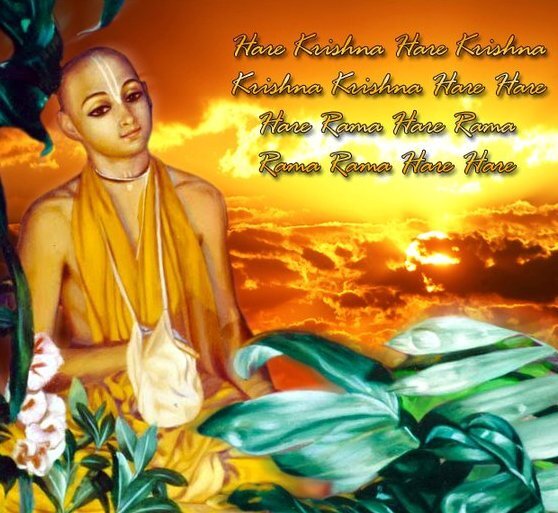
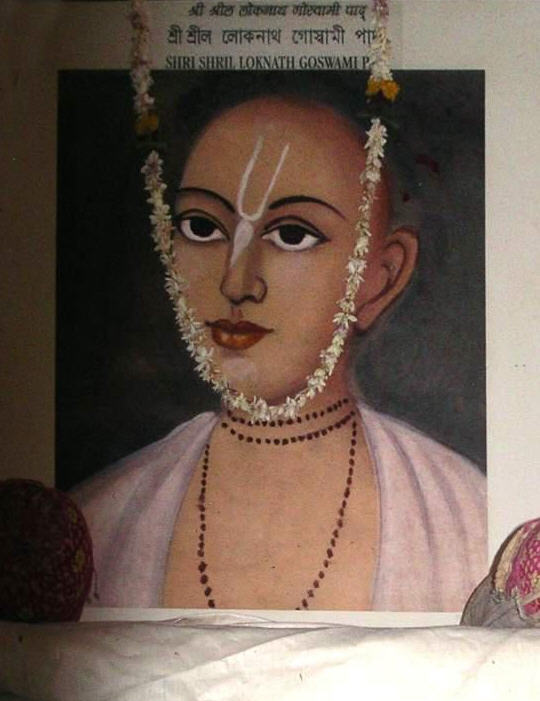
Srila Vamsivadana Thakura is remembered in Gaudiya Vaishnava tradition less for any single dramatic episode than for a lifetime of quiet, constant service. He was born in Kuliya-grama, on the edge of what is today Navadwip. Gaudiya tradition names him as Krishna's own flute in human form. The source for this is the Gaura-ganoddesha-dipika, the work that records the earlier spiritual identities of Sri Chaitanya Mahaprabhu's associates. After Mahaprabhu accepted sannyasa, Vamsivadana Thakura and Ishana Thakura stayed on in Navadwip to look after Sachi Devi and Vishnupriya Devi, the mother and the wife He left behind. By the tradition's own account, this service lasted the rest of both women's very long lives.
| Detail | Description |
|---|---|
| Identity | Krishna's dear flute (vamshi), appearing as Vamsidasa Thakura (Gaura-ganoddesha-dipika 179) |
| Also known as | Vamsivadananda Thakura, Vamsidasa Thakura, Vamshi Thakura, Vadana, Vadanananda |
| Birth | c. 1494-1495, in the house of Madhava Dasa at Kuliya-grama; some sources give 1506 instead |
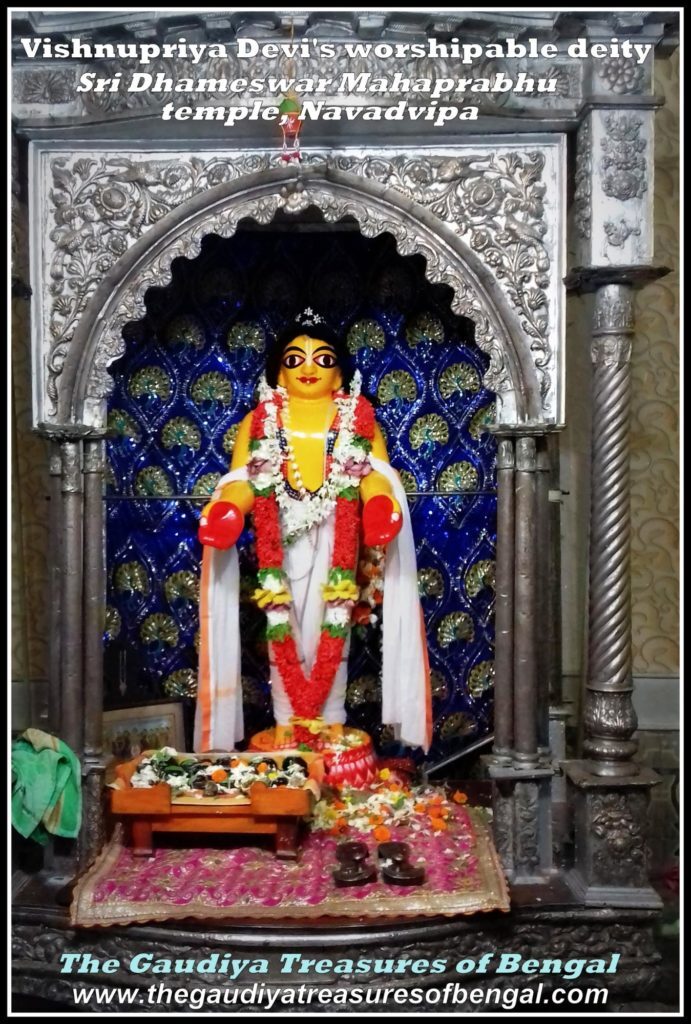
| Best known for | Caring for Sachi Devi and Vishnupriya Devi after Mahaprabhu's sannyasa, and later establishing the Dhameshvara Mahaprabhu Deity's worship at Kuliya |
| Family | Two sons, Chaitanya Dasa and Nityananda Dasa; a grandson, Ramachandra, adopted as a disciple by Jahnava Mata |
| Disappearance | Not recorded |
Krishna's Own Flute, Not One of the Twelve Gopalas #
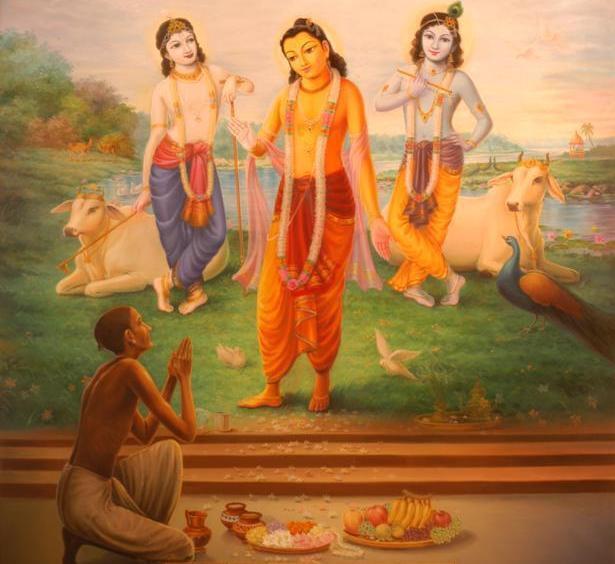
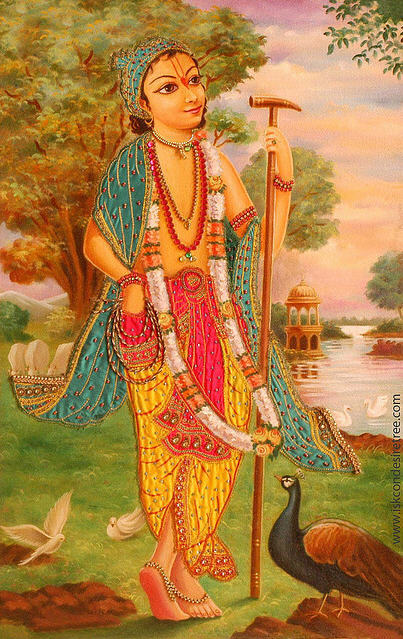
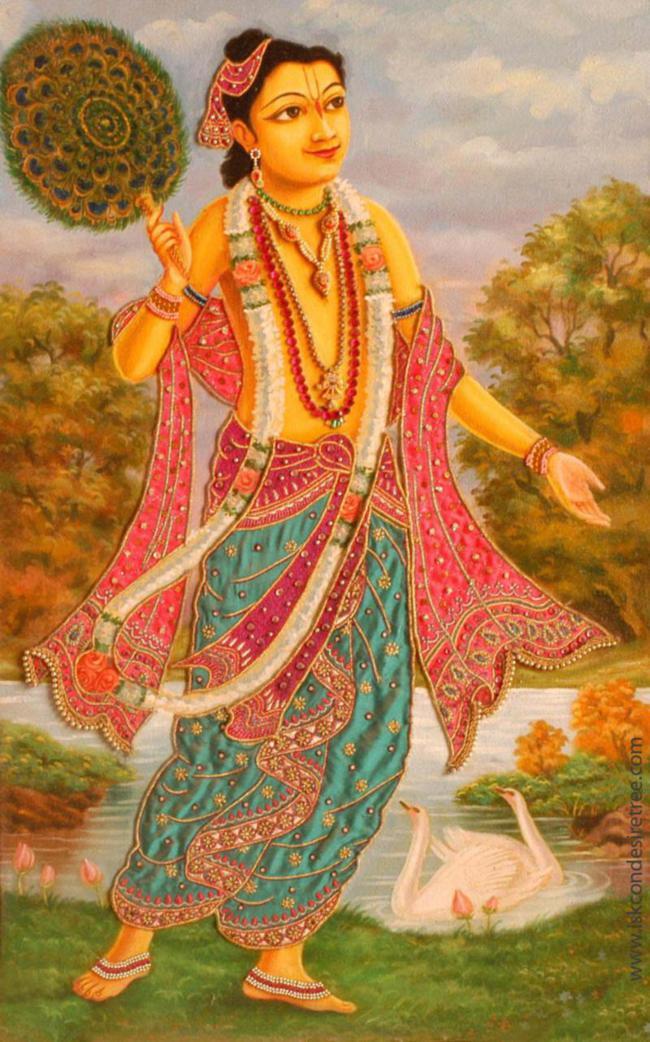
Kavi Karnapura's Gaura-ganoddesha-dipika is also the source for the well-known list of Nityananda Prabhu's twelve gopalas. These are devotees such as Uddharana Datta Thakura and Abhirama Gopala Thakura, each identified with one of Krishna's own cowherd companions in Vraja. Vamsivadana Thakura's name does not appear on that list. Instead, the same text gives him a special identity of his own. He is not a cowherd boy but Krishna's flute itself, the vamshi that never left Krishna's hands in Vraja, now walking the earth as a devotee. Gaudiya tradition sees this as a fitting reason for the mood of longing and separation in the songs he is remembered for composing. It also fits a life spent almost entirely in the company of two women mourning an absent Lord.
The verse is short, and it calls him by another of his names, Vamsidasa Thakura:
vaṁśī kṛṣṇa-priyā yāsīt sā vaṁśīdāsa-ṭhakkuraḥ
"Lord Krsna's favorite flute appeared as Vamsidasa Thakura." (Gaura-ganoddesha-dipika 179)
Scripture calls Krishna's flute so fortunate that even the gopis envy it. In the Venu-gita of Srimad-Bhagavatam, the gopis say, "My dear gopis, what auspicious activities must the flute have performed to enjoy the nectar of Krishna's lips independently and leave only a taste for us gopis, for whom that nectar is actually meant! The forefathers of the flute, the bamboo trees, shed tears of pleasure. His mother, the river on whose bank the bamboo was born, feels jubilation, and therefore her blooming lotus flowers are standing like hair on her body" (Srimad-Bhagavatam 10.21.9; the same translation is quoted in Srila Prabhupada's Chaitanya-charitamrita, Antya-lila 16.140). Vamsivadana Thakura is identified as this same flute in human form, so close to Krishna and so dear to Him.
A Birth Mahaprabhu Himself Witnessed #
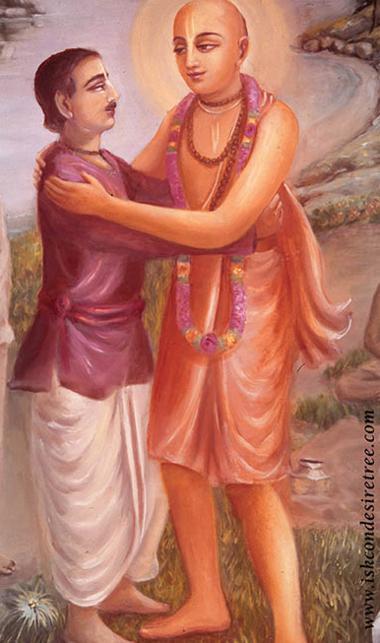
Vamsivadana Thakura's father, Madhava Dasa (also recorded as Chakadi Chattopadhyaya), was a devoted follower of Sri Chaitanya Mahaprabhu in Kuliya. Tradition holds that Mahaprabhu and Advaita Acharya were both present in Madhava Dasa's house on the day his son was born, on the full moon of the month of Chaitra. Kuliya itself had a special name in Chaitanya-charitamrita and Chaitanya-Bhagavata, long before Vamsivadana Thakura became known. It was called aparadha-bhanjanera pata, "the place where offenses are forgiven," because of Mahaprabhu's own mercy toward Devananda Pandit there. Devananda Pandit was a Bhagavatam lecturer whose students had once dragged Srivasa Thakura out of an assembly. He was freed of that offense only after Mahaprabhu told him to seek forgiveness through Vakresvara Pandit. Local Gaudiya tradition says that Mahaprabhu stayed at Madhava Dasa's own house during that reconciliation. It was the same household where his son was born and would spend his life. Years later, tradition also remembers Vamsivadana Thakura receiving a much younger pilgrim on his own lap: the boy who would grow up to become Shrinivasa Acharya. During the boy's visit to Mahaprabhu's birthplace, Vamsivadana Thakura wet his head with tears of ecstatic devotion.
Guardian of Two Grieving Women #
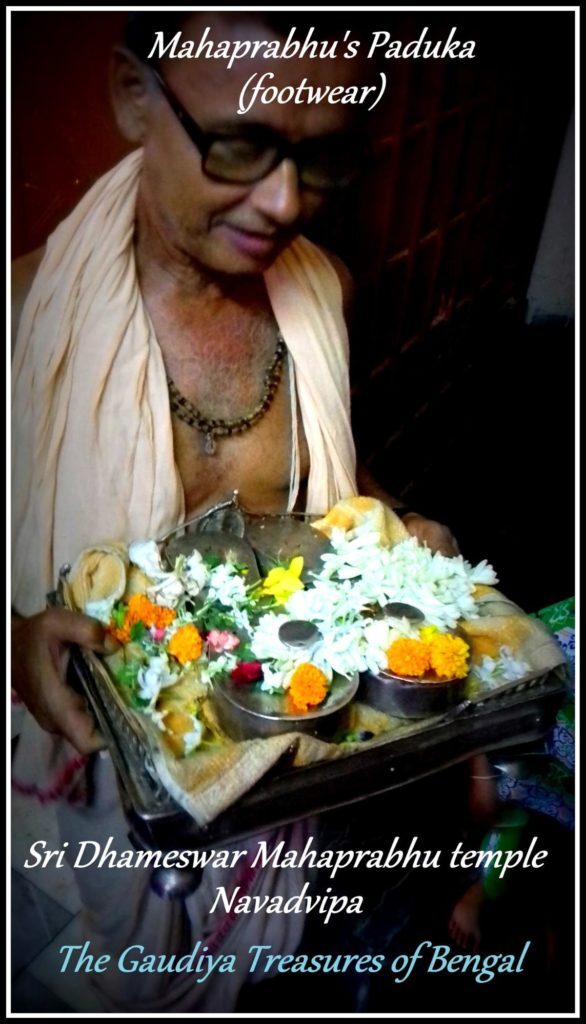
The service Vamsivadana Thakura is most remembered for began only after Mahaprabhu left Navadwip for good. With Ishana Thakura, he stayed close to Sachi Devi and Vishnupriya Devi through the decades that followed. By tradition's account, a time came when Vishnupriya Devi and Vamsivadana Thakura together decided to stop eating and drinking altogether. Their pain of separation was so great that they could see no point in keeping their bodies alive. This lasted until Mahaprabhu Himself is said to have appeared before them and turned that decision toward Deity worship instead. The fuller story of that vow, and of the Deity that came from it, is told in The Vow at Vishnupriya's Side. Vishnupriya Devi's own page tells the same Deity's origin and its later journey in even greater detail, in Worship and Legacy.
Sons, a Grandson, and a Song of Separation #
Vamsivadana Thakura lived as a householder, not a sannyasi, and had two sons, Chaitanya Dasa and Nityananda Dasa. His grandson, named Ramachandra and known to tradition as Ramai Thakura, was adopted as a disciple by Jahnava Mata, the wife of Nityananda Prabhu. Ramai Thakura went on to establish Deity worship of his own at Baghnapara. In this way the family line carried Vamsivadana Thakura's devotion forward by another generation. Vamsivadana Thakura is also remembered as a poet. He composed songs on the grief of Sachi Devi and Vishnupriya Devi at Mahaprabhu's sannyasa. But no source preserves the actual words of any particular song well enough to quote it here.
What the Record Leaves Unanswered #
It is best to say plainly what is known and what is not known. Vamsivadana Thakura is not named in Krishnadasa Kaviraja Goswami's Chaitanya-charitamrita, in Vrindavana Dasa Thakura's Chaitanya-Bhagavata, or in Murari Gupta's early biographical karcha. These are the accounts closest to Mahaprabhu's own lifetime. What is known comes instead from later sources. The main ones are the Vamsi-shiksha, a devotional work (compiled in 1716, two centuries after his life), and the continuing oral and temple tradition centered on the Dhameshvara Mahaprabhu temple at Kuliya. His own descendants still maintain that temple today. Sources also differ on his birth year by roughly a decade, and no source records a disappearance date, place, or age at all.
One more point should be made clear. Some accounts of Gaudiya Vaishnava history pair various associates of Mahaprabhu with Ramachandra Puri, the godbrother of Ishvara Puri. Ramachandra Puri is remembered in the Antya-lila of Chaitanya-charitamrita for his fault-finding. But no episode connecting Ramachandra Puri to Vamsivadana Thakura appears in Chaitanya-charitamrita itself, or in any of the devotional biographies of Vamsivadana Thakura, even though a search was made specifically for that connection. The one real test of his life that Gaudiya tradition does preserve is quite different. It was not a critic's harsh words. It was the vow that he and Vishnupriya Devi made to stop living rather than go on without Mahaprabhu, and the Lord's own appearance to turn that grief toward worship instead.
Scriptural evidence
Quoted in the text above:
- Vamsivadananda Thakura - Biography, Gaudiya History
- Vamsivadananda Thakura, Gaudiya History
- Vamshivadananda Thakura, Stephen Knapp
- Sri Vamsivadana Thakura (Vamsivadananda Thakura - Vamsi Dasa) Appearance, ISKCON Desire Tree
- Vamsivadana Thakura Appearance Day, Ramai Swami (ISKCON Desire Tree blog)
- Murali Vilasa, Vamsi Siksha and the Rasaraja Concept - Ramakanta Chakravarti
- Dwadash Gopal - Twelve Cowherd Boys, Associates of Lord Nityananda - The Gaudiya Treasures of Bengal
- Gaura Ganoddesa Dipika (English Edition), Part 3 - isvara.org
- Aparadha-Bhanjana-Pata Kuliya Kothaya, Bhaktivinoda Institute
Frequently asked
When was Srila Vamsivadana Thakura born?
Srila Vamsivadana Thakura appeared c. 1494-1495 (per the Vamsi-shiksha; some accounts give 1506 - sources differ) in The house of Madhava Dasa, Kuliya-grama (present-day Navadwip), Bengal.
When and where did Srila Vamsivadana Thakura disappear?
Srila Vamsivadana Thakura disappeared Not recorded at Not recorded.
What are the main pastimes of Srila Vamsivadana Thakura?
The pastimes covered here include: Born as the Lord's Own Flute, The Vow at Vishnupriya's Side.