Uddhava among the creepers: the queens' kīrtana
लताओं के बीच उद्धव: रानियों का कीर्तन
In short
In the Bhāgavatam, Uddhava sees the gopīs' love and prays to be a bush, creeper or herb in Vṛndāvana, to receive the dust of their feet. The Skanda Purāṇa, an old scripture, tells what came of it. After Kṛṣṇa left the world, His queens sang kīrtana by the Flower Lake near Govardhana, and Uddhava came out of the creepers.[1–7]
On this page
At a glance
- Uddhava stayed in Vraja for several months and comforted the gopīs with talks about Kṛṣṇa (Śrīmad-Bhāgavatam 10.47.54).[3, 8, 9]
- His prayer to be a bush, creeper or herb of Vṛndāvana is Śrīmad-Bhāgavatam 10.47.61. Śrīla Prabhupāda explains it in the Caitanya-caritāmṛta and the Kṛṣṇa book.[1–3, 10]
- Śrīla Jīva Gosvāmī says that Uddhava does receive in Vraja what he prayed for, through a form that fulfils his wish.[11]
- The Skanda Purāṇa's Bhāgavata-māhātmya sets the queens' kīrtana (singing God's names together) at the Flower Lake (kusuma-saras) at Sakhī-sthala, not far from Govardhana.[4 +3]
- The Bhakti-ratnākara sets Uddhava's talks with the queens at Sakhīsthalī village, which it says is "now called Sakhitharā".[14]
- According to the guidebooks (2001, 2007), his places are the Uddhava temple beside Kusuma-sarovara (Kusum Sarovar) and Uddhava-kuṇḍa, a pond just west of it.[14–19]
How long did Uddhava stay in Vraja?
Uddhava was Kṛṣṇa's dear friend and adviser in Mathurā. Kṛṣṇa sent him to Vraja with a message for the gopīs, the cowherd girls who loved Him. When Uddhava saw their love, he prayed to be born there as a bush, a creeper or a herb.[1 +4]
Long afterwards, a Purāṇa says, Kṛṣṇa's own queens found him living among the creepers by a lake of flowers near Govardhana. This article follows both parts of the story. Then it sets side by side the places the books give for the meeting.[4–7]
The Bhāgavatam says that Uddhava did not stay only a few days.[3, 8, 9]
uvāsa katicin māsān gopīnāṃ vinudan śucaḥ / kṛṣṇa-līlā-kathāṃ gāyan ramayām āsa gokulam
Uddhava remained there for several months, dispelling the gopīs’ sorrow by chanting the topics of Lord Kṛṣṇa’s pastimes. Thus he brought joy to all the people of Gokula.
Translation: Śrīla Prabhupāda's disciples (BBT)He went about Vraja, seeing its rivers, forests, hills, valleys and flowering trees, and reminded its people of Kṛṣṇa (10.47.56). The verse names no hill. But Śrīla Prabhupāda, telling the story in his Kṛṣṇa book, names Govardhana Hill among the sights that inspired him.[3, 8, 9]
General teaching (does not name the place)“Vṛndāvana’s natural atmosphere, with the presence of the river Yamunā, its nice orchards of trees decorated with various fruits, Govardhana Hill, caves, blooming flowers – all combined to inspire Uddhava to narrate Kṛṣṇa’s pastimes.”
Śrīla Prabhupāda, Kṛṣṇa, the Supreme Personality of Godhead (Kṛṣṇa book), Chapter 47, 'Delivery of the Message of Kṛṣṇa to the Gopīs' · vedabase.io
The commentators, the teachers who explain the Bhāgavatam verse by verse, add a few details (summarised here, not translated). Śrīla Sanātana Gosvāmī says that Uddhava stayed ten or eleven months. Śrīdhara Svāmī and Vaṁśīdhara say that at every river, forest and hill he asked the people of Vraja what the Lord had done there, and so made them remember Him.[3 +3]
Śrīla Raghunātha dāsa Gosvāmī also honours Uddhava in his Vraja-vilāsa-stava (verse 99). Uddhava left Kṛṣṇa's feet, which were dearer to him than millions of lives. He lived in Vraja for ten months and filled the cowherd village with talks of Kṛṣṇa again and again (summarised here, not translated).[22]
Kṛṣṇa's message itself, and the gopīs' answer, are told in their own article. This one follows Uddhava's prayer and the queens' kīrtana.[3, 8, 9] Read more: Uddhava brings Kṛṣṇa's message to the gopīs →
Why did Uddhava pray to be a creeper?
Uddhava saw how the gopīs had given up everything for Kṛṣṇa, and he prayed. Here is Śrīla Prabhupāda's translation of the verse, as he gives it in the Caitanya-caritāmṛta.[1 +4]
আসামহো চরণরেণুজুষামহং স্যাং বৃন্দাবনে কিমপি গুল্মলতৌষধীনাম্ ।
যা দুস্ত্যজং স্বজনমার্যপথঞ্চ হিত্বা ভেজুর্মুকুন্দপদবীং শ্রুতিভির্বিমৃগ্যাম্ ॥ ৪৭ ॥
āsām aho caraṇa-reṇu-juṣām ahaṁ syāṁ
vṛndāvane kim api gulma-latauṣadhīnām
yā dustyajaṁ sva-janam ārya-pathaṁ ca hitvā
bhejur mukunda-padavīṁ śrutibhir vimṛgyām
“ ‘The gopīs of Vṛndāvana have given up the association of their husbands, sons and other family members, who are very difficult to give up, and they have forsaken the path of chastity to take shelter of the lotus feet of Mukunda, Kṛṣṇa, which one should search for by Vedic knowledge. Oh, let me be fortunate enough to become one of the bushes, creepers or herbs in Vṛndāvana, for the gopīs trample them and bless them with the dust of their lotus feet.’
Translation: Śrīla A.C. Bhaktivedanta Swami PrabhupādaŚrīla Prabhupāda explains in the Kṛṣṇa book why Uddhava, Kṛṣṇa's close friend, asked for so low a birth. Uddhava did not dare to ask the gopīs for the dust of their feet. So he wished to receive it without their knowing.[1–3, 10]
General teaching (does not name the place)“Yet he dared not ask the gopīs to offer the dust from their feet; perhaps they would not be agreeable. Therefore, to have his head smeared with the dust of the gopīs’ feet without their knowledge, he desired to become only an insignificant clump of grass or herbs in the land of Vṛndāvana.”
Śrīla Prabhupāda, Kṛṣṇa, the Supreme Personality of Godhead (Kṛṣṇa book), Chapter 47, 'Delivery of the Message of Kṛṣṇa to the Gopīs' · vedabase.io
In his purport, his explanation in the Caitanya-caritāmṛta, he says it in plain words. Seeing the gopīs' pure love, Uddhava wished to be a creeper, a blade of grass or a herb in Vṛndāvana. Then the gopīs would sometimes walk on him, and the dust of their feet would fall on his head.[2]
What the commentators see in the words
The Tenth Canto commentators look closely at each word (summarised here, not translated). Śrīla Sanātana Gosvāmī and Śrīla Jīva Gosvāmī say that Uddhava names Vṛndāvana because the gopīs are always there, wandering about.[1 +2]
Uddhava does not ask to be a tree, Śrīla Sanātana Gosvāmī notes, because a tree is too tall to receive the dust of their feet. Out of humility his prayer goes lower and lower, until he is asking to be grass.[1 +2]
Śrīla Viśvanātha Cakravartī Ṭhākura says that every night, when the gopīs go out to meet Kṛṣṇa, they do not look for a path. So they would step on his head.[24]
In a later verse Uddhava bows again and again to the dust of the feet of the women of Nanda's Vraja (10.47.63). "Again and again", Śrīla Viśvanātha Cakravartī Ṭhākura says, means at every moment, for as long as Uddhava has not been born as grass.[1 +2]
None of these teachers names a particular place in Vṛndāvana.[24]
Did the prayer come true?
In the Bhāgavatam's Eleventh Canto, Uddhava goes to Badarikāśrama, a holy place in the Himālayas. Śrīla Jīva Gosvāmī comments on this in his Prīti-sandarbha (217). Uddhava, he says, was kept on earth to spread the knowledge of Kṛṣṇa. But through a kāma-vyūha, a form that fulfils his wish, he also gains in Vraja what he prayed for. He names no place (summarised here, not translated).[11, 27]
What was the queens' kīrtana at the Flower Lake?
The Skanda Purāṇa tells the rest of the story in its Bhāgavata-māhātmya, "the glory of the Bhāgavatam" (chapters 2 and 3). It takes place after Kṛṣṇa had left the world. Vajra, Kṛṣṇa's great-grandson, was then king at Mathurā. The Bhāgavatam itself records that Vajra was made king there, in Śrīla Prabhupāda's translation.[28, 29]
mathurāyāṃ tathā vajraṃ śūrasenapatiṃ tataḥ / prājāpatyāṃ nirūpyeṣṭim agnīn apibadīśvaraḥ
Then he posted Vajra, the son of Aniruddha [grandson of Lord Kṛṣṇa], at Mathurā as the King of Śūrasena.
Translation: Śrīla A.C. Bhaktivedanta Swami PrabhupādaWe quote only the translations of the Bhaktivedanta Book Trust (BBT), so the Purāṇa's account is summarised here, not translated.[4 +2]
- With Parīkṣit's help and the blessing of the sage Śāṇḍilya, Vajra found the places of Kṛṣṇa's pastimes in Vraja. He named them, settled people there, and made kuṇḍas (sacred ponds) and wells.[28]
- Kṛṣṇa's queens were grieving, separated from Him. Kālindī, the goddess of the Yamunā river, told them where Uddhava was: near Govardhana Hill, at Sakhī-sthala, in the form of the young shoots and creepers there. He lived there because he longed for the dust of the gopīs' feet.[6, 31]
- She advised them to stay with Vajra near Kusuma-saras, the Flower Lake. There they should begin a festival of kīrtana, singing God's names and glories with vīṇā, flute and mṛdaṅga drum. Then they would surely see him.[4, 31]
- The festival began at the Flower Lake at Sakhī-sthala, in the forest of Vṛndā, the goddess of Vṛndāvana's forest, not far from Govardhana. Through the beauty of the kīrtana, Kṛṣṇa's pastimes with Vṛṣabhānu's daughter seemed to appear before their eyes, and no one there saw anything else.[5 +2]
- Then, as they all watched, Uddhava came out of the mass of grass, bushes and creepers. He was dark, with garlands and a necklace of guñjā berries, dressed in yellow cloth, singing again and again of the gopīs' beloved. Everyone saw him in Kṛṣṇa's form and worshipped him.[12, 13]
- Uddhava told Parīkṣit that Kṛṣṇa had placed in him the secret of the Bhāgavatam. So, though he had gone to Badarī, he still lived among the creepers of Vraja, and always, as he liked, at the Nārada-kuṇḍa there.[7] Read more: How Nārada became a gopī: the accounts side by side →
- Vajra made Pratibāhu king in his place and stayed with the queens to listen. In Vṛndāvana near Govardhana, Uddhava began a reading of the Śrīmad-Bhāgavatam that lasted a month.[32, 33]
- As they listened, Kṛṣṇa's pastimes appeared everywhere. Vajra saw himself at Kṛṣṇa's right foot. The queens were freed from the pain of separation and went to their own abode.[33, 34]
The chapter's closing line names it as the account of how Parīkṣit and the others saw Uddhava close to Govardhana. It does not quote the Bhāgavatam's prayer. But it gives the same reason for his life among the creepers: his longing for the dust of the gopīs' feet.[1 +4]
The Nārada Purāṇa also speaks of a Sakhī-sthala near Govardhana, close to its lake of flowers and Vṛndā's hermitage. It says that in the evening Rādhā's friends reach Sakhī-sthala and go home with Rādhikā. Neither Purāṇa says which village or lake of today is meant.[6 +3]
Which places do the guidebooks name for Uddhava?
Two places beside Kusuma-sarovara carry his name. The guidebook Govardhana Hill (2001) and the undated parikramā (pilgrims' walk) notes of the same name record a tradition about the first. Uddhava used to sit at the Uddhava temple by the lake for his bhajana, his worship and chanting. So the temple is called Uddhava Baiṭhaka, "Uddhava's sitting place".[14–16]
According to Govardhana Hill (2001) and Vṛndāvana-Dhāma Ki Jaya! (c. 1986), Vajranābha installed the Deity (sacred image) of Uddhava in that temple. The parikramā notes say only that this is believed. The Skanda Purāṇa says that Vajra installed the forms of Govinda, Harideva and others, but it does not mention a Deity of Uddhava.[16 +3]
The second place is Uddhava-kuṇḍa. According to Śrī Vraja-maṇḍala Parikramā (2007), it lies just west of Kusuma-sarovara, on the right side of the parikramā path. Govardhana Hill (2001) says that a path on the left of the building there leads down to the kuṇḍa and a small temple.[17–19]
According to Śrī Vraja-maṇḍala Parikramā, Vajranābha made this kuṇḍa under the guidance of Śāṇḍilya and other sages. The Skanda Purāṇa says only in general that Vajra made kuṇḍas and wells. Govardhana Hill (2001) adds a local tradition: here Govardhana Hill has sunk into the ground and can no longer be seen.[16 +4]
Sakhīsthalī, the village of Candrāvalī
The Bhakti-ratnākara points to another place for Uddhava's talks with the queens. In it, Śrīla Rāghava Paṇḍita guides Śrīla Śrīnivāsa Ācārya around Govardhana. The last stop before Rādhā-kuṇḍa is Sakhī-sthalī village, the home of Candrāvalī, "now called Sakhitharā". Here, he says, Uddhava sat and spoke about Kṛṣṇa to the beloved queens of Dvārakā.[14 +2]
The book names no kuṇḍa or temple at Sakhīsthalī. At Kusuma-sarovara and Nārada-kuṇḍa, earlier on the same walk, it does not mention Uddhava at all.[41, 42]
Other books also know Sakhīsthalī as Candrāvalī's village. Śrīla Viśvanātha Cakravartī Ṭhākura, explaining Śrīla Rūpa Gosvāmī's play Vidagdha-mādhava, calls it her village, known as Sakhītharā. Śrī Vṛndāvana Cakravartī says it is near Govardhana. And in Śrīla Rūpa Gosvāmī's play Lalita-mādhava, Candrāvalī is Rukmiṇī, the chief queen of Dvārakā.[43–47]
The Bhakti-ratnākara also keeps the two parts of Uddhava's story apart. It shows the places of his first stay at Nandīśvara, where he spoke with Nanda and comforted the people of Vraja. There it quotes Śrīla Raghunātha dāsa Gosvāmī's verse on his ten months. Only the meeting with the queens, which came after Kṛṣṇa left the world, it sets beside Govardhana.[14 +3]
Where the sources differ
The books give different places for Uddhava's life among the creepers and for the queens' meeting. The Skanda Purāṇa names the Flower Lake at Sakhī-sthala near Govardhana, and Uddhava himself speaks of the Nārada-kuṇḍa there. Its English translator even asks whether Sakhī-sthala is meant as a place-name at all.[6 +3]
According to the guidebooks, Uddhava lives as creepers or grass at the Uddhava temple by Kusuma-sarovara. Śrī Vraja-maṇḍala Parikramā (2007) says in one chapter that he lives on the bank of Kusuma-sarovara. In its entry on Uddhava-kuṇḍa it says that he always stays near that kuṇḍa as grass and shrubs.[7 +9]
Accounts differ Where in Vraja Uddhava lives as grass, shrubs or creepers
- Skanda Purāṇa, Vaiṣṇava-khaṇḍa, Bhāgavata-māhātmya 2.24 (Kālindī)near Govardhana Hill, at Sakhī-sthala, in the form of the sprouts and creepers there
- Skanda Purāṇa, Bhāgavata-māhātmya 3.49-50 (Uddhava's own words)though gone to Badarī he stays in the creepers of Vraja, and so remains here at the Nārada-kuṇḍa for ever, by his own choice (svecchayā sadā)
- Govardhana Hill: India's Most Sacred Mountain (2001)at the Uddhava temple 'next to Kuṣuma-sarovara', 'in the form of creepers known as gulma lata'; 'It is said' he resides in Badrikāśrama, Dvārakā and on the banks of Kuṣuma-sarovara; Uddhava-kuṇḍa is dedicated to Uddhava 'who lives at Kusuma-sarovara in the form of creepers'
- Vṛndāvana-Dhāma Ki Jaya! (c. 1986)a small temple next to Kusuma-sarovara with a deity of Uddhava, 'who is remaining here in the form of grass'
For the queens' meeting, the undated notes Govardhana Hill name the Uddhava temple by Kusuma-sarovara. Śrī Vraja-maṇḍala Parikramā tells the queens' kīrtana at Uddhava-kuṇḍa and adds details not found in the texts above. The Bhakti-ratnākara names Sakhīsthalī village. Whether its Sakhīsthalī is the Skanda Purāṇa's Sakhī-sthala is not known for certain.[4 +8]
Accounts differ Where Kṛṣṇa's queens from Dvārakā met Uddhava (and where Uddhava 'sat')
- Skanda Purāṇa, Bhāgavata-māhātmya 2.25-32the kīrtana festival of the queens, Vajra and Parīkṣit was held near Kusuma-saras, 'at the Flower-Lake' at Sakhī-sthala not far from Govardhana, where Uddhava came out of the grasses and creepers
- the undated parikramā notes Govardhana, Uddhava Temple entry'Another Pastime of Dwarika Queens meeting Uddhava at this place' (i.e. at the Uddhava temple by Kusuma-sarovara); also 'Uddhava used to sit while performing his bhajana' here
- Govardhana Hill: India's Most Sacred Mountain (2001)the temple next to Kuṣuma-sarovara is headed 'Uddhava Baithaka (Sitting Place)'
- Śrī Vraja-maṇḍala Parikramā (2007), Uddhava-kuṇḍa entry (citing the Skanda Bhāgavata-māhātmya)Vajranābha came 'here' (Uddhava-kuṇḍa) with the queens; in the saṅkīrtana Arjuna danced and played mṛdaṅga, Uddhava emerged from the grass and shrubs, and Kṛṣṇa appeared with Rādhikā; 'Uddhava pacified the queens at this place'
Places in this article
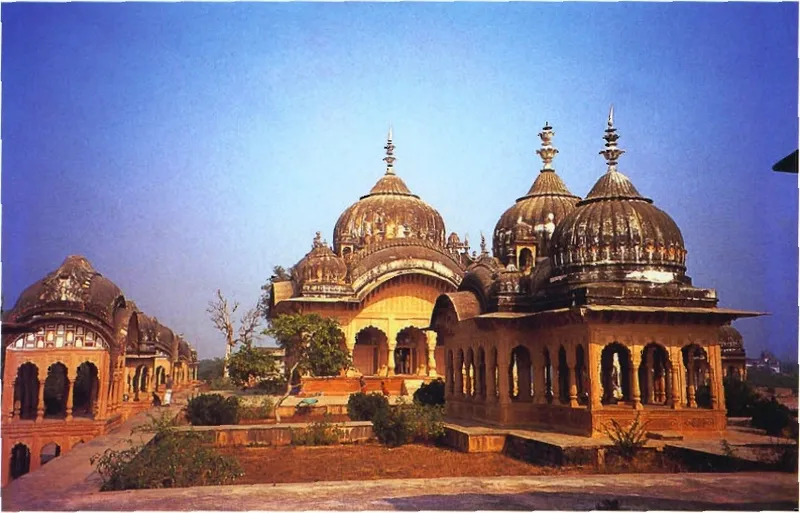
Kusuma-sarovara
कुसुम-सरोवरKusuma-sarovara lies on the right of the Govardhana parikramā path, about one and a half miles south-west of Rādhā-kuṇḍa, according to Śrī Vraja-maṇḍala Parikramā (2007).
Uddhava Mandira (Kusuma-sarovara)
उद्धव मन्दिर (कुसुम-सरोवर)The Uddhava Mandira is a temple beside Kusuma-sarovara with a Deity of Uddhava, the friend of Kṛṣṇa who brought His message to the gopīs of Vraja.
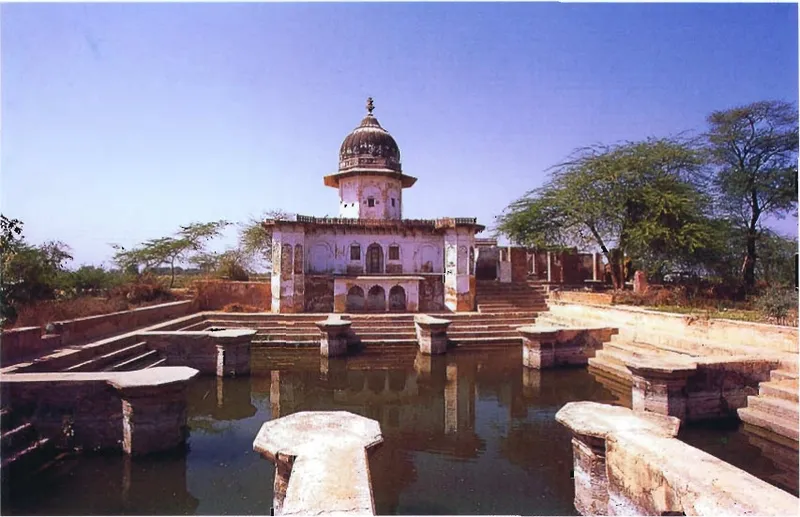
Uddhava-kuṇḍa
उद्धव-कुण्डUddhava-kuṇḍa is a pond beside the Govardhana parikramā path, just west of Kusuma-sarovara.
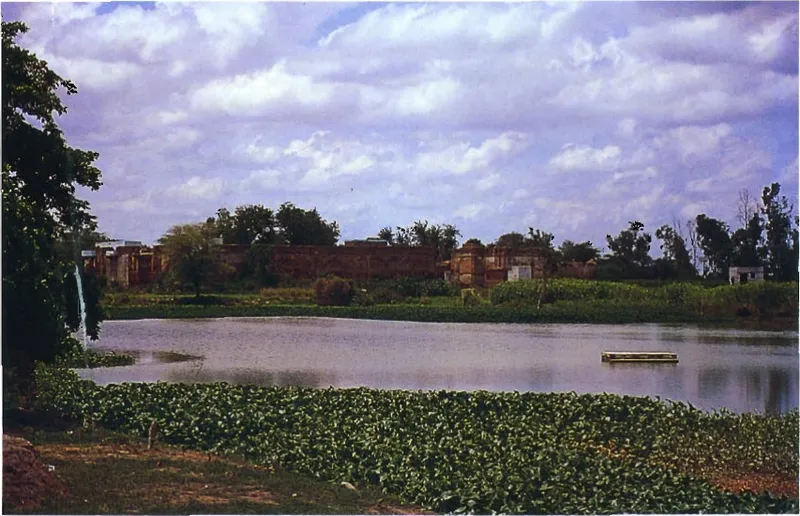
Sakhī-sthalī
सखी-स्थलीSakhī-sthalī, the place of the sakhīs (girl companions), is the village now called Sakhītharā near Govardhana.
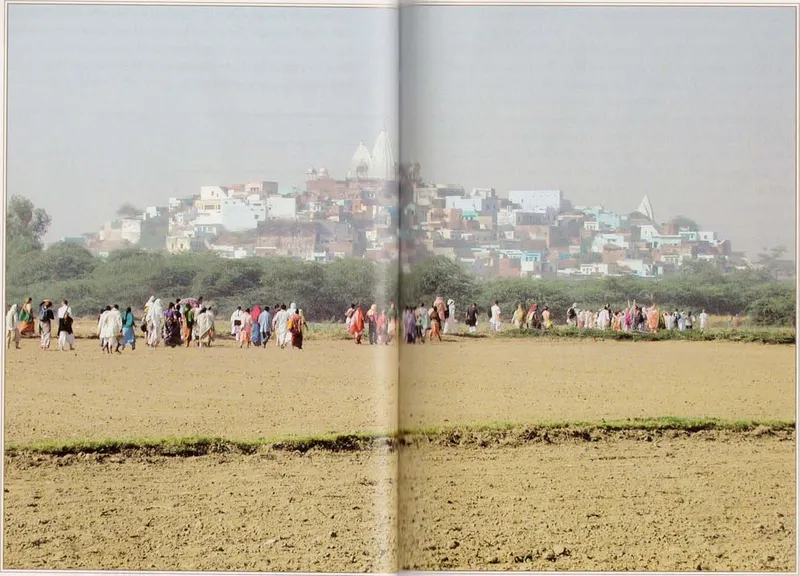
Nandīśvara Hill
नन्दीश्वर पर्वतNandīśvara is the hill of Nandagrāma, also called Rudra-parvata, "Rudra's hill".
Questions and answers
In Śrīmad-Bhāgavatam 10.47.61 he prays to be a bush, creeper or herb of Vṛndāvana, to receive the gopīs' foot-dust. The Skanda Purāṇa says he lives as creepers near Govardhana, at Sakhī-sthala. The guidebooks name the Uddhava temple by Kusuma-sarovara as the place where he used to sit for his bhajana.[1 +7]
According to the Skanda Purāṇa, after Kṛṣṇa left the world His grieving queens, with Vajra and Parīkṣit, sang kīrtana with vīṇā, flute and mṛdaṅga at the Flower Lake near Govardhana. Uddhava came out of the creepers and then read the Bhāgavatam to them for a month (summarised here, not translated).[12 +3]
He explains that Uddhava, seeing the gopīs' pure love, wished to be a creeper, a blade of grass or a herb in Vṛndāvana. Then the gopīs would walk on him, and their foot-dust would fall on his head without their knowing.[2, 3]
Śrīla Jīva Gosvāmī says yes. Uddhava went to Badarikāśrama to spread the knowledge of Kṛṣṇa, but through a form that fulfils his wish he gains in Vraja what he prayed for. He names no place.[11, 27]
Just west of Kusuma-sarovara, on the right side of the Govardhana parikramā path, according to Śrī Vraja-maṇḍala Parikramā (2007). Govardhana Hill (2001) mentions a small temple beside it.[17–19]
The Bhāgavatam says several months. Śrīla Sanātana Gosvāmī says ten or eleven months, and Śrīla Raghunātha dāsa Gosvāmī speaks of ten months.[3 +4]
Sources
- Śrīmad-Bhāgavatam 10.47.61, GRETIL
- Śrīla Prabhupāda, Śrī Caitanya-caritāmṛta, Antya-līlā 7.47, purport · vedabase.io
- Śrīla Prabhupāda, Kṛṣṇa, the Supreme Personality of Godhead (Kṛṣṇa book), Chapter 47, 'Delivery of the Message of Kṛṣṇa to the Gopīs' · vedabase.io
- Skanda Purāṇa, Vaiṣṇava-khaṇḍa (2), Śrīmad-bhāgavata-māhātmya (section 6), adhyāya 2, verses 25-26, Sanskrit Wikisource
- Skanda Purāṇa, Vaiṣṇava-khaṇḍa (2), Śrīmad-bhāgavata-māhātmya (section 6), adhyāya 2, verses 30-32, Sanskrit Wikisource
- Skanda Purāṇa, 2.6.2.24, Sanskrit Wikisource
- Skanda Purāṇa, Vaiṣṇava-khaṇḍa (2), Śrīmad-bhāgavata-māhātmya (section 6), adhyāya 3, verses 49-50, Sanskrit Wikisource
- Śrīmad-Bhāgavatam 10.47.54, GRETIL
- Śrīmad-Bhāgavatam 10.47.56, GRETIL
- Śrīla Prabhupāda, Kṛṣṇa, the Supreme Personality of Godhead, Chapter 47 · vedabase.io
- Śrīla Jīva Gosvāmī, Ṣaṭ-sandarbha: Prīti-sandarbha, Prīti-sandarbha, anuccheda 217 (on ŚB 11.29), GRETIL
- Skanda Purāṇa, 2.6.2.30-31 (Bhāgavata-māhātmya, adhyāya 2, verses 30-31), Sanskrit Wikisource
- Skanda Purāṇa, 2.6.2.32-35 and the colophon of adhyāya 2, Sanskrit Wikisource
- Śrīla Narahari Cakravartī, Bhakti-ratnākara, Fifth Wave, 1912 ed. pp. 209-210, 2nd ed., 1912
- the undated parikramā notes Govardhana, ¶31
- Govardhana Hill: India's Most Sacred Mountain (2001), Rajasekhara dasa Brahmacari, PDF p. 52
- Śrī Vraja-maṇḍala Parikramā (2007), PDF p. 134
- Govardhana Hill: India's Most Sacred Mountain (2001), Rajasekhara dasa Brahmacari, PDF p. 150
- the key of the numbered Govardhana chart, ¶71
- Śrīla Prabhupāda, Kṛṣṇa, the Supreme Personality of Godhead (Kṛṣṇa book), Chapter 47, Delivery of the Message of Kṛṣṇa to the Gopīs · vedabase.io
Show all 50 references
- Śrīdhara Svāmī, Vaṁśīdhara, Śrīla Sanātana Gosvāmī: commentary on ŚB 10.47.56, Bhagavata Vidya Pith edition, ed. Bhagavata Rishi and Krishna Shankar Shastri, 1996
- Śrīla Raghunātha dāsa Gosvāmī, Stavāvalī, Vraja-vilāsa-stava v.99 v.99)
- Śrīmad-Bhāgavatam, 10.47.61 (as quoted in CC Antya-līlā 7.47), online edition
- Śrīla Sanātana Gosvāmī: commentary on ŚB 10.47.61, Bhagavata Vidya Pith edition, ed. Bhagavata Rishi and Krishna Shankar Shastri, 1996
- Śrīla Viśvanātha Cakravartī Ṭhākura, Śrīla Jīva Gosvāmī: commentary on ŚB 10.47.63, Bhagavata Vidya Pith edition, ed. Bhagavata Rishi and Krishna Shankar Shastri, 1996
- Śrīmad-Bhāgavatam 10.47.63, GRETIL
- Śrīla Jīva Gosvāmī, Ṣaṭ-sandarbha, Prīti-sandarbha, anuccheda 217, GRETIL
- Skanda Purāṇa, Vaiṣṇava-khaṇḍa (2), Śrīmad-bhāgavata-māhātmya (section 6), adhyāya 2, verses 4-6, Sanskrit Wikisource
- Śrīla Prabhupāda, Śrīmad-Bhāgavatam, 1.15.39, purport · vedabase.io
- Śrīmad-Bhāgavatam 1.15.39, GRETIL
- Skanda Purāṇa, 2.6.2.24-25 (Bhāgavata-māhātmya, adhyāya 2, verses 24-25), Sanskrit Wikisource
- Skanda Purāṇa, Vaiṣṇava-khaṇḍa (2), Śrīmad-bhāgavata-māhātmya (section 6), adhyāya 3, verse 67, Sanskrit Wikisource
- Skanda Purāṇa, 2.6.3.66-67 (Bhāgavata-māhātmya, adhyāya 3, verses 66-67), Sanskrit Wikisource
- Skanda Purāṇa, 2.6.3.68-71 (Bhāgavata-māhātmya, adhyāya 3, verses 68-71), Sanskrit Wikisource
- Nārada Purāṇa, Uttara-bhāga, adhyāya 80, verses 6–9
- Nārada Purāṇa, Uttara-bhāga, adhyāya 80, verses 46–47a
- Skanda Purāṇa, Vaiṣṇava-khaṇḍa (2), Bhāgavata-māhātmya, adhyāya 2, verse 30, Sanskrit Wikisource
- Vṛndāvana-Dhāma Ki Jaya! (c. 1986), by Dhruva Mahārāja dāsa, PDF p. 36
- the undated parikramā notes Govardhana, ¶32
- the undated parikramā notes Govardhana, ¶154
- Śrīla Narahari Cakravartī, Bhakti-ratnākara, Fifth Wave, 1912 ed. p. 210, 2nd ed., 1912
- Śrīla Narahari Cakravartī, Bhakti-ratnākara, Fifth Wave, 1912 ed. p. 199, 2nd ed., 1912
- Viśvanātha Cakravartī Ṭhākura, Viśvanātha Cakravartī's commentary on Vidagdha-mādhava 4.4 (the text prints the commentary after the play: '(7) … after v.91 (part 14/30)')
- Śrīla Kṛṣṇadāsa Kavirāja Gosvāmī, Govinda-līlāmṛta 6.77–78 and the ṭīkā on 6.78 v.78)
- Śrīla Narahari Cakravartī, Bhakti-ratnākara, Fifth Wave, 1912 ed. p. 209, last couplet, 2nd ed., 1912
- Govardhana Hill: India's Most Sacred Mountain (2001), Rajasekhara dasa Brahmacari, PDF p. 149
- Śrīla Rūpa Gosvāmī, Lalita-mādhava, act 10, prose (after v.16)
- Śrīla Narahari Cakravartī, Bhakti-ratnākara, Fifth Wave, 1912 ed. pp. 229-230, 2nd ed., 1912
- Śrī Vraja-maṇḍala Parikramā (2007), PDF p. 19
- Śrī Vraja-maṇḍala Parikramā (2007), PDF p. 135
Further sources
- Śrīmad-Bhāgavatam 1.15.39 (translation and purport by Śrīla Prabhupāda); 10.47.54–63 (Canto 10 translation by the disciples of Śrīla Prabhupāda), 10.47.61 as translated by Śrīla Prabhupāda in Caitanya-caritāmṛta, Antya-līlā 7.47; Śrīla Prabhupāda, Kṛṣṇa, chapter 47.
- Commentaries on Śrīmad-Bhāgavatam 10.47 (Śrīdhara Svāmī, Śrīla Sanātana Gosvāmī, Śrīla Jīva Gosvāmī, Vaṁśīdhara, Śrīla Viśvanātha Cakravartī Ṭhākura); Śrīla Jīva Gosvāmī, Prīti-sandarbha 217; Śrīla Raghunātha dāsa Gosvāmī, Vraja-vilāsa-stava 99: summarised here, not translated.
- Skanda Purāṇa, Vaiṣṇava-khaṇḍa, Śrīmad-bhāgavata-māhātmya, chapters 2–3; Nārada Purāṇa, Uttara-bhāga 80: summarised here, not translated.
- Śrīla Narahari Cakravartī Ṭhākura, Bhakti-ratnākara, Fifth Wave; Govardhana Hill (2001); Vṛndāvana-Dhāma Ki Jaya! (c. 1986); Govardhana Hill, undated parikramā notes; Śrī Vraja-maṇḍala Parikramā (2007).