Srila Raghava Pandita Goswami had spent a day of great joy at Radha-kunda with his two young companions, Shrinivasa Acharya and Narottama Dasa Thakura, whom Srila Jiva Goswami had sent with him to see the holy places of Vraja (see Jiva Goswami Entrusts Shrinivasa and Narottama to Him). They had honoured mahaprasada, food offered to the Lord, at the hut of Gopala Bhatta Goswami, and then "the Pandita set out at dawn, taking the two with him" (Bhakti-ratnakara, Fifth Wave, p. 199), to go round the hill that was his home.
Narahari Chakravarti Thakura, who tells this story in his Bhakti-ratnakara, says of Raghava: "Sri Govardhana Hill is his everything; he lives at Govardhana" (Bhakti-ratnakara, Fifth Wave, p. 150). On this circuit Raghava showed the two the places of Krishna's pastimes. At many of them he told what Sri Chaitanya Mahaprabhu, Nityananda Prabhu and the Goswamis had done there. And on the way he brought them to the one place he called his own: a cave near Apsara-kunda, "at the end of Govardhana."
Govardhana in the Eyes of a Gaudiya Vaishnava #
For a Gaudiya Vaishnava, Govardhana is no ordinary hill. In the Nectar of Instruction, Srila Rupa Goswami places it above even the forest of Vrindavana, "for it was raised by the divine hand of Śrī Kṛṣṇa and was the site of His various loving pastimes" (Nectar of Instruction, verse 9). Only Radha-kunda, at its foot, stands higher. Srila Prabhupada explains in his purport: "It is also at Govardhana Hill that Kṛṣṇa tends the cows with His cowherd friends, and there also He had His rendezvous with His most beloved Śrī Rādhā and engaged in loving pastimes with Her."
Sri Chaitanya Mahaprabhu showed by His own example how a devotee looks at this hill:
govardhana dekhi’ prabhu ha-ilā daṇḍavat
‘eka śilā’ āliṅgiyā ha-ilā unmatta
"When the Lord saw Govardhana Hill, He immediately offered obeisances, falling down on the ground like a rod. He embraced one piece of rock from Govardhana Hill and became mad." (Sri Chaitanya-charitamrita Madhya 18.16)
This was the hill that Raghava called his everything, and now, place by place, he began to show it to Shrinivasa and Narottama.
From Kusuma-sarovara to Govinda-kunda #
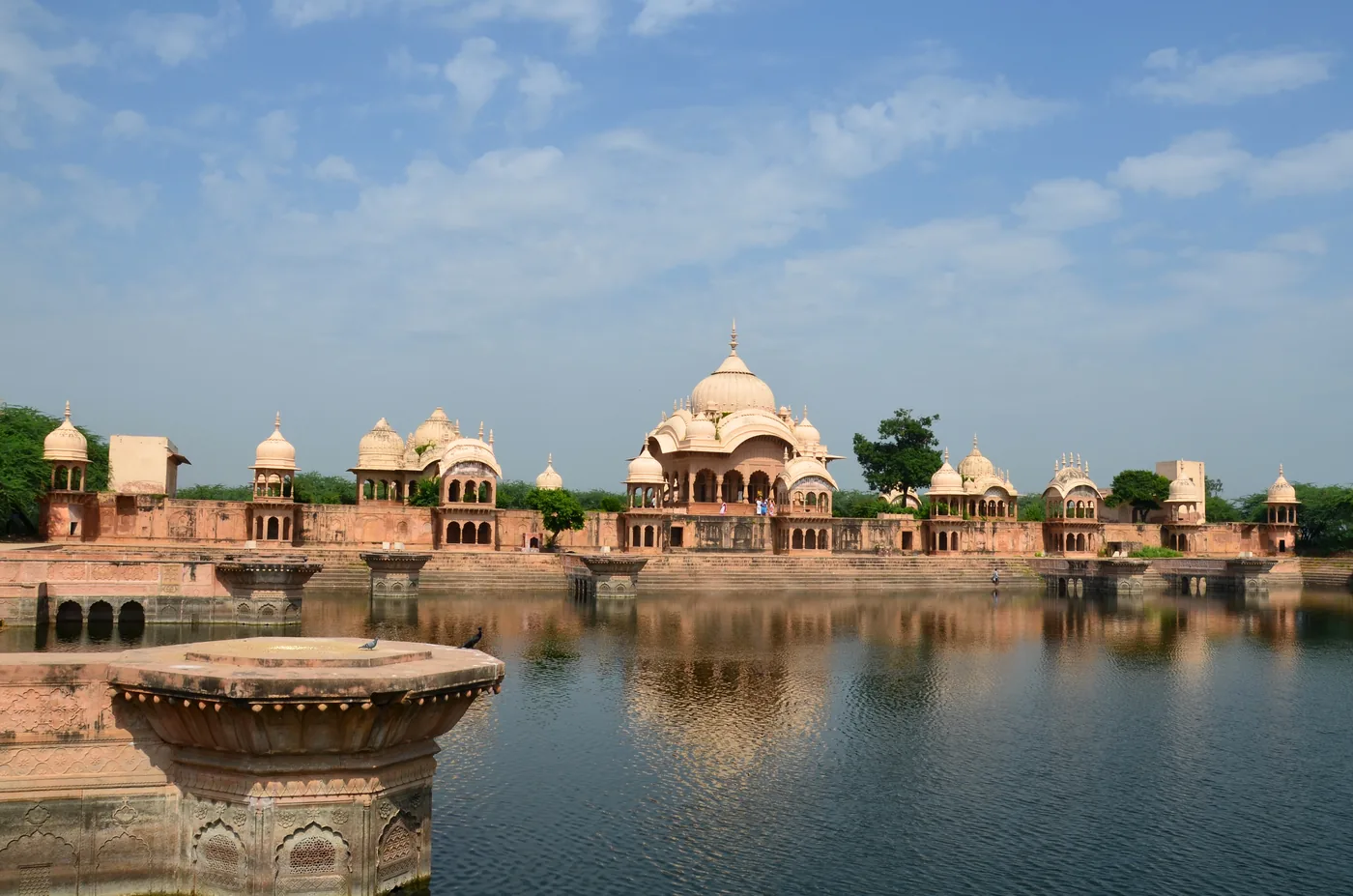
South of Radha-kunda lies the village of Mukharai. There the Pandita told Shrinivasa that there are many places of pastimes all around Govardhana (Bhakti-ratnakara, Fifth Wave, p. 199). He showed him Kusuma-sarovara "in this forest," where Radha and Krishna had wonderful play while gathering flowers, and Narada-kunda, where the sage Narada performed austerities and, through Vrinda's instruction, the desire of his heart was fulfilled.
Then came Ratna-simhasana, Parasauli of the spring rasa dance, Paitha and many more. At each place the book adds verses from Raghunatha Dasa Goswami's Vraja-vilasa-stava, Rupa Goswami's Ujjvala-nilamani and the Puranas (pp. 199-202). On these pages Narahari notes only one thing about the guide himself, his joy: "the Pandita joyfully said, 'See, Shrinivasa'" (p. 201). At Aniyora he spoke to Shrinivasa in words that Srila Prabhupada quotes in the Chaitanya-charitamrita:
gopa-gopī bhuñjāyena kautuka apāra
ei hetu ‘āniyora’ nāma se ihāra
annakūṭa-sthāna ei dekha śrīnivāsa
e-sthāna darśane haya pūrṇa abhilāṣa
"“Here all the gopīs and the gopas enjoyed wonderful pastimes with Śrī Kṛṣṇa. Therefore this place is also called Āniyora. The Annakūṭa ceremony was celebrated here. O Śrīnivāsa, whoever sees this place has all his desires fulfilled.”" (Sri Chaitanya-charitamrita Madhya 18.26, purport)
Srila Prabhupada does not name the speaker, but in the Bhakti-ratnakara these are Raghava's words. So a few sentences from this walk still reach devotees today through Srila Prabhupada's books. Close by is Govinda-kunda, where "Indra, defeated by Lord Govinda, offered prayers to Him and bathed Him" (Sri Chaitanya-charitamrita Madhya 18.37, purport). Near the kunda Raghava pointed to a thick wood: "Look at the dense forest near the kuṇḍa. It was there that Gopāla was concealed" (Sri Chaitanya-charitamrita Madhya 18.26, purport). He showed them the place under a tree where Madhavendra Puri had stayed (p. 202), and Gopala's place on the hill, adding that from time to time Gopala stays at Gathuli (p. 203).
This Is My Cave #
Going on, they came to the place where Govardhana ends. The few lines in which the Bhakti-ratnakara records what Raghava said there are among the most precious in his whole story (Bhakti-ratnakara, Fifth Wave, p. 203).
First he showed them a sacred pond and an ancient tree:
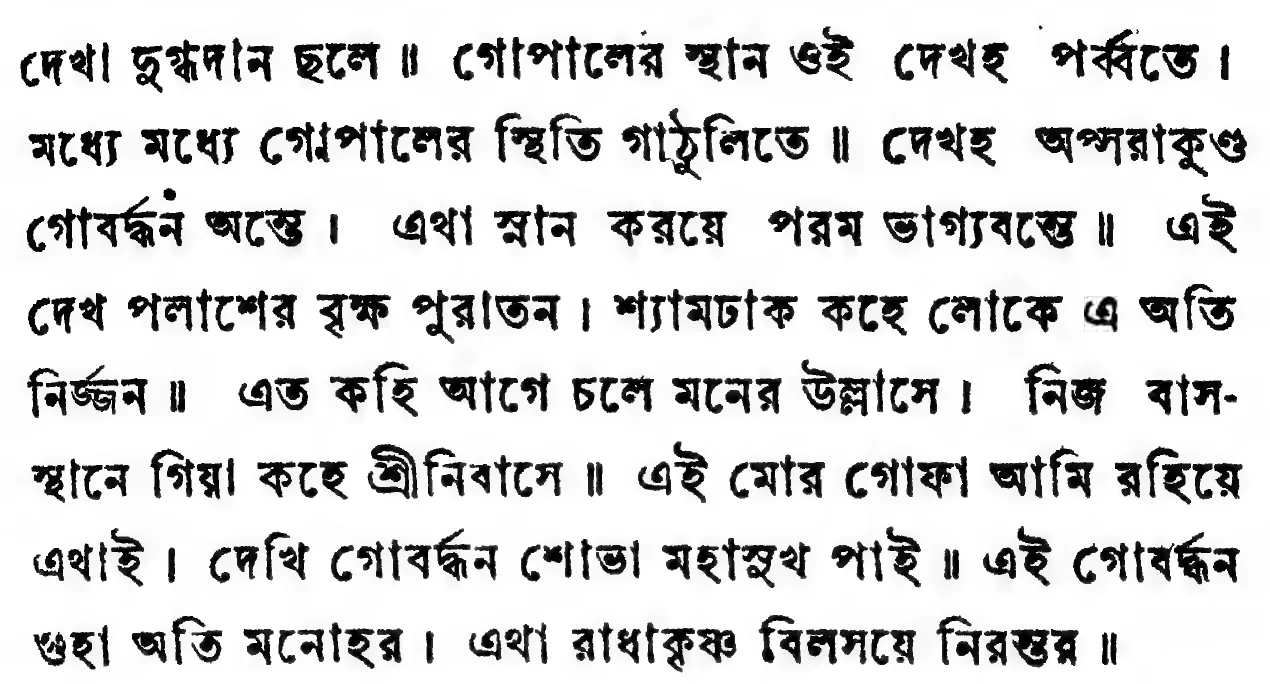
dekhaha apsarā-kuṇḍa govardhana ante / ethā snāna karaye parama bhāgyavante
ei dekha palāśera vṛkṣa purātana / śyāma-ḍhāka kahe loke e ati nirjana
"'See Apsara-kunda at the end of Govardhana; the most fortunate bathe here. And see this ancient palasha tree. People call this place Shyama-dhaka; it is very secluded.'" (Bhakti-ratnakara, Fifth Wave, p. 203, 1912 Bengali edition; English rendering ours)
Then he brought them to his home:
eta kahi āge cale manera ullāse / nija vāsa-sthāne giyā kahe śrīnivāse
ei mora gophā āmi rahiye ethāi / dekhi govardhana śobhā mahā-sukha pāi
ei govardhana guhā ati manohara / ethā rādhā-kṛṣṇa vilasaye nirantara
"Saying this, he went on with joy in his heart. Reaching his own dwelling place, he said to Shrinivasa, 'This is my cave; I live right here. Seeing the beauty of Govardhana, I feel great happiness. This cave of Govardhana is most charming; here Radha and Krishna enjoy Their pastimes without end.'" (Bhakti-ratnakara, Fifth Wave, p. 203, 1912 Bengali edition; English rendering ours)
These lines are the only place in the old books where we hear Raghava speak of his own home. He calls it a gopha, a cave. He says that he lives right there, that the beauty of Govardhana fills him with happiness, and that Radha and Krishna enjoy Their pastimes there without end. He says nothing about his comfort or hardship, and the book does not describe the cave itself. Narahari at once adds a verse of Raghunatha Dasa Goswami, with whom Raghava stayed from time to time at Radha-kunda:
yeṣāṁ kvāpi ca mādhavo viharate snigdhair vayasyotkarais
tad-dhātu-drava-puñja-citritataraiś taiś taiḥ svayaṁ citritaḥ
khelābhiḥ kila pālanair api gavāṁ kutrāpi narmotsavaiḥ
śrī-rādhā-sahito guhāsu ramate tān śaila-varyān bhaje
"I worship those best of hills where Madhava sometimes plays with crowds of loving friends, who, brightly painted with the liquid minerals of those hills, paint Him too; where He plays games and herds the cows; and where, in the caves, He enjoys joking pastimes with Sri Radha." (Vraja-vilasa-stava 65, as quoted in the Bhakti-ratnakara, p. 203; English rendering ours)
The verse speaks of all the caves of Govardhana, and the Bhakti-ratnakara applies it to Raghava's cave. For him, a cave on this hill was a place of nearness to Radha and Krishna. This helps us understand Narahari's earlier picture of him: "Grey with the dust of Vraja, he has no wish to eat. Who can understand his intense renunciation?" (p. 150; see A Brahmana of the South at Govardhana).
Where Mahaprabhu Danced Before Harideva #
From the cave they went on, past the footprint of Airavata, Indra's elephant, where "Indra spoke of Krishna's wonderful mercy," to Dana-ghati (p. 203). Here, Raghava said, Krishna, the king of rasikas (those who relish loving exchanges), demands the toll of milk products. Then he told what Sri Chaitanya Mahaprabhu had done at this spot. The Lord gently asked the brahmana travelling with Him about the toll pastime and smiled softly with joy as He heard it. Then, in ecstasy, He took darshan of the Deity of Harideva and danced so wonderfully that the people wept and said, "This is an incarnation of Harideva." Raghava ended: "O Shrinivasa, who knows how to describe how the Lord revealed Himself at Govardhana?" (Bhakti-ratnakara, Fifth Wave, p. 203).
Krishnadasa Kaviraja Goswami records the same dance: "Mad with ecstatic love, Śrī Caitanya Mahāprabhu began to dance before the Harideva Deity. Hearing of the Lord’s wonderful activities, all the people came to see Him" (Sri Chaitanya-charitamrita Madhya 18.19). Like all his stories of Mahaprabhu, Raghava tells this one in the third person and never says that he saw it. Of one such story in Mathura he said plainly, "I heard this from the mouths of the elders" (Bhakti-ratnakara, Fifth Wave, p. 165). He added that Sri Rupa had described Krishna's toll pastime in his Dana-keli-kaumudi (p. 204), and after Brahma-kunda, Manasi-ganga and darshan of Harideva, he "spoke joyfully of the glory of Govardhana" (pp. 204-205).
Two Stones of Govardhana #
Further on, Raghava told a secret pastime of Nityananda Prabhu. Near Govardhana, he said, lived a wealthy brahmana who was always overwhelmed with love for Balarama and was sure that Balarama would appear to him. Then Nityananda, who is Balarama Himself, came to Govardhana on His pilgrimage and stayed "right here" for the sake of His devotee. He accepted the brahmana's milk, butter and curd and appeared to him in a dream as Baladeva. When the brahmana wished to offer Him ornaments, Nityananda asked instead for a stone of Govardhana set in gold, and He wore it at His neck. This pastime, Raghava said, is "rare even for Brahma and the gods," and Nityananda forbade the brahmana to reveal it. Raghava added, "By seeing this place one obtains rare love" (Bhakti-ratnakara, Fifth Wave, pp. 206-208).
Next he showed Cakra-tirtha, "very famous at Govardhana" (p. 208), where Sanatana Goswami had lived with great joy. "See his hut inside the forest," Raghava said. Every day Sanatana went round Govardhana, a walk of twelve kroshas (a krosha is an old Indian measure of distance): "who else has such strength?" When Sanatana grew old, Gopinatha, Krishna Himself, came to him as a cowherd boy and gave him a stone of Govardhana marked with His own footprint, so that Sanatana could go round the stone instead. Then the boy vanished. Seeing Sanatana anxious, Krishna, unseen and full of affection, told him who He was, and Sanatana wept until he took heart (pp. 208-209).
Of the stone from Govardhana that Mahaprabhu kept with Him, Krishnadasa Kaviraja writes that "Śrī Caitanya Mahāprabhu would say, “This stone is directly the body of Lord Kṛṣṇa.”" (Sri Chaitanya-charitamrita Antya 6.292). In Raghava's two stories it is the Lord who asks for such a stone as His ornament, and the Lord who gives one to an aged devotee. Then the Pandita took Shrinivasa back to Radha-kunda (p. 210), where the stories of Rupa, Sanatana and Raghunatha and a whole night of talk about Krishna followed, as told in At Radha-kunda With Raghunatha Dasa Goswami.
Gathuli, Where Gopala Came Down #
After that night, "having gone round in this way by way of Govardhana," they went joyfully to Gathuli (Bhakti-ratnakara, Fifth Wave, p. 212). The beauty of the Gopala Deity took away their composure, and Vitthalanatha, the son of Vallabha Bhatta, showed them more love than words can tell. Raghava then told Gopala's history. In the mood of a devotee Mahaprabhu would not set foot on Govardhana, so Gopala came to Gathuli "on a pretext" to meet Him. In those days two Bengali disciples of Madhavendra Puri served Gopala; after them, "Sri Dasa Goswami and others" put Vitthaleshvara in charge of His service (pp. 213-214). Srila Prabhupada quotes these lines in his purport to Sri Chaitanya-charitamrita Madhya 18.47, and the full account is in At Radha-kunda With Raghunatha Dasa Goswami. The Chaitanya-charitamrita shows the same humility from Mahaprabhu's side:
‘govardhana-upare āmi kabhu nā caḍiba
gopāla-rāyera daraśana kemane pāiba?’
"Śrī Caitanya Mahāprabhu thought, “Since I shall not at any time climb Govardhana Hill, how shall I be able to see Gopāla Rāya?”" (Sri Chaitanya-charitamrita Madhya 18.23)
Gopala Himself answered that humble wish, as Raghava told at Gathuli. From Gathuli Raghava led the two toward the western forests, as told in Through the Forests of Vraja.
Raghava's Cave Today #
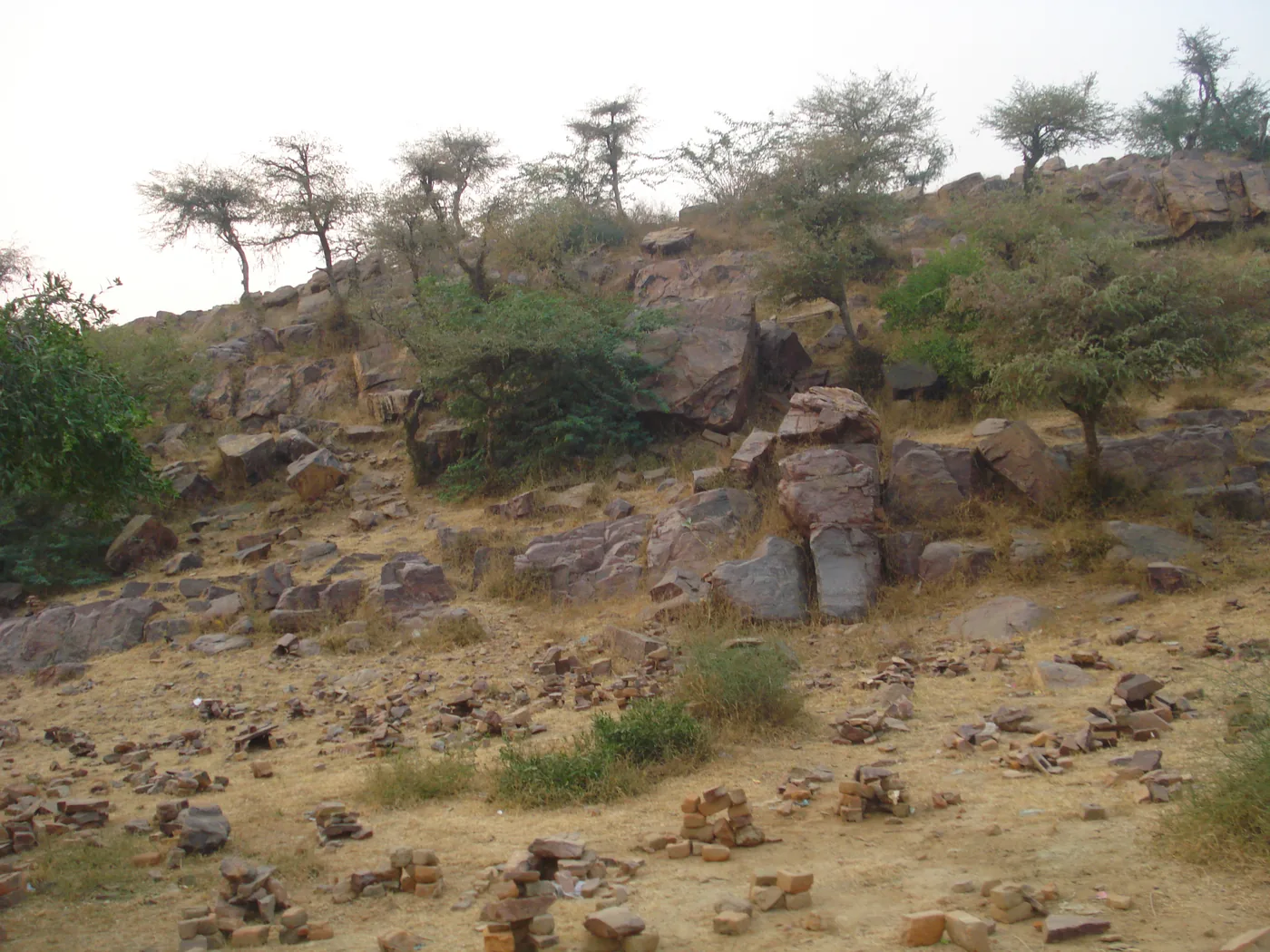
The Bhakti-ratnakara says only that Raghava's cave lay beyond Apsara-kunda, "at the end of Govardhana," and the old palasha tree of Shyama-dhaka (p. 203). A twentieth-century Gaudiya reference work, the Gaudiya Vaishnava Abhidhana of Haridasa Dasa, describes Puchari, that is Punchari, as a place at the edge of Govardhana, a mile and a half south of Govinda-kunda. North of the village, it says, are Apsara-kunda and Navala-kunda; north of the kunda is Sri Raghava Pandita's cave, and in front of the cave is the mark of Sri Krishna's crown (Gaudiya Vaishnava Abhidhana, vol. 4, p. 1908). The 1955 edition of his book calls him a "resident of the Krishna-lila place called 'Puchri' at the foot of Sri Govardhana Hill" (see Campakalata and the Krishna-bhakti-ratna-prakasha).
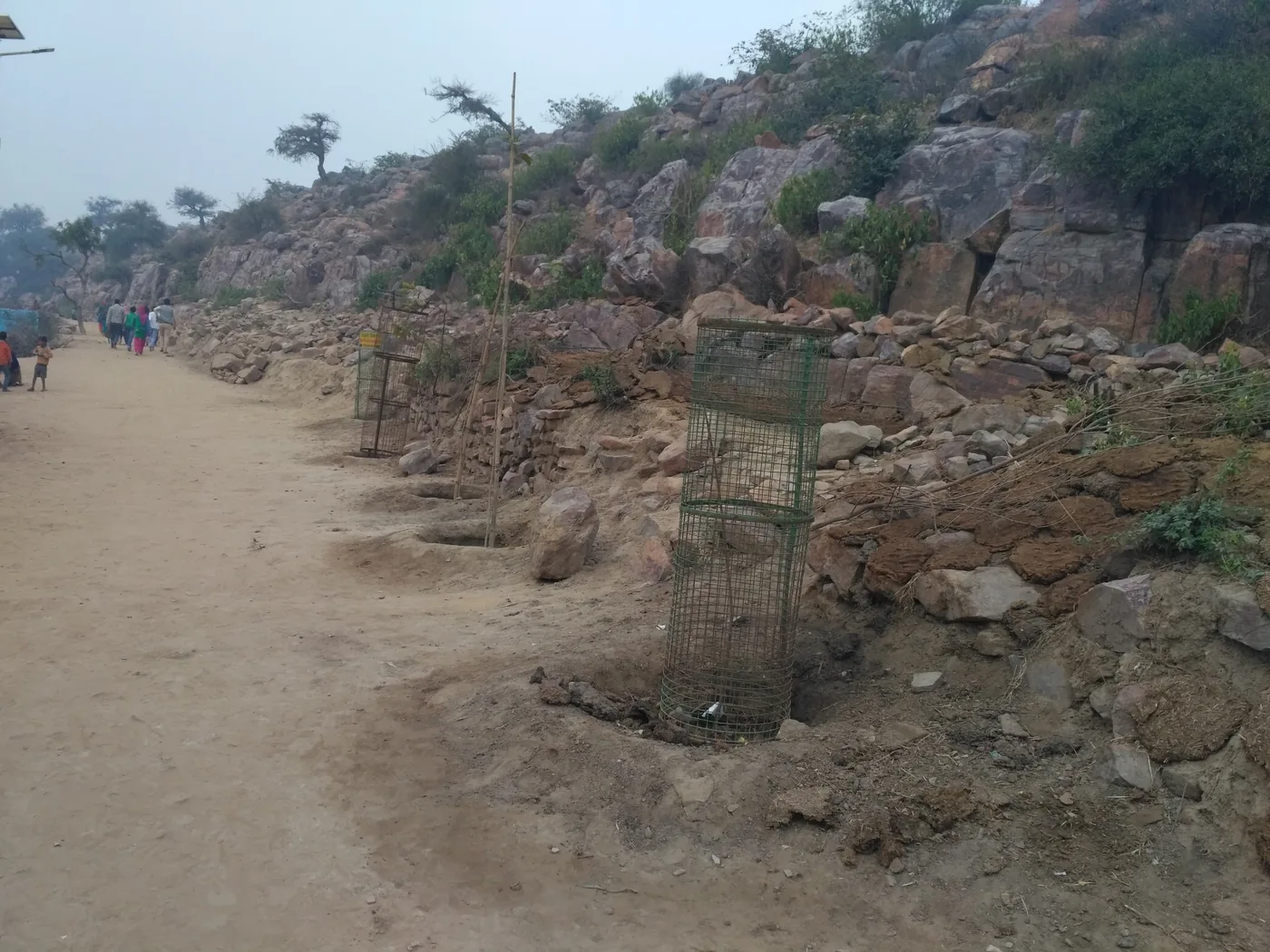
Modern guidebooks place the cave close to Apsara-kunda, near Sutala-kunda and a Sri Nathji temple at Punchari that is less than a hundred years old, and say that its mouth is now sealed. Some call it the "Mani-kandali cave," a name found in no old source, and say that a later devotee, Ramakrishna Dasa, known as Pandita Baba, did bhajana there. These are traditions of the place. Several of the same guides describe Raghava as a close associate of Mahaprabhu; that is a confusion with Raghava Pandita of Panihati, a different devotee. Pilgrims on the Govardhana parikrama pass Punchari, and the guides direct them from Apsara-kunda along a short path toward the hill. There one can offer obeisances and remember what Raghava told Shrinivasa at this spot.
Why a Devotee Lives Where Krishna Plays #
Why would a brahmana "expert in all the scriptures" (p. 150) make his home in a cave at the edge of Govardhana? One answer is in the gopis' words from the Srimad-Bhagavatam, which Mahaprabhu Himself recited as He danced on seeing the hill (Sri Chaitanya-charitamrita Madhya 18.33):
hantāyam adrir abalā hari-dāsa-varyo
yad rāma-kṛṣṇa-caraṇa-sparaśa-pramodaḥ
mānaṁ tanoti saha-go-gaṇayos tayor yat
pānīya-sūyavasa-kandara-kanda-mūlaiḥ
"“ ‘Of all the devotees, this Govardhana Hill is the best! O my friends, this hill supplies Kṛṣṇa and Balarāma, as well as Their calves, cows and cowherd friends, with all kinds of necessities — water for drinking, very soft grass, caves, fruits, flowers and vegetables. In this way the hill offers respect to the Lord. Being touched by the lotus feet of Kṛṣṇa and Balarāma, Govardhana Hill appears very jubilant.’ ”" (Sri Chaitanya-charitamrita Madhya 18.34)
The hill serves Krishna and His friends with everything they need, even caves, and one who lives in such a cave lives in the middle of Krishna's play. Raghava's life there had nothing to do with comfort or gain. Srila Prabhupada warns: "However, if one goes to Mathurā-maṇḍala-bhūmi for sense gratification or to make a livelihood, he commits an offense and is condemned" (Sri Chaitanya-charitamrita Madhya 22.132, purport). Raghava's own words tell us what kept him there: "Seeing the beauty of Govardhana, I feel great happiness." And what he saw, he gladly shared, as he shared it with Shrinivasa and Narottama. We may not be able to live at Govardhana, but we can learn from him how to see it: not as rocks and ponds, but as the place where Radha and Krishna enjoy Their pastimes without end.
