Srila Raghava Pandita Goswami of Govardhana is remembered above all as the saint who guided Shrinivasa Acharya and Narottama Dasa Thakura through the holy land of Vraja. (He is a different person from Raghava Pandita of Panihati, who had the same name.) Their journey fills the Fifth Wave of the Bhakti-ratnakara, the great Bengali history written by Narahari Chakravarti Thakura. At almost every holy place Narahari lets Raghava speak, and most of his words begin with a loving call: "O Shrinivasa."
The book gives no date for the journey and does not say how long it lasted, but it tells how it began: with a meeting at Radha-kunda, a choice made by Srila Jiva Goswami, and a few days in Mathura.
The First Meeting at Radha-kunda #
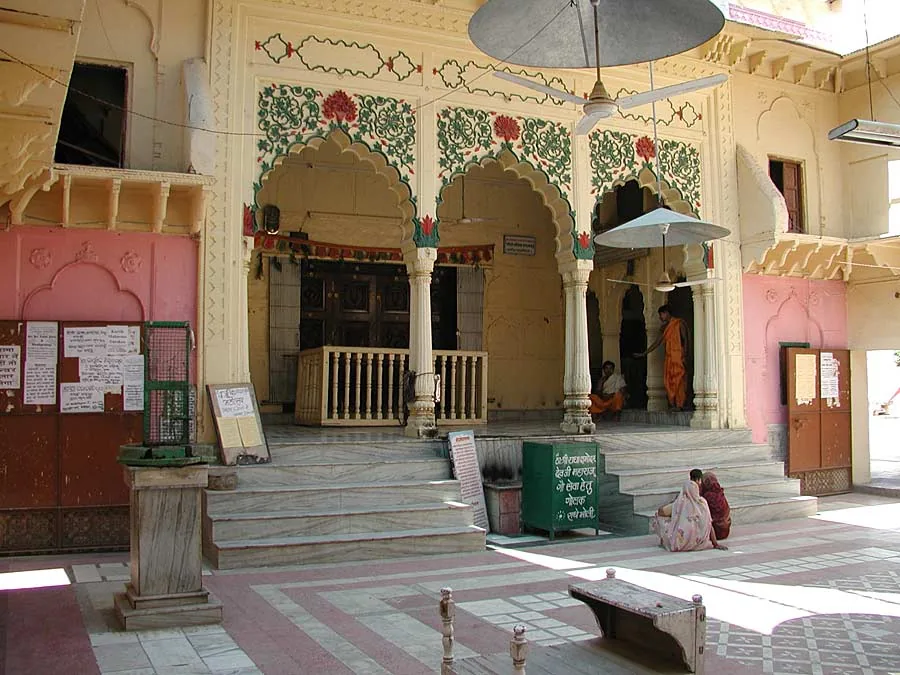
Raghava first appears in the Bhakti-ratnakara a little before the tour. Shrinivasa had just received initiation from Gopala Bhatta Goswami and had been placed in Jiva Goswami's care (see Training Under Jiva and Gopala Bhatta Goswami). The next day Jiva sent him to Raghunatha Dasa Goswami at Radha-kunda, who showed him endless kindness (Bhakti-ratnakara, Fourth Wave, p. 145). Raghava was there too, with Krishnadasa Kaviraja Goswami:
śrī-rāghava kṛṣṇadāsa-kavirāja ādi / śrīnivāse kaila sabe kṛpāra avadhi
tina dina rahi rādhā-kuṇḍa govardhane / sabā' anumati laiyā āilā vṛndāvane
"Sri Raghava, Krishnadasa Kaviraja and the others all showed Shrinivasa the greatest mercy. After staying three days at Radha-kunda and Govardhana, he took everyone's leave and came back to Vrindavana." (Bhakti-ratnakara, Fourth Wave, p. 145, 1912 Bengali edition; English rendering ours)
So Raghava first met Shrinivasa in the circle of Raghunatha Dasa Goswami, a circle very close to his heart (see At Radha-kunda With Raghunatha Dasa Goswami). Narottama, the other young devotee, was the disciple of Lokanatha Goswami (see Discipleship Under Lokanatha Gosvami); when Raghava first met him, the book does not say. Years later these two young men would carry the Goswamis' books to Bengal (Carrying the Scriptures to Bengal).
Jiva Goswami Chooses a Guide #
Narahari says that Jiva Goswami's love for Shrinivasa and Narottama cannot be told in words (Bhakti-ratnakara, Fifth Wave, p. 149). Jiva was then leading the Vaishnavas of Vrindavana. Then came the day the journey began:
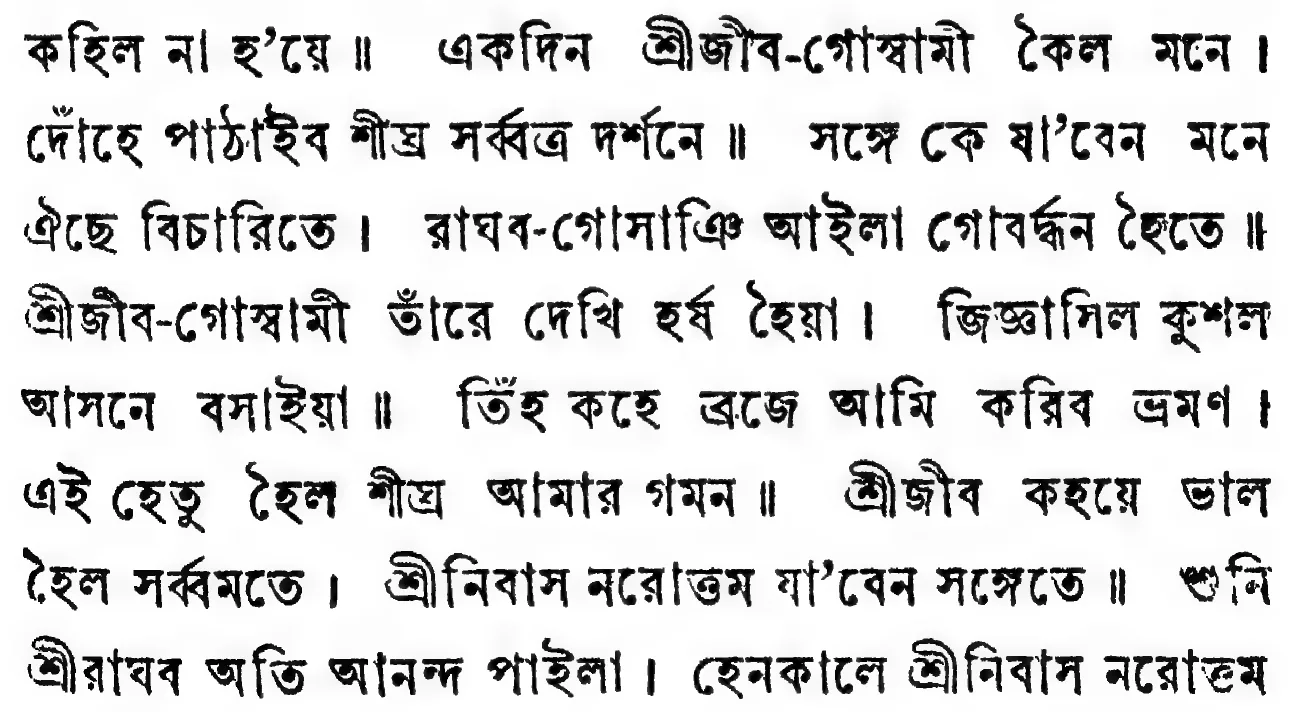
eka-dina śrī-jīva-gosvāmī kaila mane / doṅhe pāṭhāiba śīghra sarvatra darśane
saṅge ke yā'bena mane aiche vicārite / rāghava-gosāñi āilā govardhana haite
śrī-jīva-gosvāmī tāṅre dekhi harṣa haiyā / jijñāsila kuśala āsane vasāiyā
tiṅha kahe vraje āmi kariba bhramaṇa / ei hetu haila śīghra āmāra gamana
śrī-jīva kahaye bhāla haila sarva-mate / śrīnivāsa narottama yā'bena saṅgete
"One day Sri Jiva Goswami thought, 'I will soon send these two to see all the holy places.' While he was thinking about who should go with them, Raghava Gosai came from Govardhana. Sri Jiva Goswami was delighted to see him; he gave him a seat and asked how he was. Raghava said, 'I am going to wander through Vraja; that is why I have come in haste.' Sri Jiva said, 'This is good in every way. Shrinivasa and Narottama will go with you.'" (Bhakti-ratnakara, Fifth Wave, p. 149, 1912 Bengali edition; English rendering ours)
Raghava was very happy. Just then the two young men came in and bowed down, he embraced them both, and Jiva joyfully told them about the tour of the forests (p. 149). The tour was Raghava's own plan. Jiva joined the two young men to it, and his words, "This is good in every way", show how fully he trusted this sadhu from Govardhana.
The First Night in Mathura #
The two took leave of everyone at once, and Jiva bade them farewell with deep satisfaction (Bhakti-ratnakara, Fifth Wave, pp. 149-150). Raghava did not lead them first into the forests. He took them to Mathura, the city where Lord Krishna was born.
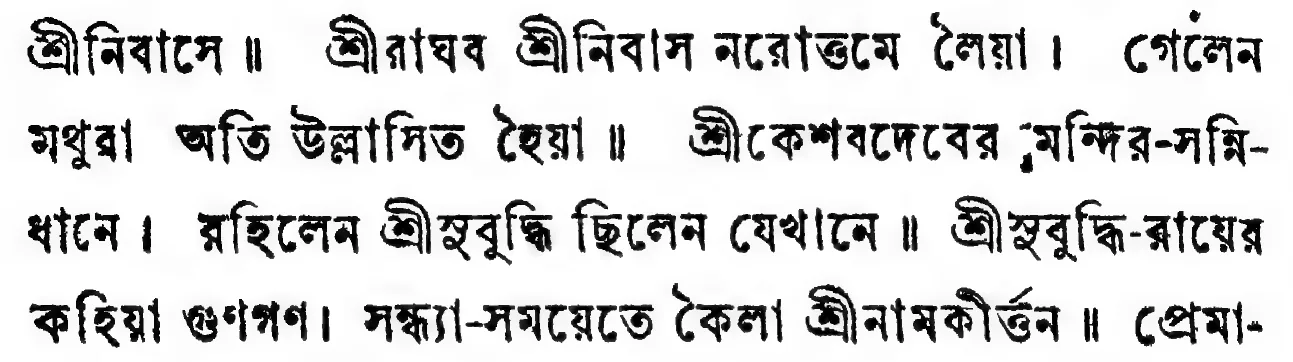
śrī-rāghava śrīnivāsa narottame laiyā / gelena mathurā ati ullāsita haiyā
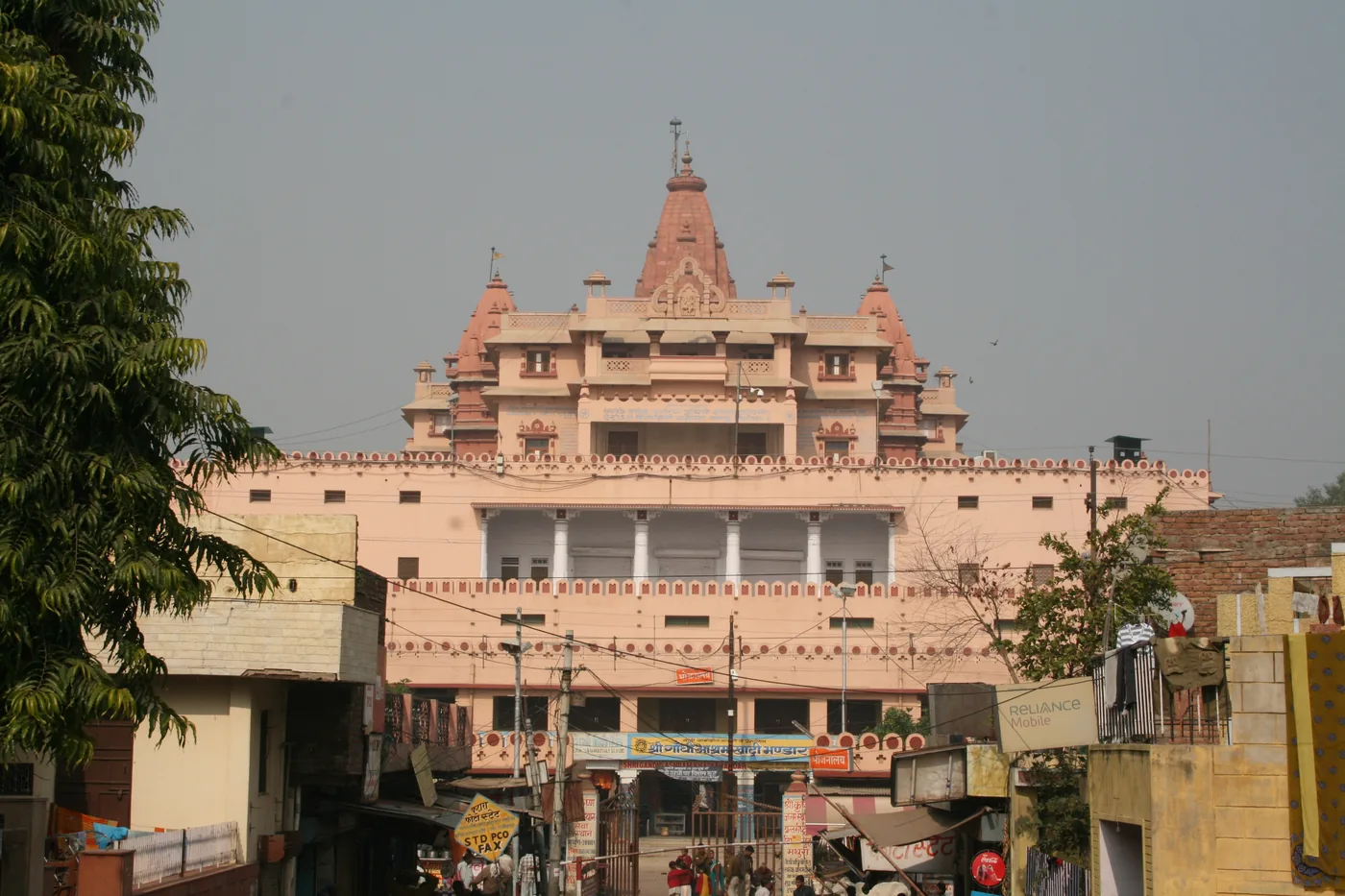
śrī-keśava-devera mandira-sannidhāne / rahilena śrī-subuddhi chilena yekhāne
śrī-subuddhi-rāyera kahiyā guṇa-gaṇa / sandhyā-samayete kailā śrī-nāma-kīrtana
"Sri Raghava took Shrinivasa and Narottama and went to Mathura in great joy. They stayed near the temple of Sri Keshavadeva, at the place where Sri Subuddhi had lived. After telling of Sri Subuddhi Raya's many good qualities, at dusk he held kirtana of the holy name." (Bhakti-ratnakara, Fifth Wave, p. 150, 1912 Bengali edition; English rendering ours)
The book says that Subuddhi Raya "had lived" at that spot (see Life of Service in Mathura and Vrindavana), and it does not say which of his qualities Raghava praised. Even so, the first lesson of the tour was about a Vaishnava, and the first evening ended in kirtana, the singing of the holy names together. Narahari now pauses to describe Raghava himself (see A Brahmana of the South at Govardhana), and then says:
śrīnivāsa narottama prema-bhakti-maya / doṅhe eka jāni sneha kare atiśaya
"Shrinivasa and Narottama were full of loving devotion. Seeing the two as one, he loved them very much." (Bhakti-ratnakara, Fifth Wave, p. 150, 1912 Bengali edition; English rendering ours)
One had received initiation from Gopala Bhatta Goswami and the other from Lokanatha Goswami, but Raghava saw the devotion they shared and loved them as one.
How the Lost Holy Places Were Found #
Later that evening, in private, Raghava told the two the history of Mathura-mandala, the holy land around Mathura (Bhakti-ratnakara, Fifth Wave, pp. 150-151). King Vajranabha, he said, had once marked the places of Krishna's pastimes with villages, Deities and kundas. In time they became almost hidden. Then Sri Chaitanya Mahaprabhu, whom Raghava calls "the son of the king of Vraja", came to Mathura and revealed everything through Rupa Goswami and Sanatana Goswami.
yadyapi se saba sthāna vedya se doṅhāra / tathāpi karilā śāstra-rīta aṅgīkāra
nānā śāstra pramāṇa kariyā saṅkalana / karilena vrajete bhramaṇa dui jana
gupta-tīrtha uddhāra karila yatna kari / vyakta kaila rādhā-kṛṣṇa-rasera mādhurī
"Although all those places were known to the two of them, they still followed the way of the scriptures. Gathering evidence from many shastras, the two travelled all over Vraja. With great care they recovered the hidden holy places, and they revealed the sweetness of the rasa of Radha and Krishna." (Bhakti-ratnakara, Fifth Wave, p. 151, 1912 Bengali edition; English rendering ours)
Rupa and Sanatana knew the places already, yet they proved each one from the shastras. Sacred knowledge is kept in the same way, as Lord Krishna tells Arjuna:
evaṁ paramparā-prāptam
imaṁ rājarṣayo viduḥ
sa kāleneha mahatā
yogo naṣṭaḥ paran-tapa
"This supreme science was thus received through the chain of disciplic succession, and the saintly kings understood it in that way. But in course of time the succession was broken, and therefore the science as it is appears to be lost." (Bhagavad-gita 4.2)
The Gita's teaching and Vraja's holy places were both lost in time, both were restored by the Lord and His pure devotees, and both live on by being handed down. That evening Raghava was handing the story of Vraja on to two young devotees.
Then he recited Mathura's glories from the Varaha, Padma, Skanda, Brahmanda and other Puranas (pp. 151-164). Srila Prabhupada's translation of Srila Rupa Goswami's Nectar of Instruction gives the root of that glory: "The holy place known as Mathurā is spiritually superior to Vaikuṇṭha, the transcendental world, because the Lord appeared there." (Nectar of Instruction, verse 9) Telling these glories, Raghava could not stay steady for joy (p. 165).
Here Gauracandra Danced #
Next morning Raghava took them first to the house of the Sanodiya brahmana, the disciple of Madhavendra Puri in whose home Mahaprabhu had taken His meal (Bhakti-ratnakara, Fifth Wave, p. 165; see also Chaitanya-charitamrita Madhya 17.167). There he spoke of Gauracandra, "the golden moon", as Mahaprabhu is lovingly called:
śrī-rāghava-paṇḍita kahaye śrīnivāse / ethā gauracandra nṛtya kailā premāveśe
āila asaṅkhya loka prabhura darśane / sabe mahā-matta hailā śrī-nāma-kīrtane
…
ethāte adbhuta gauracandrera vilāsa / eta kahi śrī-rāghava chāḍe dīrgha-śvāsa
"Sri Raghava Pandita said to Shrinivasa, 'Here Gauracandra danced in ecstatic love. Countless people came to see the Lord, and all of them became wild in the kirtana of the holy name. ... Here took place Gauracandra's wonderful pastime.' Saying this, Sri Raghava heaved a long sigh." (Bhakti-ratnakara, Fifth Wave, p. 165, 1912 Bengali edition; English rendering ours)
Hearing this, Shrinivasa and Narottama wept and lamented until they were grey with dust in the brahmana's courtyard (p. 165). Raghava told the Lord's dance as a pastime of that place, never as something he had seen himself.
I Heard This From the Elders #
Then Raghava told a story of Advaita Acharya, set at a place called Ardhacandra, and first he named his source:
śrīnivāsa prati kahe rāghava-paṇḍita / śuninu prācīna-mukhe e kathā vidita
"Raghava Pandita said to Shrinivasa, 'I heard this from the mouths of the elders; it is a well-known account.'" (Bhakti-ratnakara, Fifth Wave, p. 165, 1912 Bengali edition; English rendering ours)
A brahmana from another region, proud of his learning, used to insult the Vaishnavas of Mathura, he said, and one day he did so before Advaita, who was staying at this very spot on pilgrimage. Advaita blazed up in anger and showed a four-armed form holding the cakra; the man shook and begged for mercy. Then Advaita's anger melted into compassion. He told him: always think of yourself as an offender; give up everything and do nama-sankirtana, the chanting of the holy names together; satisfy the Vaishnavas even at the cost of your life; wait at their door; practise bhakti; and keep secret the form you have seen. The man went weeping from house to house of the Mathura Vaishnavas (pp. 165-167).
This is how an offence against a Vaishnava (Vaishnava-aparadha) is healed: by humility, by the holy name and by service to the Vaishnavas, exactly as Advaita taught. Then, Narahari says:
eta kahi śrīnivāsācārya kare dhari / manera ānande punaḥ kahe dhīri dhīri
"Having said this, he took Shrinivasa Acharya by the hand and, with joy in his heart, spoke again, slowly and gently." (Bhakti-ratnakara, Fifth Wave, p. 167, 1912 Bengali edition; English rendering ours)
Before the Deity of Keshava #
After showing them the house of Vasudeva and Devaki, where Krishna was born, Raghava brought them before the Deity of Keshava (Bhakti-ratnakara, Fifth Wave, p. 168). "O Shrinivasa, take darshan of Keshava," he said. "Here Sri Chaitanya danced wonderfully." All the people, he added, were swept away in the flood of prema and said that He was Keshava Himself.
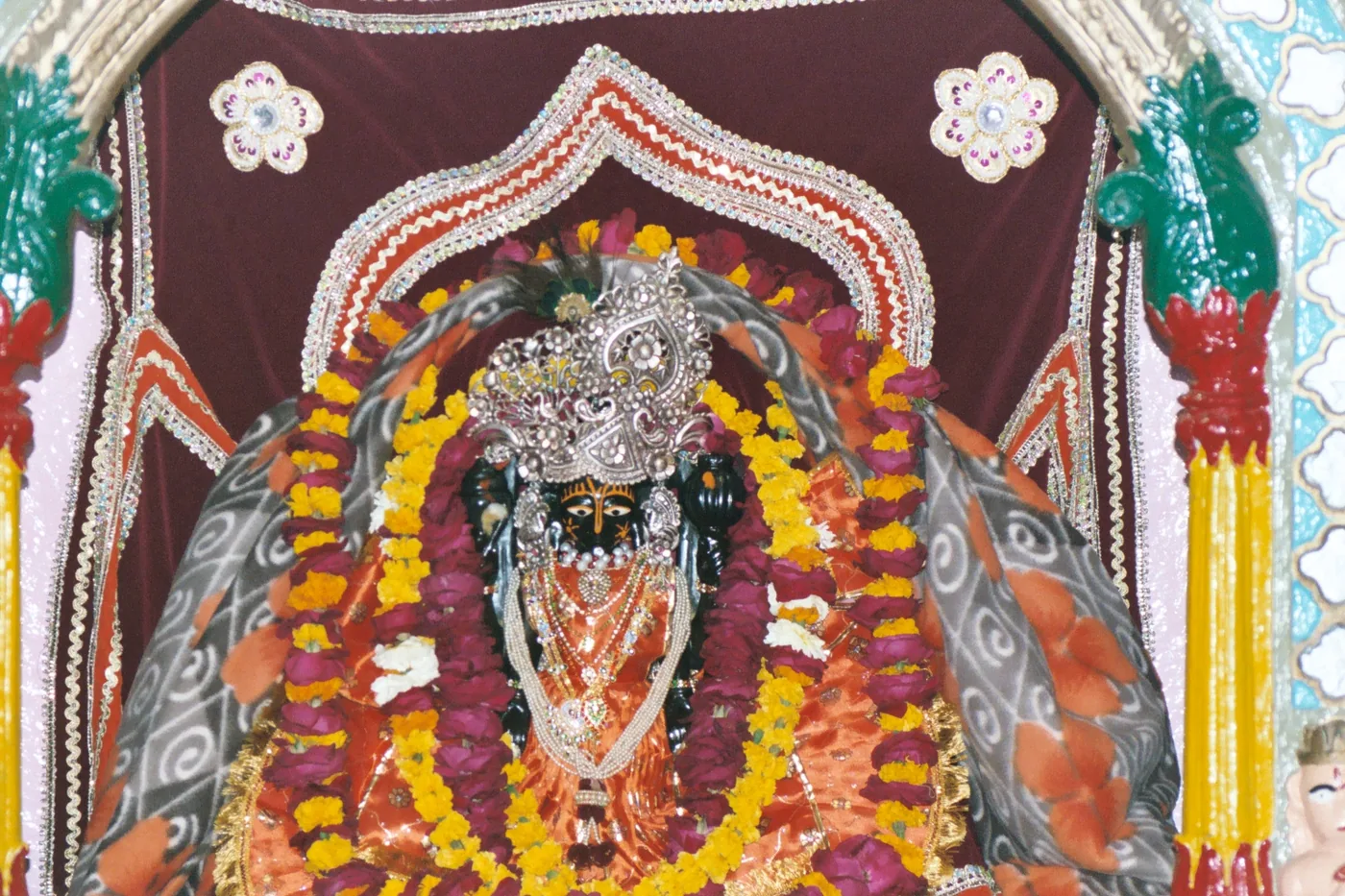
At every place of Krishna's pastimes Raghava also told what Mahaprabhu had done there, so the two came to know Vraja in the light of Mahaprabhu's visit.
Vishranti, the Ghatas and His Tears #
At Vishranti-tirtha, where Krishna rested after killing Kamsa, Raghava described the crowds who ran wild with joy when "the crest-jewel of sannyasis" came to Mathura, unable to take their eyes off Gauracandra (Bhakti-ratnakara, Fifth Wave, p. 170). At the twenty-four ghatas, the bathing steps along the Yamuna, he said that Mahaprabhu had bathed at every one (pp. 178-179).
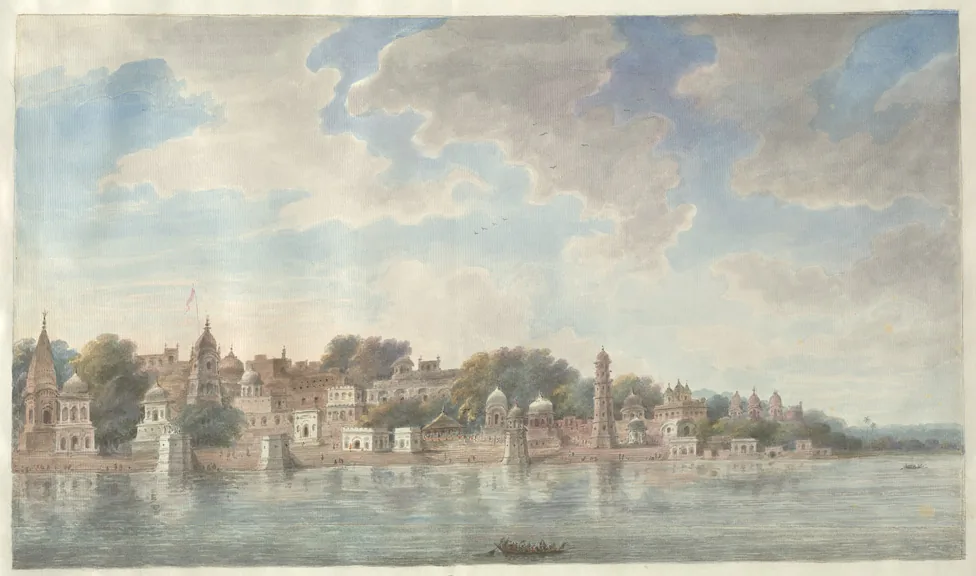
At another place he told how the brahmanas of Mathura said to one another that this sannyasi was surely Krishna, hiding Himself in a golden form (pp. 183-184). Then his own heart gave way:
aiche kata kahite śrī-rāghava-paṇḍita / hailā adhairya cinti caitanya-carita
śrīnivāsa narottama dhairya nāhi bāndhe / hā hā prabhu baliyā bhūmite paḍi kānde
śrī-rāghava-paṇḍitera caraṇe dhariyā / doṅhe kata kahe śuni vidaraye hiyā
śrī-paṇḍita sthira haiyā doṅhe sthira kaila / mathurāra āra ye tīrtha dekhāila
"While saying such things, Sri Raghava Pandita lost all composure as he thought of Sri Chaitanya's life. Shrinivasa and Narottama could not hold themselves; crying 'Ha ha Prabhu!', they fell to the ground and wept. Clasping Sri Raghava Pandita's feet, the two said things that break the heart to hear. Sri Pandita became steady, steadied the two, and showed them the other holy places of Mathura." (Bhakti-ratnakara, Fifth Wave, p. 184, 1912 Bengali edition; English rendering ours)
His tears were part of the lesson. Srila Prabhupada writes: "The purpose of pilgrimages is to remember the Lord constantly, and therefore the Lord is known as tīrtha-kīrti." (Srimad-Bhagavatam 3.1.45, purport)
Into the Twelve Forests #
Before leaving Mathura, Raghava spoke "in very sweet words" of the month Gopala spent there, when Rupa Goswami came with his companions and was overwhelmed to see Him (Bhakti-ratnakara, Fifth Wave, p. 184; the Chaitanya-charitamrita also tells of that month in Madhya 18.47). Beside an old tree he told how Nityananda Prabhu had stayed there on pilgrimage and wandered about unrecognised, overjoyed to see His former birthplace (p. 184). Then he turned to the forests:
rāghava-paṇḍita ati manera ullāse / śrīnivāsa prati kichu kahe mṛdu bhāṣe
"Raghava Pandita, full of joy, spoke a few words to Shrinivasa in a soft voice." (Bhakti-ratnakara, Fifth Wave, p. 184, 1912 Bengali edition; English rendering ours)
Mathura with its twelve forests, he said, is "sacred, removes sin, is auspicious, of unique sweetness", and he explained the forests from the Padma and Skanda Puranas (pp. 184-186). On the parikrama path, the route pilgrims walk around the holy places, it came to his mind to show them Shashthikaratavi. He left the usual road and told Shrinivasa: "Formerly this was called Shashthikaratavi; now people call it Shashthighara" (pp. 187-188). All through the tour he gave both names, the old and the new.
At Bahulavana he told, full of joy, how hundreds of thousands of cows ran to Mahaprabhu with their tails raised and gathered round Him, and how He touched them with His hand as He had once herded them (p. 189). The Chaitanya-charitamrita says the same: "When Śrī Caitanya Mahāprabhu passed through Vṛndāvana, herds of grazing cows saw Him pass and, immediately surrounding Him, began to moo very loudly." (Sri Chaitanya-charitamrita Madhya 17.194) From there the road led on to Radha-kunda and Govardhana, and later to the forests described in Through the Forests of Vraja.
The Holy Place and the Holy Man #
Jiva Goswami did not send the two young men alone. He gave them a great Vaishnava who lived in the holy land, and the Srimad-Bhagavatam explains why that matters:
bhavad-vidhā bhāgavatās
tīrtha-bhūtāḥ svayaṁ vibho
tīrthī-kurvanti tīrthāni
svāntaḥ-sthena gadābhṛtā
"My lord, devotees like your good self are verily holy places personified. Because you carry the Personality of Godhead within your heart, you turn all places into places of pilgrimage." (Srimad-Bhagavatam 1.13.10)
Srila Prabhupada writes in the purport: "If anyone visits a holy place, he must search out the pure devotees residing in such holy places, take lessons from them, try to apply such instructions in practical life and thus gradually prepare oneself for the ultimate salvation, going back to Godhead." (Srimad-Bhagavatam 1.13.10, purport) Shrinivasa and Narottama had such a devotee beside them, holding Shrinivasa's hand, proving every place from the scriptures and weeping for Sri Chaitanya. Years later Shrinivasa still spoke of touring Vraja "with Sri Raghava" (see Last Teachings in Vrindavana and the Farewell). As Srila Prabhupada said: "The real purpose of going to holy places is to find out there the holy man and take knowledge from him. That is real going to the holy places of pilgrimage." (room conversation, Geneva, 4 June 1974)
