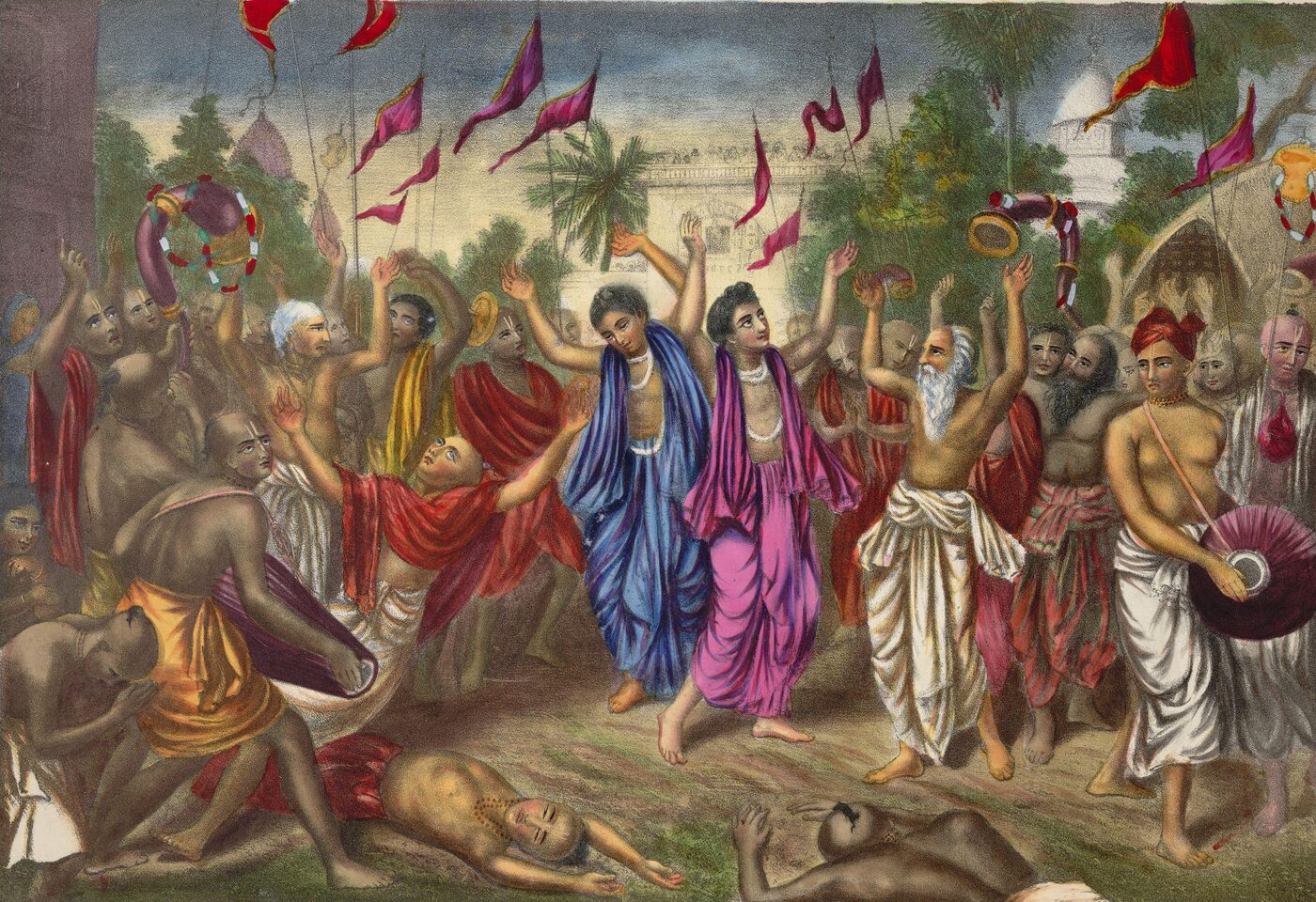
When Nimai returned to Nabadwip from Gaya, having received initiation from Ishvara Puri, the town that had known Him as its most brilliant young logician hardly recognised Him. The calm, argumentative pandit had become a man who wept at the sound of Krishna's name, who fell to the ground in the marketplace overwhelmed with emotion, and who could no longer complete an ordinary conversation without breaking into the maha-mantra. Many of His students and fellow scholars thought it was grief, or even madness. Only a small circle recognised what was really taking place. Chief among them was Nityananda Prabhu, who arrived in Nabadwip around this time. There was also Advaita Acharya, an elder Vaishnava who had for years been praying for the Lord to appear, and the devoted brahmana Srivasa Pandit.
| Detail | Description |
|---|---|
| Where it began | Srivasa Angan, the courtyard of Srivasa Pandit in Nabadwip |
| First associates | Nityananda Prabhu, Advaita Acharya, Gadadhara Pandit, Srivasa Pandit |
| The public turn | Nagara-sankirtana, congregational chanting through the town's streets |
| The opposition | Chand Kazi, the Muslim administrator of Nabadwip |
| Outcome | The prohibition withdrawn, and sankirtana permitted without restriction |
Nightly Kirtana at Srivasa Angan #
The sankirtana movement was born in the courtyard of Srivasa Pandit's house, still known today as Srivasa Angan. Each night the doors were shut, and Nimai, Nityananda, Advaita Acharya, Gadadhara Pandit, Srivasa Pandit and a small but growing circle of devotees would sing and dance before the Deity until dawn. Together they explored the ecstatic moods of devotion that Nimai's presence seemed to awaken in everyone around Him. This worship began in private, even in secret, but it could not stay hidden for long. The sound of mridanga and karatalas, and the sight of grown men weeping and dancing through the night, drew first curiosity and then hostility from the more conservative brahmana community of Nabadwip. They saw in it a dangerous break from orthodox ritual religion.
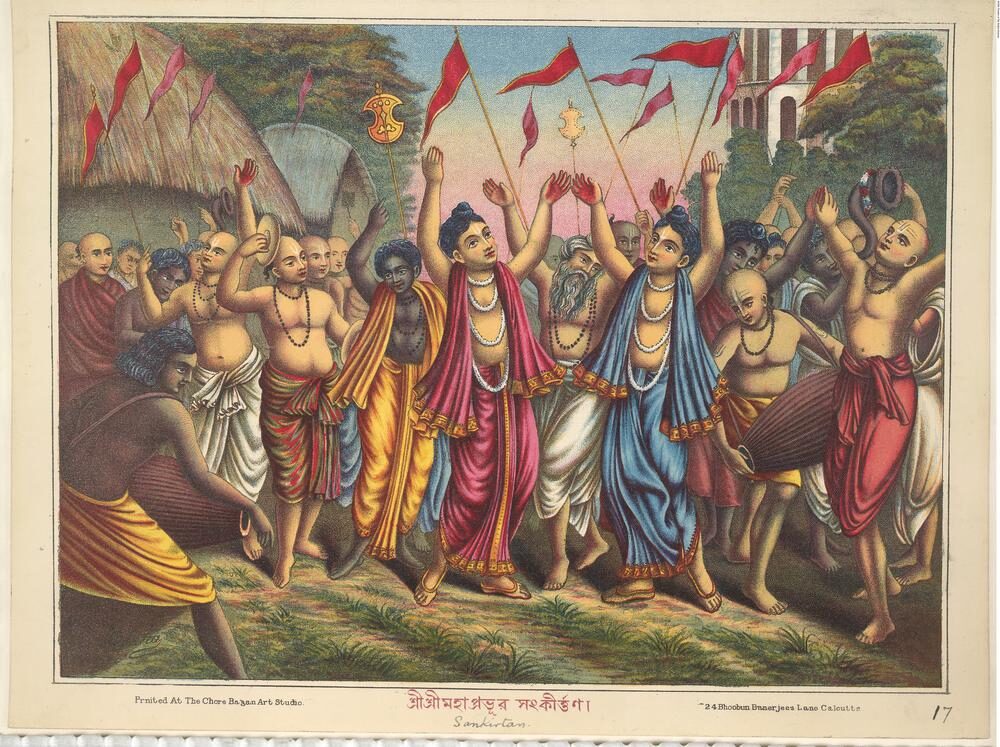
Taking the Chanting Into the Streets #
The turning point came when Nimai made a decision that changed the nature of the movement forever. Sankirtana would no longer be kept inside Srivasa's courtyard. He commanded that it be taken out into the open streets of Nabadwip, for everyone to see and join, whatever their caste, learning or social standing. He organised the assembled devotees into kirtana parties. For the first time, Nabadwip saw a full-scale nagara-sankirtana, a procession of congregational chanting moving through the town's streets and squares, with Nimai Himself dancing at its centre.
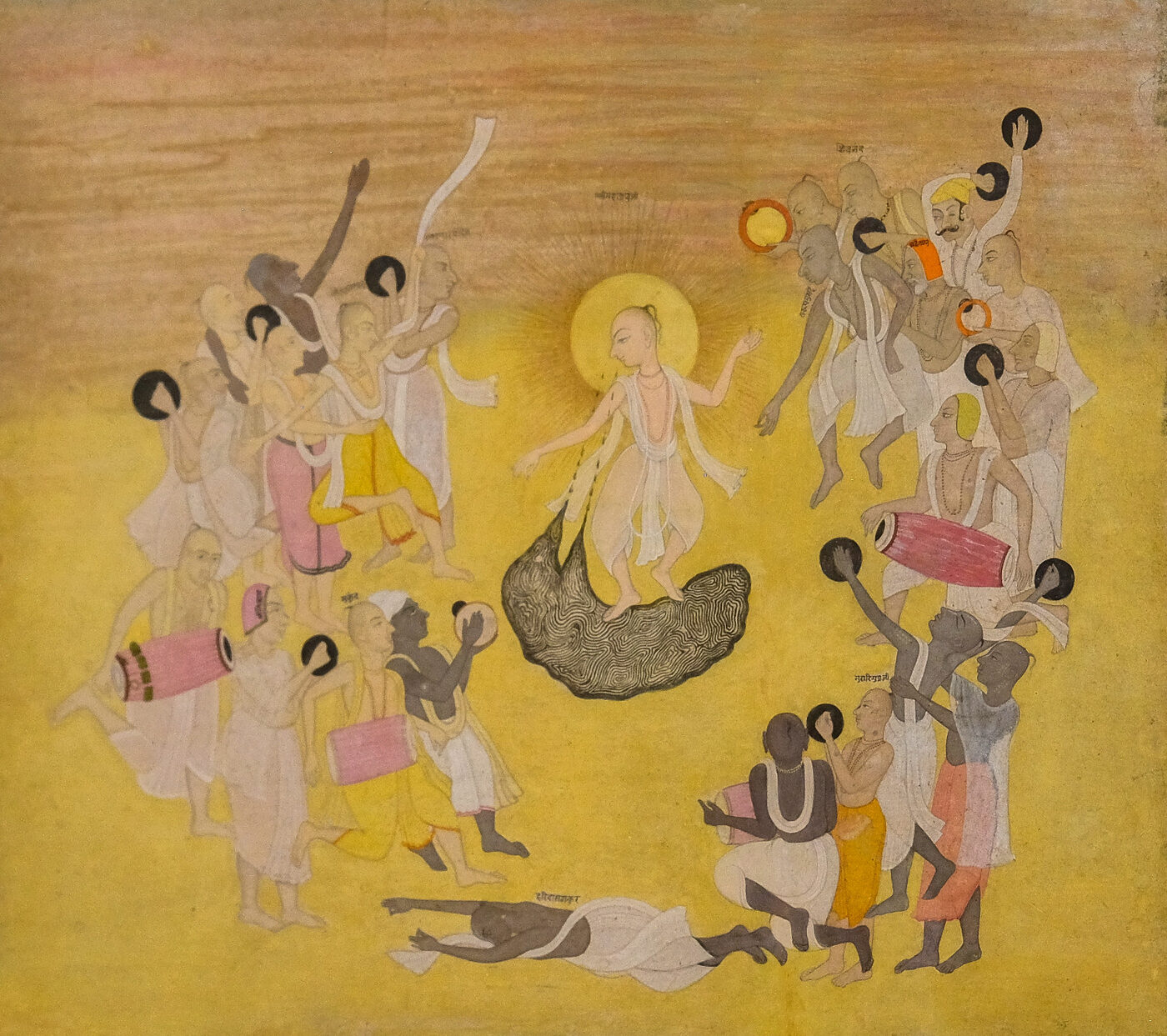
Chand Kazi Breaks the Mridanga #
This public turn angered the town's Muslim administrator, the Kazi (locally called Chand Kazi). Resentful orthodox brahmanas were pressing him, complaining that the noise of drums and the mixing of castes at these gatherings threatened public order. Under this pressure the Kazi sent men to break up one of the kirtana parties, and in the process he smashed a mridanga drum. He forbade any further sankirtana in Nabadwip and threatened punishment for anyone who disobeyed. Nimai did not retreat. Instead, He organised the single largest sankirtana procession Nabadwip had ever seen. By some accounts there were fourteen separate kirtana groups, with thousands of torches lighting the night, all moving together toward the Kazi's own residence.
The Conversation With the Kazi #
When Nimai faced the Kazi, He met not anger but clear fear. So Nimai engaged him in a calm, respectful theological conversation. It is reported that He even addressed the Kazi as a relative, because the Kazi's family and Nimai's shared an ancestral connection from earlier generations. He reasoned with him from the Kazi's own religious texts about how glorifying God through His names is universal. The Kazi was moved by the sincerity of the conversation and, tradition says, by a direct spiritual experience during the exchange. He wept, embraced Nimai, and publicly withdrew his prohibition. He permitted sankirtana to continue in Nabadwip without restriction for as long as the town should exist. Local memory holds that the Kazi's own descendants honoured this assurance for generations afterward.
Sankirtana Becomes a Public Institution #
The Kazi's change of heart removed the last major obstacle to the movement's growth. From that point, sankirtana in Nabadwip was no longer a secret practice of a small circle of devotees meeting behind closed doors. It became an open, public and established practice of congregational chanting. This was exactly the form in which Sri Chaitanya Mahaprabhu intended the chanting of the holy names to spread. It was to spread first through Bengal and Odisha in His own lifetime. Afterward, through the Six Goswamis and the unbroken line of acharyas who followed Him, it was to reach the rest of the world.