Sri Chaitanya Mahaprabhu
The Golden Avatar Who Inaugurated the Sankirtana Movement
The complete life, on one page: The main biography and every pastime page, in order, in one place
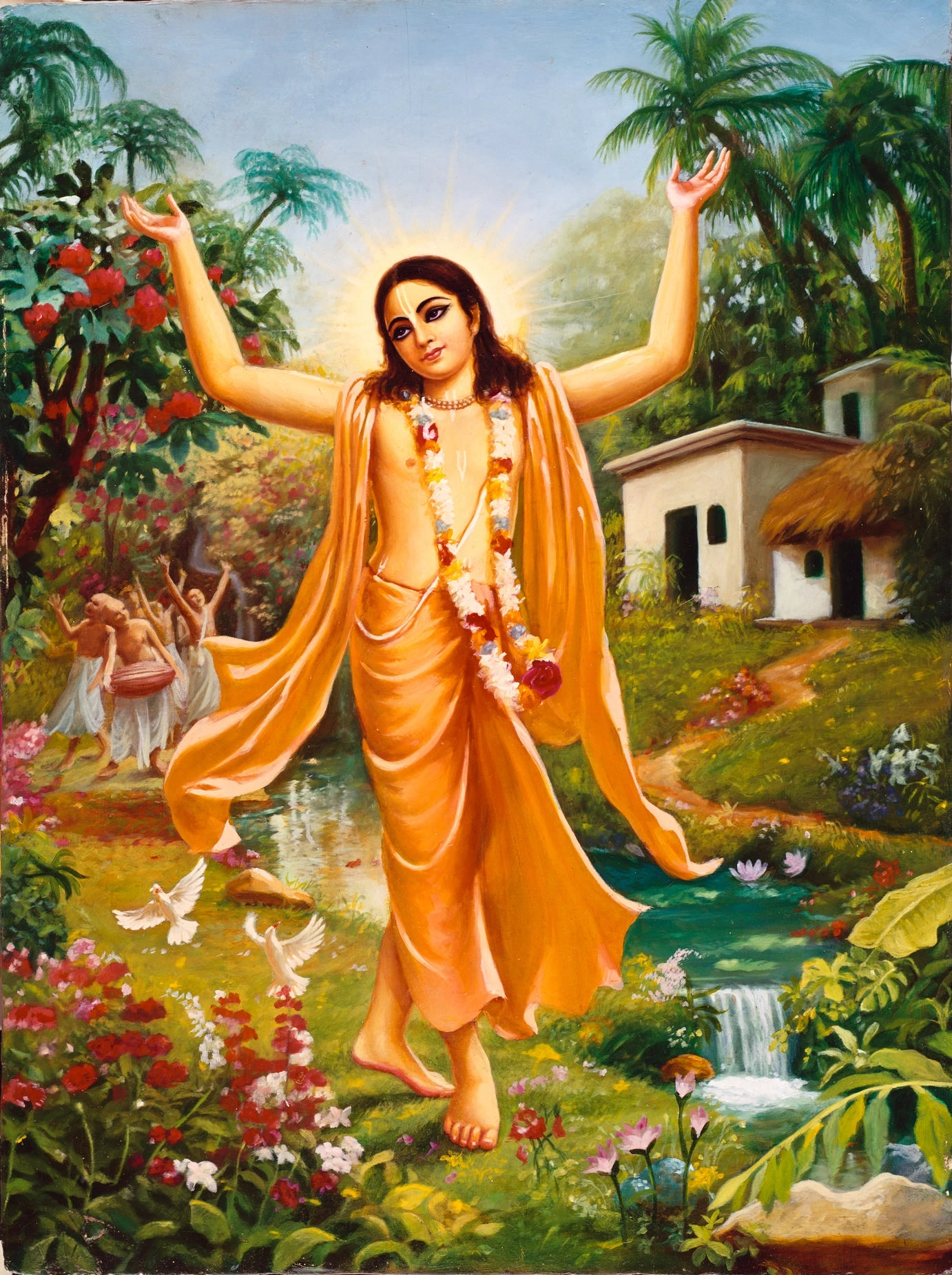
Introduction
Śrī Caitanya Mahāprabhu (1486–1534) is worshipped throughout Bengal, Odisha, and the wider Vaiṣṇava world as Kṛṣṇa Himself. He appeared in the mood and complexion of His greatest devotee, Śrīmatī Rādhārāṇī, to taste and distribute pure love of God. Historically, He is the founder of Gauḍīya Vaiṣṇavism. He also made congregational chanting of the holy names, saṅkīrtana, into a widespread spiritual movement. During His lifetime, this movement spread throughout Bengal and Odisha, and through His followers it later reached the whole world.
| Detail | Description |
|---|---|
| Appearance | 18 February 1486, the full-moon night of Phalguna |
| Birthplace | Sridhama Mayapur, Nabadwip, Nadia district, Bengal |
| Parents | Jagannatha Mishra and Sachi Devi |
| Identity | Krishna Himself, with the mood and complexion of Sri Radha (Chaitanya-charitamrita Adi 1.5; Gaura-ganoddesha-dipika 11) |
| Names | Vishvambhara, Nimai, Gaurahari, Gauranga; later Sri Krishna Chaitanya |
| Sannyasa | At the age of twenty-four, at Katwa, from Keshava Bharati |
| Disappearance | 14 June 1534, at Tota Gopinatha, Jagannatha Puri |
| Written legacy | The Siksastaka, eight verses |
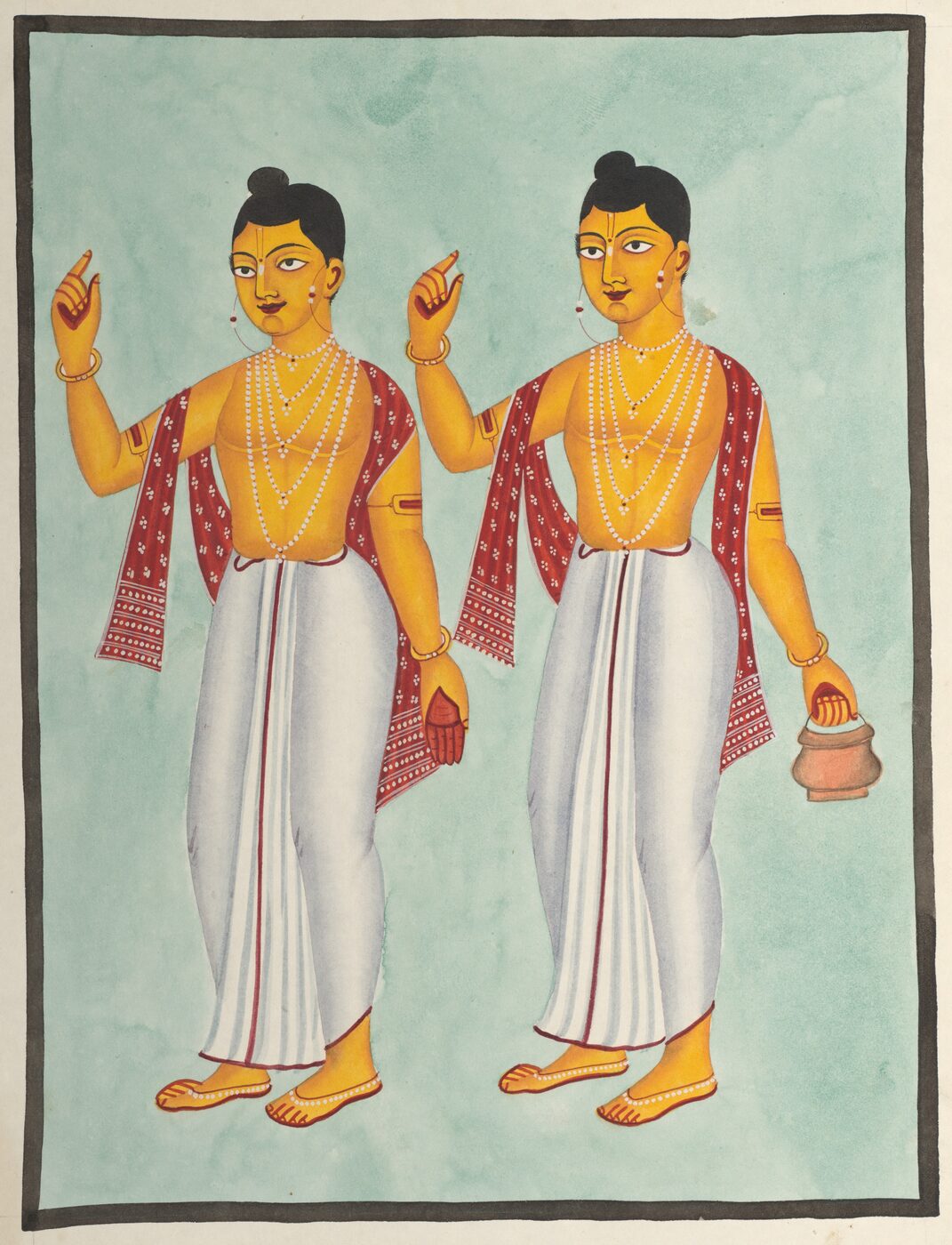
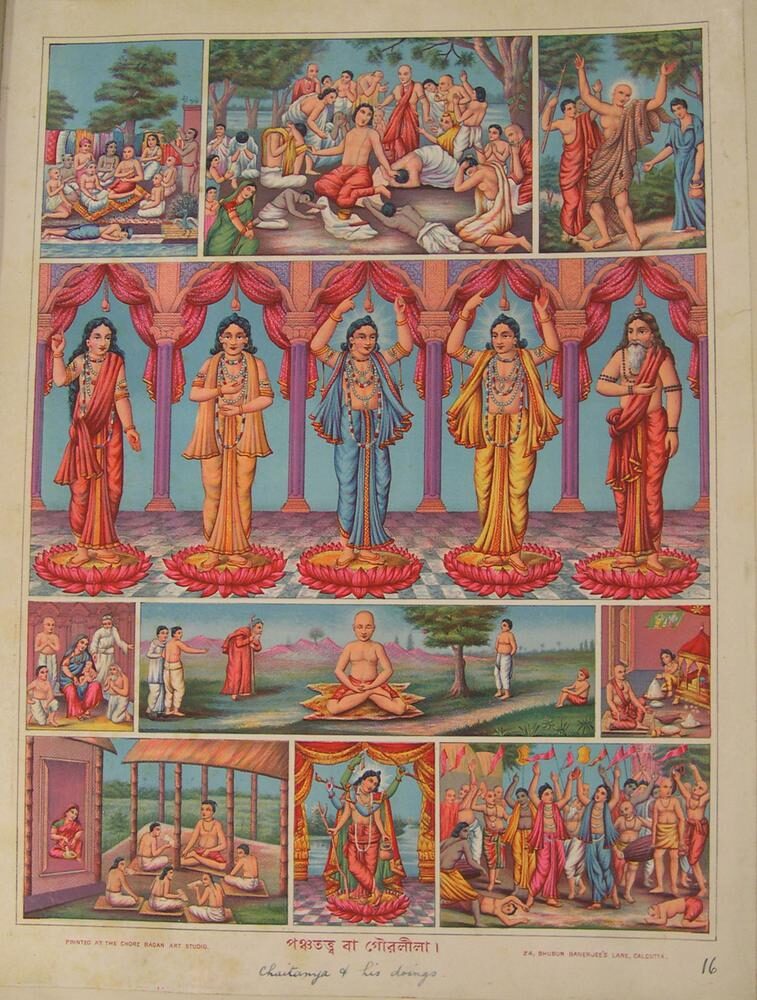
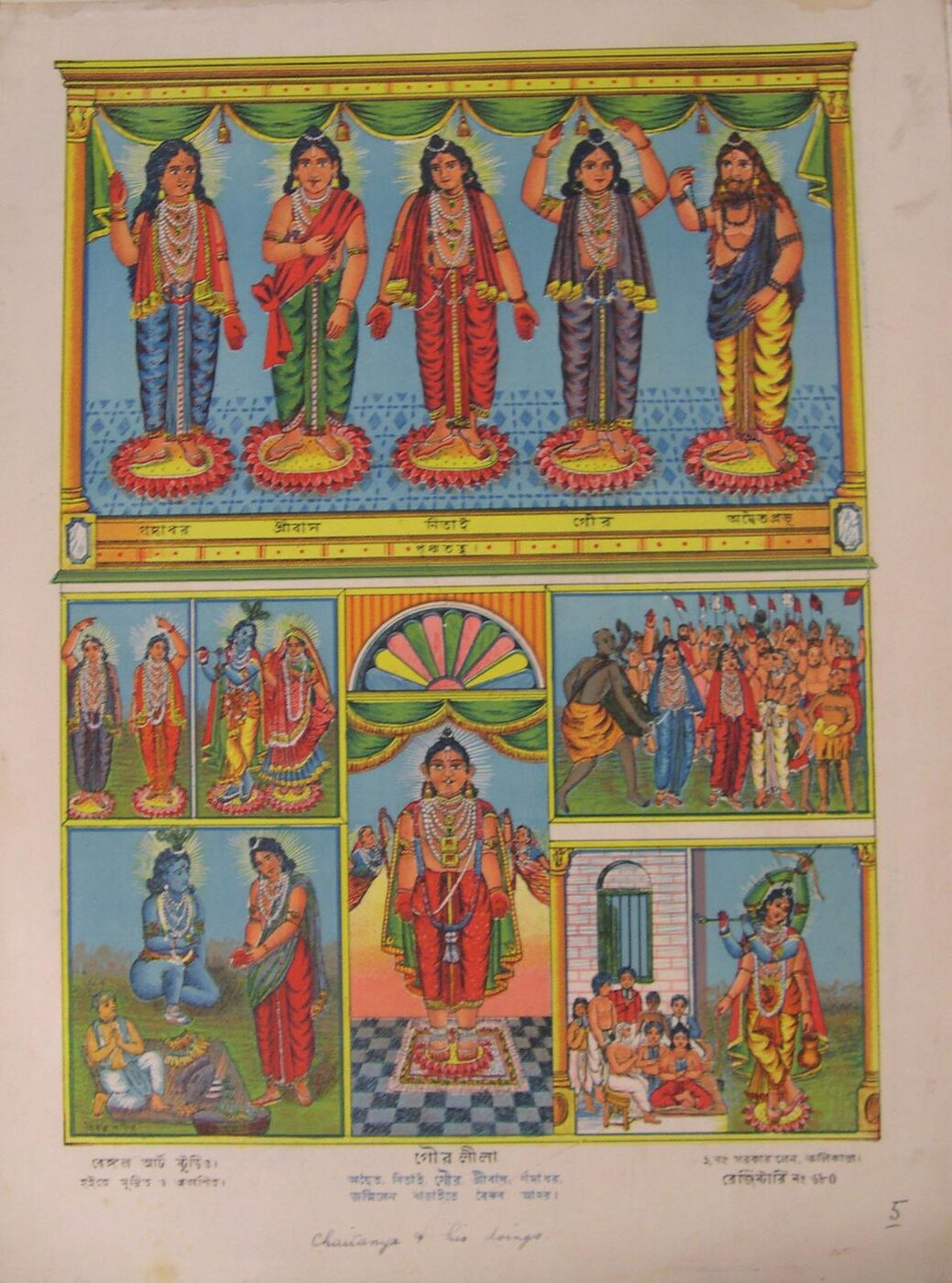
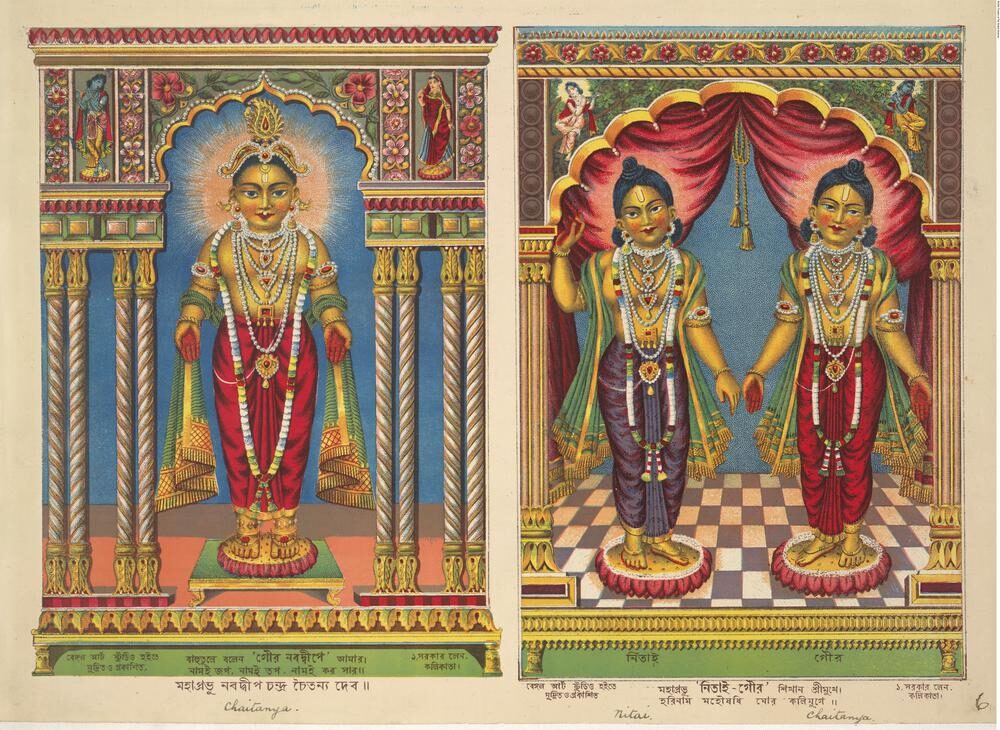
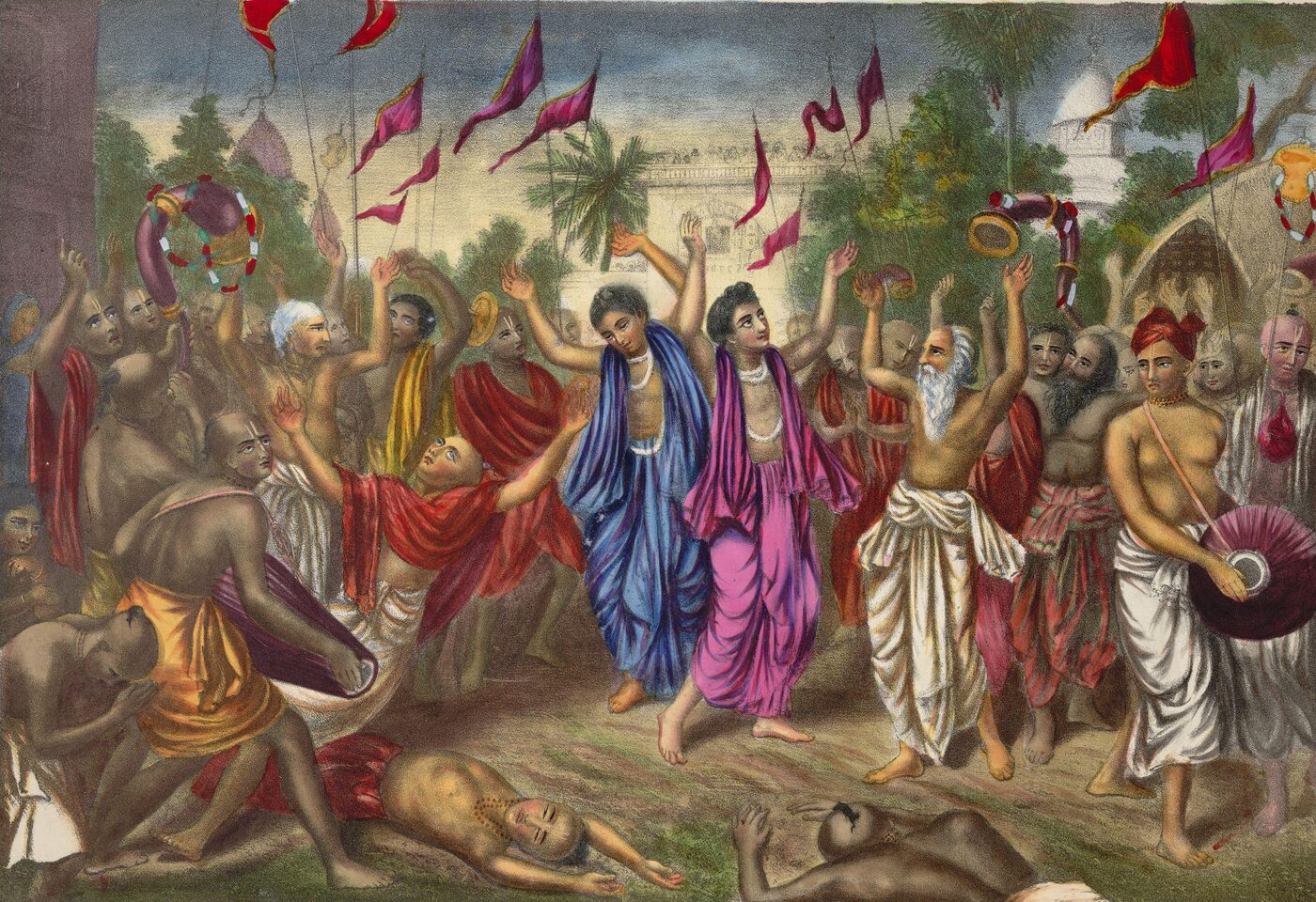
Scriptural evidence for the introduction (14)
হরের্নাম হরের্নাম হরের্নামৈব কেবলম্ ।
কলৌ নাস্ত্যেব নাস্ত্যেব নাস্ত্যেব গতিরন্যথা ॥ ২১ ॥
harer nāma harer nāma
harer nāmaiva kevalam
kalau nāsty eva nāsty eva
nāsty eva gatir anyathā
Word for word
hareḥ nāma: the holy name of the Lord; hareḥ nāma: the holy name of the Lord; hareḥ nāma: the holy name of the Lord; eva: certainly; kevalam: only; kalau: in the Age of Kali; na asti: there is none; eva: certainly; na asti: there is none; eva: certainly; na asti: there is none; eva: certainly; gatiḥ: destination; anyathā: otherwise.
“ ‘In this Age of Kali there is no other means, no other means, no other means for self-realization than chanting the holy name, chanting the holy name, chanting the holy name of Lord Hari.’
The Brhan-naradiya Purana verse harer nama harer nama - no other way in Kali-yuga.
কলিকালে নামরূপে কৃষ্ণ–অবতার ।
নাম হৈতে হয় সর্বজগৎ–নিস্তার ॥ ২২ ॥
kali-kāle nāma-rūpe kṛṣṇa-avatāra
nāma haite haya sarva-jagat-nistāra
Word for word
kali-kāle: in this Age of Kali; nāma-rūpe: in the form of the holy name; kṛṣṇa: Lord Kṛṣṇa; avatāra: incarnation; nāma: holy name; haite: from; haya: becomes; sarva: all; jagat: of the world; nistāra: deliverance.
“In this Age of Kali, the holy name of the Lord, the Hare Kṛṣṇa mahā-mantra, is the incarnation of Lord Kṛṣṇa. Simply by chanting the holy name, one associates with the Lord directly. Anyone who does this is certainly delivered.
The holy name is the incarnation of Krishna in Kali-yuga; chanting is direct association with Him.
সংকীর্তন–প্রবর্তক শ্রীকৃষ্ণচৈতন্য ।
সংকীর্তন–যজ্ঞে তাঁরে ভজে, সেই ধন্য ॥ ৭৭ ॥
saṅkīrtana-pravartaka śrī-kṛṣṇa-caitanya
saṅkīrtana-yajñe tāṅre bhaje, sei dhanya
Word for word
saṅkīrtana-pravartaka: the initiator of congregational chanting; śrī-kṛṣṇa-caitanya: Lord Caitanya Mahāprabhu; saṅkīrtana: of congregational chanting; yajñe: by the sacrifice; tāṅre: Him; bhaje: worships; sei: he; dhanya: fortunate.
Lord Śrī Kṛṣṇa Caitanya is the initiator of saṅkīrtana [congregational chanting of the holy name of the Lord]. One who worships Him through saṅkīrtana is fortunate indeed.
Chaitanya is the initiator of sankirtana; worshipping Him by sankirtana is the fortunate act of this age.
সেই ত’ সুমেধা, আর কুবুদ্ধি সংসার ।
সর্ব–যজ্ঞ হৈতে কৃষ্ণনামযজ্ঞ সার ॥ ৭৮ ॥
sei ta’ sumedhā, āra kubuddhi saṁsāra
sarva-yajña haite kṛṣṇa-nāma-yajña sāra
Word for word
sei: he; ta’: certainly; su-medhā: intelligent; āra: others; ku-buddhi: poor understanding; saṁsāra: in the material world; sarva-yajña haite: than all other sacrifices; kṛṣṇa-nāma: of chanting the name of Lord Kṛṣṇa; yajña: the sacrifice; sāra: the best.
Such a person is truly intelligent, whereas others, who have but a poor fund of knowledge, must endure the cycle of repeated birth and death. Of all sacrificial performances, the chanting of the Lord’s holy name is the most sublime.
Of all sacrifices, chanting the Lord's holy name is supreme; others endure repeated birth and death.
হর্ষে প্রভু কহেন, — “শুন স্বরূপ-রামরায় ।
নামসঙ্কীর্তন — কলৌ পরম উপায় ॥ ৮ ॥
harṣe prabhu kahena, — “śuna svarūpa-rāma-rāya
nāma-saṅkīrtana — kalau parama upāya
Word for word
harṣe: in jubilation; prabhu: Śrī Caitanya Mahāprabhu; kahena: says; śuna: please hear; svarūpa-rāma-rāya: My dear Svarūpa Dāmodara Gosvāmī and Rāmānanda Rāya; nāma-saṅkīrtana: chanting of the holy name of the Lord; kalau: in the Age of Kali; parama upāya: the most feasible means for deliverance.
In great jubilation, Śrī Caitanya Mahāprabhu said, “My dear Svarūpa Dāmodara and Rāmānanda Rāya, know from Me that chanting the holy names is the most feasible means of salvation in this Age of Kali.
Mahaprabhu Himself tells Svarupa Damodara and Ramananda Raya that chanting is the means of salvation in Kali-yuga.
সঙ্কীর্তনযজ্ঞে কলৌ কৃষ্ণ-আরাধন ।
সেই ত’ সুমেধা পায় কৃষ্ণের চরণ ॥ ৯ ॥
saṅkīrtana-yajñe kalau kṛṣṇa-ārādhana
sei ta’ sumedhā pāya kṛṣṇera caraṇa
Word for word
saṅkīrtana-yajñe: performing the yajña of chanting the Hare Kṛṣṇa mantra; kalau: in this Age of Kali; kṛṣṇa-ārādhana: the process of worshiping Kṛṣṇa; sei ta’: such persons; su-medhā: greatly intelligent; pāya: get; kṛṣṇera caraṇa: shelter at the lotus feet of Kṛṣṇa.
“In this Age of Kali, the process of worshiping Kṛṣṇa is to perform sacrifice by chanting the holy name of the Lord. One who does so is certainly very intelligent, and he attains shelter at the lotus feet of Kṛṣṇa.
The yuga-dharma of Kali is nama-sankirtana-yajna; the one who does it takes shelter of Krishna's feet.
কৃষ্ণবর্ণং ত্বিষাঽকৃষ্ণং সাঙ্গোপাঙ্গাস্ত্রপার্ষদম্ ।
যজ্ঞৈঃ সঙ্কীর্তনপ্রায়ৈর্যজন্তি হি সুমেধসঃ ॥ ১০ ॥
kṛṣṇa-varṇaṁ tviṣākṛṣṇaṁ
sāṅgopāṅgāstra-pārṣadam
yajñaiḥ saṅkīrtana-prāyair
yajanti hi su-medhasaḥ
Word for word
kṛṣṇa-varṇam: repeating the syllables kṛṣ-ṇa; tviṣā: with a luster; akṛṣṇam: not black (golden); sa-aṅga: with associates; upāṅga: servitors; astra: weapons; pārṣadam: confidential companions; yajñaiḥ: by sacrifice; saṅkīrtana-prāyaiḥ: consisting chiefly of congregational chanting; yajanti: they worship; hi: certainly; su-medhasaḥ: intelligent persons.
“ ‘In the Age of Kali, intelligent persons perform congregational chanting to worship the incarnation of Godhead who constantly sings the name of Kṛṣṇa. Although His complexion is not blackish, He is Kṛṣṇa Himself. He is accompanied by His associates, servants, weapons and confidential companions.’
Mahaprabhu Himself quotes SB 11.5.32 - the verse that describes His own mission.
জীব নিস্তারিতে প্রভু ভ্রমিলা দেশে-দেশে ।
আপনে আস্বাদি’ ভক্তি করিলা প্রকাশে ॥ ২৬৪ ॥
jīva nistārite prabhu bhramilā deśe-deśe
āpane āsvādi’ bhakti karilā prakāśe
Word for word
jīva nistārite: to deliver all the fallen souls; prabhu: Śrī Caitanya Mahāprabhu; bhramilā: traveled; deśe-deśe: in various countries; āpane: personally; āsvādi’: tasting; bhakti: devotional service; karilā: did; prakāśe: broadcasting.
To deliver all fallen souls, the Lord traveled from country to country. He personally tasted the transcendental pleasure of devotional service, and He simultaneously spread the cult of devotion everywhere.
From the purport: Purport excerpt: “pṛthivīte āche yata nagarādi grāma sarvatra pracāra haibe mora nāma “In every town and village, the chanting of My name will be heard.”
Its purport gives the exact source of the famous prediction 'prthivite ache yata nagaradi grama' - Caitanya-bhagavata Antya 4.126.
তাতে জানি — পূর্বে তোমার পাঞাছে প্রসাদ ।
তাহা বিনা নহে তোমার হৃদয়ানুবাদ ।।” ১১৭ ।। ॥ ১১৭ ॥
tāte jāni — pūrve tomāra pāñāche prasāda
tāhā vinā nahe tomāra hṛdayānuvāda”
Word for word
tāte: in such instances; jāni: I can understand; pūrve: previously; tomāra: Your; pāñāche prasāda: he has obtained special mercy; tāhā vinā: without that; nahe: there is not; tomāra: Your; hṛdaya-anuvāda: expression of feelings.
“Had You not previously bestowed Your mercy on him,” they said, “it would not have been possible for him to express Your internal feelings.”
From the purport: Purport excerpt: “The desire of Śrī Caitanya Mahāprabhu is that all over the world everyone, in every village and every town, know of Him and His saṅkīrtana movement. These are the inner feelings of Śrī Caitanya Mahāprabhu.”
Its purport again cites the prthivite verse as the inner desire of Mahaprabhu that Rupa Gosvami was empowered to record.
পঞ্চতত্ত্ব অবতীর্ণ চৈতন্যের সঙ্গে ।
পঞ্চতত্ত্ব লঞা করেন সংকীর্তন রঙ্গে ॥ ৪ ॥
pañca-tattva avatīrṇa caitanyera saṅge
pañca-tattva lañā karena saṅkīrtana raṅge
Word for word
pañca-tattva: these five tattvas; avatīrṇa: advented; caitanyera: with Caitanya Mahāprabhu; saṅge: in company with; pañca-tattva: the same five subjects; lañā: taking with Himself; karena: He does; saṅkīrtana: the saṅkīrtana movement; raṅge: in great pleasure.
These five tattvas incarnate with Lord Caitanya Mahāprabhu, and thus the Lord executes His saṅkīrtana movement with great pleasure.
The five tattvas descend with Mahaprabhu so that He may execute the sankirtana movement.
পঞ্চতত্ত্ব—একবস্তু, নাহি কিছু ভেদ ।
রস আস্বাদিতে তবু বিবিধ বিভেদ ॥ ৫॥
pañca-tattva — eka-vastu, nāhi kichu bheda
rasa āsvādite tabu vividha vibheda
Word for word
pañca-tattva: the five subjects; eka-vastu: they are one in five; nāhi: there is not; kichu: anything; bheda: difference; rasa: mellows; āsvādite: to taste; tabu: yet; vividha: varieties; vibheda: differences.
Spiritually there are no differences between these five tattvas, for on the transcendental platform everything is absolute. Yet there are also varieties in the spiritual world, and in order to taste these spiritual varieties one should distinguish between them.
The five tattvas are spiritually non-different, yet varied so that transcendental mellows may be tasted.
পঞ্চতত্ত্বাত্মকং কৃষ্ণং ভক্তরূপ–স্বরূপকম্ ।
ভক্তাবতারং ভক্তাখ্যং নমামি ভক্তশক্তিকম্ ॥ ৬ ॥
pañca-tattvātmakaṁ kṛṣṇaṁ
bhakta-rūpa-svarūpakam
bhaktāvatāraṁ bhaktākhyaṁ
namāmi bhakta-śaktikam
Word for word
pañca-tattva-ātmakam: comprehending the five transcendental subject matters; kṛṣṇam: unto Lord Kṛṣṇa; bhakta-rūpa: in the form of a devotee; svarūpakam: in the expansion of a devotee; bhakta-avatāram: in the incarnation of a devotee; bhakta-ākhyam: known as a devotee; namāmi: I offer my obeisances; bhakta-śaktikam: the energy of the Supreme Personality of Godhead.
Let me offer my obeisances unto Lord Śrī Kṛṣṇa, who has manifested Himself in five as a devotee, expansion of a devotee, incarnation of a devotee, pure devotee and devotional energy.
The panca-tattva mantra itself: pancatattvatmakam krsnam bhakta-rupa-svarupakam.
राधा कृष्णप्रणयविकृतिर्ह्लादिनी शक्तिरस्माद् ।
एकात्मानावपि भुवि पुरा देहभेदं गतौ तौ ।
चैतन्याख्यं प्रकटमधुना तद्द्वयं चैक्यमाप्तं ।
राधाभावद्युतिसुवलितं नौमि कृष्णस्वरूपम् ॥
rādhā kṛṣṇa-praṇaya-vikṛtir hlādinī śaktir asmād
ekātmānāv api bhuvi purā deha-bhedaṁ gatau tau
caitanyākhyaṁ prakaṭam adhunā tad-dvayaṁ caikyam āptaṁ
rādhā-bhāva-dyuti-suvalitaṁ naumi kṛṣṇa-svarūpam
The loving affairs of Śrī Rādhā and Kṛṣṇa are transcendental manifestations of the Lord’s internal pleasure-giving potency. Although Rādhā and Kṛṣṇa are one in Their identity, previously They separated Themselves. Now these two transcendental identities have again united, in the form of Śrī Kṛṣṇa Caitanya. I bow down to Him, who has manifested Himself with the sentiment and complexion of Śrīmatī Rādhārāṇī although He is Kṛṣṇa Himself.
Krishnadasa Kaviraja Goswami states, in the first chapter of Sri Chaitanya-charitamrita, who Sri Chaitanya is: Krishna Himself, with the mood and complexion of Srimati Radharani. Verse text, translation and purport: Srila Prabhupada, Sri Chaitanya-charitamrita (vedabase.io).
अस्यार्थो विवृतस्तैर्यः स सङ्क्षिप्य विलिख्यते ।
भक्तरूपो गौरचन्द्रो यतोऽसौ नन्दनन्दनः ॥
भक्तस्वरूपो नित्यानन्दो व्रजे यः श्रीहलायुधः ।
भक्तावतार आचार्योऽद्वैतो यः श्रीसदाशिवः ॥
भक्ताख्याः श्रीनिवासाद्या यतस्ते भक्तरूपिनः ।
भक्तशक्तिर्द्विजाग्रण्यः श्रीगदाधरपण्डितः ॥११॥
asyārtho vivṛtas tair yaḥ sa saṅkṣipya vilikhyate
bhakta-rūpo gauracandro yato’sau nanda-nandanaḥ
bhakta-svarūpo nityānando vraje yaḥ śrī-halāyudhaḥ
bhaktāvatāra ācāryo’dvaito yaḥ śrī-sadāśivaḥ
bhaktākhyāḥ śrīnivāsādyā yatas te bhakta-rūpinaḥ
bhakta-śaktir dvijāgraṇyaḥ śrī-gadādhara-paṇḍitaḥ
In this Panca-tattva, the bhakta-rupa (form of a devotee) is Lord Caitanya Mahaprabhu, who formerly appeared as Lord Krsna, the son of Nanda Maharaja.
Kavi Karnapura explains Svarupa Damodara's Panca-tattva verse: the bhakta-rupa, Gauracandra, is the son of Nanda, Krishna Himself. Sanskrit: diacritic edition of the Gaura-ganoddesha-dipika; English translation as published at bvmlu.org.
Chapter 1
The Advent of Sri Chaitanya Mahaprabhu
Gaura Purnima 1486, a lunar eclipse, a town already chanting, and the golden child born on the bank of the Ganges
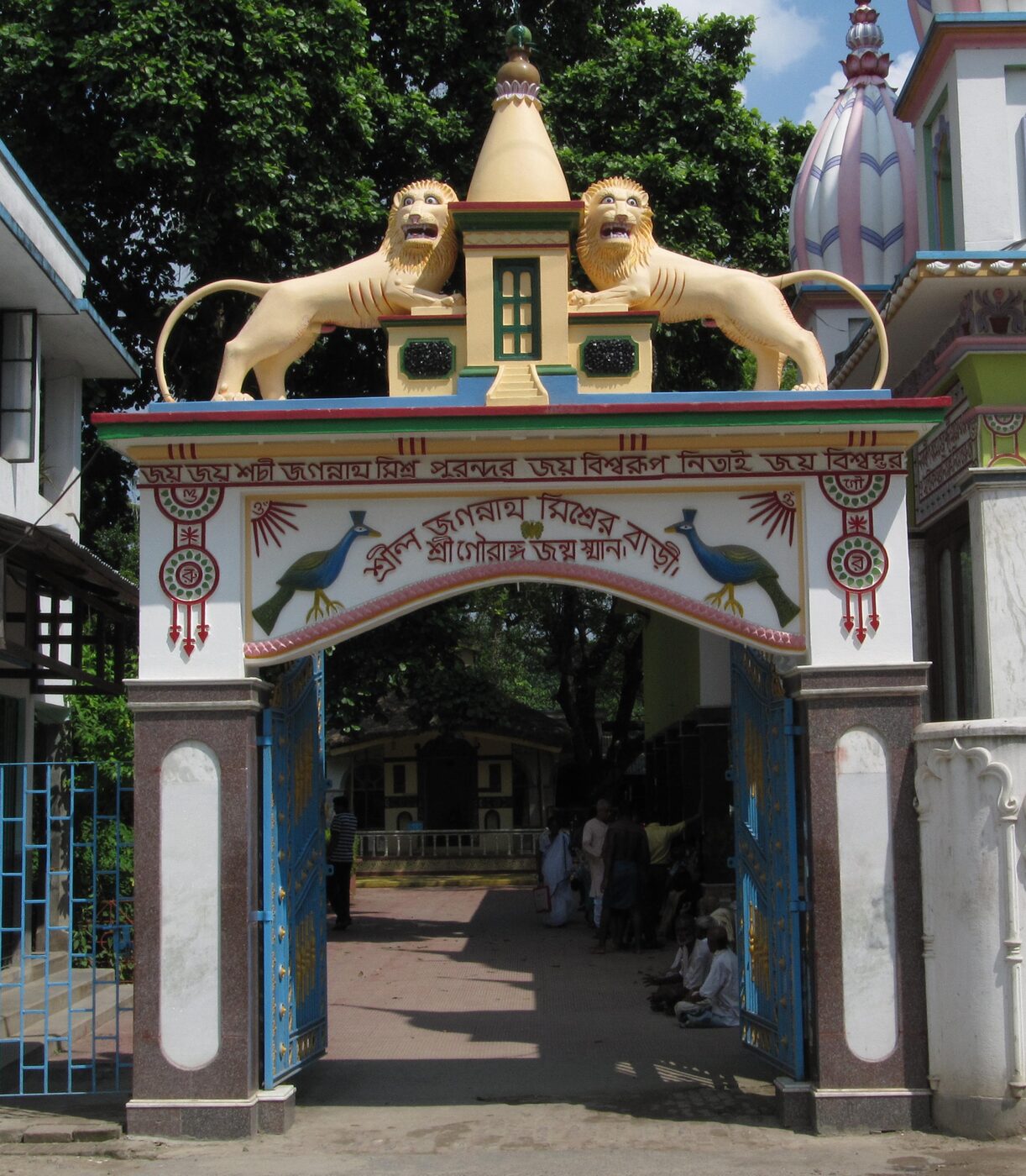
The family into which Sri Chaitanya Mahaprabhu was born had come to Nabadwip from elsewhere. His grandfather Upendra Mishra was a learned brahmana of the Srihatta district in eastern Bengal (modern Sylhet). Upendra Mishra's son Jagannatha Mishra travelled west to Nabadwip to continue his studies. At that time Nabadwip was the most famous centre of Sanskrit learning in Bengal. There Jagannatha Mishra studied under the astronomer and scholar Nilambara Chakravarti, and there he married Nilambara's daughter, Sachi Devi. The couple settled on the bank of the Ganges in the area now known as Sridhama Mayapur. They lived simply, as a learned but poor brahmana family.
| Detail | Description |
|---|---|
| Date | 18 February 1486; the full moon of Phalguna, Saka era 1407 |
| Place | Sridhama Mayapur, on the bank of the Ganges at Nabadwip |
| Father | Jagannatha Mishra, of the Srihatta district |
| Mother | Sachi Devi, daughter of Nilambara Chakravarti |
| Names given | Vishvambhara; Nimai; Gaurahari, Gauranga, Gaura |
| Sacred site | Yogapith, at Mayapur |
| Festival | Gaura Purnima |
Eight Daughters and the Birth of Vishvarupa #
Their married life was marked by repeated grief. Vaishnava biographers record that eight daughters were born to Sachi Devi before any child survived infancy. Each of them died shortly after birth. The first son to live was Vishvarupa, a boy of extraordinary beauty and seriousness. He would later leave home to accept the renounced order while still young. Then, after a long interval, Sachi Devi conceived again. The biographies describe how Jagannatha Mishra and his wife received signs that this child would be different from any that had come before. These signs came through dreams and through the words of visiting astrologers.
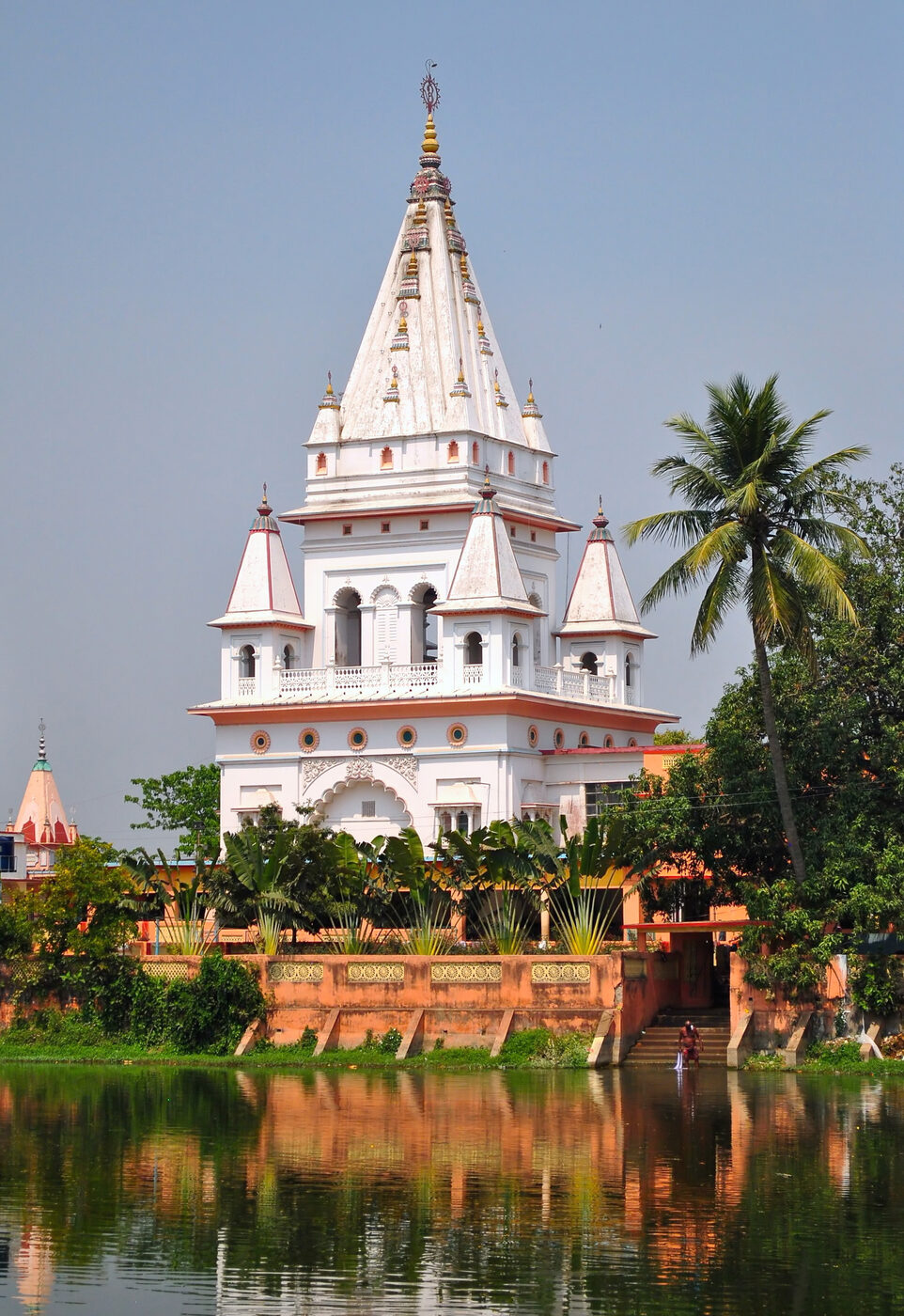
The Birth During the Lunar Eclipse #
The birth took place on the evening of the full moon of the Bengali month of Phalguna. In the Saka era the year was 1407, and by the Western calendar the date was the eighteenth of February, 1486. Vaishnavas remember this moment especially because of something that happened at the same time. That evening there was a total lunar eclipse. By a very old custom, followers of Sanatana Dharma bathe in a sacred river during an eclipse and chant the names of God for purification. So the whole of Nabadwip was standing in the Ganges, calling out the holy names of Krishna. At that very hour, the child was born a few yards away on its bank. The tradition does not see this as an accident at all. It sees it as the first and clearest sign of what He had come to do. A whole town was chanting together, without being asked, at the moment the Lord of the sankirtana movement entered the world.
The Horoscope and the Name Vishvambhara #
Nilambara Chakravarti, His maternal grandfather and a respected astrologer, drew up the child's horoscope. After reading it, he is said to have declared that this boy would become a teacher without equal, that His name would be honoured across the world, and that He would deliver countless souls. Nilambara Chakravarti gave Him the name Vishvambhara, "he who maintains the entire universe," a name with special meaning for Vaishnavas. They see in this choice a quiet sign that the grandfather recognised something far greater in this child than any grandparent usually hopes for.
How He Came to Be Called Nimai #
Because a nimba tree stood beside the house where He was born, He was given the household name by which the whole of Nabadwip would know Him for the next twenty-four years: Nimai. The biographies say that the name was chosen by Sita Thakurani, the wife of Advaita Acharya. She came from Shantipura with gifts for the newborn. She chose the name of a bitter tree to protect Him from the notice of ghosts and witches. His golden complexion was unusual, and people often spoke about it. It gave Him the other names He carried through life: Gaurahari, Gauranga and Gaura, all built on the Sanskrit word for gold.
Why Krishna Appeared as Gauranga #
Gaudiya Vaishnava theology does not treat this birth as the arrival of an unusually gifted religious teacher who was later recognised as divine. It holds that Krishna Himself descended, and in a special and deliberate way. He did not come in His own original form and dark complexion. Instead, He took on the golden complexion of His own greatest devotee, Srimati Radharani. More importantly, He took on Radharani's interior emotional life. The Chaitanya-charitamrita explains the reason. Krishna wished to taste for Himself the sweetness of the love that Radharani feels for Him. By its very nature, this experience is not open to Him as the object of that love. At the same time, He wished to distribute that love freely to everyone, which He had not done in His previous descent. The verses in which this is set out are gathered below.
Advaita Acharya's Call for the Lord #
There is another part of the tradition that is dear to Bengali Vaishnavas. Advaita Acharya was an elderly and greatly respected Vaishnava of Shantipura. For years he had been troubled by the irreligion of the age. He had worshipped Krishna with Ganges water and tulasi leaves, calling on Him with great intensity to descend and rescue the people of Kali-yuga. Vaishnavas hold that the Lord agreed to appear in answer to Advaita Acharya's appeal. Advaita Acharya was far older than Mahaprabhu in years. Even so, he is counted among the Panca-tattva, as one of the five features of the Lord's own descent, because Chaitanya-charitamrita explains that he is not different from the Lord Himself.
Yogapith and the Gaura Purnima Festival #
Today the temple known as Yogapith marks the house at Mayapur where the birth took place. It is one of the main places of pilgrimage in the Gaudiya Vaishnava world. The anniversary of the day, Gaura Purnima, is the most important festival in the Gaudiya calendar. Devotees observe it by fasting until moonrise, by reading the accounts of His pastimes and by performing sankirtana.
Scriptural evidence for this chapter (27)
कृष्णवर्णं त्विषाकृष्णं साङ्गोपाङ्गास्त्रपार्षदम् ।
यज्ञै: सङ्कीर्तनप्रायैर्यजन्ति हि सुमेधस: ॥ ३२ ॥
kṛṣṇa-varṇaṁ tviṣākṛṣṇaṁ
sāṅgopāṅgāstra-pārṣadam
yajñaiḥ saṅkīrtana-prāyair
yajanti hi su-medhasaḥ
Word for word
kṛṣṇa-varṇam: repeating the syllables kṛṣ-ṇa; tviṣā: with a luster; akṛṣṇam: not black (golden); sa-aṅga: along with associates; upa-aṅga: servitors; astra: weapons; pārṣadam: confidential companions; yajñaiḥ: by sacrifice; saṅkīrtana-prāyaiḥ: consisting chiefly of congregational chanting; yajanti: they worship; hi: certainly; su-medhasaḥ: intelligent persons.
In the Age of Kali, intelligent persons perform congregational chanting to worship the incarnation of Godhead who constantly sings the names of Kṛṣṇa. Although His complexion is not blackish, He is Kṛṣṇa Himself. He is accompanied by His associates, servants, weapons and confidential companions.
From the purport: Purport excerpt: “Śrīla Jīva Gosvāmī has explained this verse in his commentary on the Bhāgavatam known as the Krama-sandarbha, wherein he says that Lord Kṛṣṇa also appears with a golden complexion. That golden Lord Kṛṣṇa is Lord Caitanya, who is worshiped by intelligent men in this age.”
The central Bhagavatam prophecy of Kali-yuga: the golden incarnation who chants Krishna's names and is worshipped by sankirtana-yajna.
इत्थं नृतिर्यगृषिदेवझषावतारै-
र्लोकान् विभावयसि हंसि जगत्प्रतीपान् ।
धर्मं महापुरुष पासि युगानुवृत्तं
छन्न: कलौ यदभवस्त्रियुगोऽथ स त्वम् ॥ ३८ ॥
itthaṁ nṛ-tiryag-ṛṣi-deva-jhaṣāvatārair
lokān vibhāvayasi haṁsi jagat pratīpān
dharmaṁ mahā-puruṣa pāsi yugānuvṛttaṁ
channaḥ kalau yad abhavas tri-yugo ’tha sa tvam
Word for word
ittham: in this way; nṛ: like a human being (such as Lord Kṛṣṇa and Lord Rāmacandra); tiryak: like animals (such as the boar); ṛṣi: as a great saint (Paraśurāma); deva: as demigods; jhaṣa: as an aquatic (such as the fish and tortoise); avatāraiḥ: by such different incarnations; lokān: all the different planetary systems; vibhāvayasi: You protect; haṁsi: You (sometimes) kill; jagat pratīpān: persons who have simply created trouble in this world; dharmam: the principles of religion; mahā-puruṣa: O great personality; pāsi: You protect; yuga-anuvṛttam: according to the different millenniums; channaḥ: covered; kalau: in the Age of Kali; yat: since; abhavaḥ: have been (and will be in the future); tri-yugaḥ: named Triyuga; atha: therefore; saḥ: the same personality; tvam: You.
In this way, my Lord, You appear in various incarnations as a human being, an animal, a great saint, a demigod, a fish or a tortoise, thus maintaining the entire creation in different planetary systems and killing the demoniac principles. According to the age, O my Lord, You protect the principles of religion. In the Age of Kali, however, You do not assert Yourself as the Supreme Personality of Godhead, and therefore You are known as Triyuga, or the Lord who appears in three yugas.
From the purport: Purport excerpt: “In all the yugas but Kali-yuga, the Lord appears in various incarnations and asserts Himself as the Supreme Personality of Godhead, but although Lord Śrī Caitanya Mahāprabhu, who appears in Kali-yuga, is the Supreme Personality of Godhead, He never asserted Himself as such.”
Prahlada Maharaja foretells the Lord's 'channa' (covered/disguised) appearance in Kali-yuga, understood as Sri Chaitanya.
आसन् वर्णास्त्रयो ह्यस्य गृह्णतोऽनुयुगं तनू: ।
शुक्लो रक्तस्तथा पीत इदानीं कृष्णतां गत: ॥ १३ ॥
āsan varṇās trayo hy asya
gṛhṇato ’nuyugaṁ tanūḥ
śuklo raktas tathā pīta
idānīṁ kṛṣṇatāṁ gataḥ
Word for word
āsan: were assumed; varṇāḥ trayaḥ: three colors; hi: indeed; asya: of your son Kṛṣṇa; gṛhṇataḥ: accepting; anuyugam tanūḥ: transcendental bodies according to the different yugas; śuklaḥ: sometimes white; raktaḥ: sometimes red; tathā: as well as; pītaḥ: sometimes yellow; idānīm kṛṣṇatām gataḥ: at the present moment He has assumed a blackish color.
Your son Kṛṣṇa appears as an incarnation in every millennium. In the past, He assumed three different colors — white, red and yellow — and now He has appeared in a blackish color. [In another Dvāpara-yuga, He appeared (as Lord Rāmacandra) in the color of śuka, a parrot. All such incarnations have now assembled in Kṛṣṇa.]
Garga Muni names the Lord's four yuga-complexions; the unmanifested yellow-gold one is fulfilled in Sri Chaitanya.
যুগধর্ম প্রবর্তাইমু নাম–সংকীর্তন ।
চারি ভাব–ভক্তি দিয়া নাচামু ভুবন ॥ ১৯ ॥
yuga-dharma pravartāimu nāma-saṅkīrtana
cāri bhāva-bhakti diyā nācāmu bhuvana
Word for word
yuga-dharma: the religion of the age; pravartāimu: I shall inaugurate; nāma-saṅkīrtana: chanting of the holy name; cāri: four; bhāva: of the moods; bhakti: devotion; diyā: giving; nācāmu: I shall cause to dance; bhuvana: the world.
“I shall personally inaugurate the religion of the age — nāma-saṅkīrtana, the congregational chanting of the holy name. I shall make the world dance in ecstasy, realizing the four mellows of loving devotional service.
Krishna Himself declares He will personally inaugurate nama-sankirtana as the yuga-dharma.
আপনি করিমু ভক্তভাব অঙ্গীকারে ।
আপনি আচরি’ ভক্তি শিখাইমু সবারে ॥ ২০ ॥
āpani karimu bhakta-bhāva aṅgīkāre
āpani ācari’ bhakti śikhāimu sabāre
Word for word
āpani: personally; karimu: I shall make; bhakta-bhāva: the position of a devotee; aṅgīkāre: acceptance; āpani: personally; ācari’: practicing; bhakti: devotional service; śikhāimu: I shall teach; sabāre: to all.
“I shall accept the role of a devotee, and I shall teach devotional service by practicing it Myself.
He will descend in the role of a devotee and teach devotional service by practising it Himself.
আপনে না কৈলে ধর্ম শিখান না যায় ।
এই ত’ সিদ্ধান্ত গীতা–ভাগবতে গায় ॥ ২১ ॥
āpane nā kaile dharma śikhāna nā yāya
ei ta’ siddhānta gītā-bhāgavate gāya
Word for word
āpane: personally; nā kaile: if not practiced; dharma: religion; śikhāna: the teaching; nā yāya: does not advance; ei: this; ta’: certainly; siddhānta: conclusion; gītā: in the Bhagavad-gītā; bhāgavate: in Śrīmad-Bhāgavatam; gāya: they sing.
“Unless one practices devotional service himself, he cannot teach it to others. This conclusion is indeed confirmed throughout the Gītā and Bhāgavatam.
Establishes the principle that a teacher of bhakti must practise it, explaining why Krishna comes as a devotee.
যুগধর্ম–প্রবর্তন হয় অংশ হৈতে ।
আমা বিনা অন্যে নারে ব্রজপ্রেম দিতে ॥ ২৬ ॥
yuga-dharma-pravartana haya aṁśa haite
āmā vinā anye nāre vraja-prema dite
Word for word
yuga-dharma: of the religion of the age; pravartana: the inauguration; haya: is; aṁśa: the plenary portion; haite: from; āmā: for Me; vinā: except; anye: another; nāre: is not able; vraja-prema: love like that of the residents of Vraja; dite: to bestow.
“My plenary portions can establish the principles of religion for each age. No one but Me, however, can bestow the kind of loving service performed by the residents of Vraja.
No plenary portion can bestow Vraja-prema; only Krishna Himself, so He must come personally.
সন্ত্ববতারা বহবঃ পঙ্কজনাভস্য সর্বতোভদ্রাঃ
কৃষ্ণাদন্যঃ কো বা লতাস্বপি প্রেমদো ভবতি ॥ ২৭ ॥
santv avatārā bahavaḥ paṅkaja-nābhasya sarvato-bhadrāḥ
kṛṣṇād anyaḥ ko vā latāsv api prema-do bhavati
Word for word
santu: let there be; avatārāḥ: incarnations; bahavaḥ: many; paṅkaja-nābhasya: of the Lord, from whose navel grows a lotus flower; sarvataḥ-bhadrāḥ: completely auspicious; kṛṣṇāt: than Lord Kṛṣṇa; anyaḥ: other; kaḥ vā: who possibly; latāsu: on the surrendered souls; api: also; prema-daḥ: the bestower of love; bhavati: is.
“ ‘There may be many all-auspicious incarnations of the Personality of Godhead, but who other than Lord Śrī Kṛṣṇa can bestow love of God upon the surrendered souls?’
Rupa Gosvami's verse: no incarnation but Sri Krishna Chaitanya bestows love of God on surrendered souls.
তাহাতে আপন ভক্তগণ করি’ সঙ্গে ।
পৃথিবীতে অবতরি’ করিমু নানা রঙ্গে ॥ ২৮ ॥
tāhāte āpana bhakta-gaṇa kari’ saṅge
pṛthivīte avatari’ karimu nānā raṅge
Word for word
tāhāte: in that; āpana: My own; bhakta-gaṇa: with devotees; kari’: doing; saṅge: in association; pṛthivīte: on the earth; avatari’: descending; karimu: I shall perform; nānā: various; raṅge: colorful pastimes.
“Therefore in the company of My devotees I shall appear on earth and perform various colorful pastimes.”
Krishna resolves to appear together with His devotees and perform colourful pastimes on earth.
শেষলীলায় ধরে নাম ‘শ্রীকৃষ্ণচৈতন্য’ ।
শ্রীকৃষ্ণ জানায়ে সব বিশ্ব কৈল ধন্য ॥ ৩৪ ॥
śeṣa-līlāya dhare nāma ‘śrī-kṛṣṇa-caitanya’
śrī-kṛṣṇa jānāye saba viśva kaila dhanya
Word for word
śeṣa-līlāya: in His final pastimes; dhare: He held; nāma: the name; śrī-kṛṣṇa-caitanya: Śrī Kṛṣṇa Caitanya; śrī-kṛṣṇa: about Lord Kṛṣṇa; jānāye: He taught; saba: all; viśva: the world; kaila: made; dhanya: fortunate.
In His later pastimes He is known as Lord Śrī Kṛṣṇa Caitanya. He blesses the whole world by teaching about the name and fame of Lord Śrī Kṛṣṇa.
Names the later pastimes: 'Sri Krishna Chaitanya', who blesses the world by teaching Krishna's name.
সুবর্ণবর্ণো হেমাঙ্গো বরাঙ্গশ্চন্দনাঙ্গদী ।
সন্ন্যাসকৃচ্ছমঃ শান্তো নিষ্ঠাশান্তিপরায়ণঃ ॥ ৪৯ ॥
suvarṇa-varṇo hemāṅgo
varāṅgaś candanāṅgadī
sannyāsa-kṛc chamaḥ śānto
niṣṭhā-śānti-parāyaṇaḥ
Word for word
suvarṇa: of gold; varṇaḥ: having the color; hema-aṅgaḥ: whose body was like molten gold; vara-aṅgaḥ: having a most beautiful body; candana-aṅgadī: whose body was smeared with sandalwood; sannyāsa-kṛt: practicing the renounced order of life; śamaḥ: equipoised; śāntaḥ: peaceful; niṣṭhā: devotion; śānti: and of peace; parāyaṇaḥ: the highest resort.
“In His early pastimes He appears as a householder with a golden complexion. His limbs are beautiful, and His body, smeared with the pulp of sandalwood, seems like molten gold. In His later pastimes He accepts the sannyāsa order, and He is equipoised and peaceful. He is the highest abode of peace and devotion, for He silences the impersonalist nondevotees.”
The Mahabharata Vishnu-sahasra-nama verse (suvarna-varno hemango) read as a direct prophecy of the golden sannyasi Chaitanya.
সুবর্ণবর্ণো হেমাঙ্গো বরাঙ্গশ্চন্দনাঙ্গদী ।
সন্ন্যাসকৃচ্ছমঃ শান্তো নিষ্ঠা-শান্তি-পরায়ণঃ ॥ ১০৪ ॥
suvarṇa-varṇo hemāṅgo
varāṅgaś candanāṅgadī
sannyāsa-kṛc chamaḥ śānto
niṣṭhā-śānti-parāyaṇaḥ
Word for word
suvarṇa-varṇaḥ: whose complexion is like gold; hema-aṅgaḥ: having a body like molten gold; vara-aṅgaḥ: whose body is very beautifully constructed; candana-aṅgadī: smeared with the pulp of sandalwood; sannyāsa-kṛt: accepting the renounced order of life; śamaḥ: self-controlled; śāntaḥ: peaceful; niṣṭhā: firmly fixed; śānti: bringing peace by propagating the Hare Kṛṣṇa mahā-mantra; parāyaṇaḥ: always in the ecstatic mood of devotional service.
“ ‘The Lord [in the incarnation of Gaurasundara] has a golden complexion. Indeed, His entire body, which is very nicely constituted, is like molten gold. Sandalwood pulp is smeared all over His body. He will take the fourth order of spiritual life [sannyāsa] and will be very much self-controlled. He will be distinguished from Māyāvādī sannyāsīs in that He will be fixed in devotional service and will spread the saṅkīrtana movement.’ ”
Sarvabhauma Bhattacarya cites the same Mahabharata verse to establish Chaitanya's identity as the predicted golden avatara.
ব্যক্ত করি’ ভাগবতে কহে বার বার ।
কলিযুগে ধর্ম—নামসংকীর্তন সার ॥ ৫০ ॥
vyakta kari’ bhāgavate kahe bāra bāra
kali-yuge dharma — nāma-saṅkīrtana sāra
Word for word
vyakta: evident; kari’: making; bhāgavate: in Śrīmad-Bhāgavatam; kahe: they say; bāra bāra: time and time again; kali-yuge: in the Age of Kali; dharma: the religion; nāma-saṅkīrtana: congregational chanting of the holy name; sāra: the essence.
In Śrīmad-Bhāgavatam it is repeatedly and clearly said that the essence of religion in the Age of Kali is the chanting of the holy name of Kṛṣṇa.
Kaviraja Gosvami states the Bhagavatam repeatedly declares chanting Krishna's name to be the Kali-yuga dharma.
ইতি দ্বাপর উর্বীশ স্তুবন্তি জগদীশ্বরম্ ।
নানাতন্ত্রবিধানেন কলাবপি যথা শৃণু ॥ ৫১ ॥
iti dvāpara urv-īśa
stuvanti jagad-īśvaram
nānā-tantra-vidhānena
kalāv api yathā śṛṇu
Word for word
iti: thus; dvāpare: in the Dvāpara Age; uru-īśa: O King; stuvanti: they praise; jagat-īśvaram: the Lord of the universe; nānā: various; tantra: of scriptures; vidhānena: by the regulations; kalau: in the Age of Kali; api: also; yathā: in which manner; śṛṇu: please hear.
“O King, in this way people in Dvāpara-yuga worshiped the Lord of the universe. In Kali-yuga they also worship the Supreme Personality of Godhead by the regulations of the revealed scriptures. Kindly now hear of that from me.
SB 11.5.31 as quoted in CC: the Dvapara-yuga worship, setting up the Kali-yuga prediction that follows.
কৃষ্ণবর্ণং ত্বিষাঽকৃষ্ণং সাঙ্গোপাঙ্গাস্ত্রপার্ষদম্
যজ্ঞৈঃ সংকীর্তনপ্রায়ৈর্যজন্তি হি সুমেধসঃ ॥ ৫২ ॥
kṛṣṇa-varṇaṁ tviṣākṛṣṇaṁ
sāṅgopāṅgāstra-pārṣadam
yajñaiḥ saṅkīrtana-prāyair
yajanti hi su-medhasaḥ
Word for word
kṛṣṇa-varṇam: repeating the syllables kṛṣ-ṇa; tviṣā: with a luster; akṛṣṇam: not black (golden); sa-aṅga: along with associates; upāṅga: servitors; astra: weapons; pārṣadam: confidential companions; yajñaiḥ: by sacrifice; saṅkīrtana-prāyaiḥ: consisting chiefly of congregational chanting; yajanti: they worship; hi: certainly; su-medhasaḥ: intelligent persons.
“In the Age of Kali, intelligent persons perform congregational chanting to worship the incarnation of Godhead who constantly sings the name of Kṛṣṇa. Although His complexion is not blackish, He is Kṛṣṇa Himself. He is accompanied by His associates, servants, weapons and confidential companions.”
CC's quotation of SB 11.5.32, the verse Kaviraja Gosvami uses as the scriptural proof of Chaitanya's advent.
অনর্পিতচরীং চিরাৎ করুণয়াবতীর্ণঃ কলৌ
সমর্পয়িতুমুন্নতোজ্জ্বলরসাং স্বভক্তিশ্রিয়ম্ ।
হরিঃ পুরটসুন্দরদ্যুতিকদম্বসন্দীপিতঃ
সদা হৃদয়কন্দরে স্ফুরতু বঃ শচীনন্দনঃ ॥ ৪ ॥
anarpita-carīṁ cirāt karuṇayāvatīrṇaḥ kalau
samarpayitum unnatojjvala-rasāṁ sva-bhakti-śriyam
hariḥ puraṭa-sundara-dyuti-kadamba-sandīpitaḥ
sadā hṛdaya-kandare sphuratu vaḥ śacī-nandanaḥ
Word for word
anarpita: not bestowed; carīm: having been formerly; cirāt: for a long time; karuṇayā: by causeless mercy; avatīrṇaḥ: descended; kalau: in the Age of Kali; samarpayitum: to bestow; unnata: elevated; ujjvala-rasām: the conjugal mellow; sva-bhakti: of His own service; śriyam: the treasure; hariḥ: the Supreme Lord; puraṭa: than gold; sundara: more beautiful; dyuti: of splendor; kadamba: with a multitude; sandīpitaḥ: lighted up; sadā: always; hṛdaya-kandare: in the cavity of the heart; sphuratu: let Him be manifest; vaḥ: your; śacī-nandanaḥ: the son of mother Śacī.
May the Supreme Lord who is known as the son of Śrīmatī Śacī-devī be transcendentally situated in the innermost chambers of your heart. Resplendent with the radiance of molten gold, He has appeared in the Age of Kali by His causeless mercy to bestow what no incarnation has ever offered before: the most sublime and radiant mellow of devotional service, the mellow of conjugal love.
anarpita-carim cirat: Rupa Gosvami's verse on the Lord who descended to give the unnata-ujjvala-rasa never given before.
রাধা কৃষ্ণপ্রণয়বিকৃতির্হ্লাদিনীশক্তিরস্মা–
দেকাত্মানাবপি ভুবি পুরা দেহভেদং গতৌ তৌ ।
চৈতন্যাখ্যং প্রকটমধুনা তদ্দ্বয়ং চৈক্যমাপ্তং
রাধাভাবদ্যুতিসুবলিতং নৌমি কৃষ্ণস্বরূপম্ ॥ ৫ ॥
rādhā kṛṣṇa-praṇaya-vikṛtir hlādinī śaktir asmād
ekātmānāv api bhuvi purā deha-bhedaṁ gatau tau
caitanyākhyaṁ prakaṭam adhunā tad-dvayaṁ caikyam āptaṁ
rādhā-bhāva-dyuti-suvalitaṁ naumi kṛṣṇa-svarūpam
Word for word
rādhā: Śrīmatī Rādhārāṇī; kṛṣṇa: of Lord Kṛṣṇa; praṇaya: of love; vikṛtiḥ: the transformation; hlādinī śaktiḥ: pleasure potency; asmāt: from this; eka-ātmānau: both the same in identity; api: although; bhuvi: on earth; purā: formerly; deha-bhedam: separate forms; gatau: obtained; tau: those two; caitanya-ākhyam: known as Śrī Caitanya; prakaṭam: manifest; adhunā: now; tat-dvayam: the two of Them; ca: and; aikyam: unity; āptam: obtained; rādhā: of Śrīmatī Rādhārāṇī; bhāva: mood; dyuti: the luster; su-valitam: who is adorned with; naumi: I offer my obeisances; kṛṣṇa-svarūpam: to Him who is identical with Śrī Kṛṣṇa.
The loving affairs of Śrī Rādhā and Kṛṣṇa are transcendental manifestations of the Lord’s internal pleasure-giving potency. Although Rādhā and Kṛṣṇa are one in Their identity, previously They separated Themselves. Now these two transcendental identities have again united, in the form of Śrī Kṛṣṇa Caitanya. I bow down to Him, who has manifested Himself with the sentiment and complexion of Śrīmatī Rādhārāṇī although He is Kṛṣṇa Himself.
radha-krsna-pranaya-vikrtir: the mangalacarana verse defining Chaitanya as Radha and Krishna united in one form.
শ্রীরাধায়াঃ প্রণয়মহিমা কীদৃশো বানয়ৈবা–
স্বাদ্যো যেনাদ্ভূতমধুরিমা কীদৃশো বা মদীয়ঃ ।
সৌখ্যঞ্চাস্যা মদনুভবতঃ কীদৃশং বেতি লোভা–
ত্তদ্ভাবাঢ্যঃ সমজনি শচীগর্ভসিন্ধৌ হরীন্দুঃ ॥ ৬ ॥
śrī-rādhāyāḥ praṇaya-mahimā kīdṛśo vānayaivā-
svādyo yenādbhuta-madhurimā kīdṛśo vā madīyaḥ
saukhyaṁ cāsyā mad-anubhavataḥ kīdṛśaṁ veti lobhāt
tad-bhāvāḍhyaḥ samajani śacī-garbha-sindhau harīnduḥ
Word for word
śrī-rādhāyāḥ: of Śrīmatī Rādhārāṇī; praṇaya-mahimā: the greatness of the love; kīdṛśaḥ: of what kind; vā: or; anayā: by this one (Rādhā); eva: alone; āsvādyaḥ: to be relished; yena: by that love; adbhuta-madhurimā: the wonderful sweetness; kīdṛśaḥ: of what kind; vā: or; madīyaḥ: of Me; saukhyam: the happiness; ca: and; asyāḥ: Her; mat-anubhavataḥ: from realization of My sweetness; kīdṛśam: of what kind; vā: or; iti: thus; lobhāt: from the desire; tat: Her; bhāva-āḍhyaḥ: richly endowed with emotions; samajani: took birth; śacī-garbha: of the womb of Śrīmatī Śacī-devī; sindhau: in the ocean; hari: Lord Kṛṣṇa; induḥ: like the moon.
Desiring to understand the glory of Rādhārāṇī’s love, the wonderful qualities in Him that She alone relishes through Her love, and the happiness She feels when She realizes the sweetness of His love, the Supreme Lord Hari, richly endowed with Her emotions, appeared from the womb of Śrīmatī Śacī-devī, as the moon appeared from the ocean.
States the three internal desires of Krishna that caused Him to appear as the son of Saci.
প্রেমরস–নির্যাস করিতে আস্বাদন ।
রাগমার্গ ভক্তি লোকে করিতে প্রচারণ ॥ ১৫ ॥
রসিক–শেখর কৃষ্ণ পরমকরুণ ।
এই দুই হেতু হৈতে ইচ্ছার উদ্গম ॥ ১৬ ॥
prema-rasa-niryāsa karite āsvādana
rāga-mārga bhakti loke karite pracāraṇa
rasika-śekhara kṛṣṇa parama-karuṇa
ei dui hetu haite icchāra udgama
Word for word
prema-rasa: of the mellow of love of God; niryāsa: the essence; karite: to do; āsvādana: tasting; rāga-mārga: the path of spontaneous attraction; bhakti: devotional service; loke: in the world; karite: to do; pracāraṇa: propagation; rasika-śekhara: the supremely jubilant; kṛṣṇa: Lord Kṛṣṇa; parama-karuṇa: the most merciful; ei: these; dui: two; hetu: reasons; haite: from; icchāra: of desire; udgama: the birth.
The Lord’s desire to appear was born from two reasons: the Lord wanted to taste the sweet essence of the mellows of love of God, and He wanted to propagate devotional service in the world on the platform of spontaneous attraction. Thus He is known as supremely jubilant and as the most merciful of all.
The two reasons for His advent: to taste the mellows of love Himself and to propagate raganuga-bhakti.
অতএব সেই ভাব অঙ্গীকার করি’ ।
সাধিলেন নিজ বাঞ্ছা গৌরাঙ্গ–শ্রীহরি ॥ ৫০ ॥
ataeva sei bhāva aṅgīkāra kari’
sādhilena nija vāñchā gaurāṅga-śrī-hari
Word for word
ataeva: therefore; sei bhāva: that mood; aṅgīkāra kari’: accepting; sādhilena: fulfilled; nija: His own; vāñchā: desire; gaurāṅga: Lord Caitanya Mahāprabhu; śrī-hari: the Supreme Personality of Godhead.
Therefore Lord Gaurāṅga, who is Śrī Hari Himself, accepted the sentiments of Rādhā and thus fulfilled His own desires.
Lord Gauranga, who is Hari Himself, accepted Radha's sentiments to fulfil His own desires.
সুরেশানাং দুর্গং গতিরতিশয়েনোপনিষদাং
মুনীনাং সর্বস্বং প্রণতপটলীনাং মধুরিমা ।
বিনির্যাসঃ প্রেম্নো নিখিলপশুপালাম্বুজদৃশাং
স চৈতন্যঃ কিং মে পুনরপি দৃশোর্যাস্যতি পদম্ ॥ ৫১ ॥
sureśānāṁ durgaṁ gatir atiśayenopaniṣadāṁ
munīnāṁ sarva-svaṁ praṇata-paṭalīnāṁ madhurimā
viniryāsaḥ premṇo nikhila-paśu-pālāmbuja-dṛśāṁ
sa caitanyaḥ kiṁ me punar api dṛśor yāsyati padam
Word for word
sura-īśānām: of the kings of the demigods; durgam: fortress; gatiḥ: the goal; atiśayena: eminently; upaniṣadām: of the Upaniṣads; munīnām: of the sages; sarva-svam: the be-all and end-all; praṇata-paṭalīnām: of the groups of the devotees; madhurimā: the sweetness; viniryāsaḥ: the essence; premṇaḥ: of love; nikhila: all; paśu-pālā: of the cowherd women; ambuja-dṛśām: lotus-eyed; saḥ: He; caitanyaḥ: Lord Caitanya; kim: what; me: my; punaḥ: again; api: certainly; dṛśoḥ: of the two eyes; yāsyati: will come; padam: to the abode.
“Lord Caitanya is the shelter of the demigods, the goal of the Upaniṣads, the be-all and end-all of the great sages, the beautiful shelter of His devotees, and the essence of the love of the lotus-eyed gopīs. Will He again be the object of my vision?”
Svarupa Damodara's verse identifying Chaitanya as the goal of the Upanisads and shelter of the devotees.
অপারং কস্যাপি প্রণয়িজনবৃন্দস্য কুতুকী
রসস্তোমং হৃত্বা মধুরমুপভোক্তুং কমপি যঃ ।
রুচং স্বামাবব্রে দ্যুতিমিহ তদীয়াং প্রকটয়ন্
স দেবশ্চৈতন্যাকৃতিরতিতরাং নঃ কৃপয়তু ॥ ৫২ ॥
apāraṁ kasyāpi praṇayi-jana-vṛndasya kutukī
rasa-stomaṁ hṛtvā madhuram upabhoktuṁ kam api yaḥ
rucaṁ svām āvavre dyutim iha tadīyāṁ prakaṭayan
sa devaś caitanyākṛtir atitarāṁ naḥ kṛpayatu
Word for word
apāram: boundless; kasya api: of someone; praṇayi-jana-vṛndasya: of the multitude of lovers; kutukī: one who is curious; rasa-stomam: the group of mellows; hṛtvā: stealing; madhuram: sweet; upabhoktum: to enjoy; kam api: some; yaḥ: who; rucam: luster; svām: own; āvavre: covered; dyutim: luster; iha: here; tadīyām: related to Him; prakaṭayan: manifesting; saḥ: He; devaḥ: the Supreme Personality of Godhead; caitanya-ākṛtiḥ: having the form of Lord Caitanya Mahāprabhu; atitarām: greatly; naḥ: unto us; kṛpayatu: may He show His mercy.
“Lord Kṛṣṇa desired to taste the limitless nectarean mellows of the love of one of His multitude of loving damsels [Śrī Rādhā], and so He has assumed the form of Lord Caitanya. He has tasted that love while hiding His own dark complexion with Her effulgent yellow color. May that Lord Caitanya confer upon us His grace.”
Krishna assumed the form of Chaitanya specifically to taste Radha's love for Him.
রাধা কৃষ্ণপ্রণয়বিকৃতির্হ্লাদিনীশক্তিরস্মা–
দেকাত্মানাবপি ভুবি পুরা দেহভেদং গতৌ তৌ ।
চৈতন্যাখ্যং প্রকটমধুনা তদ্দ্বয়ঞ্চৈক্যমাপ্তং,
রাধাভাবদ্যুতিসুবলিতং নৌমি কৃষ্ণস্বরূপম্ ॥ ৫৫ ॥
rādhā kṛṣṇa-praṇaya-vikṛtir hlādinī śaktir asmād
ekātmānāv api bhuvi purā deha-bhedaṁ gatau tau
caitanyākhyaṁ prakaṭam adhunā tad-dvayaṁ caikyam āptaṁ
rādhā-bhāva-dyuti-suvalitaṁ naumi kṛṣṇa-svarūpam
Word for word
rādhā: Śrīmatī Rādhārāṇī; kṛṣṇa: of Lord Kṛṣṇa; praṇaya: of love; vikṛtiḥ: the transformation; hlādinī śaktiḥ: pleasure potency; asmāt: from this; eka-ātmānau: both the same in identity; api: although; bhuvi: on earth; purā: from beginningless time; deha-bhedam: separate forms; gatau: obtained; tau: these two; caitanya-ākhyam: known as Śrī Caitanya; prakaṭam: manifest; adhunā: now; tat-dvayam: the two of Them; ca: and; aikyam: unity; āptam: obtained; rādhā: of Śrīmatī Rādhārāṇī; bhāva: mood; dyuti: the luster; suvalitam: who is adorned with; naumi: I offer my obeisances; kṛṣṇa-svarūpam: to Him who is identical with Śrī Kṛṣṇa.
“The loving affairs of Śrī Rādhā and Kṛṣṇa are transcendental manifestations of the Lord’s internal pleasure-giving potency. Although Rādhā and Kṛṣṇa are one in Their identity, They separated Themselves eternally. Now these two transcendental identities have again united, in the form of Śrī Kṛṣṇa Caitanya. I bow down to Him, who has manifested Himself with the sentiment and complexion of Śrīmatī Rādhārāṇī although He is Kṛṣṇa Himself.”
The full statement of radha-krsna-pranaya-vikrti in its explanatory context in Chapter Four.
রাধাকৃষ্ণ এক আত্মা, দুই দেহ ধরি’ ।
অন্যোন্যে বিলসে রস আস্বাদন করি’ ॥ ৫৬ ॥
rādhā-kṛṣṇa eka ātmā, dui deha dhari’
anyonye vilase rasa āsvādana kari’
Word for word
rādhā-kṛṣṇa: Rādhā and Kṛṣṇa; eka: one; ātmā: self; dui: two; deha: bodies; dhari’: assuming; anyonye: one another; vilase: They enjoy; rasa: the mellows of love; āsvādana kari’: tasting.
Rādhā and Kṛṣṇa are one and the same, but They have assumed two bodies. Thus They enjoy each other, tasting the mellows of love.
Radha and Krishna are one but assumed two bodies to taste the mellows of love.
সেই দুই এক এবে চৈতন্য গোসাঞি ।
রস আস্বাদিতে দোঁহে হৈলা একঠাঁই ॥ ৫৭ ॥
sei dui eka ebe caitanya gosāñi
rasa āsvādite doṅhe hailā eka-ṭhāṅi
Word for word
sei: these; dui: two; eka: one; ebe: now; caitanya gosāñi: Lord Caitanya Mahāprabhu; rasa: mellow; āsvādite: to taste; doṅhe: the two; hailā: have become; eka-ṭhāṅi: one body.
Now, to enjoy rasa, They have appeared in one body as Lord Caitanya Mahāprabhu.
The two have now appeared in one body as Sri Chaitanya Mahaprabhu to enjoy rasa.
প্রেমভক্তি শিখাইতে আপনে অবতরি ।
রাধা–ভাব–কান্তি দুই অঙ্গীকার করি’ ॥ ৯৯ ॥
শ্রীকৃষ্ণচৈতন্যরূপে কৈল অবতার।
এই ত’ পঞ্চম শ্লোকের অর্থ পরচার ॥ ১০০ ॥
prema-bhakti śikhāite āpane avatari
rādhā-bhāva-kānti dui aṅgīkāra kari’
śrī-kṛṣṇa-caitanya-rūpe kaila avatāra
ei ta’ pañcama ślokera artha paracāra
Word for word
prema-bhakti: devotional service in love of Godhead; śikhāite: to teach; āpane: Himself; avatari: descending; rādhā-bhāva: the mood of Śrīmatī Rādhārāṇī; kānti: and luster; dui: two; aṅgīkāra kari’: accepting; śrī-kṛṣṇa-caitanya: of Lord Caitanya Mahāprabhu; rūpe: in the form; kaila: made; avatāra: incarnation; ei: this; ta’: certainly; pañcama: fifth; ślokera: of the verse; artha: meaning; paracāra: proclamation.
To promulgate prema-bhakti [devotional service in love of Godhead], Kṛṣṇa appeared as Śrī Kṛṣṇa Caitanya with the mood and complexion of Śrī Rādhā. Thus I have explained the meaning of the fifth verse.
Summary conclusion: Krishna appeared as Chaitanya with the bhava and kanti (mood and complexion) of Radha.
স্বমাধুর্য রাধা–প্রেমরস আস্বাদিতে ।
রাধাভাব অঙ্গী করিয়াছে ভালমতে ॥ ২৭৬ ॥
sva-mādhurya rādhā-prema-rasa āsvādite
rādhā-bhāva aṅgī kariyāche bhāla-mate
Word for word
sva-mādhurya: His own conjugal love; rādhā-prema-rasa: the mellow of the loving affairs between Rādhārāṇī and Kṛṣṇa; āsvādite: to taste; rādhā-bhāva: the mood of Śrīmatī Rādhārāṇī; aṅgī kariyāche: He accepted; bhāla-mate: very well.
To taste the mellows of Śrīmatī Rādhārāṇī’s loving affairs in Her relationship with Kṛṣṇa, and to understand the reservoir of pleasure in Kṛṣṇa, Kṛṣṇa Himself, as Śrī Caitanya Mahāprabhu, accepted the mood of Rādhārāṇī.
Concluding the Adi-lila: He accepted Radharani's mood to taste her love and understand His own sweetness.
Chapter 2
Childhood Pastimes
Nimai Pandita of Nabadwip, prodigy, prankster, and the Lord hidden in a brahmana's son
The Crying That Stopped at the Holy Name #
Even before He could speak, the infant Vishvambhara showed a nature that no ordinary child has. Vaishnava biographers record that He would cry in His mother's arms and could not be comforted, sometimes for hours. Nothing would quiet Him except the sound of women in the neighbourhood calling out "Haribol! Haribol!" ("Chant the name of Hari!"). Sachi Devi soon learned to invite the neighbourhood women to gather and chant whenever her son wept. The crying would stop the moment the holy names were chanted. It was as if the child Himself, even from the cradle, was teaching Nabadwip what would become the medicine for the whole world's suffering.
Eating Clay and His Answer to His Mother #
As a toddler He was mischievous in ways that tried His family's patience, though looking back they saw them as miraculous. It is said that He was once found eating clay from the courtyard instead of the sweets His mother had left for Him. Sachi Devi scolded Him and asked why. He innocently replied that earth is used to make cooking pots, and cooking pots hold the food she gives Him, so He didn't see the difference. This mischievous reasoning already gave a hint of the brilliant mind that was to come.
The Two Thieves Who Carried Him Away #
On another occasion two travelling thieves saw the extraordinarily beautiful golden child playing alone. They wanted to steal the gold ornaments He wore, so they tried to lure Him away with the promise of sweets. The stories tell that they then became hopelessly lost, wandering in circles around Nabadwip. At last, terrified and sorry for what they had done, they had no choice but to bring the child safely back to His mother's door.
The Dream of Sannyasis and the Offered Food #
Before his son was born, Nimai's father Jagannatha Mishra had once dreamed that many sannyasis had come to worship the child in his house. Wandering holy men and Vaishnavas were indeed drawn to their home. One detail appears again and again in the biographies. Whenever a guest arrived and left food offerings unattended even for a moment, the infant would help Himself. His embarrassed parents were forced to keep the doors closed to visiting brahmanas. This went on until they discovered that Nimai only ever touched food that had truly been offered to Krishna in the heart of the devotee bringing it. He never touched the food of a hypocrite, or of a casual visitor whose devotion was insincere. For those who could understand, small incidents like these were clear signs that this was no ordinary brahmana boy.
Learning the Alphabet in a Single Day #
At the age of five, Nimai was enrolled in the village pathasala and is said to have learned the entire Bengali alphabet within a single day of instruction, astonishing His teacher.
Studying Grammar Under Gangadasa Pandita #
By eight He was sent to study under the famous pandit Gangadasa at his tola in the neighbouring village of Ganganagar. There, within about two years, He mastered Sanskrit vyakarana (grammar), the most difficult of the traditional sciences. He also learned the beginnings of rhetoric (alankara) and logic. The accounts agree that He was a restless and playful student. Still, He understood in a single hearing what other students needed weeks to memorise. His father passed away while Nimai was still a boy. After that, He continued His education largely by teaching Himself from His father's books, studying especially smriti (scriptural law) and nyaya (logic).
The Young Logician of Nabadwip #
By His early teenage years Nimai had opened His own tola in Nabadwip. At that time Nabadwip was the leading centre of Sanskrit scholarship in all of Bengal, and He was already recognised there as one of its sharpest young logicians. This reputation prepared the way for His famous encounter with the visiting scholar Keshava Kashmiri Pandita, which is told in full on its own page. Besides His scholarship, Nimai was known among the townspeople for His wit, which could be gently cutting toward false pride and religious hypocrisy. He also had a playful sense of humour with His young friends and fellow students. Later, once He revealed Himself as Krishna Chaitanya, many of them remembered these moments as pastimes of clearly divine playfulness, not as ordinary childhood mischief.
Why These Pastimes Matter #
These childhood pastimes are precious to Gaudiya Vaishnavas, and not only because they are charming. They show that the child born in Sachi Devi's house was never an ordinary brahmana boy who later "became" enlightened. This is clear even before the Lord ever lifts His arms in sankirtana. From His very first cry, which only the holy name could quiet, He was Krishna Himself. He was playing the part of a human child so that Nabadwip, and through Nabadwip the entire world, would have a human life to look to, learn from and love.
Scriptural evidence for this chapter (6)
চৌদ্দশত সাতশকে মাস যে ফাল্গুন ।
পৌর্ণমাসীর সন্ধ্যাকালে হৈলে শুভক্ষণ ॥ ৮৯ ॥
caudda-śata sāta-śake māsa ye phālguna
paurṇamāsīra sandhyā-kāle haile śubha-kṣaṇa
Word for word
caudda-śata sāta-śake: in 1407 of the Śaka Era (A.D. 1486); māsa: month; ye: which; phālguna: Phālguna; paurṇamāsīra: of the full-moon day; sandhyā-kāle: in the evening; haile: there was; śubha-kṣaṇa: an auspicious moment.
Thus in the year 1407 of the Śaka Era [A.D. 1486], in the month of Phālguna [February-March], in the evening of the full-moon day, the desired auspicious moment arrived.
Fixes the date of the advent: Phalguna full-moon evening, Saka 1407 (A.D. 1486).
জগৎ ভরিয়া লোক বলে—‘হরি’ ‘হরি’ ।
সেইক্ষণে গৌরকৃষ্ণ ভূমে অবতরি ॥ ৯৪ ॥
jagat bhariyā loka bale — ‘hari’ ‘hari’
sei-kṣaṇe gaurakṛṣṇa bhūme avatari
Word for word
jagat: the whole world; bhariyā: fulfilling; loka: people; bale: said; hari hari: the holy name of the Lord; sei-kṣaṇe: at that time; gaurakṛṣṇa: Lord Kṛṣṇa in the form of Gaurahari; bhūme: on the earth; avatari: advented.
When the whole world was thus chanting the holy name of the Supreme Personality of Godhead, Kṛṣṇa in the form of Gaurahari advented Himself on the earth.
The moment of the advent: Krishna as Gaurahari appeared while the whole world chanted the holy name.
নদীয়া–উদয়গিরি, পূর্ণচন্দ্র গৌরহরি,
কৃপা করি’ হইল উদয় ।
পাপ–তমঃ হৈল নাশ, ত্রিজগতের উল্লাস,
জগভরি’ হরিধ্বনি হয় ॥ ৯৮ ॥
nadīyā-udayagiri, pūrṇacandra gaurahari,
kṛpā kari’ ha-ila udaya
pāpa-tamaḥ haila nāśa, tri-jagatera ullāsa,
jagabhari’ hari-dhvani haya
Word for word
nadīyā: the place known as Nadia; udayagiri: is the appearing place; pūrṇa-candra: the full moon; gaurahari: Lord Śrī Caitanya Mahāprabhu; kṛpā: by mercy; kari’: doing so; ha-ila: became; udaya: risen; pāpa: sinful; tamaḥ: darkness; haila: became; nāśa: dissipated; tri-jagatera: of the three worlds; ullāsa: happiness; jaga-bhari’: filling the whole world; hari-dhvani: the transcendental vibration of Hari; haya: resounded.
Thus by His causeless mercy the full moon, Gaurahari, rose in the district of Nadia, which is compared to Udayagiri, where the sun first becomes visible. His rising in the sky dissipated the darkness of sinful life, and thus the three worlds became joyful and chanted the holy name of the Lord.
Gaurahari rose over Nadia like the full moon over Udayagiri, dissipating the darkness of the age.
বন্দে চৈতন্যকৃষ্ণস্য বাল্যলীলাং মনোহরাম্ ।
লৌকিকীমপি তামীশ–চেষ্টয়া বলিতান্তরাম্ ॥ ৫॥
vande caitanya-kṛṣṇasya
bālya-līlāṁ mano-harām
laukikīm api tām īśa-
ceṣṭayā valitāntarām
Word for word
vande: I worship; caitanya-kṛṣṇasya: of Lord Caitanya, who is Kṛṣṇa Himself; bālya-līlā: pastimes of childhood; manaḥ-harām: which are so beautiful; laukikīm: appearing ordinary; api: although; tām: those; īśa-ceṣṭayā: by manifestation of supreme authority; valita-antarām: quite fit although appearing differently.
Let me offer my respectful obeisances unto the childhood pastimes of Lord Śrī Caitanya Mahāprabhu, who is Lord Kṛṣṇa Himself. Although such pastimes appear exactly like those of an ordinary child, they should be understood as various pastimes of the Supreme Personality of Godhead.
The invocation to the balya-lila: apparently ordinary childhood acts that are in fact transcendental.
একদিন শচী খই–সন্দেশ আনিয়া ।
বাটা ভরি’ দিয়া বৈল,—খাও ত’ বসিয়া ॥ ২৪ ॥
ekadina śacī kha-i-sandeśa āniyā
bāṭā bhari’ diyā baila, — khāo ta’ basiyā
Word for word
eka-dina: one day; śacī: mother Śacī; kha-i: fused rice; sandeśa: sweetmeat; āniyā: bringing; bāṭā: tiffin dish; bhari’: filling; diyā: delivering; baila: said; khāo: eat; ta’: now; basiyā: sitting down.
One day while the Lord was enjoying His playful sports with the other little children, mother Śacī brought a dish filled with fused rice and sweetmeats and asked the child to sit down and eat them.
Opening of the famous dirt-eating pastime through which the child taught His mother about material enjoyment.
চোরে লঞা গেল প্রভুকে বাহিরে পাইয়া ।
তার স্কন্ধে চড়ি’ আইলা তারে ভুলাইয়া ॥ ৩৮ ॥
core lañā gela prabhuke bāhire pāiyā
tāra skandhe caḍi’ āilā tāre bhulāiyā
Word for word
core: two thieves; lañā: taking; gela: went; prabhuke: the Lord; bāhire: outside; pāiyā: finding Him; tāra: their; skandhe: on the shoulders; caḍi’: rising; āilā: came back; tāre: them; bhulāiyā: misleading.
In His childhood the Lord was taken away by two thieves outside His home. The Lord, however, got up on the shoulders of the thieves, and while they were thinking they were safely carrying the child to rob His ornaments, the Lord misled them, and thus instead of going to their own home the thieves came back to the home of Jagannātha Miśra.
The pastime of the two thieves, who carried the child away only to be led back to His own house.
Chapter 3
Student Life and Nimai Pandita the Scholar
Grammar under Gangadasa, a school of His own, and the sharpest logician in the most learned town in Bengal
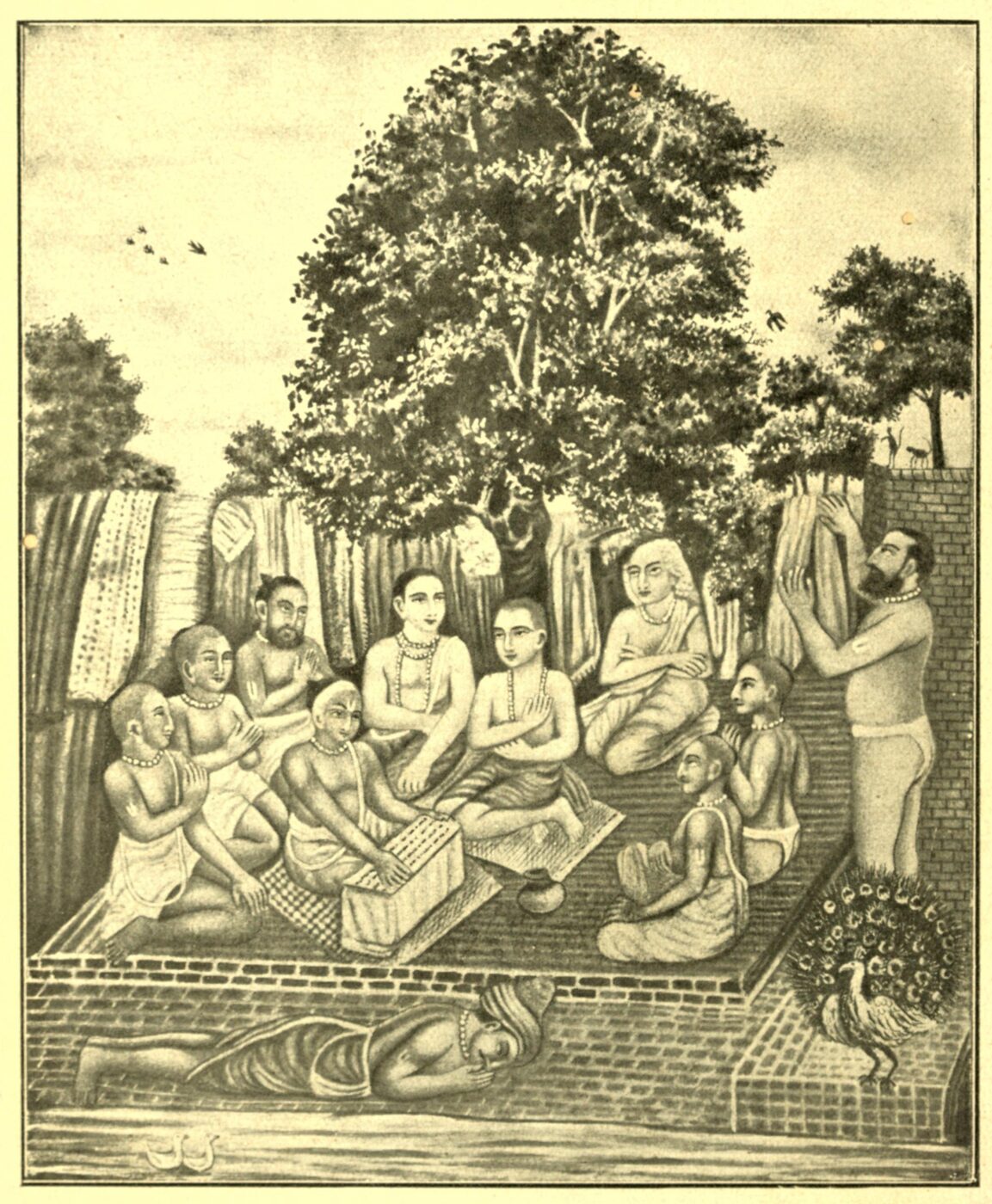
By the time Nimai was five He had been enrolled in the village school, and by eight He was studying at the tola of Gangadasa Pandita in the neighbouring village of Ganganagar. Vyakarana, Sanskrit grammar, was the foundation of the whole traditional course of study, and the hardest of its subjects. A student who could handle Panini's system and the commentaries built on it was considered fit for any other study that might follow. The biographies record that Nimai not only mastered grammar with unusual speed but also began writing His own commentaries on it. They also say that He would sometimes silence older students. He did this by showing that a rule they had taken as settled could be read in another way that could still be defended.
| Detail | Description |
|---|---|
| Village school | Enrolled at the age of five |
| Teacher | Gangadasa Pandita, at his tola in Ganganagar, from the age of eight |
| Subjects | Vyakarana (Sanskrit grammar), smriti and nyaya |
| Elder brother | Vishvarupa, who took sannyasa as Shankararanya |
| His own tola | Opened by His mid-teens, on the bank of the Ganges |
Vishvarupa Leaves Home for Sannyasa #
Two griefs shaped this period of His life. The first was the departure of His elder brother. Vishvarupa, some years older, had grown into a young man of strong detachment. His parents were arranging his marriage, but instead of accepting it he left home and accepted sannyasa, taking the name Shankararanya. For Sachi Devi and Jagannatha Mishra it was a hard blow. The Chaitanya-charitamrita relates that Nimai afterwards comforted His mother with a promise that He would not do the same. Vaishnava readers have always found this promise sad and touching, because they know what He would do at twenty-four. The chapter also preserves an episode in which Vishvarupa appeared to Nimai in a dream and invited Him to take sannyasa and join him. Nimai declined, and Vishvarupa sent Him back home.
The Death of Jagannatha Mishra #
The second grief was the death of Jagannatha Mishra, while Nimai was still a boy. The family, never wealthy, was left in real difficulty. Nimai continued His education largely on His own. He worked through His father's books in smriti, the literature of religious and social law, and in nyaya, the very difficult school of Indian logic. At that time Nabadwip was the most famous centre of nyaya in India. He gained a good working knowledge of nyaya almost entirely without a teacher, and this is one of the details the biographers stress. Students of nyaya commonly spent a decade under a master.
Opening His Own Tola in Nabadwip #
By His mid-teens Nimai had opened His own tola and was teaching grammar to His own students on the bank of the Ganges. Accounts of Him as a teacher are vivid, and they agree with each other. They describe Him as brilliant, playful, quick and merciless in debate, and quite ready to enjoy His own superiority. He is described walking the streets of Nabadwip with a crowd of students behind Him. He would stop any scholar He met, challenge him on some fine point, and then break down whatever position the man defended. Sometimes, after doing so, He argued the opposite side with equal force, just to show that He could. Nabadwip's pandits found Him a fearsome opponent and rather hard to bear. By the time He was sixteen, the town had decided that He was the sharpest logician of His generation, and that no one in Nadia could stand against Him in argument.
The Meeting With Keshava Kashmiri Pandita #
His reputation was confirmed once and for all in His encounter with the travelling scholar Keshava Kashmiri Pandita. Keshava Kashmiri had toured the gatherings of learned men across India, and he came to Nabadwip undefeated. He left it having accepted defeat from a teenager on the bank of the Ganges. The full account is given separately.
Ekadashi Fasting and the Ganges Pastimes #
The Chaitanya-charitamrita also records incidents from these years that already show, behind the scholar, where His life would lead. He forbade His mother to eat grains on Ekadashi, the fortnightly fast day observed by Vaishnavas. It was a small instruction at home, but a clearly Vaishnava one, coming from a boy whose fame rested entirely on worldly learning. On one Ekadashi He pretended to be ill and asked for the food being offered to Lord Vishnu at the house of the wealthy brothers Hiranya and Jagadisha, and they sent it to Him. He played in the Ganges with the other young men of the town and joked with the girls at the bathing ghats. Gaudiya commentators treat this last incident as more than youthful high spirits. This is because they read the whole of His household life as a time when the Lord conducted Himself in a fully human way, while always remaining, in His own nature, exactly what He was.
The Purpose of His Scholarly Pride #
This stage of His life raises a difficult question, and the tradition does not try to smooth it over. The young Nimai Pandita was proud, and knew He was, and enjoyed it. Vaishnava writers do not read this pride as a fault that was later corrected. They read it as part of the design. The Lord established Himself as the finest scholar in the most learned town in Bengal. So when He later gave up scholarship for the chanting of the holy name, no one could say He had taken up devotion because He was not capable of anything more demanding. The man who taught Nabadwip to chant was the same man who had first beaten Nabadwip at its own game.
Scriptural evidence for this chapter (9)
পৌগণ্ড–লীলার সূত্র করিয়ে গণন ।
পৌগণ্ড–বয়সে প্রভুর মুখ্য অধ্যয়ন ॥ ৩ ॥
paugaṇḍa-līlāra sūtra kariye gaṇana
paugaṇḍa-vayase prabhura mukhya adhyayana
Word for word
paugaṇḍa: of the age from five years to ten years; līlāra: of the pastimes; sūtra: synopsis; kariye: I do; gaṇana: enumerate; paugaṇḍa-vayase: in that age between five and ten years; prabhura: of the Lord; mukhya: chief; adhyayana: studying.
Let me now enumerate the activities of the Lord between the ages of five and ten. His chief occupation during this period was to engage Himself in study.
Krishnadasa Kaviraja introduces the period from age five to ten, when study was His chief occupation
গঙ্গাদাস পণ্ডিত–স্থানে পড়েন ব্যাকরণ ।
শ্রবণ–মাত্রে কণ্ঠে কৈল সূত্রবৃত্তিগণ ॥ ৫ ॥
gaṅgādāsa paṇḍita-sthāne paḍena vyākaraṇa
śravaṇa-mātre kaṇṭhe kaila sūtra-vṛtti-gaṇa
Word for word
gaṅgādāsa: Gaṅgādāsa; paṇḍita-sthāne: at the place of the teacher; paḍena: studies; vyākaraṇa: grammar; śravaṇa-mātre: simply by hearing; kaṇṭhe: between the neck and the heart; kaila: did; sūtra-vṛtti-gaṇa: the aphorisms and their definitions.
When the Lord was studying grammar at the place of Gaṅgādāsa Paṇḍita, He would immediately learn grammatical rules and definitions by heart simply by hearing them once.
He learned grammatical rules and definitions by heart on a single hearing
অল্পকালে হৈলা পঞ্জী–টীকাতে প্রবীণ ।
চিরকালের পড়ুয়া জিনে হইয়া নবীন ॥ ৬ ॥
alpa-kāle hailā pañjī-ṭīkāte pravīṇa
cira-kālera paḍuyā jine ha-iyā navīna
Word for word
alpa-kāle: within a very short time; hailā: became; pañjī-ṭīkāte: in the commentary on grammar named Pañjī-ṭīkā; pravīṇa: very expert; cira-kālera: all older; paḍuyā: students; jine: conquers; ha-iyā: being; navīna: their junior.
He soon became so expert in commenting on the Pañjī-ṭīkā that He could win victory over all the other students, although He was a neophyte.
Though a neophyte, He could defeat all the other students in commenting on the Panji-tika
মাতা বলে,—তাই দিব, যা তুমি মাগিবে ।
প্রভু কহে,—একাদশীতে অন্ন না খাইবে ॥ ৯ ॥
mātā bale, — tāi diba, yā tumi māgibe
prabhu kahe, — ekādaśīte anna nā khāibe
Word for word
mātā bale: His mother said; tāi diba: I shall give that; yā: whatever; tumi: You; māgibe: should ask me; prabhu kahe: the Lord said; ekādaśīte: on the Ekādaśī day; anna: grains; nā: don’t; khāibe: eat.
His mother replied, “My dear son, I will give You whatever You ask.” Then the Lord said, “My dear mother, please do not eat grains on the Ekādaśī day.”
The boy asks His mother to give up grains on Ekadashi, an early sign of His Vaishnava conduct
বিশ্বরপ শুনি’ ঘর ছাড়ি পলাইলা।
সন্ন্যাস করিয়া তীর্থ করিবারে গেলা ॥ ১২ ॥
viśvarūpa śuni’ ghara chāḍi palāilā
sannyāsa kariyā tīrtha karibāre gelā
Word for word
viśvarūpa: Viśvarūpa; śuni’: hearing this; ghara: home; chāḍi: giving up; palāilā: went away; sannyāsa: the renounced order; kariyā: accepting; tīrtha: the holy places; karibāre: for touring; gelā: went away.
Hearing of this, Viśvarūpa immediately left home and went away to accept sannyāsa and travel from one place of pilgrimage to another.
Vishvarupa leaves home to accept sannyasa rather than marry
ভাল হৈল,—বিশ্বরূপ সন্ন্যাস করিল ।
পিতৃকুল, মাতৃকুল,—দুই উদ্ধারিল ॥ ১৪ ॥
bhāla haila, — viśvarūpa sannyāsa karila
pitṛ-kula, mātṛ-kula, — dui uddhārila
Word for word
bhāla haila: it is very good; viśvarūpa: Viśvarūpa; sannyāsa: the renounced order of life; karila: has accepted; pitṛ-kula: father’s family; mātṛ-kula: mother’s family; dui: both of them; uddhārila: delivered.
“My dear mother and father,” the Lord said, “it is very good that Viśvarūpa has accepted the sannyāsa order, for thus He has delivered both His father’s family and His mother’s family.”
Nimai consoles His grieving parents over Vishvarupa's renunciation
কতদিন রহি’ মিশ্র গেলা পরলোক ।
মাতা–পুত্র দুঁহার বাড়িল হৃদি শোক ॥ ২৩ ॥
kata dina rahi’ miśra gelā para-loka
mātā-putra duṅhāra bāḍila hṛdi śoka
Word for word
kata dina: some days; rahi’: remaining; miśra: Jagannātha Miśra; gelā: passed away; para-loka: for the transcendental world; mātā: mother; putra: son; duṅhāra: of both of them; bāḍila: increased; hṛdi: in the hearts; śoka: lamentation.
After some days, Jagannātha Miśra passed away from this world to the transcendental world, and both mother and son were very much aggrieved in their hearts.
The passing of Jagannatha Mishra, which left the household in difficulty
এই ত’ কৈশোর–লীলার সূত্র–অনুবন্ধ ।
শিষ্যগণ পড়াইতে করিলা আরম্ভ ॥ ৪ ॥
ei ta’ kaiśora-līlāra sūtra-anubandha
śiṣya-gaṇa paḍāite karilā ārambha
Word for word
ei ta’: thus; kaiśora: the age of kaiśora (the age between the eleventh and fifteenth years); līlāra: of the pastimes; sūtra-anubandha: chronological synopsis; śiṣya-gaṇa: students; paḍāite: to teach; karilā: did; ārambha: begin.
At the age of eleven Śrī Caitanya Mahāprabhu began to teach students. This marks the beginning of His kaiśora age.
At eleven He began teaching students, the start of His kaisora period
সর্বশাস্ত্রে সর্ব পণ্ডিত পায় পরাজয় ।
বিনয়ভঙ্গীতে কারো দুঃখ নাহি হয় ॥ ৬ ॥
sarva-śāstre sarva paṇḍita pāya parājaya
vinaya-bhaṅgīte kāro duḥkha nāhi haya
Word for word
sarva-śāstre: in all scriptures; sarva: all; paṇḍita: learned scholars; pāya: obtain; parājaya: defeat; vinaya: gentle; bhaṅgīte: by behavior; kāro: anyone’s; duḥkha: unhappiness; nāhi: does not; haya: become.
The Lord defeated all kinds of scholars in discourses about all the scriptures, yet because of His gentle behavior, none of them were unhappy.
He defeated scholars of every school, yet His gentleness left none of them resentful
Chapter 4
The Debate with Kashmiri Pandita
How a young Nabadwip logician humbled India's undefeated traveling scholar without ever claiming victory
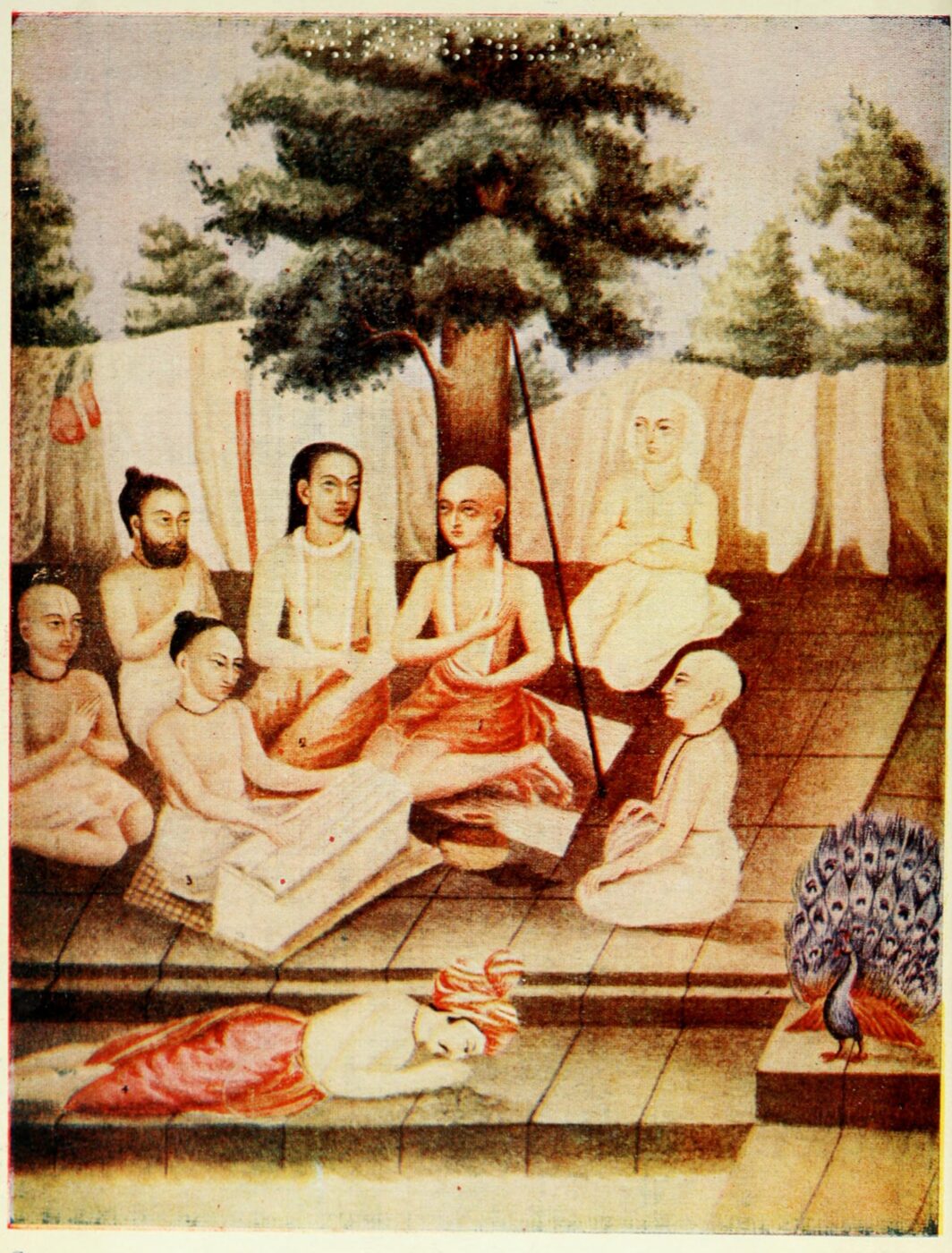
By the time He was a young pandit running His own school of Sanskrit grammar in Nabadwip, Nimai had already earned a reputation as the sharpest logician in a town famous for producing them. At this stage of His life Nimai was still a householder. He was still known simply as a brilliant and somewhat proud young scholar, and there was no outward sign yet of the sankirtana movement to come. It was then that a famous traveling pandit named Keshava arrived in Nabadwip. Keshava had been honoured with the title Kashmiri Pandita for his mastery of poetry and rhetoric.
| Detail | Description |
|---|---|
| Opponent | Keshava, titled Kashmiri Pandita, a digvijayi scholar |
| Place | Nabadwip, on the bank of the Ganges |
| The challenge | A hundred extempore Sanskrit verses in praise of the Ganges |
| Nimai's reply | Questions revealing flaws, redundancies and unintended meanings |
| Outcome | Keshava conceded the next morning and gave up the pride of digvijaya |
The Digvijayi and His Hundred Verses #
Keshava Kashmiri Pandita had already toured the length and breadth of India as a "digvijayi". This is a scholar who challenges the gatherings of learned men in every city he visits and, if no one defeats him, claims the title of conqueror of all directions. He had reportedly triumphed over the greatest pandits of Kashi, Kanchi and countless other centres of learning. He arrived in Nabadwip expecting an easy victory, as everywhere else. He hoped to add the town's proud reputation for scholarship to his own list of conquests. In Nimai's honour and as a challenge, he composed on the spot a hundred Sanskrit verses in praise of the Ganges. The verses were so full of alliteration and double meanings that no scholar present could immediately find fault with a single syllable.
Nimai Finds the Flaws in the Verses #
The pandits of Nabadwip did not want to be humiliated, but they could not answer Keshava on his own terms. It is said that they quietly asked the young Nimai to test the visiting scholar. Even though He was young, they already knew Him to be unusually gifted. Nimai listened to the hundred verses once. Then, with a courtesy that gave no hint of what was coming, He praised one particular verse. With apparent innocence He asked whether a certain compound word in it could carry a second meaning. Keshava was puzzled and admitted he had not intended one. Then Nimai went through the verses one by one. He showed that many of Keshava's own famous lines, read with strict grammatical care, actually contained faults, needless repetitions or unintended meanings. A truly perfect composition should never contain such things. Nimai did this so respectfully and so exactly that the older scholar could find no honest way to disagree.
Victory Without Humiliation #
The encounter is remembered as more than an ordinary contest between scholars because of the way Nimai won. He never boasted, never humiliated Keshava Kashmiri Pandita in front of the crowd, and never claimed to have "defeated" him. He raised questions as a respectful junior seeking to understand, and He let the older pandit see the flaws for himself.
The Dream of Mother Ganga #
That night, so the histories relate, Keshava Kashmiri Pandita had a dream. In it the goddess of the Ganges herself, whom his hundred verses had glorified, appeared to him. She revealed that the young brahmana who had questioned him that day was in fact the Supreme Lord. She also gently scolded him for his pride in digvijaya conquest. Shaken, Keshava returned the next morning and openly accepted that Nimai was greater. The two are said to have parted as friends, not rivals. Keshava Kashmiri Pandita continued his life, free of the very pride that had shaped his whole career until then.
Why the Episode Matters #
For Gaudiya Vaishnavas, the episode is important in two ways. On the historical level, it firmly established Nimai as the finest scholar Nabadwip, and by extension all of Bengal, could produce. No one could rival Him, and this was settled before the sankirtana movement had even begun. Later He freely gave up this scholarly fame for the humility of the holy name, and His high position made that choice stand out even more clearly. On the spiritual level, later Vaishnava commentators read the story as an early, still-hidden hint of who Nimai really was. Even at the height of His fame as a logician, a moment's contact with Him was enough to reveal the presence of the Supreme Lord in a dream. Nabadwip itself would not fully recognise this truth until a short time later, when He returned from Gaya transformed forever.
Scriptural evidence for this chapter (7)
জীয়াৎ কৈশোর–চৈতন্যো মূর্তিমত্যা গৃহাশ্ৰমাৎ ।
লক্ষ্ম্যার্চিতোঽথ বাগ্দেব্যা দিশাংজয়ি–জয়চ্ছলাৎ ॥ ৩॥
jīyāt kaiśora-caitanyo
mūrti-matyā gṛhāśramāt
lakṣmyārcito ’tha vāg-devyā
diśāṁ jayi-jaya-cchalāt
Word for word
jīyāt: long live; kaiśora: situated in the kaiśora age; caitanyaḥ: Lord Caitanya Mahāprabhu; mūrti-matyā: having accepted such a body; gṛha-āśramāt: from a householder’s life; lakṣmyā: by Lakṣmī; arcitaḥ: being worshiped; atha: then; vāk-devyā: by the goddess of learning; diśām: of all directions; jayi: the conqueror; jaya-chalāt: on the plea of conquering.
Long live Lord Caitanya Mahāprabhu in His kaiśora age! Both the goddess of fortune and the goddess of learning worshiped Him. The goddess of learning, Sarasvatī, worshiped Him in His victory over the scholar who had conquered all the world, and the goddess of fortune, Lakṣmīdevī, worshiped Him at home. Since He is therefore the husband or Lord of both goddesses, I offer my obeisances unto Him.
Chapter invocation: Sarasvati herself worshipped Him through His victory over the champion Kesava Kasmiri.
হেনকালে দিগ্বিজয়ী তাঁহাই আইলা ।
গঙ্গারে বন্দন করি’ প্রভুরে মিলিলা ॥ ২৯ ॥
hena-kāle digvijayī tāhāṅi āilā
gaṅgāre vandana kari’ prabhure mililā
Word for word
hena-kāle: at this time; dig-vijayī: Keśava Kāśmīrī; tāhāṅi: there; āilā: reached; gaṅgāre: to mother Ganges; vandana: prayers; kari’: offering; prabhure: the Lord; mililā: met.
Coincidentally, Keśava Kāśmīrī Paṇḍita came there. While offering his prayers to mother Ganges, he met Caitanya Mahāprabhu.
The meeting on the bank of the Ganges where the digvijayi pandita encountered Nimai Pandita.
মহত্ত্বং গঙ্গায়াঃ সততমিদমাভাতি নিতরাং
যদেষা শ্রীবিষ্ণোশ্চরণকমলোৎপত্তিসুভগা ।
দ্বিতীয়–শ্রীলক্ষ্মীরিব সুরনরৈরর্চ্যচরণা
ভবানীভর্তুর্যা শিরসি বিভবত্যদ্ভুতগুণা ॥ ৪১ ॥
mahattvaṁ gaṅgāyāḥ satatam idam ābhāti nitarāṁ
yad eṣā śrī-viṣṇoś caraṇa-kamalotpatti-subhagā
dvitīya-śrī-lakṣmīr iva sura-narair arcya-caraṇā
bhavānī-bhartur yā śirasi vibhavaty adbhuta-guṇā
Word for word
mahattvam: greatness; gaṅgāyāḥ: of mother Ganges; satatam: always; idam: this; ābhāti: shines; nitarām: without comparison; yat: because; eṣā: she; śrī-viṣṇoḥ: of Lord Viṣṇu; caraṇa: feet; kamala: lotus flower; utpatti: generation; subhagā: fortunate; dvitīya: second; śrī: beautiful; lakṣmīḥ: goddess of fortune; iva: like; sura-naraiḥ: by demigods and human beings; arcya: worshipable; caraṇā: feet; bhavānī: of goddess Durgā; bhartuḥ: of the husband; yā: she; śirasi: on the head; vibhavati: flourishes; adbhuta: wonderful; guṇā: qualities.
“ ‘The greatness of mother Ganges always brilliantly exists. She is the most fortunate because she emanated from the lotus feet of Śrī Viṣṇu, the Personality of Godhead. She is a second goddess of fortune, and therefore she is always worshiped both by demigods and by humanity. endowed with all wonderful qualities, she flourishes on the head of Lord Śiva.’ ”
The single verse from Kesava Kasmiri's hundred that Mahaprabhu recited back from memory as a sruti-dhara.
শাস্ত্রের বিচার ভাল–মন্দ নাহি জানি ।
সরস্বতী যে বলায়, সেই বলি বাণী ॥ ৯৪ ॥
śāstrera vicāra bhāla-manda nāhi jāni
sarasvatī ye balāya, sei bali vāṇī
Word for word
śāstrera vicāra: discussion of śāstra; bhāla-manda: good or bad; nāhi jāni: do not know; sarasvatī: mother Sarasvatī; ye balāya: whatever she speaks; sei: those; bali: I say; vāṇī: words.
“My dear sir, I do not know what is good composition and what is bad. But whatever I have spoken must be understood to have been spoken by mother Sarasvatī.”
Mahaprabhu humbly attributes His own critique to mother Sarasvati speaking through Him.
বস্তুতঃ সরস্বতী অশুদ্ধ শ্লোক করাইল ।
বিচার–সময় তাঁর বুদ্ধি আচ্ছাদিল ॥ ৯৭ ॥
vastutaḥ sarasvatī aśuddha śloka karāila
vicāra-samaya tāṅra buddhi ācchādila
Word for word
vastutaḥ: in fact; sarasvatī: mother Sarasvatī; aśuddha: impure; śloka: verse; karāila: caused him to compose; vicāra-samaya: at the time of reviewing; tāṅra: his; buddhi: intelligence; ācchādila: covered.
Sarasvatī had in fact induced the champion to compose his verse in an impure way. Furthermore, when it was discussed she covered his intelligence, and thus the Lord’s intelligence was triumphant.
Sarasvati had induced the flaw and covered the pandita's intelligence so that the Lord's intelligence triumphed.
সরস্বতী স্বপ্নে তাঁরে উপদেশ কৈল ।
সাক্ষাৎ ঈশ্বর করি’ প্রভুকে জানিল ॥ ১০৬ ॥
sarasvatī svapne tāṅre upadeśa kaila
sākṣāt īśvara kari’ prabhuke jānila
Word for word
sarasvatī: mother Sarasvatī; svapne: in a dream; tāṅre: unto him; upadeśa: advice; kaila: gave; sākṣāt: directly; īśvara: the Supreme Person; kari’: accepting; prabhuke: the Lord; jānila: he understood.
In a dream the goddess informed him of the Lord’s position, and the poetic champion could understand that Lord Caitanya Mahāprabhu is the Supreme Personality of Godhead Himself.
In a dream Sarasvati reveals to the poet that Chaitanya is the Supreme Personality of Godhead Himself.
প্রাতে আসি’ প্রভুপদে লইল শরণ ।
প্রভু কৃপা কৈল, তাঁর খণ্ডিল বন্ধন ॥ ১০৭ ॥
prāte āsi’ prabhu-pade la-ila śaraṇa
prabhu kṛpā kaila, tāṅra khaṇḍila bandhana
Word for word
prāte: in the morning; āsi’: coming back; prabhu-pade: at the lotus feet of the Lord; la-ila: took; śaraṇa: shelter; prabhu: the Lord; kṛpā: mercy; kaila: showed; tāṅra: his; khaṇḍila: cut off; bandhana: all bondage.
The next morning the poet came to Lord Caitanya and surrendered unto His lotus feet. The Lord bestowed His mercy upon him and cut off all his bondage to material attachment.
The champion's surrender the next morning and the cutting of his material bondage.
Chapter 5
Marriage and Household Life
Lakshmipriya, the journey to East Bengal, and His years as a grihastha pandit, a full household life that He would later give up
Marriage came to Nimai in the ordinary way and at the ordinary age. The bride was Lakshmipriya, also called Lakshmidevi, the daughter of Vallabhacharya of Nabadwip, from a respectable brahmana family of the town. The Chaitanya-charitamrita places the marriage after the death of Jagannatha Mishra, so Sachi Devi, a widow with little money, arranged it. The biographies say the match was proposed after Sachi Devi saw her son and the girl meeting near the Ganges. They record the wedding as a simple and entirely traditional one. Nimai was in His middle teens, and His wife was younger still.
| Detail | Description |
|---|---|
| First wife | Lakshmipriya, also called Lakshmidevi, daughter of Vallabhacharya of Nabadwip |
| Her passing | Bitten by a serpent while Nimai was teaching in East Bengal |
| Second wife | Vishnupriya, daughter of Sanatana Mishra, the raja-pandita |
| Arranged by | Sachi Devi, after the death of Jagannatha Mishra |
| Duration | A householder until He accepted sannyasa at twenty-four |
The Teaching Journey to East Bengal #
What followed was just as ordinary. Nimai was a young brahmana pandit with a school of His own, and He had a widowed mother and a wife to support. He needed an income, and teaching grammar in Nabadwip did not provide much of one. So Nimai did what many Bengali scholars of that time did. He travelled east, into what is now Bangladesh, to teach and to seek the support of wealthy men there. The sixteenth chapter of the Chaitanya-charitamrita records that the journey had three purposes. They were to get financial help, to continue His own study, and to introduce sankirtana, which was important for what was to come. Even at this stage, before the transformation at Gaya, there are signs in the record that He was already teaching people in East Bengal to chant.
The Meeting With Tapana Mishra #
On this journey He met Tapana Mishra, a brahmana who was troubled about the goal of life and came to Nimai for guidance. Nimai instructed him in devotional service and told him to go and live at Varanasi. The instruction seems strange until one knows what happened later. Years later, when Mahaprabhu came to Varanasi as a sannyasi to challenge the Mayavadi scholars of that city, He took His meals in Tapana Mishra's house. Tapana Mishra's son Raghunatha served Him there. The tradition reads the episode as an early example of the Lord arranging His own future circumstances well in advance.
The Snakebite and the Death of Lakshmipriya #
While Nimai was still in East Bengal, Lakshmidevi died at home in Nabadwip. The Chaitanya-charitamrita states that she was bitten by a serpent. As he often does, Krishnadasa Kaviraja leaves the phrase open. Gaudiya commentators have long read it as the serpent of separation, meaning that she could not survive being parted from Him. She was very young. In a few short years the household had lost a father, an elder son and a daughter-in-law. Nimai returned to that household, and to a mother whose grief the biographers describe as it was, without any attempt to soften it.
The Second Marriage to Vishnupriya #
It was Sachi Devi who insisted on a second marriage. Nimai agreed to it out of respect for her, not out of any desire of His own. The bride this time was Vishnupriya, daughter of Sanatana Mishra. Sanatana Mishra was a scholar of high standing who held the position of raja-pandita, court pandit. His household was far richer than that of the widow Sachi Devi. So the marriage was a much grander occasion than the first. Vaishnava accounts describe at length the procession, the assembled pandits, and the astonishment of Nabadwip that the most brilliant young scholar in the town should be marrying into its most distinguished family.
Nimai as a Householder #
The household life that followed lasted only a few years, and the tradition remembers these years with a special tenderness. As a grihastha, Nimai taught in the morning and came back to a house where His mother and His wife waited. He argued with pandits in the street. In every outward detail His life was quite ordinary. This was the last period in which He belonged to anyone in the ordinary human way. Vaishnavas note that, by every account, He was an attentive son and a considerate husband, and that nothing in His conduct as a householder was lacking or half-hearted. This matters to the tradition because of what came next. When He renounced it all at twenty-four, walking out at night without a farewell, He was not abandoning a life that had disappointed Him or a family He had failed. He was giving up something that was still whole.
Vishnupriya Devi in Separation #
Vishnupriya survived Him by many decades. Vaishnava literature records that she remained in Nabadwip after His departure, living in great austerity. She worshipped a Deity of her husband and chanted on tulasi beads. For each round she completed, she set aside one grain of rice, and in the evening she cooked only what she had counted out that day. In Gaudiya Vaishnavism she is honoured not as a wife who was left behind, but as the living form of bhakti in separation. This is the mood in which Mahaprabhu Himself would live for the last years of His life at Puri.
Scriptural evidence for this chapter (9)
গৃহিণী বিনা গৃহধর্ম না হয় শোভন ।
এত চিন্তি’ বিবাহ করিতে হৈল মন ॥ ২৬ ॥
gṛhiṇī vinā gṛha-dharma nā haya śobhana
eta cinti’ vivāha karite haila mana
Word for word
gṛhiṇī: wife; vinā: without; gṛha-dharma: duties of family life; nā: not; haya: become; śobhana: beautiful; eta cinti’: thinking thus; vivāha: marriage; karite: to execute; haila: became; mana: mind.
“Without a wife,” Lord Caitanya considered, “there is no meaning to householder life.” Thus the Lord decided to marry.
The Lord's own stated reason for marrying: without a wife, household life has no meaning
দৈবে এক দিন প্রভু পড়িয়া আসিতে ।
বল্লভাচার্যের কন্যা দেখে গঙ্গা–পথে ॥ ২৮ ॥
daive eka dina prabhu paḍiyā āsite
vallabhācāryera kanyā dekhe gaṅgā-pathe
Word for word
daive: accidentally; eka dina: one day; prabhu: the Lord; paḍiyā: after studying; āsite: while He was coming back; vallabhācāryera: of Vallabhācārya; kanyā: daughter; dekhe: sees; gaṅgā-pathe: on the way to the Ganges.
One day when the Lord was coming back from school He accidentally saw the daughter of Vallabhācārya on the way to the Ganges.
He sees the daughter of Vallabhacharya on the way to the Ganges
শচীর ইঙ্গিতে সম্বন্ধ করিল ঘটন ।
লক্ষ্মীকে বিবাহ কৈল শচীর নন্দন ॥ ৩০ ॥
śacīra iṅgite sambandha karila ghaṭana
lakṣmīke vivāha kaila śacīra nandana
Word for word
śacīra iṅgite: by the indication of mother Śacī; sambandha: the relationship; karila: made; ghaṭana: possible; lakṣmīke: unto Lakṣmīdevī; vivāha: marriage; kaila: executed; śacīra nandana: the son of mother Śacī.
Following the indications of Śacīdevī, Vanamālī Ghaṭaka arranged the marriage, and thus in due course the Lord married Lakṣmīdevī.
Vanamali Ghataka arranges the match and the marriage to Lakshmidevi takes place
কতদিনে কৈল প্রভু বঙ্গেতে গমন ।
যাঁহা যায়, তাঁহা লওয়ায় নাম–সংকীর্তন ॥ ৮ ॥
kata dine kaila prabhu baṅgete gamana
yāhāṅ yāya, tāhāṅ laoyāya nāma-saṅkīrtana
Word for word
kata dine: after a few days; kaila: did; prabhu: the Lord; baṅgete: in East Bengal; gamana: touring; yāhāṅ yāya: wherever He goes; tāhāṅ: there; laoyāya: induces; nāma-saṅkīrtana: the saṅkīrtana movement.
After some days the Lord went to East Bengal, and wherever He went He introduced the saṅkīrtana movement.
He goes to East Bengal and introduces sankirtana wherever He travels
সেই দেশে বিপ্র, নাম—মিশ্র তপন ।
নিশ্চয় করিতে নারে সাধ্য–সাধন ॥ ১০ ॥
sei deśe vipra, nāma — miśra tapana
niścaya karite nāre sādhya-sādhana
Word for word
sei deśe: in that region of East Bengal; vipra: a brāhmaṇa; nāma: named; miśra tapana: Tapana Miśra; niścaya karite: to ascertain; nāre: not able; sādhya: objective; sādhana: process.
In East Bengal there was a brāhmaṇa named Tapana Miśra, who could not ascertain the objective of life or how to attain it.
Tapana Mishra, unable to ascertain the goal of life, is introduced
তাঁর ইচ্ছা,—প্রভুসঙ্গে নবদ্বীপে বসি ।
প্রভু আজ্ঞা দিল,—তুমি যাও বারাণসী ॥ ১৬ ॥
tāṅra icchā, — prabhu-saṅge navadvīpe vasi
prabhu ājñā dila, — tumi yāo vārāṇasī
Word for word
tāṅra icchā: his desire; prabhu-saṅge: with the Lord; navadvīpe: in Navadvīpa; vasi: I live there; prabhu ājñā dila: but the Lord advised him; tumi: you; yāo: go; vārāṇasī: to Benares.
Tapana Miśra desired to live with the Lord in Navadvīpa, but the Lord asked him to go to Vārāṇasī [Benares].
The Lord directs Tapana Mishra to live at Varanasi rather than stay with Him
প্রভুর বিরহ–সৰ্প লক্ষ্মীরে দংশিল ।
বিরহ–সৰ্প–বিষে তাঁর পরলোক হৈল ॥ ২১ ॥
prabhura viraha-sarpa lakṣmīre daṁśila
viraha-sarpa-viṣe tāṅra paraloka haila
Word for word
prabhura: of the Lord; viraha-sarpa: the separation snake; lakṣmīre: Lakṣmīdevī; daṁśila: bit; viraha-sarpa: of the separation snake; viṣe: by the poison; tāṅra: her; para-loka: next world; haila: it so happened.
The snake of separation bit Lakṣmīdevī, and its poison caused her death. Thus she passed to the next world. She went back home, back to Godhead.
The snake of separation: the passing of Lakshmidevi while He was away
ঘরে আইলা প্রভু বহু লঞা ধন–জন ।
তত্ত্ব–জ্ঞানে কৈলা শচীর দুঃখ বিমোচন ॥ ২৩ ॥
ghare āilā prabhu bahu lañā dhana-jana
tattva-jñāne kailā śacīra duḥkha vimocana
Word for word
ghare: home; āilā: returned; prabhu: the Lord; bahu: much; lañā: bringing; dhana: riches; jana: followers; tattva-jñāne: by transcendental knowledge; kailā: did; śacīra: of Śacīmātā; duḥkha: the unhappiness; vimocana: relieving.
When the Lord returned home, bringing with Him great wealth and many followers, He spoke to Śacīdevī about transcendental knowledge to relieve her of the grief she was suffering.
He returns and speaks transcendental knowledge to console Sachidevi
তবে বিষ্ণুপ্রিয়া–ঠাকুরাণীর পরিণয় ।
তবে ত’ করিল প্রভু দিগ্বিজয়ী জয় ॥ ২৫ ॥
tabe viṣṇupriyā-ṭhākurāṇīra pariṇaya
tabe ta’ karila prabhu digvijayī jaya
Word for word
tabe: after this; viṣṇupriyā: Viṣṇupriyā; ṭhākurāṇīra: of the goddess of fortune; pariṇaya: marriage; tabe ta’: thereafter; karila: did; prabhu: the Lord; dig-vijayī: the champion; jaya: conquer.
Then Lord Caitanya married Viṣṇupriyā, the goddess of fortune, and thereafter He conquered a champion of learning named Keśava Kāśmīrī.
The marriage to Vishnupriya, and the subsequent victory over Keshava Kashmiri
Chapter 6
The Journey to Gaya and Initiation by Ishvara Puri
A son's duty at the Vishnupada temple, initiation from a disciple of Madhavendra Puri, and the great turning point of His life
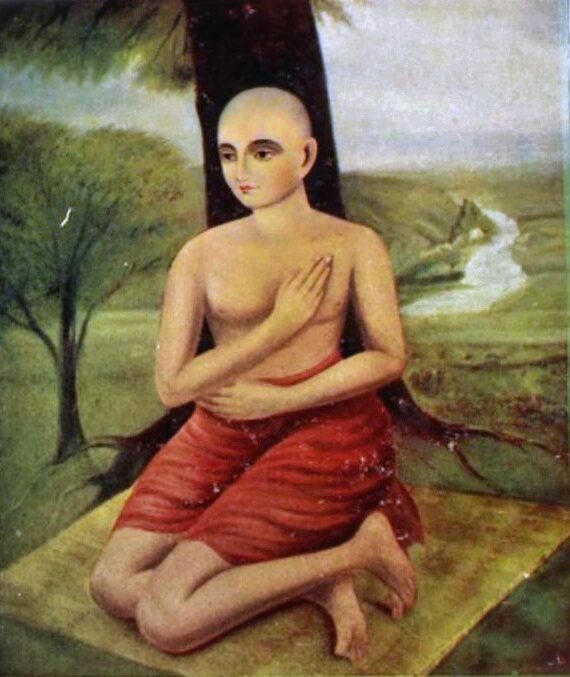
According to tradition, a son owes his departed father the shraddha ceremony. The place in all India where it brings the greatest religious merit is Gaya. There the offering is made at the temple of Vishnupada, the imprint of Vishnu's foot. Some years after Jagannatha Mishra's death, Nimai set out from Nabadwip for Gaya to fulfil that duty, taking with Him a party of His own students. When He went, He was a young married pandit, the most celebrated logician in Nadia, travelling to carry out a family obligation. He returned as someone His own town could hardly recognise.
| Detail | Description |
|---|---|
| Destination | Gaya, and the temple of Vishnupada |
| Purpose | The shraddha ceremony for His father, Jagannatha Mishra |
| Spiritual master | Ishvara Puri, a disciple of Madhavendra Puri |
| Initiation received | The ten-syllable Krishna mantra |
| Result | He returned to Nabadwip absorbed in the holy names and closed His school |
Meeting Ishvara Puri at Vishnupada #
At Gaya He performed the ceremony for His father. And at the Vishnupada temple He met a wandering Vaishnava sannyasi named Ishvara Puri. Ishvara Puri was a disciple of Madhavendra Puri, and so he belonged to a line in which the mood of intense, personal, deeply felt devotion to Krishna had been carefully preserved. Gaudiya Vaishnavas see Madhavendra Puri as the one in whom that mood first fully blossomed, and Ishvara Puri had received it from him directly. From Ishvara Puri, Nimai received initiation and the ten-syllable Krishna mantra.
The Transformation on the Road Home #
All the biographies agree that the change was immediate and complete. The young man who had walked to Gaya arguing points of grammar with His students walked back from it weeping, trembling and losing consciousness. He was unable to hold a conversation without breaking into the names of Krishna. On the road home He is described as hardly able to travel, overcome again and again. His students were confused and more and more alarmed by what had happened to their teacher. His brilliant love of argument was simply gone. In its place He was now so completely absorbed that the ordinary business of life could no longer get His attention.
Nabadwip's Reaction and the Closed School #
Understandably, Nabadwip's reaction was confusion. The town's leading pandits had spent years being defeated by this man in argument. Now they found Him unwilling to argue at all. It is said that when His students assembled for their grammar lessons, He told them that every rule of grammar reminded Him of Krishna. He is said to have wept instead of teaching, until at last He closed His school altogether. Those who had resented His pride decided that He had gone mad, or that grief had disturbed His mind. Only a small number of people understood what they were looking at. One was Advaita Acharya at Shantipura, who had been praying for exactly this. Another was Srivasa Pandit, in whose courtyard the movement would soon begin. There were also a handful of others who were already inclined to devotion.
Why the Lord Accepted a Guru #
Gaudiya theology explains this episode carefully, because at first sight it seems to raise a difficulty. If Chaitanya Mahaprabhu is Krishna Himself, He cannot have needed initiation from anyone. He also cannot have gained at Gaya a devotion that He did not have before. The tradition's answer is that the Lord accepted a spiritual master in order to establish the principle for everyone else. The principle is that no one, however exalted, approaches Krishna without taking shelter of a guru in an authentic disciplic line. The Lord obeyed this rule Himself, so that no one after Him could claim to be free from it. In the same way, the tradition understands that the ecstasy which appeared on the road home was not newly created. It was only newly shown. It was the inner life He had come to demonstrate, which He now allowed to be seen.
The Turning Point of His Life #
However one explains it, the practical result is not in dispute. Everything that Sri Chaitanya Mahaprabhu is remembered for begins after this journey. Before Gaya He is a scholar of exceptional gifts, known only in His own region. History would have kept His name, if at all, only as a small note in the story of Navya-nyaya logic. After Gaya He is the founder of a movement. Within a very short time of His return, the nightly gatherings at Srivasa Pandit's house had begun. From them the sankirtana movement went out into the streets of Nabadwip, and in the centuries that followed it went much further.
From Ritual Observance to Love of God #
The change was not from irreligion to religion. Nimai Pandita had been a perfectly orthodox brahmana. He performed the prescribed duties, observed Ekadashi, and travelled to Gaya to make an offering for His father. At Gaya His religious observance did not change. What changed was the thing His attention was fixed on. The tradition points to this as the very difference it wants us to understand. Religion correctly performed is not the goal. It is the ground from which love of God may or may not grow. At Gaya, in the case of this particular pilgrim, it grew.
Scriptural evidence for this chapter (4)
তবেত করিলা প্রভু গয়াতে গমন ।
ঈশ্বরপুরীর সঙ্গে তথাই মিলন ॥ ৮ ॥
tabeta karilā prabhu gayāte gamana
īśvara-purīra saṅge tathāi milana
Word for word
tabeta: thereafter; karilā: did; prabhu: Lord Caitanya Mahāprabhu; gayāte: to Gayā; gamana: travel; īśvara-purīra saṅge: with Īśvara Purī; tathāi: there; milana: meeting.
Thereafter the Lord went to Gayā. There He met Śrīla Īśvara Purī.
The Lord goes to Gaya and meets Ishvara Puri
দীক্ষা–অনন্তরে হৈল, প্রেমের প্রকাশ ।
দেশে আগমন পুনঃ প্রেমের বিলাস ॥ ৯ ॥
dīkṣā-anantare haila, premera prakāśa
deśe āgamana punaḥ premera vilāsa
Word for word
dīkṣā: initiation; anantare: immediately after; haila: became; premera: of love of Godhead; prakāśa: exhibition; deśe: in His home country; āgamana: coming back; punaḥ: again; premera: of love of God; vilāsa: enjoyment.
In Gayā, Śrī Caitanya Mahāprabhu was initiated by Īśvara Purī, and immediately afterwards He exhibited signs of love of Godhead. He again displayed such symptoms after returning home.
He is initiated by Ishvara Puri and immediately shows the signs of love of Godhead
প্রভুর অভিষেক তবে করিল শ্রীবাস ।
খাটে বসি’ প্রভু কৈলা ঐশ্বর্য প্রকাশ ॥ ১১ ॥
prabhura abhiṣeka tabe karila śrīvāsa
khāṭe vasi’ prabhu kailā aiśvarya prakāśa
Word for word
prabhura: of the Lord; abhiṣeka: worship; tabe: after that; karila: did; śrīvāsa: Śrīvāsa; khāṭe: on the cot; vasi’: sitting; prabhu: Lord Śrī Caitanya Mahāprabhu; kailā: did; aiśvarya: opulence; prakāśa: manifestation.
Śrīvāsa Ṭhākura then worshiped Lord Caitanya Mahāprabhu by the process of abhiṣeka. Sitting on a cot, the Lord exhibited transcendental opulence.
Back in Nabadwip, Srivasa Thakura worships Him by abhiseka
তবে নিত্যানন্দ–স্বরূপের আগমন ।
প্রভুকে মিলিয়া পাইল ষড়্ভুজ–দর্শন ॥ ১২ ॥
tabe nityānanda-svarūpera āgamana
prabhuke miliyā pāila ṣaḍ-bhuja-darśana
Word for word
tabe: thereafter; nityānanda-svarūpera: of the Personality of Godhead Nityānanda; āgamana: appearance; prabhuke: Lord Caitanya Mahāprabhu; miliyā: meeting; pāila: obtained; ṣaṭ-bhuja-darśana: a vision of the six-armed Śrī Caitanya Mahāprabhu.
After this function at the house of Śrīvāsa Ṭhākura, Nityānanda Prabhu appeared, and when He met with Lord Caitanya He got the opportunity to see Him in His six-armed form.
Nityananda Prabhu arrives and meets Him
Chapter 7
Inaugurating the Sankirtana Movement
From Srivasa Angan's closed courtyard to the open streets of Nabadwip, and the confrontation with Chand Kazi that made public sankirtana permanent
When Nimai returned to Nabadwip from Gaya, having received initiation from Ishvara Puri, the town that had known Him as its most brilliant young logician hardly recognised Him. The calm, argumentative pandit had become a man who wept at the sound of Krishna's name, who fell to the ground in the marketplace overwhelmed with emotion, and who could no longer complete an ordinary conversation without breaking into the maha-mantra. Many of His students and fellow scholars thought it was grief, or even madness. Only a small circle recognised what was really taking place. Chief among them was Nityananda Prabhu, who arrived in Nabadwip around this time. There was also Advaita Acharya, an elder Vaishnava who had for years been praying for the Lord to appear, and the devoted brahmana Srivasa Pandit.
| Detail | Description |
|---|---|
| Where it began | Srivasa Angan, the courtyard of Srivasa Pandit in Nabadwip |
| First associates | Nityananda Prabhu, Advaita Acharya, Gadadhara Pandit, Srivasa Pandit |
| The public turn | Nagara-sankirtana, congregational chanting through the town's streets |
| The opposition | Chand Kazi, the Muslim administrator of Nabadwip |
| Outcome | The prohibition withdrawn, and sankirtana permitted without restriction |
Nightly Kirtana at Srivasa Angan #
The sankirtana movement was born in the courtyard of Srivasa Pandit's house, still known today as Srivasa Angan. Each night the doors were shut, and Nimai, Nityananda, Advaita Acharya, Gadadhara Pandit, Srivasa Pandit and a small but growing circle of devotees would sing and dance before the Deity until dawn. Together they explored the ecstatic moods of devotion that Nimai's presence seemed to awaken in everyone around Him. This worship began in private, even in secret, but it could not stay hidden for long. The sound of mridanga and karatalas, and the sight of grown men weeping and dancing through the night, drew first curiosity and then hostility from the more conservative brahmana community of Nabadwip. They saw in it a dangerous break from orthodox ritual religion.
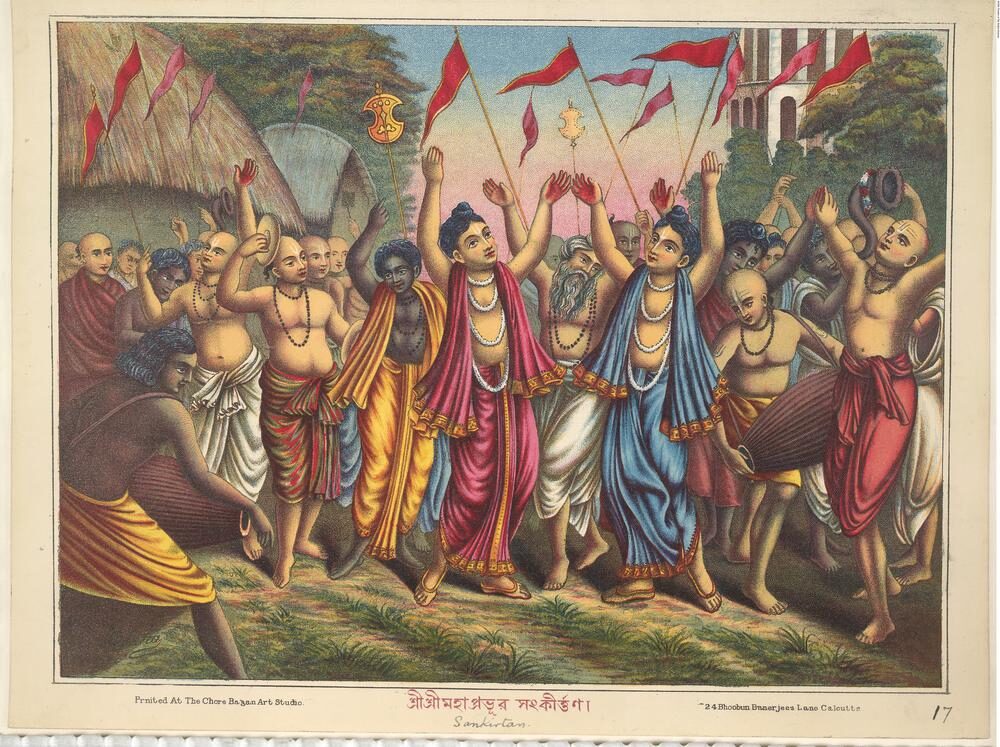
Taking the Chanting Into the Streets #
The turning point came when Nimai made a decision that changed the nature of the movement forever. Sankirtana would no longer be kept inside Srivasa's courtyard. He commanded that it be taken out into the open streets of Nabadwip, for everyone to see and join, whatever their caste, learning or social standing. He organised the assembled devotees into kirtana parties. For the first time, Nabadwip saw a full-scale nagara-sankirtana, a procession of congregational chanting moving through the town's streets and squares, with Nimai Himself dancing at its centre.
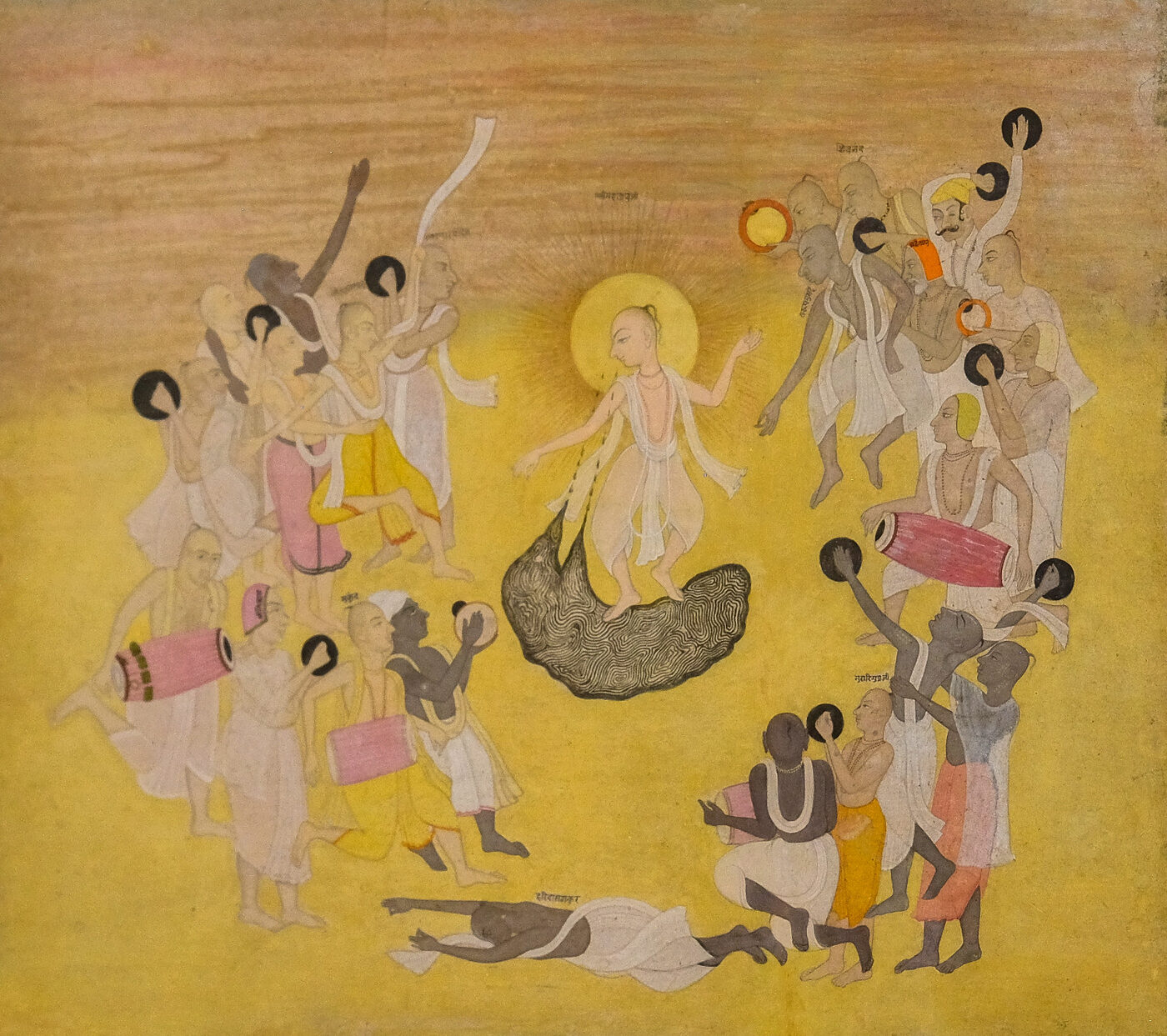
Chand Kazi Breaks the Mridanga #
This public turn angered the town's Muslim administrator, the Kazi (locally called Chand Kazi). Resentful orthodox brahmanas were pressing him, complaining that the noise of drums and the mixing of castes at these gatherings threatened public order. Under this pressure the Kazi sent men to break up one of the kirtana parties, and in the process he smashed a mridanga drum. He forbade any further sankirtana in Nabadwip and threatened punishment for anyone who disobeyed. Nimai did not retreat. Instead, He organised the single largest sankirtana procession Nabadwip had ever seen. By some accounts there were fourteen separate kirtana groups, with thousands of torches lighting the night, all moving together toward the Kazi's own residence.
The Conversation With the Kazi #
When Nimai faced the Kazi, He met not anger but clear fear. So Nimai engaged him in a calm, respectful theological conversation. It is reported that He even addressed the Kazi as a relative, because the Kazi's family and Nimai's shared an ancestral connection from earlier generations. He reasoned with him from the Kazi's own religious texts about how glorifying God through His names is universal. The Kazi was moved by the sincerity of the conversation and, tradition says, by a direct spiritual experience during the exchange. He wept, embraced Nimai, and publicly withdrew his prohibition. He permitted sankirtana to continue in Nabadwip without restriction for as long as the town should exist. Local memory holds that the Kazi's own descendants honoured this assurance for generations afterward.
Sankirtana Becomes a Public Institution #
The Kazi's change of heart removed the last major obstacle to the movement's growth. From that point, sankirtana in Nabadwip was no longer a secret practice of a small circle of devotees meeting behind closed doors. It became an open, public and established practice of congregational chanting. This was exactly the form in which Sri Chaitanya Mahaprabhu intended the chanting of the holy names to spread. It was to spread first through Bengal and Odisha in His own lifetime. Afterward, through the Six Goswamis and the unbroken line of acharyas who followed Him, it was to reach the rest of the world.
Scriptural evidence for this chapter (5)
শুনিয়া যে ক্রুদ্ধ হৈল সকল যবন ।
কাজী–পাশে আসি’ সবে কৈল নিবেদন ॥ ১২৪ ॥
śuniyā ye kruddha haila sakala yavana
kājī-pāśe āsi’ sabe kaila nivedana
Word for word
śuniyā: by hearing; ye: that; kruddha: angry; haila: became; sakala: all; yavana: Muslims; kājī-pāśe: in the court of the Kazi, or magistrate; āsi’: coming; sabe: all; kaila: made; nivedana: petition.
Hearing the resounding vibration of the Hare Kṛṣṇa mantra, the local Muslims, greatly angry, submitted a complaint to the Kazi.
The Muslims of Navadvipa complain to the Kazi about the loud chanting of the Hare Krishna mantra.
ক্রোধে সন্ধ্যাকালে কাজী এক ঘরে আইল ।
মৃদঙ্গ ভাঙ্গিয়া লোকে কহিতে লাগিল ॥ ১২৫ ॥
krodhe sandhyā-kāle kājī eka ghare āila
mṛdaṅga bhāṅgiyā loke kahite lāgila
Word for word
krodhe: in anger; sandhyā-kāle: in the evening; kājī: the Chand Kazi; eka ghare: in one home; āila: came; mṛdaṅga: drum; bhāṅgiyā: breaking; loke: unto the people; kahite: to speak; lāgila: began.
Chand Kazi angrily came to one home in the evening, and when he saw kīrtana going on, he broke a mṛdaṅga and spoke as follows.
Chand Kazi breaks a mrdanga and forbids kirtana - the direct provocation for the first civil disobedience movement.
তবে মহাপ্রভু তার দ্বারেতে বসিলা ।
ভব্যলোক পাঠাইয়া কাজীরে বোলাইলা ॥ ১৪৩ ॥
tabe mahāprabhu tāra dvārete vasilā
bhavya-loka pāṭhāiyā kājīre bolāilā
Word for word
tabe: thereafter; mahāprabhu: Śrī Caitanya Mahāprabhu; tāra dvārete: at the Kazi’s door; vasilā: sat down; bhavya-loka: respectable persons; pāṭhāiyā: sending; kājīre: unto the Kazi; bolāilā: had them call.
Thereafter, when Śrī Caitanya Mahāprabhu reached the Kazi’s house, He sat down by the doorway and sent some respectable persons to call for the Kazi.
Mahaprabhu leads the nagara-sankirtana to the Kazi's own door and sits down there.
কাজী কহে,—মোর বংশে যত উপজিবে ।
তাহাকে ‘তালাক’ দিব, কীর্তন না বাধিবে ॥ ১১২ ॥
kājī kahe, — mora vaṁśe yata upajibe
tāhāke ‘tālāka’ diba, — kīrtana nā bādhibe
Word for word
kājī kahe: the Kazi said; mora: my; vaṁśe: in the dynasty; yata: all (descendants); upajibe: who will take birth; tāhāke: unto them; tālāka: grave admonition; diba: I shall give; kīrtana: the saṅkīrtana movement; nā: never; bādhibe: they will oppose.
The Kazi said, “To as many descendants as take birth in my dynasty in the future, I give this grave admonition: No one should check the saṅkīrtana movement.”
The Kazi's decree binding all his descendants never to stop the sankirtana movement.
এই মতে কাজীরে প্রভু করিলা প্রসাদ ।
ইহা যেই শুনে তার খণ্ডে অপরাধ ॥ ২২৬ ॥
ei mate kājīre prabhu karilā prasāda
ihā yei śune tāra khaṇḍe aparādha
Word for word
ei mate: in this way; kājīre: unto the Kazi; prabhu: the Lord; karilā: did; prasāda: mercy; ihā: this; yei: anyone who; śune: hears; tāra: his; khaṇḍe: vanquishes; aparādha: offenses.
This is the incident concerning the Kazi and the Lord’s mercy upon him. Anyone who hears this is also freed from all offenses.
The concluding benediction: hearing the Kazi incident frees one from all offences.
Chapter 8
Chand Kazi and the Great Kirtana Procession
A magistrate breaks a drum, and Nabadwip answers with torches: the night that made public chanting permanent
By about 1509, Nabadwip had changed beyond recognition. On Chaitanya Mahaprabhu's own instruction, what had begun as a closed nightly gathering in the courtyard of Srivasa Pandit had moved into the open. The Chaitanya-charitamrita says that congregational chanting was going on in every household of the town. It says that nothing else could be heard in Nabadwip but the words "Hari! Hari!", the beating of mridangas and the clash of hand cymbals. That part of the story is told, along with the beginnings of the movement, on its own page. This page tells of the episode that ended the town's short attempt to stop the chanting. It also tells of the conversation that ended that attempt, which Krishnadasa Kaviraja preserved in unusual detail.
| Detail | Description |
|---|---|
| Date | About 1509, at Nabadwip |
| The magistrate | Chand Kazi, a qadi of the Bengal Sultanate |
| The ban | The mridanga broken, and public sankirtana forbidden on pain of punishment |
| The relationship | Uncle and nephew, through Nilambara Chakravarti |
| Sources | Chaitanya-charitamrita gives three parties; the fourteen groups come from Chaitanya-bhagavata |
| Outcome | A standing instruction to his descendants never to stop the sankirtana movement |
The Complaints That Reached the Kazi #
Nabadwip was governed under the Bengal Sultanate. Its magistrate was a qadi, a judge applying Islamic law, remembered in the Vaishnava literature simply as Chand Kazi. The complaints that reached him came from two directions, and the second is the more surprising. Some of the town's Muslim residents, angered by the noise, complained to him. But the Kazi himself later revealed that a group of five or seven orthodox Hindus had also come to him. These men had known Nimai Pandita as a promising young scholar, and now they wanted Him removed from the town. Their objections are recorded almost word for word. They said that He had abandoned the religious principles of Sanatana Dharma and invented a form of worship that no scripture approved. They said that singing and dancing all night was proper for the worship of local goddesses such as Mangalachandi and Vishahari, but not for this. They said that since returning from Gaya He had begun singing, clapping, drumming, laughing, weeping, falling down and rolling on the ground, and had made the whole town as mad as Himself. They said that He had dropped His own name and taken to calling Himself Gaurahari, and that nobody in the neighbourhood could sleep. Their last objection goes to the heart of the matter. Lower-class people were now chanting the maha-mantra, they said, and a holy name heard by everyone would lose its potency. They asked the magistrate to make Him leave.
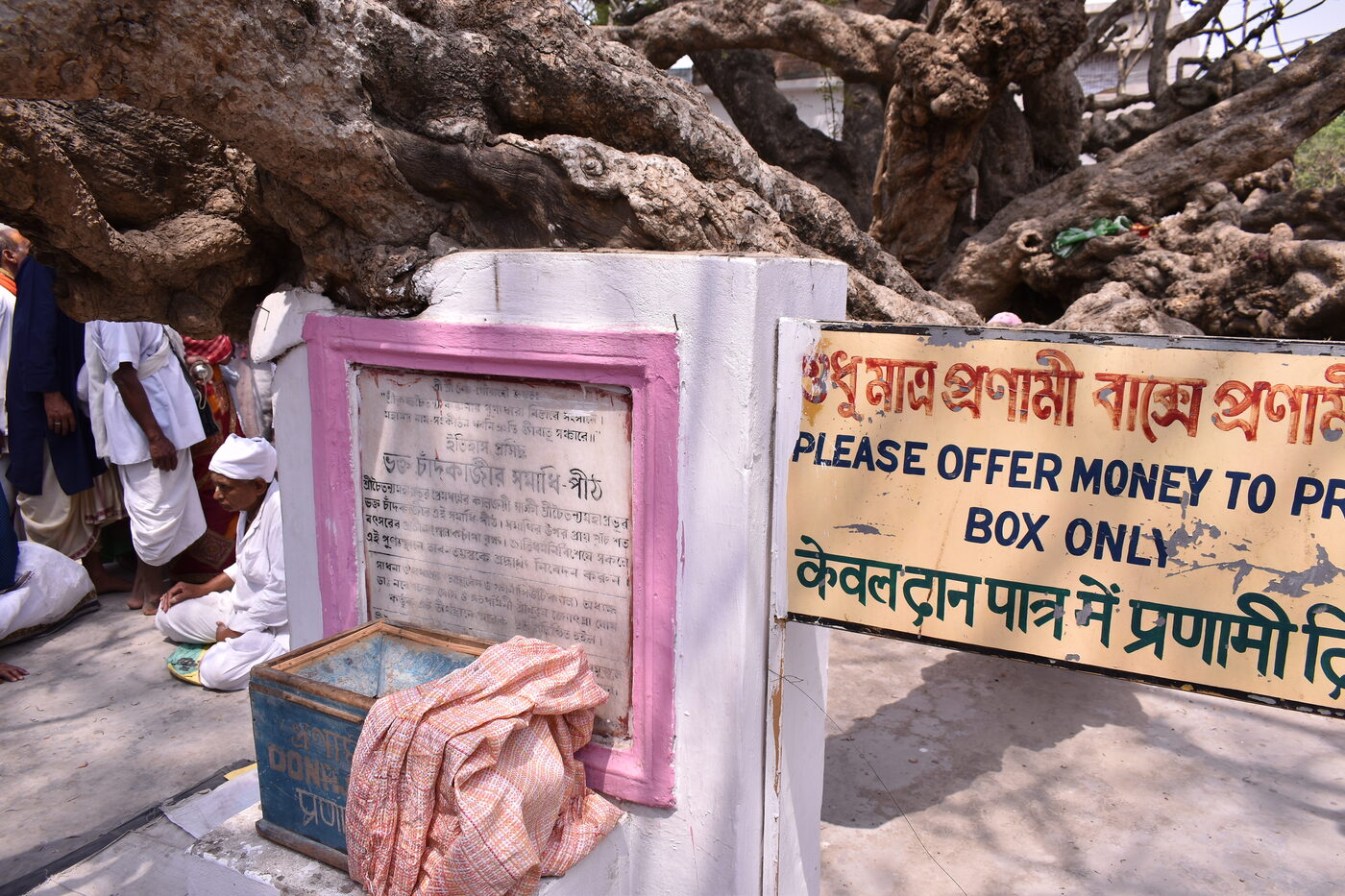
Breaking the Mridanga and the Ban #
The Kazi acted one evening. He came to a house where kirtana was going on and broke the mridanga with his own hands. The biographer preserves three statements he made. The first was a taunt: these people had never bothered to follow their own religion before, and he would like to know on whose support they were suddenly following it so eagerly. The second was an order: no one was to perform sankirtana in the streets of the town. The third was a threat: he was excusing the offence this once, but anyone found chanting in public again would have his property taken away and would be converted to Islam. Then he went home.
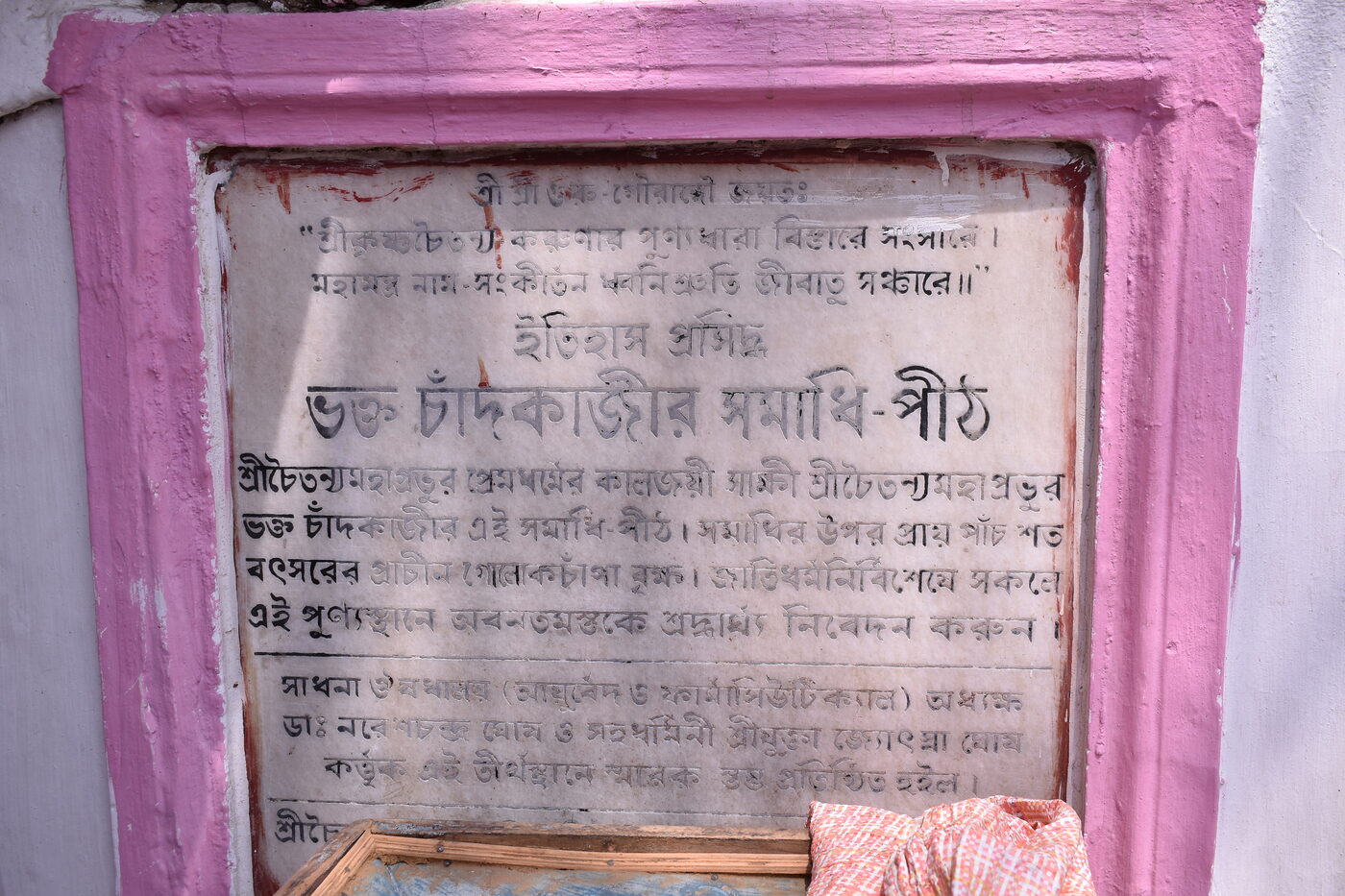
The Lord Calls for Torches #
The devotees brought the news to Chaitanya Mahaprabhu, and His first recorded response was not a gentle one: go and perform sankirtana, He said, and today I shall kill all the Muslims. What He actually did was something else. He saw that the townspeople were now chanting in fear, not in joy. So He called them together and gave instructions of a quite different kind. That evening the whole city was to be decorated. A torch was to be lit in every house. He would take responsibility for everyone's protection. And then, He said, let us see what sort of Kazi comes to stop our kirtana.
How Large the Procession Was #
The sources differ about the size of what followed. Krishnadasa Kaviraja gives only a short account. He says the Lord formed three parties: Haridasa Thakura dancing at the head of the procession, Advaita Acharya dancing in the middle, and the Lord Himself dancing at the rear with Nityananda Prabhu moving beside Him. He then stops to say that Vrindavana Dasa Thakura has already described the whole incident in detail in the Chaitanya-bhagavata, and that he will not repeat it. That is why the much larger figures known from popular retellings, commonly given as fourteen kirtana groups, come from the earlier biography, not from the Chaitanya-charitamrita. Both books agree on what kind of event it was. It was a night procession, lit by thousands of torches, moving slowly and with purpose through every quarter of the town and coming together at the magistrate's house.
The Crowd at the Kazi's House #
The Chaitanya-charitamrita does not make the crowd look better than it was. It records that the sound terrified the Kazi, who shut himself in his room and would not come out. It also records that the people, protected by the Lord and roaring in anger, became reckless, and that some of them wrecked his house and damaged his flower garden. The Lord had not ordered this, and the narrative gives no sign that He approved it. When He reached the house He did not go in. He sat down by the doorway and sent respectable men to ask the Kazi to come out.
The Kazi Comes Out #
The Kazi came, with his head down. What happened next, not the procession, is the reason this episode is remembered. The Lord stood, offered him respect, and gave him a seat. Then, in a friendly tone, He began with a complaint about manners: I have come to your house as your guest, and on seeing Me you hid in your room; what sort of etiquette is that? The Kazi answered honestly. He said that his guest had arrived very angry, and that hiding had seemed the surest way of allowing Him to calm down. Now that He had calmed down, the visit was an honour.
Uncle and Nephew Through Nilambara Chakravarti #
Then the Kazi brought up the fact on which the whole conversation turned. The scholar Nilambara Chakravarti, he said, was his uncle by village relationship, and he described this bond as stronger than a bodily one. Nilambara Chakravarti was Chaitanya Mahaprabhu's maternal grandfather. That made the Kazi His maternal uncle and the Lord his nephew. The Kazi drew the conclusion himself: when a nephew is angry the uncle tolerates it, and when the uncle gives offence the nephew does not take it seriously. From that point the two addressed each other as uncle and nephew for the rest of the exchange. Krishnadasa Kaviraja adds an interesting note. He says that a good deal of what they said to each other was spoken in hints, and that nobody outside could follow the inner meaning of the conversation.
The Question About Cow Killing #
The Lord's questions did not begin with kirtana. They began with cows. You drink cows' milk, He said, so the cow is your mother; the bull produces the grain that maintains you, so he is your father; how then can you kill and eat your own father and mother, and what religion is that? The Kazi answered as the trained judge of law that he was. You have your Vedas and Puranas, he said; we have the Koran. It distinguishes two paths, one of increasing worldly engagement and one of decreasing it. On the path of renunciation the killing of animals is prohibited. On the path of regulated activity it is permitted under scriptural sanction, and therefore it is not sinful. Then he argued back: your own Vedic scriptures sanction the killing of a cow in sacrifice, and the great sages performed such sacrifices.
Sacrifice and the Power to Restore Life #
The Lord agreed with the Kazi's starting point, but not with the way he applied it. The Vedas do prohibit cow-killing, and the exception for sacrifice depended on one condition. One may take a life for such a purpose only if one can restore it. The sages who performed those sacrifices took old and worn-out cows and revived them by the power of Vedic mantra. So what looked like killing was a benefit to the animal. Brahmanas of the present age have no such power, He said, which is why the sacrifice of a cow is among the acts specifically forbidden in the age of Kali. Since you cannot bring the animal back, the killing is simply killing, and the responsibility is yours.
The Kazi Concedes the Argument #
The Kazi, the biographer says, was stunned into silence. He thought the matter over and accepted defeat. He then admitted a great deal more than the argument required. What You have said is true, he answered; our scriptures are of recent composition and are not logical or philosophical; I know they contain a good deal of imagination and mistaken idea, and I accept them because I am a Muslim and for the sake of my community, though their support is thin. However one understands the theological content of this exchange, the record shows it as a debate that the Lord conducted entirely from His opponent's own beliefs. His opponent accepted defeat, and he was not humiliated in front of the crowd.
Why the Kazi Stopped Enforcing His Order #
Chaitanya Mahaprabhu then smiled and asked the question He had come to ask. Chanting goes on in your city day and night; as a Muslim magistrate you have the authority to stop Sanatana Dharma ceremonies, and you have stopped enforcing your own order. Why? The Kazi asked to be taken somewhere private. The Lord refused: these are all My confidential associates, speak in front of them. Then the Kazi, addressing Him by the name the town used, Gaurahari, told the whole story.
The Dream of the Man-Lion Form #
On the night he had broken the drum, he had dreamed of a roaring form with the body of a man and the face of a lion. It sprang onto his chest and set its claws on him. It said that it would tear him open exactly as he had broken the mridanga. It had spared him because the disturbance he had caused was not yet great, but it promised to return if he interfered again. He had woken terrified. Here, he said, and opened his shirt in front of the assembly to show the marks of the claws. The people who saw them, the biographer records, accepted the incident as wonderful.
The Orderlies With Scorched Faces #
Then his orderlies (attendants) had come to him one by one, each with the same report. When they went to stop the chanting, their faces had been scorched, their beards burned and their cheeks blistered. He had told them to go home and leave the chanting alone.
The Tongue That Would Not Stop Chanting #
And then the Muslims of the town had come back to complain again. One of them explained the reason for his own visit. He had started mocking the Hindus, who name their sons Krishnadasa and Ramadasa and Haridasa and go about calling "Hari, Hari," and since that day his own tongue had chanted the name without stopping. He could not make it stop. Another man said the same. The Kazi's conclusion was simple, and remarkable coming from a Muslim judge: I know that Narayana is the supreme God of the Hindus, and I think within my mind that You are that same Narayana.
The Pledge to His Descendants #
The Lord touched him. He told him that the three names he had just spoken, Hari, Krishna and Narayana, had wiped out the reactions of all his sinful activity, and that he was now supremely pure. The Kazi wept, took hold of the Lord's feet, and asked for one thing only: that his devotion should remain fixed. In return the Lord asked one favour of him. He wanted a pledge that the sankirtana movement would not be stopped, at least in the district of Nadia. The Kazi did not give this as a simple permission. He gave it as a binding instruction to his own line: to as many descendants as are born in my family in future, I give this grave admonition: no one is to stop the sankirtana movement. The Lord rose chanting, the whole assembly rose with Him, and the Kazi walked back with the kirtana party before being sent home.
The Kazi's Tomb at Nabadwip #
The memory of the episode has lasted five centuries. The Kazi's tomb still stands at Nabadwip beneath an old champaka tree. Vaishnavas visit it, and local tradition holds that his descendants honoured the pledge for generations. Historians of Bengal read the incident as one of the better-documented examples of peaceful agreement, not confrontation, between the new devotional movement and the Sultanate's local government. Gaudiya Vaishnavas read it differently and more simply. Faced with a legal ban, Chaitanya Mahaprabhu neither obeyed it nor met it with violence. He broke it in public, on a large scale, with light and sound and so many people that it could not be quietly punished. Then He sat down in the dust outside the magistrate's door and talked to him, until the man who had imposed the ban withdrew it himself. The argument He used was not about the rights of Hindus. It was about cows, and then about the magistrate's own dream. What He finally asked for was not for Himself. It was for a practice to continue forever, in a district He was about to leave for good.
Scriptural evidence for this chapter (10)
মৃদঙ্গ–করতাল সংকীর্তন–মহাধ্বনি ।
হরি’ ‘হরি’–ধ্বনি বিনা অন্য নাহি শুনি ॥ ১২৩ ॥
mṛdaṅga-karatāla saṅkīrtana-mahādhvani
‘hari’ ‘hari’ — dhvani vinā anya nāhi śuni
Word for word
mṛdaṅga: drum; karatāla: hand bells; saṅkīrtana: chanting of the holy name of the Lord; mahā-dhvani: great vibration; hari: the Lord; hari: the Lord; dhvani: sound; vinā: except; anya: another; nāhi: not; śuni: one can hear.
When the saṅkīrtana movement thus started, no one in Navadvīpa could hear any sound other than the words “Hari! Hari!” and the beating of the mṛdaṅga and clashing of hand bells.
The state of Nabadwip before the ban, nothing audible in the town but the holy name, mridanga and cymbals.
ক্রোধে সন্ধ্যাকালে কাজী এক ঘরে আইল ।
মৃদঙ্গ ভাঙ্গিয়া লোকে কহিতে লাগিল ॥ ১২৫ ॥
krodhe sandhyā-kāle kājī eka ghare āila
mṛdaṅga bhāṅgiyā loke kahite lāgila
Word for word
krodhe: in anger; sandhyā-kāle: in the evening; kājī: the Chand Kazi; eka ghare: in one home; āila: came; mṛdaṅga: drum; bhāṅgiyā: breaking; loke: unto the people; kahite: to speak; lāgila: began.
Chand Kazi angrily came to one home in the evening, and when he saw kīrtana going on, he broke a mṛdaṅga and spoke as follows.
The Kazi breaking the mridanga, his taunt, his prohibition of street sankirtana and his threat of confiscation and forced conversion.
নগরে নগরে আজি করিমু কীর্তন ।
সন্ধ্যাকালে কর সভে নগর–মণ্ডন ॥ ১৩৩ ॥
nagare nagare āji karimu kīrtana
sandhyā-kāle kara sabhe nagara-maṇḍana
Word for word
nagare: from town; nagare: to town; āji: today; karimu: I shall perform; kīrtana: chanting of the Hare Kṛṣṇa mahā-mantra; sandhyā-kāle: in the evening; kara: do; sabhe: all; nagara: of the city; maṇḍana: decoration.
“In the evening I shall perform saṅkīrtana in each and every town. Therefore you should all decorate the city in the evening.
The Lord's counter-order: decorate the city, light a torch in every house, and see what Kazi comes to stop the kirtana.
এত কহি’ সন্ধ্যাকালে চলে গৌররায় ।
কীর্তনের কৈল প্রভু তিন সম্প্রদায় ॥১৩৫ ॥
eta kahi’ sandhyā-kale cāle gaurarāya
kīrtanera kaila prabhu tina sampradāya
Word for word
eta kahi’: saying this; sandhyā-kāle: in the evening; cale: went out; gaura-rāya: Gaurasundara; kīrtanera: of performing saṅkīrtana; kaila: made; prabhu: the Lord; tina: three; sampradāya: parties.
In the evening Lord Gaurasundara went out and formed three parties to perform kīrtana.
The three kirtana parties, with Haridasa Thakura at the head, Advaita Acharya in the middle and the Lord at the rear.
গ্রাম সম্বন্ধে ‘চক্রবর্তী হয় মোর চাচা ।
দেহ–সম্বন্ধে হৈতে হয় গ্রাম–সম্বন্ধ সাঁচা ॥১৪৮ ॥
grāma-sambandhe ‘cakravartī’ haya mora cācā
deha-sambandhe haite haya grāma-sambandha sāṅcā
Word for word
grāma-sambandhe: in our neighborhood relationship; cakravartī: Your grandfather Nīlāmbara Cakravartī; haya: becomes; mora: my; cācā: uncle; deha-sambandhe: in a bodily relationship; haite: than; haya: becomes; grāma-sambandha: neighborhood relationship; sāṅcā: more powerful.
“In our village relationship, Nīlāmbara Cakravartī Ṭhākura was my uncle. Such a relationship is stronger than a bodily relationship.
The Kazi's claim of kinship through Nilambara Chakravarti, and the uncle-and-nephew footing on which the whole conversation proceeds.
কাজী কহে,—তোমার যৈছে বেদ–পুরাণ ।
তৈছে আমার শাস্ত্র—কেতাব ‘কোরাণ’ ॥ ১৫৫ ॥
kājī kahe, — tomāra yaiche veda-purāṇa
taiche āmāra śāstra — ketāva ‘korāṇa’
Word for word
kājī kahe: the Kazi replied; tomāra: Your; yaiche: as much as; veda-purāṇa: the Vedas and Purāṇas; taiche: similarly; āmāra: our; śāstra: scripture; ketāva: the holy book; korāṇa: the Koran.
The Kazi replied, “As You have Your scriptures called the Vedas and Purāṇas, we have our scripture, known as the holy Koran.
The Kazi's argument from the Koran, distinguishing the path of engagement from the path of renunciation.
কলিকালে তৈছে শক্তি নাহিক ব্রাহ্মণে ।
অতএব গোবধ কেহ না করে এখনে ॥ ১৬৩ ॥
kali-kāle taiche śakti nāhika brāhmaṇe
ataeva go-vadha keha nā kare ekhane
Word for word
kali-kāle: in the Age of Kali; taiche: such; śakti: power; nāhika: there is none; brāhmaṇe: in the brāhmaṇas; ataeva: therefore; go-vadha: killing of cows; keha: anyone; nā: does not; kare: execute; ekhane: at the present.
“Formerly there were powerful brāhmaṇas who could make such experiments using Vedic hymns, but now, because of the Kali-yuga, brāhmaṇas are not so powerful. Therefore the killing of cows and bulls for rejuvenation is forbidden.
The Lord's reply that cow sacrifice depended on the power to restore life, and is therefore among the acts forbidden in Kali-yuga.
আসি’ কহে,—হিন্দুর ধর্ম ভাঙ্গিল নিমাই ।
যে কীর্তন প্রবর্তাইল, কভু শুনি নাই ॥ ২০৪ ॥
āsi’ kahe, — hindura dharma bhāṅgila nimāi
ye kīrtana pravartāila, kabhu śuni nāi
Word for word
āsi’: coming there; kahe: they said; hindura: of the Hindus; dharma: religious principles; bhāṅgila: has broken; nimāi: Nimāi Paṇḍita; ye: that; kīrtana: congregational chanting; pravartāila: has introduced; kabhu: at any time; śuni: we heard; nāi: never.
“Coming to me, the Hindus complained, ‘Nimāi Paṇḍita has broken the Hindu religious principles. He has introduced the saṅkīrtana system, which we never heard from any scripture.
The complaint of the orthodox Hindus, reported by the Kazi himself, including the objection that the holy name loses potency if everyone hears it.
প্রভু কহে,—এক দান মাগিয়ে তোমায় ।
সংকীর্তন বাদ যৈছে নহে নদীয়ায় ॥ ২২১ ॥
prabhu kahe, — eka dāna māgiye tomāya
saṅkīrtana vāda yaiche nahe nadīyāya
Word for word
prabhu kahe: the Lord said; eka: one; dāna: charity; māgiye: I beg; tomāya: from you; saṅkīrtana: chanting of the Hare Kṛṣṇa mantra; vāda: opposition; yaiche: as it may be; nahe: not be; nadīyāya: in the district of Nadia.
The Lord said, “I wish to beg you for one favor in charity. You must pledge that this saṅkīrtana movement will not be checked, at least in the district of Nadia.”
The Lord's single request and the Kazi's decree binding his descendants never to check the sankirtana movement.
হরের্নাম হরের্নাম হরের্নামৈব কেবলম্ ।
কলৌ নাস্ত্যেব নাস্ত্যেব নাস্ত্যেব গতিরন্যথা ॥ ২১ ॥
harer nāma harer nāma
harer nāmaiva kevalam
kalau nāsty eva nāsty eva
nāsty eva gatir anyathā
Word for word
hareḥ nāma: the holy name of the Lord; hareḥ nāma: the holy name of the Lord; hareḥ nāma: the holy name of the Lord; eva: certainly; kevalam: only; kalau: in the Age of Kali; na asti: there is none; eva: certainly; na asti: there is none; eva: certainly; na asti: there is none; eva: certainly; gatiḥ: destination; anyathā: otherwise.
“ ‘In this Age of Kali there is no other means, no other means, no other means for self-realization than chanting the holy name, chanting the holy name, chanting the holy name of Lord Hari.’
The verse on the holy name as the only means in the age of Kali, quoted in this same chapter and often recited alongside the episode.
Chapter 9
Deliverance of Jagai and Madhai
Nabadwip's most notorious criminals become the living proof that no soul is beyond the mercy of the holy name
Among the many souls touched by the sankirtana movement in Nabadwip, none is remembered more vividly, or cited more often, than the two brothers Jagai and Madhai. They were born into a respectable brahmana family, but they had given up every trace of their upbringing. The biographies describe them as habitual drunkards, meat-eaters, thieves and troublemakers who terrorised the neighbourhood. They had fallen so low that ordinary townspeople crossed the street to avoid them. No one any longer expected, or even hoped, that they would change.
Nityananda Prabhu Approaches the Brothers #
Nityananda Prabhu was the first to approach them directly. He met the two brothers drunk in the street and spoke to them gently about the value of chanting the Lord's name. He also spoke of a different life, which is possible for every soul without exception.
Madhai Strikes Nityananda Prabhu #
Madhai was drunk. Instead of receiving this compassion with gratitude, he became furious at what he took to be interference. He struck Nityananda Prabhu and cut His forehead so badly that blood flowed freely. Jagai was also drunk, but he was horrified at his brother's violence toward a Vaishnava sannyasi who had come only to help them. Jagai tried to hold Madhai back.
The Lord's Anger and Nityananda's Plea #
News of the attack on Nityananda Prabhu reached Chaitanya Mahaprabhu. It is said that He rose in righteous anger, unlike anything the devotees had seen from Him before, and went to face the brothers Himself with the Sudarshana disc called into His hand. But Nityananda Prabhu, still bleeding, threw Himself between the Lord and the two brothers and begged the Lord to forgive them. He reminded Chaitanya Mahaprabhu that He had appeared in this age for this very purpose, to deliver the fallen. He also reminded Him that Jagai and Madhai, however low they had fallen, were exactly the souls His mission existed for. Moved by His own devotee's mercy, the Lord gave up His anger.
The Surrender of Jagai and Madhai #
What happened next is the heart of the story. Jagai and Madhai saw Nityananda Prabhu's blood and heard of the Lord's compassion even after such an attack. They broke down completely. They fell at the feet of both Nityananda Prabhu and Chaitanya Mahaprabhu, weeping and begging forgiveness for a lifetime of sin. Chaitanya Mahaprabhu accepted them on the spot. He asked only that they give up their old habits of intoxication and violence. Vaishnava tradition holds that from that moment the two brothers were changed within, as completely as they had once fallen into a life of crime. In some tellings, Madhai was somewhat more likely to fall back into old ways and needed the Lord's continued mercy. But in the end both were recognised as sincere, dedicated devotees.
Why the Story Is Remembered #
News of the two most notorious sinners in Nabadwip becoming devotees spread through the town far faster than any sermon could have. The debate with Kashmiri Pandita had shown Nabadwip Nimai's unmatched intellect. The sankirtana processions had shown the town His power to inspire ecstatic devotion. But the deliverance of Jagai and Madhai showed something that convinced even doubters about the true nature of His mission. It showed that the mercy of the holy name asked nothing of birth, learning or past conduct. For this reason "Jagai-Madhai" has become the standard example of the saving power of the holy name, in the whole of Gaudiya Vaishnava literature and preaching. Devotees still pray, quoting the example of these two brothers, that if even they could be delivered by the Lord's mercy, no fallen soul is ever truly beyond hope.
Scriptural evidence for this chapter (5)
তবে শচী দেখিল, রামকৃষ্ণ—দুই ভাই ।
তবে নিস্তারিল প্রভু জগাই–মাধাই ॥ ১৭ ॥
tabe śacī dekhila, rāma-kṛṣṇa — dui bhāi
tabe nistārila prabhu jagāi-mādhāi
Word for word
tabe: thereafter; śacī: mother Śacīdevī; dekhila: saw; rāma-kṛṣṇa: Lord Kṛṣṇa and Lord Balarāma; dui bhāi: two brothers; tabe: thereafter; nistārila: delivered; prabhu: the Lord; jagāi-mādhāi: the two brothers Jagāi and Mādhāi.
Thereafter mother Śacīdevī saw the brothers Kṛṣṇa and Balarāma in Their manifestation of Lord Caitanya and Nityānanda. Then the Lord delivered the two brothers Jagāi and Mādhāi.
The Adi-lila synopsis verse recording that the Lord delivered the brothers Jagai and Madhai.
হেন প্রেম শ্রীচৈতন্য দিলা যথা তথা ।
জগাই মাধাই পর্যন্ত—অন্যের কা কথা ॥ ২০ ॥
hena prema śrī-caitanya dilā yathā tathā
jagāi mādhāi paryanta — anyera kā kathā
Word for word
hena: such; prema: love of Godhead; śrī-caitanya: Lord Śrī Caitanya Mahāprabhu; dilā: has given; yathā: anywhere; tathā: everywhere; jagāi: Jagāi; mādhāi: Mādhāi; paryanta: up to them; anyera: of others; kā: what to speak; kathā: words.
Lord Śrī Caitanya Mahāprabhu has freely given this love of Kṛṣṇa everywhere and anywhere, even to the most fallen, such as Jagāi and Mādhāi. What then to speak of those who are already pious and elevated?
From the purport: Purport excerpt: “The two brothers Jagāi and Mādhāi epitomize the sinful population of this Age of Kali. They were most disturbing elements in society because they were meat-eaters, drunkards, woman-hunters, rogues and thieves.”
Chaitanya gave krsna-prema freely even to the most fallen, Jagai and Madhai.
মহা–কৃপাপাত্র প্রভুর জগাই, মাধাই ।
‘পতিতপাবন’ নামের সাক্ষী দুই ভাই ॥ ১২০ ॥
mahā-kṛpā-pātra prabhura jagāi, mādhāi
‘patita-pāvana’ nāmera sākṣī dui bhāi
Word for word
mahā-kṛpā-pātra: object of very great mercy; prabhura: of the Lord; jagāi mādhāi: the two brothers Jagāi and Mādhāi; patita-pāvana: deliverer of the fallen; nāmera: of this name; sākṣī: witness; dui bhāi: these two brothers.
Jagāi and Mādhāi, the eighty-ninth and ninetieth branches of the tree, were the greatest recipients of Lord Caitanya’s mercy. These two brothers were the witnesses who proved that Lord Caitanya was rightly named Patita-pāvana, “the deliverer of the fallen souls.”
From the purport: Purport excerpt: “Jagāi and Mādhāi were born in respectable brāhmaṇa families, but they adopted the professions of thieves and rogues and thus became implicated in all kinds of undesirable activities, especially woman-hunting, intoxication and gambling.”
The two brothers are the standing proof of the Lord's name 'Patita-pavana', deliverer of the fallen.
জগাই-মাধাই দুই করিলে উদ্ধার ।
তাহাঁ উদ্ধারিতে শ্রম নহিল তোমার ॥ ১৯২ ॥
jagāi-mādhāi dui karile uddhāra
tāhāṅ uddhārite śrama nahila tomāra
Word for word
jagāi-mādhāi: the two brothers Jagāi and Mādhāi; dui: two; karile: You did; uddhāra: deliverance; tāhāṅ: there; uddhārite: to deliver; śrama: exertion; nahila: there was not; tomāra: of You.
“You have delivered the two brothers Jagāi and Mādhāi, but to deliver them You did not have to exert Yourself very much.
Rupa Gosvami tells the Lord that delivering Jagai and Madhai cost Him no great exertion.
পাপী নীচ উদ্ধারিতে তাঁর অবতার ।
জগাই মাধাই তেঁহ করিলা উদ্ধার ॥ ৪৫ ॥
pāpī nīca uddhārite tāṅra avatāra
jagāi mādhāi teṅha karilā uddhāra
Word for word
pāpī: sinful; nīca: lowborn; uddhārite: to deliver; tāṅra: His; avatāra: incarnation; jagāi: Jagāi; mādhāi: Mādhāi; teṅha: He; karilā uddhāra: delivered.
The King said, “Śrī Caitanya Mahāprabhu has descended just to deliver all kinds of sinful, lowborn persons. Consequently He has delivered sinners like Jagāi and Mādhāi.
King Prataparudra cites Jagai and Madhai as evidence that the Lord descended to deliver the sinful and lowborn.
Chapter 10
Accepting the Sannyasa Order of Life
At twenty-four, Nimai Pandita renounces home, caste and family to become Sri Krishna Chaitanya
By the time He was twenty-four, Chaitanya Mahaprabhu had already transformed Nabadwip. A nightly gathering of devotees in a private courtyard had grown into open, town-wide sankirtana. The local Muslim government had withdrawn its opposition, and even the town's most notorious sinners had been saved. Yet in the eyes of most of Bengal, Nimai was still a brilliant young householder pandit. His mission was to give love of Krishna freely to every soul, whatever their caste or position in society. Nimai became convinced that this mission could not fully succeed while He remained a grihastha (householder). He was convinced of this because Bengali society automatically gave great honour and respect to a married brahmana scholar. That honour would always stand between Him and the most fallen people He most wished to reach.
| Detail | Description |
|---|---|
| Age at renunciation | Twenty-four |
| Place | Katwa, on the banks of the Ganges |
| Sannyasa guru | Keshava Bharati |
| Sannyasa name | Sri Krishna Chaitanya |
| Insignia received | Danda, kamandalu, kaupina and bahirvasa |
| Journey afterwards | Shantipura, then Jagannatha Puri |
Why the Renounced Order Was Necessary #
The renounced order of sannyasa gave exactly the opposite social message from that of a respected householder. A sannyasi renounces all family ties and all claim to caste privilege. He depends on the charity of others even for his food. So in the eyes of society he becomes the equal of anyone, high or low. By formally accepting sannyasa, Nimai would remove the last worldly difference that stood between Himself and the people He had come to deliver. This decision fitted everything He had already been doing in the sankirtana movement, but it went much further.
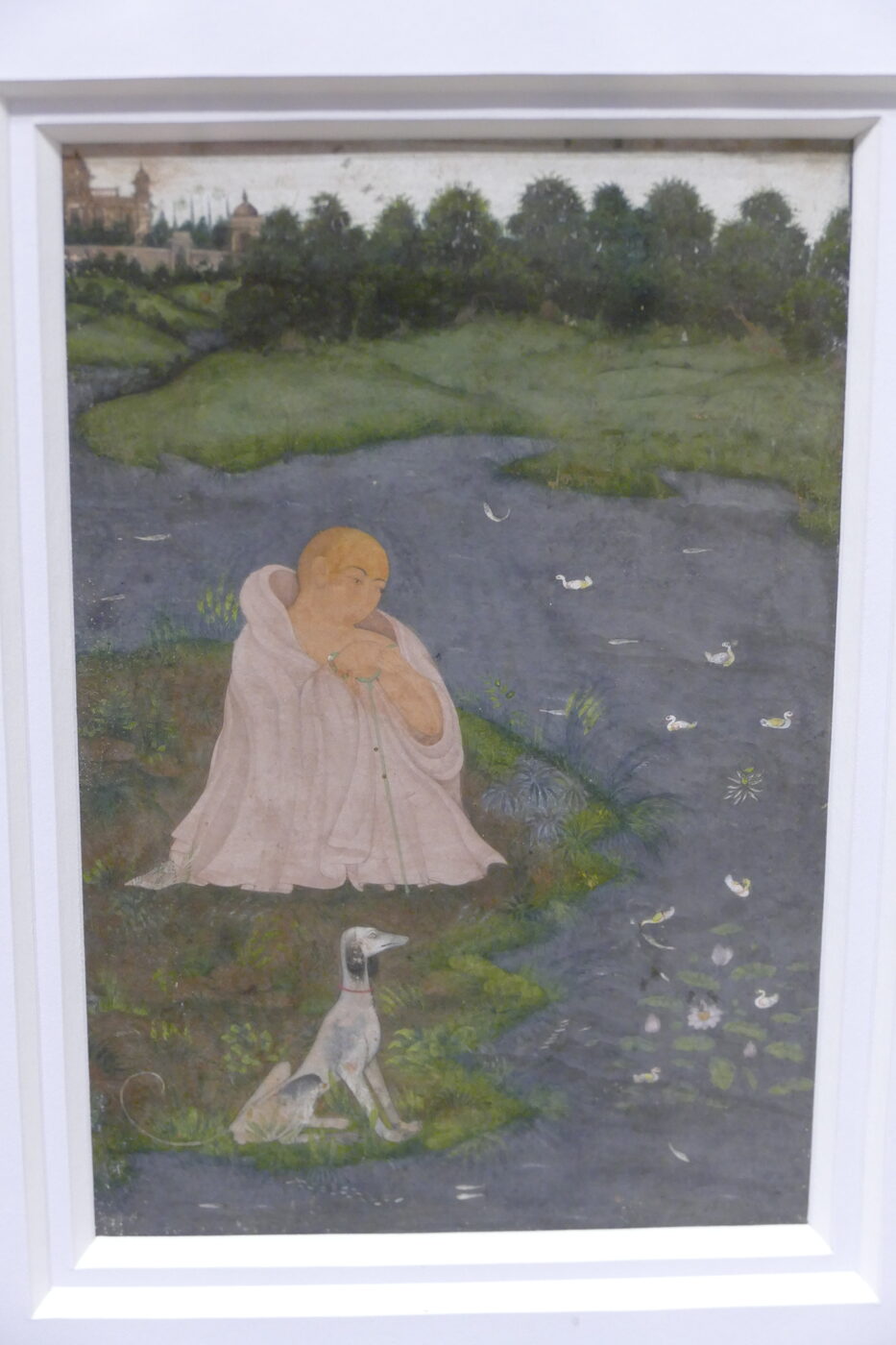
Sannyasa from Keshava Bharati at Katwa #
Once He had decided on this, He is said to have left home quietly at night, so that His mother and young wife would be spared the pain of watching Him go. He travelled from Nabadwip to the town of Katwa on the banks of the Ganges. At Katwa He went to the sannyasi Keshava Bharati and asked to be initiated into the renounced order. At first Keshava Bharati hesitated to accept as his disciple someone so clearly exalted. But Nimai insisted, and Keshava Bharati performed the sannyasa ceremony. Keshava Bharati shaved Nimai's head and gave Him the danda (the sannyasi's staff) and kamandalu (water pot). He dressed Him in the simple kaupina and bahirvasa of one who has renounced the world. Then he gave Him the sannyasa name by which He would be known for the rest of His life and for all the centuries since: Sri Krishna Chaitanya.
The Grief of Sachi Devi and Vishnupriya #
When the news reached Nabadwip, the devotees hurried to Katwa, led by Nityananda Prabhu and including Mukunda Datta and others. They arrived in time to see what happened just after the ceremony. When Sachi Devi and Vishnupriya learned that Nimai had renounced the world without even a final farewell, they were overcome with grief. The biographies do not soften this moment. They describe at length the household's pain at losing the son and husband on whom their whole home life had depended, all in a single night.
The Last Meeting at Shantipura #
Advaita Acharya and the assembled devotees eventually persuaded the new sannyasi Krishna Chaitanya to travel first to Shantipura, to the home of Advaita Acharya. They did this so that Sachi Devi could see her son once more in His new condition before He left for Puri. This meeting is remembered as one of the most tender and sorrowful in the entire Vaishnava literature. Through their tears, mother and son both accepted that His path now lay elsewhere.
Life as a Wandering Sannyasi #
From Katwa onward, Sri Krishna Chaitanya belonged to no one household and no caste, in the fullest social sense. He was a wandering sannyasi who lived on alms. For the following twenty-four years of His manifest presence, He first walked the length of India, teaching kings and outcastes with the same freedom. Then He finally settled at Jagannatha Puri for the last eighteen years. Gaudiya Vaishnavas do not regard His acceptance of sannyasa as a rejection of family life itself, which the tradition continues to honour. They regard it as a deliberate, personal sacrifice. Through it the Lord removed every remaining social barrier between Himself and the most fallen souls of the world He had come to deliver.
Scriptural evidence for this chapter (5)
অতএব অবশ্য আমি সন্ন্যাস করিব ।
সন্ন্যাসি–বুদ্ধ্যে মোরে প্রণত হইব ॥ ২৬৫ ॥
ataeva avaśya āmi sannyāsa kariba
sannyāsi-buddhye more praṇata ha-iba
Word for word
ataeva: therefore; avaśya: certainly; āmi: I; sannyāsa: the renounced order of life; kariba: shall accept; sannyāsi-buddhye: by thinking of Me as a sannyāsī; more: unto Me; praṇata: bow down; ha-iba: they shall do.
“I shall accept the sannyāsa order of life, for thus people will offer Me their obeisances, thinking of Me as a member of the renounced order.
His stated reason for taking sannyasa: so that offenders would offer obeisances and thereby be delivered.
এত বলি’ ভারতী গোসাঞি কাটোয়াতে গেলা ।
মহাপ্রভু তাহা যাই’ সন্ন্যাস করিলা ॥ ২৭২ ॥
eta bali’ bhāratī gosāñi kāṭoyāte gelā
mahāprabhu tāhā yāi’ sannyāsa karilā
Word for word
eta bali’: saying this; bhāratī: Keśava Bhāratī; gosāñi: the spiritual master; kāṭoyāte: to Katwa; gelā: went; mahāprabhu: Lord Caitanya Mahāprabhu; tahā: there; yai’: going; sannyāsa: the renounced order of life; karilā: accepted.
After saying this, Keśava Bhāratī, the spiritual master, went back to his village, Katwa. Lord Caitanya Mahāprabhu went there and accepted the renounced order of life [sannyāsa].
Kesava Bharati returns to Katwa, where the Lord goes and accepts the renounced order.
সঙ্গে নিত্যানন্দ, চন্দ্রশেখর আচার্য ।
মুকুন্দদত্ত,—এই তিন কৈল সর্ব কার্য ॥ ২৭৩ ৷৷
saṅge nityānanda, candraśekhara ācārya
mukunda-datta, — ei tina kaila sarva kārya
Word for word
saṅge: in His company; nityānanda: Nityānanda Prabhu; candraśekhara ācārya: Candraśekhara Ācārya; mukunda-datta: Mukunda Datta; ei tina: these three; kaila: performed; sarva: all; kārya: necessary activities.
When Śrī Caitanya Mahāprabhu accepted sannyāsa, three personalities were with Him to perform all the necessary activities. They were Nityānanda Prabhu, Candraśekhara Ācārya and Mukunda Datta.
The three associates present at the sannyasa: Nityananda, Candrasekhara Acarya and Mukunda Datta.
চব্বিশ বৎসর-শেষ যেই মাঘ-মাস ।
তার শুক্লপক্ষে প্রভু করিলা সন্ন্যাস ॥ ৩ ॥
cabbiśa vatsara-śeṣa yei māgha-māsa
tāra śukla-pakṣe prabhu karilā sannyāsa
Word for word
cabbiśa: twenty-fourth; vatsara: of the year; śeṣa: at the end; yei: that; māgha-māsa: the month of Māgha (January-February); tāra: of that; śukla-pakṣe: in the waxing period of the moon; prabhu: the Lord; karilā: accepted; sannyāsa: the sannyāsa order of life.
At the end of His twenty-fourth year, in the month of Māgha, Śrī Caitanya Mahāprabhu accepted the sannyāsa order during the waxing period of the moon.
The precise time: the end of His twenty-fourth year, in the month of Magha, during the waxing moon.
এতাং স আস্থায় পরাত্মনিষ্ঠা-
মধ্যাসিতাং পূর্বতমৈর্মহদ্ভিঃ ।
অহং তরিষ্যামি দুরন্তপারং
তমো মুকুন্দাঙ্ঘ্রিনিষেবয়ৈব ॥ ৬ ॥
etāṁ sa āsthāya parātma-niṣṭhām
adhyāsitāṁ pūrvatamair mahadbhiḥ
ahaṁ tariṣyāmi duranta-pāraṁ
tamo mukundāṅghri-niṣevayaiva
Word for word
etām: this; saḥ: such; āsthāya: being completely fixed in; para-ātma-niṣṭhām: devotion to the Supreme Person, Kṛṣṇa; adhyāsitām: worshiped; pūrva-tamaiḥ: by previous; mahadbhiḥ: ācāryas; aham: I; tariṣyāmi: shall cross over; duranta-pāram: the insurmountable; tamaḥ: the ocean of nescience; mukunda-aṅghri: of the lotus feet of Mukunda; niṣevayā: by worship; eva: certainly.
“[As a brāhmaṇa from Avantī-deśa said:] ‘I shall cross over the insurmountable ocean of nescience by being firmly fixed in the service of the lotus feet of Kṛṣṇa. This was approved by the previous ācāryas, who were fixed in firm devotion to the Lord, Paramātmā, the Supreme Personality of Godhead.’ ”
The SB 11.23.57 verse He recited in ecstasy after sannyasa, defining its true purpose as service to Mukunda.
Chapter 11
The Conversion of Sarvabhauma Bhattacharya
The greatest Vedantist in Orissa offers to teach the young sannyasi Vedanta. On the eighth day, the sannyasi gives His answer.
Early in 1510, a few weeks after He had accepted the renounced order at Katwa and taken the name Sri Krishna Chaitanya, the young sannyasi walked into Jagannatha Puri for the first time. He had come by way of Remuna and Kataka, and He arrived ahead of the devotees travelling with Him, unable to slow His pace once the temple towers came into view. Krishnadasa Kaviraja relates that He passed through the gates, saw the form of Lord Jagannatha, and ran forward to embrace the Deity, and then collapsed unconscious on the floor of the temple. A watchman saw a stranger running towards the altar and raised his stick. An elderly, heavily built brahmana stopped the watchman. This brahmana had also seen the fall, and he recognised at once that whatever this was, it was not ordinary. That brahmana was Sarvabhauma Bhattacharya, and the conversation that began between them in the following weeks is one of the decisive events in the history of Gaudiya Vaishnavism.
| Detail | Description |
|---|---|
| Date | Early in 1510 |
| Place | Jagannatha Puri |
| The scholar | Vasudeva Sarvabhauma, royal pandit of Maharaja Prataparudra |
| His training | Logic under Pakshadhara Mishra at Mithila |
| His philosophy | Sankara's Vedanta, the impersonal Absolute |
| Turning point | The atmarama verse of the Srimad-Bhagavatam |
| Outcome | One hundred verses composed in praise of the Lord |
The Foremost Logician in Odisha #
Sarvabhauma Bhattacharya (Vasudeva Sarvabhauma) was not an ordinary local temple pandit. He was widely accepted as the foremost scholar in Odisha and one of the most powerful logicians in India. He was born at Nabadwip, the son of Mahesvara Visarada. As a young man he went to Mithila in Bihar to study logic under Pakshadhara Mishra, who was then the head of the leading school of nyaya in the country. Tradition holds that he memorised the whole course of study, returned to Bengal and opened his own school, and that this moved the main centre of Indian logic from Mithila to Nabadwip, where it has remained ever since. Later he came to Puri as the royal pandit under Maharaja Prataparudra and the recognised authority on Vedanta in Odisha. His Vedanta was Sankara's Vedanta. It taught that the Absolute Truth is impersonal, formless and without energies, and that the personal form of God is a product of the material mode of goodness.
Carrying the Unconscious Lord Home #
Now this great scholar had an unconscious sannyasi to care for. With the help of the watchman and some of his students, he carried the Lord to his own house and laid Him in a purified room. He found no movement in the abdomen and no breath. So he held a thin piece of cotton to His nostrils until it moved very slightly. Sitting down beside Him, Sarvabhauma recognised the condition as a transformation of ecstatic love. The scriptures describe such a transformation as appearing only in eternally liberated devotees, and he wondered how it could possibly appear in a human body.
Sarvabhauma's Plan to Correct the Young Sannyasi #
The Lord revived, and Sarvabhauma learned that He was the grandson of Nilambara Chakravarti, a family his own father had respected. Sarvabhauma then came to a conclusion that was affectionate and entirely wrong. Here was a beautiful young man of about twenty-four who had accepted sannyasa from Keshava Bharati. So in Sarvabhauma's ranking He was a second-class sannyasi of the Bharati line, not of a first-rate branch of the Sankara order. Worse, He wept, fainted, danced and lost consciousness at the sight of a Deity. To a man trained in nyaya, this was a very promising young sannyasi who was being ruined by uncontrolled emotion. To him the remedy was obvious. He would recite Vedanta philosophy to Him again and again, so that He would remain fixed in renunciation and take up the path of monism. He even offered, if the Lord wished, to initiate Him again into a more respectable sampradaya.
Gopinatha Acharya's Protest #
Sarvabhauma's brother-in-law Gopinatha Acharya came from Nadia and already knew who this sannyasi was. He argued furiously against Sarvabhauma. He said that the Supreme Lord is known only by His own mercy and never by logical reasoning, and that Sarvabhauma, with all his learning, was blind to what stood in his own house. Sarvabhauma replied, smiling, that the scriptures say there is no incarnation of Vishnu in the age of Kali. Gopinatha Acharya and Mukunda Datta were distressed and reported these exchanges. But Chaitanya Mahaprabhu refused to hear a word against Sarvabhauma. The Bhattacharya, He said, was acting out of a father's affection, and He accepted him as His spiritual master in the matter.
Seven Days of Silent Listening #
So the classes began. They sat in the Jagannatha temple. Out of respect for a sannyasi, Sarvabhauma sat on the floor, and Chaitanya Mahaprabhu sat on a seat. There the greatest Vedantist in Odisha explained the Vedanta-sutra according to Sankara's Sariraka-bhasya. For seven days the Lord listened without a word. He did not object, did not agree, did not ask a question. On the eighth day Sarvabhauma finally stopped and said what had been troubling him: You simply sit in silence, and I cannot tell whether You are understanding this or not.
The Commentary That Covered the Sun #
Mahaprabhu's first answer was the humble one He used all His life. He said He was a fool who did not study the Vedanta-sutra. He said He listened only because a sannyasi is supposed to, and because Sarvabhauma had ordered Him to. Sarvabhauma pressed Him: even a man who does not understand asks questions. Then the Lord gave the real answer. He understood the meaning of every sutra perfectly well. What He could not understand were the explanations. The sutras of Vyasadeva, He said, carry their own clear purport. Sarvabhauma's commentary had covered that purport the way a cloud covers the sun. The Bhattacharya had not explained the Brahma-sutra. Instead, he seemed to be hiding it.
The Direct Meaning of the Vedic Statements #
After that sentence, the seven days of one-sided lecturing became a real debate, and this is the debate the biographies actually remember. The Vedanta-sutra, Mahaprabhu maintained, is the summary of the Upanishads, and the direct meaning of a Vedic statement must be accepted as it stands; the moment we substitute an interpretation of our own devising, the self-evident authority of the Veda is gone. The Veda calls conchshell and cow dung pure, though by ordinary reckoning they are bone and stool, and no one presumes to explain that away. If we may not reinterpret so small a thing, why should we reinterpret the description of the Absolute? And when the Vedas describe the Absolute in negative or impersonal terms, they are denying material characteristics, not denying personality: the mantra that rejects hands and feet in the same breath says that He walks swiftly and accepts what is offered to Him. Every impersonal description in the end establishes a person.
The Absolute Truth and His Energies #
As Mahaprabhu presented it, the heart of the disagreement was the question of energy. The Mayavadi position denies that the Absolute has potencies, and this is its basic error. It is an error because the Vedic literature everywhere describes the Supreme as full of inconceivable energies. There is the internal spiritual potency. There is the marginal potency, which is the living being. And there is the external potency of nescience (ignorance), which covers the living being's constitutional position. The internal potency itself appears as eternity, knowledge and bliss. To call the Supreme formless is to call formless someone who is complete in six opulences. And to say that He has no energy leaves nothing that could explain either the world or the soul. The living entity is the marginal energy of the Lord. Therefore he is neither identical with the Lord, as monism claims, nor completely separate from Him. This is the position later explained in full as achintya-bheda-abheda-tattva, the inconceivable simultaneous oneness and difference of the soul and the Supreme.
Transformation of Energy Versus Illusion #
He pressed the same point on the question of how the world came to be. The Vedanta-sutra teaches that the cosmos arises through the transformation of the Lord's inconceivable potency. A touchstone produces gold from iron without itself changing. In the same way, the Supreme manifests the creation by His energy while remaining unchanged in His own eternal form. He argued that Sankara took this to mean that the Absolute itself is transformed, found this absurd, decided that Vyasadeva had made a mistake, and replaced transformation with illusion. But illusion applies to the soul's wrong identification with the body. It does not apply to the cosmos, which is temporary but not false. Sankara also stressed the phrase "you are that" and passed over omkara, the sound form of the Supreme from which all Vedic knowledge comes. In this way the commentator made a secondary statement carry the whole weight of the Veda. Krishnadasa Kaviraja records that Chaitanya Mahaprabhu pointed out hundreds of faults in the Sariraka-bhasya. He also records that Sarvabhauma defended it with everything his training could give him, and lost. The Lord closed with a summary that would become the framework of all His teaching. The Vedic literature, He said, has three subjects: one's eternal relationship with the Supreme Person, the activity by which that relationship is acted upon, and the goal of life which is love of God. Any other reading is imagination.
The Atmarama Verse Explained Eighteen Ways #
Then He softened the whole exchange with a remark that turned it in a new direction: even sages who are fully self-satisfied are drawn to the loving service of Krishna, whose qualities are transcendental and whose activities are wonderful. That is the atmarama verse of the Srimad-Bhagavatam. Sarvabhauma, still a scholar at heart, asked to hear it explained, and the Lord, with perfect courtesy, asked him to go first. Sarvabhauma explained it in nine different ways, using all his knowledge of logic and scripture. Mahaprabhu praised the performance without reservation: no one in the world, He said, could expound a verse like that. And then, without touching any of the nine, He took the eleven words of the verse one by one, combined each in turn with the word atmarama, and gave eighteen explanations of His own.
Sarvabhauma Sees the Lord's Original Form #
At this, Sarvabhauma's resistance broke down. The tradition records that he understood at that moment that this was Krishna Himself. It records that he condemned himself aloud as an offender who had been blinded by his own learning. It also records that Chaitanya Mahaprabhu, seeing him surrender, showed him first the four-armed form of Vishnu and then His own original form of Krishna with a flute at His lips. Sarvabhauma fell flat, rose, and began to compose. In a very short time he produced one hundred verses in praise of the Lord. Krishnadasa Kaviraja remarks that Brihaspati, the teacher of the demigods, could not have composed them so fast. The Lord embraced him, and the greatest logician in Odisha fainted, wept, trembled, perspired, and got up and danced.
Eating Maha-Prasadam Before the Morning Bath #
Sarvabhauma's change of heart showed itself in a small matter of proper conduct. Early the next morning Mahaprabhu carried garlands and food remnants from the Jagannatha temple to Sarvabhauma's house and put them into his hands. The Bhattacharya had not yet washed his mouth, bathed or performed his morning duties. For a brahmana of his standing, eating anything at such a time was unthinkable. But Sarvabhauma quoted two verses which say that maha-prasadam should be eaten without regard to time or place, and he ate it on the spot. Chaitanya Mahaprabhu embraced him, and the two of them danced together. Today, He said, He had conquered the three worlds.
The Two Verses on the Palm Leaf #
Some days afterwards Sarvabhauma composed two verses on a palm leaf and sent them to the Lord. Mukunda Datta, intercepting the leaf, copied them onto the outside wall of the room before delivering it; Mahaprabhu read them and tore the leaf up, but the devotees had already learned them from the wall. In them Sarvabhauma declared that Krishna had descended as Chaitanya Mahaprabhu to teach detachment and devotion, and that He had come to restore the ancient system of devotional service to Himself which had almost been lost to the influence of time. Those two verses are still recited by Gaudiya Vaishnavas.
Changing Liberation to Devotion #
One last exchange is recorded because it shows how completely the man had turned. Reciting a verse of Lord Brahma's from the Bhagavatam, Sarvabhauma altered two syllables, replacing a word meaning "the shelter of liberation" with one meaning "the shelter of devotion." Mahaprabhu caught it at once and objected: the original word refers directly to Krishna, at whose feet all forms of liberation stand, so why change the text? Sarvabhauma did not give way. He knew the Lord's reading was correct, he said. But the very sound of the word "liberation" made him uneasy, while the word "devotion" filled his mind with bliss. The pure devotee, he said, would sooner go to hell than merge into the effulgence. Mahaprabhu laughed and embraced him. The man who had spent his life teaching that merging into Brahman is the goal of existence now felt uneasy even at the sound of the word.
Why This Meeting Mattered #
For Gaudiya Vaishnavas this episode is far more important than its length would suggest. Historically it gave the movement a firm base in Odisha. With Sarvabhauma converted, Kashi Mishra and the leading men of Puri followed. Through Sarvabhauma the Lord eventually gained the confidence of Maharaja Prataparudra himself, and this gave the sankirtana movement royal protection in a second kingdom. It was Sarvabhauma who sent Him to Ramananda Raya on the South India tour. Philosophically, it is the first full statement of Chaitanya Mahaprabhu's case against impersonalism, and the source from which the later Goswamis drew their criticism of it. And devotionally, the tradition sees it as proof that scholarship alone, however vast, cannot reach the Supreme Person. It also sees it as proof that the same scholarship, once surrendered, becomes an instrument in His service. Sarvabhauma's own summary was blunter than any of that. Delivering the whole world, he told the Lord, was no great achievement. Delivering him was the wonder, he said, because reading too many books of logic had turned him into a bar of iron, and the Lord had melted him.
Scriptural evidence for this chapter (10)
প্রভু কহে — “মূর্খ আমি, নাহি অধ্যয়ন ।
তোমার আজ্ঞাতে মাত্র করিয়ে শ্রবণ ॥ ১২৬ ॥
prabhu kahe — “mūrkha āmi, nāhi adhyayana
tomāra ājñāte mātra kariye śravaṇa
Word for word
prabhu kahe: the Lord replied; mūrkha āmi: I am a fool; nāhi: there is not; adhyayana: study; tomāra: your; ājñāte: by the order; mātra: only; kariye: I do; śravaṇa: hearing.
Śrī Caitanya Mahāprabhu replied, “I am a fool, and consequently I do not study the Vedānta-sūtra. I am just trying to hear it from you because you have ordered Me.
Mahaprabhu's opening reply to Sarvabhauma after seven days of silence, 'I am a fool and do not study the Vedanta-sutra', the humility that frames the whole exchange.
সূত্রের অর্থ ভাষ্য কহে প্রকাশিয়া ।
তুমি, ভাষ্য কহ — সূত্রের অর্থ আচ্ছাদিয়া ॥ ১৩১ ॥
sūtrera artha bhāṣya kahe prakāśiyā
tumi, bhāṣya kaha — sūtrera artha ācchādiyā
Word for word
sūtrera artha: meanings of the sūtras; bhāṣya: the purport; kahe: one speaks; prakāśiyā: clearly manifesting; tumi: you; bhāṣya kaha: make a comment; sūtrera: of the sūtras; artha: the meanings; ācchādiyā: covering.
“The meaning of the aphorisms in the Vedānta-sūtra contain clear purports in themselves, but other purports you presented simply covered the meaning of the sūtras like a cloud.
The turning point of the conversation: the sutras carry their own clear purport, and the commentary covered it like a cloud.
স্বতঃপ্রমাণ বেদ সত্য যেই কয় ।
লক্ষণা’ করিলে স্বতঃপ্রামাণ্য-হানি হয় ॥ ১৩৭ ॥
svataḥ-pramāṇa veda satya yei kaya
‘lakṣaṇā’ karile svataḥ-prāmāṇya-hāni haya
Word for word
svataḥ-pramāṇa: self-evidence; veda: Vedic literature; satya: truth; yei: whatever; kaya: say; lakṣaṇā: interpretation; karile: by making; svataḥ-prāmāṇya: self-evidential proof; hāni: lost; haya: becomes.
“The Vedic statements are self-evident. Whatever is stated there must be accepted. If we interpret according to our own imagination, the authority of the Vedas is immediately lost.”
The principle at issue, the Vedic statements are self-evident, and interpretation destroys their authority.
মণি যৈছে অবিকৃতে প্রসবে হেমভার ।
জগদ্রূপ হয় ঈশ্বর, তবু অবিকার ॥ ১৭১ ॥
maṇi yaiche avikṛte prasabe hema-bhāra
jagad-rūpa haya īśvara, tabu avikāra
Word for word
maṇi: the touchstone; yaiche: just as; avikṛte: without being transformed; prasabe: produces; hema-bhāra: volumes of gold; jagat-rūpa: the cosmic manifestation; haya: becomes; īśvara: the Supreme Personality of Godhead; tabu: still; avikāra: unchanged.
“The touchstone, after touching iron, produces volumes of gold without being changed. Similarly, the Supreme Personality of Godhead manifests Himself as the cosmic manifestation by His inconceivable potency, yet He remains unchanged in His eternal, transcendental form.
The touchstone analogy for transformation of energy, the core of the reply to Sankara's doctrine of illusion.
ভগবান্ — ‘সম্বন্ধ’, ভক্তি — ‘অভিধেয়’ হয় ।
প্রেমা — ‘প্রয়োজন’, বেদে তিনবস্তু কয় ॥ ১৭৮ ॥
bhagavān — ‘sambandha’, bhakti — ‘abhidheya’ haya
premā — ‘prayojana’, vede tina-vastu kaya
Word for word
bhagavān: the Supreme Personality of Godhead; sambandha: relationship; bhakti: devotional service; abhidheya: transcendental activities; haya: is; premā: love of Godhead; prayojana: the ultimate goal of life; vede: the Vedas; tina-vastu: three subject matters; kaya: describe.
Śrī Caitanya Mahāprabhu continued, “The Supreme Personality of Godhead is the central point of all relationships, acting in devotional service to Him is one’s real occupation, and the attainment of love of Godhead is the ultimate goal of life. These three subject matters are described in the Vedic literature.
The three subjects of all Vedic literature, sambandha, abhidheya and prayojana, stated here for the first time in the Madhya-lila.
आत्मारामाश्च मुनयो निर्ग्रन्था अप्युरुक्रमे ।
कुर्वन्त्यहैतुकीं भक्तिमित्थम्भूतगुणो हरि: ॥ १० ॥
sūta uvāca
ātmārāmāś ca munayo
nirgranthā apy urukrame
kurvanty ahaitukīṁ bhaktim
ittham-bhūta-guṇo hariḥ
Word for word
sūtaḥ uvāca: Sūta Gosvāmī said; ātmārāmāḥ: those who take pleasure in the ātmā (generally, spirit self); ca: also; munayaḥ: sages; nirgranthāḥ: freed from all bondage; api: in spite of; urukrame: unto the great adventurer; kurvanti: do; ahaitukīm: unalloyed; bhaktim: devotional service; ittham-bhūta: such wonderful; guṇaḥ: qualities; hariḥ: of the Lord.
Sūta Gosvāmī said: All different varieties of ātmārāmas [those who take pleasure in the ātmā, or spirit self], especially those established on the path of self-realization, though freed from all kinds of material bondage, desire to render unalloyed devotional service unto the Personality of Godhead. This means that the Lord possesses transcendental qualities and therefore can attract everyone, including liberated souls.
The atmarama verse itself, which Sarvabhauma explained in nine ways and Mahaprabhu then explained in eighteen.
আত্মারামাশ্চ মুনয়ো নির্গ্রন্থা অপ্যুরুক্রমে ।
কুর্বন্ত্যহৈতুকীং ভক্তিমিত্থম্ভূতগুণো হরিঃ ॥” ১৮৬ ॥
ātmārāmāś ca munayo
nirgranthā apy urukrame
kurvanty ahaitukīṁ bhaktim
ittham-bhūta-guṇo hariḥ
Word for word
ātma-ārāmāḥ: persons who take pleasure in being transcendentally situated in the service of the Lord; ca: also; munayaḥ: great saintly persons who have completely rejected material aspirations, fruitive activities and so forth; nirgranthāḥ: without interest in any material desire; api: certainly; urukrame: unto the Supreme Personality of Godhead, Kṛṣṇa, whose activities are wonderful; kurvanti: do; ahaitukīm: causeless, or without material desires; bhaktim: devotional service; ittham-bhūta: so wonderful as to attract the attention of the self-satisfied; guṇaḥ: who has transcendental qualities; hariḥ: the Supreme Personality of Godhead.
“ ‘Those who are self-satisfied and unattracted by external material desires are also attracted to the loving service of Śrī Kṛṣṇa, whose qualities are transcendental and whose activities are wonderful. Hari, the Personality of Godhead, is called Kṛṣṇa because He has such transcendentally attractive features.’ ”
The atmarama verse as quoted by Mahaprabhu to Sarvabhauma, at the point where the argument turns into an exposition.
তর্ক-শাস্ত্রে জড় আমি, যৈছে লৌহপিণ্ড ।
আমা দ্রবাইলে তুমি, প্রতাপ প্রচণ্ড ॥’ ২১৪ ॥
tarka-śāstre jaḍa āmi, yaiche lauha-piṇḍa
āmā dravāile tumi, pratāpa pracaṇḍa’
Word for word
tarka-śāstre: due to logical scriptures; jaḍa: dull; āmi: I; yaiche: just like; lauha-piṇḍa: an iron bar; āmā: me; dravāile: melted; tumi: You; pratāpa: power; pracaṇḍa: very great.
“I had become dull-headed due to reading too many books on logic. Consequently I had become like an iron bar. Nonetheless, You have melted me, and therefore Your influence is very great.”
Sarvabhauma's own account of his conversion, logic had made him a bar of iron and the Lord melted him.
বৈরাগ্য-বিদ্যা-নিজ-ভক্তিযোগ-শিক্ষার্থমেকঃ পুরুষঃ পুরাণঃ ।
শ্রীকৃষ্ণচৈতন্যশরীরধারী কৃপাম্বুধির্যস্তমহং প্ৰপদ্যে ॥ ২৫৪ ॥
vairāgya-vidyā-nija-bhakti-yoga-
śikṣārtham ekaḥ puruṣaḥ purāṇaḥ
śrī-kṛṣṇa-caitanya-śarīra-dhārī
kṛpāmbudhir yas tam ahaṁ prapadye
Word for word
vairāgya: detachment from everything that does not help develop Kṛṣṇa consciousness; vidyā: knowledge; nija: own; bhakti-yoga: devotional service; śikṣā-artham: just to instruct; ekaḥ: the single person; puruṣaḥ: the Supreme Person; purāṇaḥ: very old, or eternal; śrī-kṛṣṇa-caitanya: of Lord Śrī Kṛṣṇa Caitanya Mahāprabhu; śarīra-dhārī: accepting the body; kṛpā-ambudhiḥ: the ocean of transcendental mercy; yaḥ: who; tam: unto Him; aham: I; prapadye: surrender.
“Let me take shelter of the Supreme Personality of Godhead, Śrī Kṛṣṇa, who has descended in the form of Lord Caitanya Mahāprabhu to teach us real knowledge, His devotional service and detachment from whatever does not foster Kṛṣṇa consciousness. He has descended because He is an ocean of transcendental mercy. Let me surrender unto His lotus feet.
The two verses Sarvabhauma composed on a palm leaf, still recited daily by Gaudiya Vaishnavas.
হরের্নাম হরের্নাম হরের্নামৈব কেবলম্ ।
কলৌ নাস্ত্যেব নাস্ত্যেব নাস্ত্যেব গতিরন্যথা ॥ ২৪২ ॥
harer nāma harer nāma
harer nāmaiva kevalam
kalau nāsty eva nāsty eva
nāsty eva gatir anyathā
Word for word
hareḥ nāma: the holy name of the Lord Hari; hareḥ nāma: the holy name of the Lord Hari; hareḥ nāma: the holy name of the Lord; eva: certainly; kevalam: only; kalau: in this Age of Kali; na asti: there is not; eva: certainly; na asti: there is not; eva: certainly; na asti: there is not; eva: certainly; gatiḥ: means; anyathā: other.
“ ‘In this age of quarrel and hypocrisy, the only means of deliverance is the chanting of the holy names of the Lord. There is no other way. There is no other way. There is no other way.’ ”
The verse of the Brihan-naradiya Purana on the holy name, which Mahaprabhu gave Sarvabhauma as the essence of devotional practice.
Chapter 12
The South India Tour
Two years on foot from Puri to Cape Comorin, curing a leper, recovering two lost books, converting whole provinces
When Sri Chaitanya Mahaprabhu accepted sannyasa at Katwa, He had intended to walk straight to Vrindavana. But His devotees turned Him toward Jagannatha Puri instead. His life as a wandering sannyasi actually began there, in the first months of 1510. Krishnadasa Kaviraja gives the dates carefully. The Lord took sannyasa in the month of Magha and reached Puri in Phalguna, where He saw the Dola-yatra festival. He converted the great logician Sarvabhauma Bhattacharya in Chaitra, and at the beginning of Vaishakha He announced that He was leaving on a tour of the south. The reason He gave was that He wished to search for His elder brother Vishvarupa, who had taken sannyasa years earlier and vanished into the south. But the biographies note plainly that He already knew Vishvarupa had passed away. They say that the search was only an outward reason for a preaching journey.
| Stage of the Journey | What Happened There |
|---|---|
| Kurma-kshetra | The brahmana Kurma told to stay home and preach; Vasudeva cured of leprosy |
| Jiyada-Nrisimha and the Godavari | The meeting with Ramananda Raya at Vidyanagara |
| Rangakshetra (Srirangam) | Four months of Chaturmasya with Venkata Bhatta; the illiterate brahmana's Gita |
| Rishabha Hill to Cape Comorin | Paramananda Puri, southern Mathura, the Kurma Purana from Rameshvaram |
| Adi-keshava on the Payasvini | The lost chapter of the Brahma-samhita recovered |
| Pandarpur, then the Krishna-venva river | News of Vishvarupa; Krishna-karnamrita copied |
| Udupi | The head of the Tattvavadi school questioned |
Krishnadasa the Servant and Sarvabhauma's Request #
He wanted to travel alone, and said so, but the devotees would not agree. Nityananda Prabhu argued that a man whose two hands are always busy chanting and counting the holy names cannot also carry a waterpot and a change of cloth. He also argued that when the Lord fell unconscious in ecstasy on the road, there would be nobody to look after His belongings. The compromise was a simple, quiet brahmana named Krishnadasa. He would carry the waterpot and the garments and, as Nityananda put it, would not say a word. Sarvabhauma Bhattacharya sent four sets of cloth after Him and made one more request. He asked the Lord to be sure to meet a government officer named Ramananda Raya on the banks of the Godavari. He also asked Him not to turn Ramananda Raya away because he came from a family that the brahmanas of Bengal would have called low. The devotees walked with Him as far as Alalanatha, and the Bhattacharya fainted at the roadside as He left. Krishnadasa Kaviraja records plainly that the Lord did not turn round.
Preaching Village by Village #
The method of the tour was fixed in the first few days, and it never changed. He walked chanting Krishna's names aloud, and asked every person He passed to chant "Hari! Hari!" Those who did so followed Him for a while, and when He judged the moment right He embraced them and sent them home. The Chaitanya-charitamrita describes what happened next. Each person He had embraced went back to his own village chanting, laughing, weeping and dancing, and asked everyone he met to chant. Those villagers in turn became devotees. Visitors came from neighbouring villages simply to look at this changed man, and they were changed in the same way. And so, village by village, the practice spread far ahead of the Lord's own footsteps. The biographer sums up that hundreds of thousands of people in the south became Vaishnavas without ever meeting Him. He also notes frankly that Chaitanya Mahaprabhu had not shown this power to empower others in Nabadwip, but He showed it in the south.
The Brahmana Kurma and the Order to Preach #
At Kurma-kshetra, the temple of the tortoise incarnation on the Andhra coast, He was received by a Vedic brahmana named Kurma who washed His feet, fed Him, and then begged to be allowed to abandon his household and follow Him. The Lord refused, and His answer has become one of the most quoted sentences in the whole tradition: stay at home, chant Krishna's name always, teach everyone you meet what Krishna teaches in the Bhagavad-gita and the Srimad-Bhagavatam, and in that way become a spiritual master and deliver this country. Krishnadasa Kaviraja states clearly that this was not a one-time instruction but the pattern of the whole tour. He says that wherever the Lord took a meal, He gave His host the same instruction before moving on. Gaudiya Vaishnavism has always sent householders out to preach on the strength of this instruction.
The Healing of Vasudeva the Leper #
In the same village lived a brahmana named Vasudeva. His leprosy was so advanced that his body was full of worms. The biographies record one thing that shows what kind of man he was: when a worm dropped from him, he would pick it up and put it back rather than let it die. He heard that the Lord had come, and the next morning he went to Kurma's house. He found that the Lord had already left, and he collapsed in the road. Chaitanya Mahaprabhu turned back and embraced him. The accounts say that the disease and the distress left him together and that his body became beautiful. They say his first reaction was to worry that he would now become proud. For this, again, the Lord's remedy was constant chanting and constant preaching. From this episode He received one of His less familiar names, Vasudevamrita-prada, "He who gave nectar to Vasudeva."
Jiyada-Nrisimha and the Meeting with Ramananda Raya #
Continuing south He visited the temple of Jiyada-Nrisimha and then came to the Godavari. There the sight of the river reminded Him of the Yamuna, and the woods along its bank reminded Him of Vrindavana. At the bathing place near Vidyanagara, He met Ramananda Raya, who was then governor of the Godavari region on behalf of the king of Odisha. The conversations that followed over several evenings are the theological centre of the entire Chaitanya-charitamrita. They are told in full on their own page. The most important meeting of the tour happened only a few weeks after it began. Afterwards the Lord ordered Ramananda Raya to resign his post and come to Puri.
Chaturmasya at Rangakshetra with Venkata Bhatta #
From the Godavari the route ran through a great many temple towns, including Mallikarjuna, Ahovala-Nrisimha, Siddhavata, Tirupati and Tirumala, Kanchi and Vriddhakola. At the start of his account, Krishnadasa Kaviraja admits that he cannot record them in order and will simply list what he can. At Rangakshetra, the great Srirangam temple on an island in the Kaveri, a Sri Vaishnava brahmana of the Ramanuja line named Venkata Bhatta invited the Lord to his home. Venkata Bhatta pointed out that the four months of Chaturmasya had begun, so a wandering sannyasi was required to stay in one place. The Lord stayed the whole four months.
The Illiterate Brahmana Who Read the Gita #
It is at Srirangam, too, that the tour produced its most charming episode: an illiterate brahmana who read the whole Bhagavad-gita aloud every day, mispronouncing it so badly that people laughed at him, and who wept as he read. Asked which passage moved him, he answered that he did not understand a word, but that while he read he saw Krishna sitting on the chariot with the reins in His hands, and could not look away. The Lord embraced him and told him he had understood the Gita correctly.
The Goddess of Fortune and the Rasa Dance #
With His host Venkata Bhatta the Lord had a long argument, and He deliberately tried to provoke him. He teased him by asking why the goddess of fortune, who had performed austerities to enter the rasa dance, was never admitted to it, while ordinary cowherd girls were. Venkata Bhatta's entire tradition held Narayana to be the supreme form of God, and he could not answer. At last the Lord told him that the joking had a purpose. He led him to the conclusion that Krishna in Vrindavana is the original and complete form of the Divine.
The Boy Who Became Gopala Bhatta Goswami #
The household included a boy who served the Lord throughout those four months. Krishnadasa Kaviraja does not name him. The reason is given elsewhere in the Chaitanya-charitamrita. Before beginning his book, the author sought the blessings of the surviving Goswamis. This Goswami gave his blessing on condition that his own name should never appear in it. The boy was Gopala Bhatta, later Gopala Bhatta Goswami of Vrindavana, one of the Six Goswamis. He installed the Radharamana Deity, and he is the compiler behind the Hari-bhakti-vilasa.
From Rishabha Hill to Cape Comorin #
Beyond Srirangam the Lord went on to Rishabha Hill. There He met the elderly sannyasi Paramananda Puri, a godbrother of His own guru, and persuaded him to come to Puri. Next He went to southern Mathura, the modern Madurai. There a brahmana devoted to Ramachandra was starving himself to death, out of grief that Sita had been touched by Ravana. The Lord consoled him by explaining that Ravana had abducted only an illusory form. This was later confirmed to the brahmana from an old palm-leaf manuscript of the Kurma Purana, which the Lord tracked down at Rameshvaram and carried back to him. Finally, past Kanyakumari, the Lord went to Cape Comorin at the very tip of the peninsula.
Krishnadasa and the Bhattatharis #
On the way back up the western side, the Lord came to a settlement of Bhattatharis in Mallara-desa. There His servant Krishnadasa was lured away and had to be brought back by force. In the end this incident cost Krishnadasa his place in the Lord's service.
Recovering the Brahma-samhita at Adi-keshava #
In the temple of Adi-keshava, on the banks of the Payasvini in the far south, the tour produced its most lasting concrete result. There, among a group of advanced devotees who were discussing spiritual subjects, the Lord found a manuscript chapter of the Brahma-samhita. At that time the text was practically lost. Krishnadasa Kaviraja praises it without reserve. He says there is no scripture equal to it on the final conclusion, and that it is essential among all Vaishnava literatures. The Lord had it copied and carried it with Him.
Krishna-karnamrita and the News of Vishvarupa #
Some months later, at Pandarpur in the Maratha country, He learned from Sri Ranga Puri that the sannyasi Sankararanya, who had attained perfection in that town, was in fact His own elder brother Vishvarupa. Next, on the bank of the Krishna-venva river, He came upon a community of brahmanas who read daily from a book of devotional poetry called Krishna-karnamrita, by Bilvamangala Thakura. He had that copied too. The two manuscripts came back to Odisha with Him, and the biographer calls them the two jewels He brought home. The first thing He did on reaching Vidyanagara again was to hand both to Ramananda Raya, who copied them.
Debating the Philosophers of the South #
The Chaitanya-charitamrita sums up the debates of the tour in only a handful of verses. The chapter's opening verse says that the people of the south were as strong as elephants, but were held in the jaws of the crocodiles of Buddhist, Jain and Mayavada philosophy. The narrative that follows names the opponents whom He met and answered using their own ways of reasoning, before establishing devotion. They were logicians of the Nyaya school, followers of Jaimini's Mimamsa, Sankhya philosophers, yogis of Patanjali's system and the impersonalist followers of Shankaracharya.
The Buddhist Teacher and the Impure Offering #
One Buddhist episode is told at length. A learned teacher came to argue the nine principles of his school, and he was defeated. Then the Buddhists made a plot. They brought the Lord a plate of untouchable food and presented it as if it were sacred offered food. The plot failed. A very large bird appeared, carried the plate away in its beak and dropped it on the chief teacher's head. The metal edge cut him, and he fell unconscious. It ended with the teacher's own disciples reviving him by chanting the names of Krishna into his ear, until he chanted them himself.
Questioning the Tattvavadis at Udupi #
At Udupi, the seat of Madhvacharya and the Tattvavadi tradition, the Lord questioned the head of the school. He did it so respectfully that at first the man did not realise he was being examined. Then the Lord took apart the Tattvavadi position that the perfection of life is to dedicate one's varnashrama duty to Krishna in order to obtain liberation. His reason was that pure devotees reject liberation itself.
What the Tour Left Behind #
The tour lasted roughly two years, and the Lord returned to Puri by much the same road, so the villages He had converted saw Him a second time. Its results were far greater than its length would suggest. Two lost books came back with Him, and they became foundation texts of a school that did not yet exist. A boy in a Srirangam household became one of its six great theologians. A governor on the Godavari became His most confidential associate. And an instruction given casually to a village brahmana over lunch became the lasting order under which the movement has brought in new devotees ever since. From the South India tour, Gaudiya Vaishnavas learn that Chaitanya Mahaprabhu did not treat the chanting of the holy name as a simple folk practice for people who could not read, while keeping argument only for scholars. He did both, in the same journey, with the same calm mind. And, as the biographer puts it, He left behind whole provinces where the only sound to be heard on the road was the name of Krishna.
Scriptural evidence for this chapter (10)
কৃষ্ণদাস’-নামে এই সরল ব্রাহ্মণ ।
ইঁহো সঙ্গে করি’ লহ, ধর নিবেদন ॥ ৩৯ ॥
‘kṛṣṇadāsa’-nāme ei sarala brāhmaṇa
iṅho saṅge kari’ laha, dhara nivedana
Word for word
kṛṣṇa-dāsa-nāme: named Kṛṣṇadāsa; ei: this; sarala: simple; brāhmaṇa: brāhmaṇa; iṅho: he; saṅge: with You; kari’: accepting; laha: take; dhara: just catch; nivedana: the petition.
Śrī Nityānanda Prabhu continued, “Here is a simple brāhmaṇa named Kṛṣṇadāsa. Please accept him and take him with You. That is My request.
Nityananda Prabhu's request that the simple brahmana Krishnadasa be allowed to carry the Lord's waterpot and cloth on the tour.
যারে দেখ, তারে কহ ‘কৃষ্ণ’ উপদেশ ।
আমার আজ্ঞায় গুরু হঞা তার’ এই দেশ ॥ ১২৮ ॥
yāre dekha, tāre kaha ‘kṛṣṇa’-upadeśa
āmāra ājñāya guru hañā tāra’ ei deśa
Word for word
yāre: whomever; dekha: you meet; tāre: him; kaha: tell; kṛṣṇa-upadeśa: the instruction of the Bhagavad-gītā as it is spoken by the Lord or of Śrīmad-Bhāgavatam, which advises one to worship Śrī Kṛṣṇa; āmāra ājñāya: under My order; guru hañā: becoming a spiritual master; tāra’: deliver; ei deśa: this country.
“Instruct everyone to follow the orders of Lord Śrī Kṛṣṇa as they are given in the Bhagavad-gītā and Śrīmad-Bhāgavatam. In this way become a spiritual master and try to liberate everyone in this land.”
The instruction given to the brahmana Kurma, teach what Krishna teaches and become a guru where you are. The charter verse for householder preaching.
সেই যাই’ গ্রামের লোক বৈষ্ণব করয় ।
অন্যগ্ৰামী আসি’ তাঁরে দেখি’ বৈষ্ণব হয় ॥ ১০৩ ॥
sei yāi’ grāmera loka vaiṣṇava karaya
anya-grāmī āsi’ tāṅre dekhi’ vaiṣṇava haya
Word for word
sei: that Vaiṣṇava; yāi’: going to his own village; grāmera loka: all the people of the village; vaiṣṇava: devotees; karaya: makes; anya-grāmī: inhabitants from different villages; āsi’: coming there; tāṅre dekhi’: by seeing him; vaiṣṇava haya: become devotees.
When each of these newly empowered individuals returned to his own village, he also converted the villagers into devotees. And when others came from different villages to see him, they were also converted.
The chain reaction by which empowered villagers converted their own villages, which the biographer gives as the mechanism of the whole tour.
প্রভু-স্পর্শে দুঃখ-সঙ্গে কুষ্ঠ দূরে গেল ।
আনন্দ সহিতে অঙ্গ সুন্দর হইল ॥ ১৪১ ॥
prabhu-sparśe duḥkha-saṅge kuṣṭha dūre gela
ānanda sahite aṅga sundara ha-ila
Word for word
prabhu-sparśe: by the touch of Śrī Caitanya Mahāprabhu; duḥkha-saṅge: along with his unhappiness; kuṣṭha: the infection of leprosy; dūre: to a distant place; gela: went; ānanda sahite: with great pleasure; aṅga: whole body; sundara: beautiful; ha-ila: became.
When Śrī Caitanya Mahāprabhu touched him, both the leprosy and his distress went to a distant place. Indeed, Vāsudeva’s body became very beautiful, to his great happiness.
The curing of the leper brahmana Vasudeva and the name Vasudevamrita-prada that the Lord received from it.
কিবা বিপ্র, কিবা ন্যাসী, শূদ্র কেনে নয় ।
যেই কৃষ্ণতত্ত্ববেত্তা, সেই ‘গুরু’ হয় ॥ ১২৮ ॥
kibā vipra, kibā nyāsī, śūdra kene naya
yei kṛṣṇa-tattva-vettā, sei ‘guru’ haya
Word for word
kibā: whether; vipra: a brāhmaṇa; kibā: whether; nyāsī: a sannyāsī; śūdra: a śūdra; kene: why; naya: not; yei: anyone who; kṛṣṇa-tattva-vettā: a knower of the science of Kṛṣṇa; sei: that person; guru: the spiritual master; haya: is.
“Whether one is a brāhmaṇa, a sannyāsī or a śūdra — regardless of what he is — he can become a spiritual master if he knows the science of Kṛṣṇa.”
The verse on qualification for guru irrespective of birth, spoken during this tour on the banks of the Godavari.
নানামতগ্রাহগ্রস্তান্ দাক্ষিণাত্যজনদ্বিপান্ ।
কৃপারিণা বিমুচ্যৈতান্ গৌরশ্চক্রে স বৈষ্ণবান্ ॥ ১ ॥
nānā-mata-grāha-grastān
dākṣiṇātya-jana-dvipān
kṛpāriṇā vimucyaitān
gauraś cakre sa vaiṣṇavān
Word for word
nānā-mata: by various philosophies; grāha: like crocodiles; grastān: captured; dākṣiṇātya-jana: the inhabitants of South India; dvipān: like elephants; kṛpā-ariṇā: by His disc of mercy; vimucya: liberating; etān: all these; gauraḥ: Śrī Caitanya Mahāprabhu; cakre: converted; saḥ: He; vaiṣṇavān: to the Vaiṣṇava cult.
Lord Śrī Caitanya Mahāprabhu converted the inhabitants of South India. These people were as strong as elephants, but they were in the clutches of the crocodiles of various philosophies, such as the Buddhist, Jain and Māyāvāda philosophies. With His disc of mercy the Lord delivered them all by converting them into Vaiṣṇavas, devotees of the Lord.
The chapter's benedictory verse naming Buddhist, Jain and Mayavada philosophy as the schools He met in the south.
যাবৎ পড়োঁ, তাবৎ পাঙ তাঁর দরশন ।
এই লাগি’ গীতা-পাঠ না ছাড়ে মোর মন ॥ ১০১ ॥
yāvat paḍoṅ, tāvat pāṅa tāṅra daraśana
ei lāgi’ gītā-pāṭha nā chāḍe mora mana
Word for word
yāvat: as long as; paḍoṅ: I read; tāvat: so long; pāṅa: I get; tāṅra: His; daraśana: audience; ei lāgi’: for this reason; gītā-pāṭha: reading the Bhagavad-gītā; nā chāḍe: does not quit; mora mana: my mind.
“As long as I read the Bhagavad-gītā, I simply see the Lord’s beautiful features. It is for this reason that I am reading the Bhagavad-gītā, and my mind cannot be distracted from this.”
The illiterate brahmana of Srirangam who saw Krishna on the chariot while reading the Bhagavad-gita he could not pronounce.
সিদ্ধান্ত-শাস্ত্র নাহি ‘ব্রহ্মসংহিতা’র সম ।
গোবিন্দমহিমা জ্ঞানের পরম কারণ ॥ ২৩৯ ॥
অল্পাক্ষরে কহে সিদ্ধান্ত অপার ।
সকল-বৈষ্ণবশাস্ত্র-মধ্যে অতি সার ॥ ২৪০ ॥
siddhānta-śāstra nāhi ‘brahma-saṁhitā’ra sama
govinda-mahimā jñānera parama kāraṇa
alpākṣare kahe siddhānta apāra
sakala-vaiṣṇava-śāstra-madhye ati sāra
Word for word
siddhānta-śāstra: conclusive scripture; nāhi: there is not; brahma-saṁhitāra sama: like the scripture Brahma-saṁhitā; govinda-mahimā: of the glories of Lord Govinda; jñānera: of knowledge; parama: final; kāraṇa: cause; alpa-akṣare: briefly; kahe: expresses; siddhānta: conclusion; apāra: unlimited; sakala: all; vaiṣṇava-śāstra: devotional scriptures; madhye: among; ati sāra: very essential.
There is no scripture equal to the Brahma-saṁhitā as far as the final spiritual conclusion is concerned. Indeed, that scripture is the supreme revelation of the glories of Lord Govinda, for it reveals the topmost knowledge about Him. Since all conclusions are briefly presented in the Brahma-saṁhitā, it is essential among all the Vaiṣṇava literatures.
Krishnadasa Kaviraja's estimate of the Brahma-samhita, the manuscript recovered at the Adi-keshava temple.
কর্ণামৃত’-সম বস্তু নাহি ত্রিভুবনে ।
যাহা হৈতে হয় কৃষ্ণে শুদ্ধপ্রেমজ্ঞানে ॥ ৩০৭ ॥
‘karṇāmṛta’-sama vastu nāhi tribhuvane
yāhā haite haya kṛṣṇe śuddha-prema-jñāne
Word for word
karṇāmṛta: the Kṛṣṇa-karṇāmṛta; sama: like; vastu nāhi: there is nothing; tri-bhuvane: in the three worlds; yāhā haite: from which; haya: there is; kṛṣṇe: unto Lord Kṛṣṇa; śuddha-prema-jñāne: knowledge of pure devotional service.
There is no comparison to the Kṛṣṇa-karṇāmṛta within the three worlds. By studying this book, one is elevated to the knowledge of pure devotional service to Kṛṣṇa.
The Krishna-karnamrita of Bilvamangala Thakura, and the description of the two recovered books as the jewels He carried home.
শ্রীগোপাল ভট্ট এক শাখা সর্বোত্তম ।
রূপ–সনাতন–সঙ্গে যাঁর প্রেম–আলাপন ॥ ১০৫ ॥
śrī-gopāla bhaṭṭa eka śākhā sarvottama
rūpa-sanātana-saṅge yāṅra prema-ālāpana
Word for word
śrī-gopāla bhaṭṭa: Śrī Gopāla Bhaṭṭa; eka: one; śākhā: branch; sarva-uttama: very exalted; rūpa: Rūpa; sanātana: Sanātana; saṅge: company; yāṅra: whose; prema: love of Godhead; ālāpana: discussion.
Śrī Gopāla Bhaṭṭa Gosvāmī, the forty-seventh branch, was one of the great and exalted branches of the tree. He always engaged in discourses about love of Godhead in the company of Rūpa Gosvāmī and Sanātana Gosvāmī.
Establishes that Gopala Bhatta Goswami was the son of Venkata Bhatta of Srirangam and served the Lord during the four months of Chaturmasya in 1511.
Chapter 13
The Ramananda Samvada
Ten evenings on the Godavari, in which every proposed goal of life is refused until the last one
When Chaitanya Mahaprabhu set out from Jagannatha Puri on His long tour of South India in 1510, Sarvabhauma Bhattacharya, who had recently given himself completely to Him, gave Him one specific piece of advice. Somewhere on the Godavari, in the town of Vidyanagara, there was a man He must meet. Sarvabhauma had said honestly that he himself did not know the topics of Lord Krishna. Those, he said, were known to Ramananda Raya. The Lord took the advice so seriously that He said afterwards He had come to that stretch of river for no other purpose. The conversation that followed took place over ten evenings on the bank of the Godavari. It is the single most important theological dialogue in Gaudiya Vaishnavism. Krishnadasa Kaviraja states that his account of it is taken from the notebook of Svarupa Damodara Goswami, who in later years was Chaitanya Mahaprabhu's close personal secretary. This means that the tradition preserved the conversation as a record, not as a memory.
| Stage of the Dialogue | What Ramananda Proposed | The Lord's Response |
|---|---|---|
| 1 | Duties of varna and asrama | External, say something further |
| 2 | Offering the results of work to Krishna | External, go on |
| 3 | Renunciation of occupational duty | Rejected |
| 4 | Devotional service mixed with knowledge | External |
| 5 | Unalloyed devotional service | Correct, but say more |
| 6 | Spontaneous love, bought only by greed | A genuine advance |
| 7 | Dasya, the mood of the servant | Very good, go further |
| 8 | Sakhya, the mood of the friend | Very good, go further |
| 9 | Vatsalya, the mood of the parent | Very good, go further |
| 10 | Madhurya, conjugal love | Certainly the limit of perfection |
| 11 | The love of the gopis of Vrindavana | Beyond even that |
| 12 | The love of Srimati Radharani | Supreme |
Who Ramananda Raya Was #
Ramananda Raya was a most unlikely partner for such a conversation. He was a government officer. He was governor of the southern province of the Gajapati kingdom of Maharaja Prataparudra, based at Vidyanagara on the Godavari, in the district the Chaitanya-charitamrita calls Madras. He was the eldest son of the devotee Bhavananda Raya. He was a truly accomplished poet and dramatist, the author of the Sanskrit play Jagannatha-vallabha-nataka, deeply read in the literature of rasa, and a musician. By birth, however, he was not a brahmana. He belonged to the karana or scribe community, which orthodox people of that time counted as sudra. He travelled by palanquin with a group of Vedic brahmanas attending him. He came down to the river to bathe and make offerings to his forefathers. There he saw an extraordinary sannyasi, brilliant as a hundred suns, sitting a little way from the bathing place. Ramananda came over and fell flat on the ground.
The Meeting at the Bathing Place #
Mahaprabhu asked whether he was Ramananda Raya. Ramananda answered that he was His most fallen servant and that he belonged to the sudra community. The Lord embraced him, and both of them were completely overcome. They trembled and wept, and the word "Krishna" came out of them in broken syllables. Then Mahaprabhu noticed the shocked faces of the ritualistic brahmanas standing around, and He controlled Himself. The brahmanas were thinking exactly what one would expect them to think. They thought that a sannyasi with the lustre of Brahman was weeping in the arms of a fourth-caste man, and that the grave and learned governor was behaving like a lunatic. The whole conversation that follows takes place with this scandal in the background, and before the conversation was over, the Lord spoke to the scandal directly.
The Question Put on the First Evening #
They arranged to meet in the evening, privately. When Ramananda came, with a single servant, Mahaprabhu gave him a question and a method: recite a verse from the revealed scriptures concerning the ultimate goal of life.
Varnasrama-Dharma Rejected as External #
Ramananda began where any responsible Vedic scholar would begin. He quoted the verse from the Vishnu Purana which says that Lord Vishnu is worshipped by properly carrying out one's prescribed duties within the system of varna and asrama, and that there is no other way to satisfy Him. The Lord's answer was two words that would be repeated all evening: this is external. Say something further.
Offering the Results of Work to Krishna #
Ramananda went one step further. If mere performance of duty is external, then let all the results of one's work, whatever one does, eats, sacrifices, gives in charity, or performs as austerity, be offered to Krishna. That is the teaching of the Bhagavad-gita, and it converts ordinary duty into worship. External, said the Lord. Go on.
Renouncing Occupational Duty Altogether #
The third proposal was to renounce occupational duty altogether. A person may examine the duties given in the scriptures and understand their merits and their defects. If he then abandons them entirely in order to serve the Supreme Person, he is a first-class man. Ramananda supported it with Krishna's own final instruction in the Gita, to abandon all varieties of religion and simply surrender. This is the most extreme position on the usual ladder of paths, and the Lord rejected it too.
Devotional Service Mixed With Knowledge #
Next Ramananda offered devotional service mixed with knowledge. The Gita describes this state. A man who is transcendentally situated realises the Supreme Brahman and becomes joyful. He no longer laments or hankers, he sees all beings equally, and in that condition he attains pure devotion to Krishna. Since the Absolute is here reached first as Brahman and only afterwards as the Lord, Mahaprabhu again set it aside as external.
Unalloyed Devotion Accepted at Last #
Only with the fifth proposal did the Lord's reply change. Ramananda now offered pure devotional service, free from speculation. He quoted Lord Brahma's prayer about those who give up the attempt to know God by their own mental effort. Instead they live by hearing about His name, form, qualities and pastimes from realised devotees, and they surrender with body, words and mind. The prayer says that such people conquer the unconquerable, and that they may do so while remaining in whatever social position they happen to occupy. The Lord did not call this external. He said it was correct, and asked for more. Everything before this point had been rejected. Everything after it would be a climb higher, not a correction.
Spontaneous Love and the Price of Greed #
Next Ramananda added that devotion is not only a duty but also a taste. As hunger makes food pleasurable, so love makes the acts of worship themselves a source of transcendental bliss. He also said that this love cannot be bought with piety gathered over millions of lifetimes. The only price it has is intense greed for it, and if it can be found anywhere, one should buy it at once without delay. That verse is among the most quoted in the whole tradition. Hearing it, the Lord accepted spontaneous love as a genuine advance and asked to be taken further still.
Dasya, the Mood of Eternal Service #
From here the dialogue climbs through the relationships in which love of God becomes personal. Ramananda described dasya, service, in which the devotee knows himself as the Lord's eternal servant and asks for nothing beyond permanent employment in that service.
Sakhya, Friendship With Krishna #
Above it he placed sakhya, friendship. The cowherd boys of Vrindavana play with Krishna as an equal. The Bhagavatam says that their fortune cannot be understood by those who know the Lord only as Brahman or only as master.
Vatsalya, the Love of Nanda and Yasoda #
Above that he placed vatsalya, parental love: what pious acts had Nanda Maharaja performed to receive Krishna as his son, and what had Yasoda done that the Absolute Truth should call her mother and take milk from her breast. The Bhagavatam observes that such a favour was never obtained by Brahma, by Siva, or by the goddess of fortune herself. Each time the Lord said that this was very good and that something still surpassed it.
Madhurya, the Summit of Conjugal Love #
The summit of that ascent is madhurya, conjugal love. Ramananda argued for it by showing how the relationships are built, not by appealing to feeling. The five relationships are not five separate choices. They build on one another. Among the material elements, from ether to earth, each one gains the qualities of the one before it and adds its own, until earth possesses all five. In the same way, each higher relationship with Krishna keeps the qualities of those below it and adds its own. First there is neutrality, then service, then the trust of friendship, then the protective closeness of a parent, and finally, in conjugal love, the offering of oneself entirely. Because it contains all the others, its taste is the fullest. Krishna returns each devotee's love according to the way that devotee approaches Him. So He admits that He is unable to repay the gopis of Vrindavana, and He remains eternally in their debt. Krishna's own beauty, Ramananda added, is the height of sweetness. Yet it increases when He stands among the gopis, as an emerald increases in beauty when set in gold.
The Supreme Love of Srimati Radharani #
This, said Mahaprabhu, is certainly the limit of perfection. Then He asked him to speak further if there was anything more. Ramananda's answer at that point is one of the moments the tradition treasures. Until that day, he said, he had not known anyone in this world who could inquire beyond that stage. And then he went beyond it. Among the gopis, the love of Srimati Radharani for Krishna is supreme. He argued it from the rasa dance itself. When Krishna treated all the gopis alike, Radharani left the circle in Her pride and displeasure. Krishna could not relish the dance without Her. So He abandoned hundreds of thousands of gopis and went alone into the forest to search for Her, lamenting. The Lord is satisfied in Himself, yet He is not satisfied in that vast assembly and goes out after one person. The tradition reads this as the strongest possible statement of who She is.
Knowledge of Krishna, Not Birth, Qualifies a Guru #
At this point Mahaprabhu pressed him to explain the underlying truth of Radha and Krishna and the nature of rasa itself, and Ramananda protested. He did not know these things, he said. He was a parrot repeating what the Lord Himself was making him speak, a stringed instrument with the Lord's hand on it, a puppet dancing on the Lord's strings. Mahaprabhu answered that he should stop flattering Him as a learned sannyasi. Then He made the statement that settled the question the brahmanas by the river had been thinking about that morning: whether a man is a brahmana, a sannyasi or a sudra makes no difference: whoever knows the science of Krishna is, by that fact, qualified to be a spiritual master. No other line in the tradition has done more to separate spiritual authority from birth.
Radharani as the Hladini Potency #
So Ramananda spoke on the underlying tattva. Krishna is the original Personality of Godhead, the source of all incarnations, eternally youthful in Vrindavana, attractive even to Cupid and even to Himself. His energies are three: spiritual, material and marginal. Of these, the spiritual or internal energy is supreme. The internal potency itself appears as eternal existence, knowledge and bliss. The bliss-portion, the hladini, is the potency through which the Lord tastes His own pleasure and gives it to His devotees. The essence of that pleasure potency is prema. The essence of prema, its most concentrated form, is mahabhava, and mahabhava is personified as Srimati Radharani. She is therefore not one gopi among many. She is the source of love of Krishna, and Lalita, Visakha and the rest are expansions of Her. Ramananda described Her ornaments as so many different ecstasies and Her dress as shyness and affection. He concluded that even Krishna cannot reach the end of Her qualities.
Prema-Vilasa-Vivarta and the Covered Mouth #
Then Ramananda mentioned that there was one further topic, called prema-vilasa-vivarta. He warned that he did not know whether the Lord would be pleased to hear it. Ramananda began to sing a song of his own composition on the transformation of love in separation. It tells of an attachment that began in an exchange of glances and grew past all limit. In it neither is enjoyer nor enjoyed, and in separation it becomes something that cannot be explained at all. Mahaprabhu covered Ramananda's mouth with His own hand.
Following in the Footsteps of the Gopis #
The last question was the practical one, and it produced the most important answer in the dialogue. The goal is one thing; by what process is it reached? Ramananda replied that the pastimes of Radha and Krishna cannot be entered through servitude, friendship or parental affection. Only the gopis have the right to them, and therefore only one who worships in the mood of the gopis, following in their footsteps, can enter. This is not sentiment. It is a rule, and its consequence is stated. The goddess of fortune herself wanted to join the pastimes of Vrindavana, but she could not, because she was held back by her knowledge of Krishna's majesty. Awareness of opulence stands in the way of intimacy. The Upanishads personified, the sruti, are described as having attained the lotus feet of the son of Nanda Maharaja by following the gopis. And the mood of the gopis is known by what it leaves out. It contains no trace of desire for one's own enjoyment. Radharani's own happiness increases tenfold when the gopis, rather than She Herself, are engaged with Krishna.
The Combined Form of Radha and Krishna Revealed #
By now Ramananda had understood who he was speaking to. Ramananda saw the Lord sometimes as a sannyasi and sometimes as Syamasundara with a flute, and he begged Him to stop concealing Himself. Ramananda said he could see that this was Krishna, who had accepted the mood and the golden complexion of Srimati Radharani in order to taste His own sweetness from Her side. Mahaprabhu revealed that combined form to him, and Ramananda lost consciousness and fell. When he came to his senses, the Lord embraced him. The Lord told him that no one else had ever seen it, and asked him to keep the whole matter secret, since people would only laugh at behaviour that looks like madness. Then He added, putting him at ease: I am a madman, and you are also a madman, so we are on the same platform.
Ten Nights and the Order to Come to Puri #
Ten nights passed in this way. On other evenings the talks took a lighter, question-and-answer form: what is the highest education, the greatest wealth, the sharpest suffering. Ramananda answered that of all distresses he knew none more unbearable than separation from a devotee of Krishna. He concluded that those who taste only dry philosophy are like crows chewing the bitter fruit of a nimba tree, while devotees are cuckoos eating the buds of the mango. Krishnadasa Kaviraja compares the whole conversation to a mine from which copper, bell metal, silver, gold and touchstone are dug out one after another, each better than the last. At parting the Lord gave Ramananda an instruction that shows what He thought of him: give up your government post and come to Jagannatha Puri. Ramananda did so. For the rest of the Lord's life, along with Svarupa Damodara, he was one of the very small circle admitted to His most confidential moods.
Why the Ramananda Samvada Matters #
The Ramananda Samvada matters to Gaudiya Vaishnavism in three distinct ways. It is the tradition's own map of the spiritual path. It is arranged as a ladder, with every rung named and every rung below the top clearly refused. For this reason later acharyas treat it as the measure by which any claimed goal of life is judged. It is the main scriptural basis for the theology of Srimati Radharani as the hladini-sakti and for the practice of following the gopis. And it establishes that the qualification to speak about Krishna is knowledge of Krishna, not birth. It shows this through a non-brahmana governor of a province teaching the Supreme Lord, who had appeared in the dress of a sannyasi. The movement has acted on this principle ever since.
Further Reading #
Read Ramananda Raya's own full biography at Srila Ramananda Raya: his life as governor of Vidyanagara, his resignation to serve at Puri, and his place in Krishna-lila theology.
Scriptural evidence for this chapter (14)
বর্ণাশ্রমাচারবতা পুরুষেণ পরঃ পুমান্ ।
বিষ্ণুরারাধ্যতে পন্থা নান্যত্তত্তোষকারণম্ ॥ ৫৮ ॥
varṇāśramācāra-vatā
puruṣeṇa paraḥ pumān
viṣṇur ārādhyate panthā
nānyat tat-toṣa-kāraṇam
Word for word
varṇa-āśrama-ācāra-vatā: who behaves according to the system of four divisions of social order and four divisions of spiritual life; puruṣeṇa: by a man; paraḥ: the supreme; pumān: person; viṣṇuḥ: Lord Viṣṇu; ārādhyate: is worshiped; panthā: way; na: not; anyat: another; tat-toṣa-kāraṇam: cause of satisfying the Lord.
“ ‘The Supreme Personality of Godhead, Lord Viṣṇu, is worshiped by the proper execution of prescribed duties in the system of varṇa and āśrama. There is no other way to satisfy the Supreme Personality of Godhead. One must be situated in the institution of the four varṇas and āśramas.’ ”
The opening proposal, from the Vishnu Purana: Vishnu is worshipped by the execution of varnasrama duty and there is no other way.
প্রভু কহে, — “এহো বাহ্য, আগে কহ আর ।”
রায় কহে, “কৃষ্ণে কর্মার্পণ — সর্বসাধ্য-সার ॥” ৫৯ ॥
prabhu kahe, — “eho bāhya, āge kaha āra”
rāya kahe, “kṛṣṇe karmārpaṇa — sarva-sādhya-sāra”
Word for word
prabhu kahe: the Lord said; eho: this; bāhya: external; āge: ahead; kaha: say; āra: more; rāya kahe: Śrī Rāmānanda Rāya said; kṛṣṇe: unto Kṛṣṇa; karma-arpaṇa: offering the results of activities; sarva-sādhya-sāra: the essence of all means of perfection.
The Lord replied, “This is external. You had better tell Me of some other means.”
The refrain of the whole dialogue, 'this is external, tell Me something further', stated here for the first time.
জ্ঞানে প্রয়াসমুদপাস্য নমন্ত এব
জীবন্তি সন্মুখরিতাং ভবদীয়বার্তাম্ ।
স্থানে স্থিতাঃ শ্রুতিগতাং তনুবাঙ্মনোভি-
র্যে প্রায়শোঽজিত জিতোঽপ্যসি তৈস্ত্রিলোক্যাম্ ॥ ৬৭ ॥
jñāne prayāsam udapāsya namanta eva
jīvanti san-mukharitāṁ bhavadīya-vārtām
sthāne sthitāḥ śruti-gatāṁ tanu-vāṅ-manobhir
ye prāyaśo ’jita jito ’py asi tais tri-lokyām
Word for word
jñāne: in gaining knowledge; prayāsam: unnecessary endeavor; udapāsya: setting far aside; namantaḥ: completely surrendering; eva: certainly; jīvanti: live; sat-mukharitām: declared by great realized devotees; bhavadīya-vārtām: discussions about You, the Supreme Personality of Godhead; sthāne sthitāḥ: situated in their own positions; śruti-gatām: received aurally; tanu-vāk-manobhiḥ: by the body, words and mind; ye: those who; prāyaśaḥ: almost always; ajita: O my unconquerable Lord (beyond perception and unlimitedly independent); jitaḥ: conquered; api: indeed; asi: You are; taiḥ: by such pure devotees; tri-lokyām: within the three worlds.
Rāmānanda Rāya continued, “Lord Brahmā said, ‘My dear Lord, those devotees who have thrown away the impersonal conception of the Absolute Truth and have therefore abandoned discussing empiric philosophical truths should hear from self-realized devotees about Your holy name, form, pastimes and qualities. They should completely follow the principles of devotional service and remain free from illicit sex, gambling, intoxication and animal slaughter. Surrendering themselves fully with body, words and mind, they can live in any āśrama or social status. Indeed, You are conquered by such persons, although You are always unconquerable.’ ”
The first proposal Mahaprabhu accepts: setting aside speculative endeavour and living on what is heard from realised devotees.
কৃষ্ণভক্তিরসভাবিতা মতিঃ
ক্রীয়তাং যদি কুতোঽপি লভ্যতে ।
তত্র লৌল্যমপি মূল্যমেকলং
জন্মকোটিসুকৃতৈর্ন লভ্যতে ॥ ৭০ ॥
kṛṣṇa-bhakti-rasa-bhāvitā matiḥ
krīyatāṁ yadi kuto ’pi labhyate
tatra laulyam api mūlyam ekalaṁ
janma-koṭi-sukṛtair na labhyate
Word for word
kṛṣṇa-bhakti-rasa-bhāvitā: absorbed in the mellows of executing devotional service to Kṛṣṇa; matiḥ: intelligence; krīyatām: let it be purchased; yadi: if; kutaḥ api: somewhere; labhyate: is available; tatra: there; laulyam: greed; api: indeed; mūlyam: price; ekalam: only; janma-koṭi: of millions of births; sukṛtaiḥ: by pious activities; na: not; labhyate: is obtained.
“ ‘Pure devotional service in Kṛṣṇa consciousness cannot be had even by pious activity in hundreds and thousands of lives. It can be attained only by paying one price — that is, intense greed to obtain it. If it is available somewhere, one must purchase it without delay.’ ”
The price of pure devotion is intense greed alone, one of the most quoted verses in the tradition.
কিবা বিপ্র, কিবা ন্যাসী, শূদ্র কেনে নয় ।
যেই কৃষ্ণতত্ত্ববেত্তা, সেই ‘গুরু’ হয় ॥ ১২৮ ॥
kibā vipra, kibā nyāsī, śūdra kene naya
yei kṛṣṇa-tattva-vettā, sei ‘guru’ haya
Word for word
kibā: whether; vipra: a brāhmaṇa; kibā: whether; nyāsī: a sannyāsī; śūdra: a śūdra; kene: why; naya: not; yei: anyone who; kṛṣṇa-tattva-vettā: a knower of the science of Kṛṣṇa; sei: that person; guru: the spiritual master; haya: is.
“Whether one is a brāhmaṇa, a sannyāsī or a śūdra — regardless of what he is — he can become a spiritual master if he knows the science of Kṛṣṇa.”
Mahaprabhu's answer on accepting instruction from a non-brahmana: whoever knows the science of Krishna is qualified to be guru.
পূর্ব-পূর্ব-রসের গুণ — পরে পরে হয় ।
দুই-তিন গণনে পঞ্চ পর্যন্ত বাড়য় ॥ ৮৫ ॥
pūrva-pūrva-rasera guṇa — pare pare haya
dui-tina gaṇane pañca paryanta bāḍaya
Word for word
pūrva-pūrva: of each previous; rasera: of the mellow; guṇa: the qualities; pare pare: in each subsequent; haya: there are; dui-tina: two and then three; gaṇane: in counting; pañca: five; paryanta: up to; bāḍaya: increases.
“There is a gradual order of improvement in transcendental mellows from the initial ones to the later ones. In each subsequent mellow the qualities of the previous mellows are manifested, counting from two, then three, and up to the point of five complete qualities.
The structural argument for madhurya-rasa, the mellows accumulate as the qualities of the material elements do.
ইঁহার মধ্যে রাধার প্রেম — ‘সাধ্যশিরোমণি’ ।
যাঁহার মহিমা সর্বশাস্ত্রেতে বাখানি ॥ ৯৮ ॥
iṅhāra madhye rādhāra prema — ‘sādhya-śiromaṇi’
yāṅhāra mahimā sarva-śāstrete vākhāni
Word for word
iṅhāra madhye: among the loving affairs of the gopīs; rādhāra prema: the love of Godhead of Śrīmatī Rādhārāṇī; sādhya-śiromaṇi: the topmost perfection; yāṅhāra: of which; mahimā: the glories; sarva- śāstrete: in every scripture; vākhāni: description.
“Among the loving affairs of the gopīs,” Rāmānanda Rāya continued, “Śrīmatī Rādhārāṇī’s love for Śrī Kṛṣṇa is topmost. Indeed, the glories of Śrīmatī Rādhārāṇī are highly esteemed in all revealed scriptures.
The declaration that among all the gopis Srimati Radharani's love is supreme.
হ্লাদিনীর সার অংশ, তার ‘প্রেম’ নাম ।
আনন্দচিন্ময়রস প্রেমের আখ্যান ॥ ১৫৯ ॥
hlādinīra sāra aṁśa, tāra ‘prema’ nāma
ānanda-cinmaya-rasa premera ākhyāna
Word for word
hlādinīra: of this pleasure potency; sāra: the essential; aṁśa: part; tāra: its; prema: love of God; nāma: name; ānanda: full of pleasure; cit-maya-rasa: the platform of spiritual mellows; premera: of love of Godhead; ākhyāna: the explanation.
“The most essential part of this pleasure potency is love of Godhead [prema]. Consequently, the explanation of love of Godhead is also a transcendental mellow full of pleasure.
The definition of the hladini potency and of mahabhava as personified in Srimati Radharani.
না খোঁজলুঁ দূতী, না খোঁজলুঁ আন্ ।
দুঁহুকেরি মিলনে মধ্য ত পাঁচবাণ ॥
অব্ সোহি বিরাগ, তুঁহু ভেলি দূতী ।
সু-পুরুখ-প্রেমকি ঐছন রীতি ॥ ১৯৪ ॥
pahilehi rāga nayana-bhaṅge bhela
anudina bāḍhala, avadhi nā gela
nā so ramaṇa, nā hāma ramaṇī
duṅhu-mana manobhava peṣala jāni’
e sakhi, se-saba prema-kāhinī
kānu-ṭhāme kahabi vichurala jāni’
nā khoṅjaluṅ dūtī, nā khoṅjaluṅ ān
duṅhukeri milane madhya ta pāṅca-bāṇa
ab sohi virāga, tuṅhu bheli dūtī
su-purukha-premaki aichana rīti
Word for word
pahilehi: in the beginning; rāga: attraction; nayana-bhaṅge: by activities of the eyes; bhela: there was; anu-dina: gradually, day after day; bāḍhala: increased; avadhi: limit; nā: not; gela: reached; nā: not; so: He; ramaṇa: the enjoyer; nā: not; hāma: I; ramaṇī: the enjoyed; duṅhu-mana: both the minds; manaḥ-bhava: the mental situation; peṣala: pressed together; jāni’: knowing; e: this; sakhi: My dear friend; se-saba: all those; prema-kāhinī: affairs of love; kānu-ṭhāme: before Kṛṣṇa; kahabi: you will say; vichurala: He has forgotten; jāni’: knowing; nā: not; khoṅjaluṅ: searched out; dūtī: a messenger; nā: not; khoṅjaluṅ: searched out; ān: anyone else; duṅhukeri: of both of Us; milane: by the meeting; madhya: in the middle; ta: indeed; pāṅca-bāṇa: five arrows of Cupid; ab: now; sohi: that; virāga: separation; tuṅhu: you; bheli: became; dūtī: the messenger; su-purukha: of a beautiful person; premaki: of loving affairs; aichana: such; rīti: the consequence.
“ ‘Alas, before We met there was an initial attachment between Us brought about by an exchange of glances. In this way attachment evolved. That attachment has gradually grown, and there is no limit to it. Now that attachment has become a natural sequence between Ourselves. It is not that it is due to Kṛṣṇa, the enjoyer, nor is it due to Me, for I am the enjoyed. It is not like that. This attachment was made possible by mutual meeting. This mutual exchange of attraction is known as manobhava, or Cupid. Kṛṣṇa’s mind and My mind have merged together. Now, during this time of separation, it is very difficult to explain these loving affairs. My dear friend, though Kṛṣṇa might have forgotten all these things, you can understand and bring this message to Him. But during Our first meeting there was no messenger between Us, nor did I request anyone to see Him. Indeed, Cupid’s five arrows were Our via media. Now, during this separation, that attraction has increased to another ecstatic state. My dear friend, please act as a messenger on My behalf, because if one is in love with a beautiful person, this is the consequence.’
Ramananda Raya's own song on prema-vilasa-vivarta, at which Mahaprabhu covered his mouth.
সখী বিনা এই লীলায় অন্যের নাহি গতি ।
সখীভাবে যে তাঁরে করে অনুগতি ॥ ২০৪ ॥
রাধাকৃষ্ণ-কুঞ্জসেবা-সাধ্য সেই পায় ।
সেই সাধ্য পাইতে আর নাহিক উপায় ॥ ২০৫ ॥
sakhī vinā ei līlāya anyera nāhi gati
sakhī-bhāve ye tāṅre kare anugati
rādhā-kṛṣṇa-kuñjasevā-sādhya sei pāya
sei sādhya pāite āra nāhika upāya
Word for word
sakhī vinā: without the gopīs; ei līlāya: in these pastimes; anyera: of others; nāhi: there is not; gati: entrance; sakhī-bhāve: in the mood of the gopīs; ye: anyone who; tāṅre: Lord Kṛṣṇa; kare: does; anugati: following; rādhā-kṛṣṇa: of Rādhā and Kṛṣṇa; kuñja-sevā: of service in the kuñjas, or gardens, of Vṛndāvana; sādhya: the goal; sei pāya: he gets; sei: that; sādhya: achievement; pāite: to receive; āra: other; nāhika: there is not; upāya: means.
“Without the help of the gopīs, one cannot enter into these pastimes. Only one who worships the Lord in the ecstasy of the gopīs, following in their footsteps, can engage in the service of Śrī Śrī Rādhā-Kṛṣṇa in the bushes of Vṛndāvana. Only then can one understand the conjugal love between Rādhā and Kṛṣṇa. There is no other procedure for understanding.
The stated means: only by following in the footsteps of the gopis can one enter the pastimes of Radha and Krishna.
নিভৃতমরুন্মনোঽক্ষদৃঢ়যোগযুজো হৃদি য-
ন্মুনয় উপাসতে তদরয়োঽপি যযুঃ স্মরণাৎ ।
স্ত্রিয় উরগেন্দ্রভোগভুজদণ্ডবিষক্ত-ধিয়ো
বয়মপি তে সমাঃ সমদৃশোঽঙ্ঘ্রিসরোজসুধাঃ ॥ ২২৪ ॥
nibhṛta-marun-mano ’kṣa-dṛḍha-yoga-yujo hṛdi yan
munaya upāsate tad arayo ’pi yayuḥ smaraṇāt
striya uragendra-bhoga-bhuja-daṇḍa-viṣakta-dhiyo
vayam api te samāḥ sama-dṛśo ’ṅghri-saroja-sudhāḥ
Word for word
nibhṛta: controlled; marut: the life air; manaḥ: the mind; akṣa: senses; dṛḍha: strong; yoga: in the mystic yoga process; yujaḥ: who are engaged; hṛdi: within the heart; yat: who; munayaḥ: the great sages; upāsate: worship; tat: that; arayaḥ: the enemies; api: also; yayuḥ: obtain; smaraṇāt: from remembering; striyaḥ: the gopīs; uraga-indra: of serpents; bhoga: like the bodies; bhuja: the arms; daṇḍa: like rods; viṣakta: fastened to; dhiyaḥ: whose minds; vayam api: we also; te: Your; samāḥ: equal to them; sama-dṛśaḥ: having the same ecstatic emotions; aṅghri-saroja: of the lotus feet; sudhāḥ: the nectar.
“ ‘Great sages conquer the mind and senses by practicing the mystic yoga system and controlling the breath. Thus engaging in mystic yoga, they see the Supersoul within their hearts and ultimately enter into impersonal Brahman. But even the enemies of the Supreme Personality of Godhead attain that position simply by thinking of the Supreme Lord. However, the damsels of Vraja, the gopīs, being attracted by the beauty of Kṛṣṇa, simply wanted to embrace Him and His arms, which are like serpents. Thus the gopīs ultimately tasted the nectar of the lotus feet of the Lord. Similarly, we Upaniṣads can also taste the nectar of His lotus feet by following in the footsteps of the gopīs.’ ”
The sruti-stuti verse cited as evidence that even the personified Upanishads attained Krishna by following the gopis.
यत्करोषि यदश्नासि यज्जुहोषि ददासि यत् ।
यत्तपस्यसि कौन्तेय तत्कुरुष्व मदर्पणम् ॥ २७ ॥
yat karoṣi yad aśnāsi
yaj juhoṣi dadāsi yat
yat tapasyasi kaunteya
tat kuruṣva mad-arpaṇam
Word for word
yat: whatever; karoṣi: you do; yat: whatever; aśnāsi: you eat; yat: whatever; juhoṣi: you offer; dadāsi: you give away; yat: whatever; yat: whatever; tapasyasi: austerities you perform; kaunteya: O son of Kuntī; tat: that; kuruṣva: do; mat: unto Me; arpaṇam: as an offering.
Whatever you do, whatever you eat, whatever you offer or give away, and whatever austerities you perform – do that, O son of Kuntī, as an offering to Me.
सर्वधर्मान्परित्यज्य मामेकं शरणं व्रज ।
अहं त्वां सर्वपापेभ्यो मोक्षयिष्यामि मा शुच: ॥ ६६ ॥
sarva-dharmān parityajya
mām ekaṁ śaraṇaṁ vraja
ahaṁ tvāṁ sarva-pāpebhyo
mokṣayiṣyāmi mā śucaḥ
Word for word
sarva-dharmān: all varieties of religion; parityajya: abandoning; mām: unto Me; ekam: only; śaraṇam: for surrender; vraja: go; aham: I; tvām: you; sarva: all; pāpebhyaḥ: from sinful reactions; mokṣayiṣyāmi: will deliver; mā: do not; śucaḥ: worry.
Abandon all varieties of religion and just surrender unto Me. I shall deliver you from all sinful reactions. Do not fear.
ब्रह्मभूत: प्रसन्नात्मा न शोचति न काङ्क्षति ।
सम: सर्वेषु भूतेषु मद्भक्तिं लभते पराम् ॥ ५४ ॥
brahma-bhūtaḥ prasannātmā
na śocati na kāṅkṣati
samaḥ sarveṣu bhūteṣu
mad-bhaktiṁ labhate parām
Word for word
brahma-bhūtaḥ: being one with the Absolute; prasanna-ātmā: fully joyful; na: never; śocati: laments; na: never; kāṅkṣati: desires; samaḥ: equally disposed; sarveṣu: to all; bhūteṣu: living entities; mat-bhaktim: My devotional service; labhate: gains; parām: transcendental.
One who is thus transcendentally situated at once realizes the Supreme Brahman and becomes fully joyful. He never laments or desires to have anything. He is equally disposed toward every living entity. In that state he attains pure devotional service unto Me.
Chapter 14
The Instructions to Rupa and Sanatana Goswami
Two ministers of the Sultan of Bengal are taught for ten days at Prayag and two months at Varanasi, and then given a mission
When they first began writing to Chaitanya Mahaprabhu, the two men who would become Rupa Goswami and Sanatana Goswami were among the most powerful Hindus in Bengal. They were also among the most despised. Their family were Yajur-vedi brahmanas of the Bharadvaja gotra, whose ancestors had come north from Karnataka and settled in Bengal. Their father was Kumaradeva. There were three brothers: Sanatana the eldest, Rupa in the middle, and Vallabha, later known as Anupama. All three had been pulled, more or less against their will, into the government of Alauddin Hussain Shah, the Sultan of Bengal. The Sultan wanted their learning and would not accept a refusal. Sanatana became revenue minister, holding the title Sakara Mallik. Rupa became the Sultan's private secretary, holding the title Dabir Khas. They lived at Ramakeli, near the capital, in what is now Maldah district. Because they served a Muslim court, they had been formally cast out of brahmana society, and they seem to have fully accepted that judgment of themselves.
| Detail | Description |
|---|---|
| The brothers | Sanatana the eldest, Rupa in the middle, and Vallabha, later Anupama |
| Family | Yajur-vedi brahmanas of the Bharadvaja gotra; father Kumaradeva |
| Court titles | Sakara Mallik (Sanatana) and Dabir Khas (Rupa), under Alauddin Hussain Shah |
| Home | Ramakeli, near the capital in what is now Maldah district |
| With Rupa | Ten days at Prayag, at the Dasasvamedha-ghata |
| With Sanatana | Two months at Varanasi |
| The mission given | Broadcast the scriptures and excavate the lost holy places of Mathura |
The Letters Before They Met #
They had begun writing to Chaitanya Mahaprabhu before they ever saw Him. He later told them that He had written back once. He had sent them a single verse about a woman who is attached to a man other than her husband. She appears fully absorbed in her household work, but her heart is elsewhere. It was an instruction about how to live in a position one cannot leave.
Sankirtana at Ramakeli #
Then, in about 1514, on His way toward Vrindavana through Bengal, He came to Ramakeli itself and performed sankirtana there. Countless people came out. When the Sultan heard of it, he concluded that a man who attracts such numbers without giving out charity must be a genuine prophet. He ordered his officers not to stop Him. The Sultan also asked Rupa privately what he thought of the visitor. Rupa answered that the Supreme Person, whom the Sultan accepted as a prophet, had taken birth in the Sultan's kingdom. Rupa said that the King should consult his own mind, because whatever came to his mind could be taken as evidence.
The Brothers Come at Night in Disguise #
The brothers came at night, in disguise, with straw between their teeth and cloth bound round their necks, and fell flat before Him like rods. Their prayer is one of the strongest expressions of humility in Vaishnava literature. They said that the deliverance of Jagai and Madhai had cost Him nothing. Those two were brahmanas of Nabadwip who were only addicted to sin. But the brothers themselves were servants of meat-eaters, and their whole work was harmful to cows and brahmanas. So they were millions of times more fallen. If the Lord would deliver them, they said, the name Patita-pavana, saviour of the fallen, would be truly earned.
The Names Rupa and Sanatana Given #
Chaitanya Mahaprabhu answered that they were His eternal servants birth after birth, and that from that day their names were Rupa and Sanatana. He asked them to stop humbling themselves, because it was breaking His heart. He also told them that He had no business in Bengal at all and had come only to see the two of them. No one else in Ramakeli understood this. Before they left, the brothers gave Him some advice. A crowd of thousands following Him to Vrindavana would make the pilgrimage impossible. He acted on their advice and turned back to Puri to plan a quieter journey.
Leaving the Service of Hussain Shah #
Getting out of Hussain Shah's service was the harder half. Rupa resigned, went home and divided his property carefully: half in charity to brahmanas and Vaishnavas, a quarter to relatives, a quarter kept aside in case of legal trouble, and ten thousand coins left with a Bengali grocer for emergencies.
Sanatana's Imprisonment and Escape #
Sanatana was more senior and could not be released so easily. He said he was ill and stayed at home, studying Srimad-Bhagavatam with brahmana scholars. The Nawab sent his own physician, who found nothing wrong. Then the Nawab came in person, understood that his minister meant to resign, and had him arrested and imprisoned. Sanatana bought his way out. He persuaded the Muslim jailer that releasing a prisoner is itself a pious act, and fled across the Ganges with a servant named Ishana, who was carrying eight gold coins. An innkeeper in the hills learned of the coins and prepared to murder them for the money. Sanatana simply handed seven of the coins over to him. The innkeeper gave up his plan and guided them safely across the hill tract instead. Meanwhile, Rupa had left with Anupama to find the Lord, and caught up with Him at Prayag.
Ten Days With Rupa at Prayag #
Those ten days at Prayag, at the Dasasvamedha-ghata where the Ganges and the Yamuna meet, are the origin of the theological literature of Gaudiya Vaishnavism. Krishnadasa Kaviraja says clearly that the Lord taught Rupa Goswami everything He had heard from Ramananda Raya, and empowered him to understand it. The Lord entered Rupa's heart, so that Rupa's conclusions would agree with the disciplic succession and not with his own opinion. In its main points, what the Lord gave him is the outline of the Bhakti-rasamrita-sindhu.
How Rare a Pure Devotee Is #
The teaching begins with a kind of counting that shows the listener where he stands. There are countless living beings in 8,400,000 species, wandering up and down through the universe according to their acts. Only a small part of them are human. Of humans, only some follow any revealed principle at all, and half of those only claim to follow it. Of the sincere ones, most are weighing good and bad work for their own advantage. Out of many such people, one becomes truly wise. Out of many millions of the wise, one attains liberation. And out of many millions of the liberated, a pure devotee of Krishna is very difficult to find. The purpose of this counting is not to make one lose hope. It shows what is rare and therefore valuable. And this rare thing is not earned by merit. It is passed on through contact. Wandering through the universe, one fortunate soul obtains by Krishna's grace the association of a genuine spiritual master. From the mercy of Krishna and the guru together, he receives the seed of the creeper of devotional service.
The Seed and the Creeper of Devotion #
Everything else in the Prayag teaching is built on that picture. The seed, the bhakti-lata-bija, is planted in the heart, and the devotee becomes a gardener. He waters it with hearing and chanting, and it sprouts and grows. The Lord describes the path of its growth in a striking way. It climbs past the walls of the universe, crosses the Viraja river and passes through the impersonal Brahman effulgence. Then it reaches Goloka Vrindavana. There it takes shelter at the wish-fulfilling tree of Krishna's lotus feet and produces its fruit, which is love of God. The gardener remains here, sprinkling water. The fruit ripens there, and when it falls he tastes it.
The Mad Elephant and the Weeds #
Two dangers are named. The first is offence at the feet of a Vaishnava. The Lord compares it to a mad elephant that gets inside the garden and uproots the creeper, so that its leaves dry up. The gardener must put up a fence to protect the creeper from it. The second danger is weeds. These are unwanted creepers that grow beside the bhakti creeper and drink the same water. The Lord names them one by one: desire for material enjoyment, desire for liberation, deceitful behaviour, violence toward animals, desire for profit, and the craving for worldly praise and importance. If the gardener cannot tell one creeper from another, his watering feeds the weeds and starves the devotion. So an intelligent devotee cuts them out the moment he sees them.
What Pure Devotional Service Is #
From there Mahaprabhu explained what pure devotional service really is. It is service offered favourably to Krishna, in the way Krishna wants it. It is free of any other desire, and it is not covered by either speculative knowledge or fruitive action. He called desire for enjoyment and desire for liberation two witches that haunt the heart. While they remain, the bliss of devotion cannot be tasted. He explained how attachment ripens into love through the example of sugar: cane seed, cane, juice, liquid molasses, solid molasses, sugar, candy, rock candy. He also set out the five relationships in which love is tasted, from neutrality through servitude, friendship and parental affection to conjugal love.
Majesty at Mathura, Sweetness in Vrindavana #
And He explained a difference on which the whole Gaudiya teaching about rasa rests. Where awareness of Krishna's majesty is strong, as at Mathura, Dvaraka and Vaikuntha, love is somewhat held back by reverence. Where that awareness is absent, as in Vrindavana, Yasoda can bind the Absolute Truth to a mortar with a rope, and the cowherd boys can climb on His shoulders. Then, as was His way, He stopped. I have given only a general survey, He said, and you may consider how to adjust and expand it. Rupa Goswami spent the rest of his life doing exactly that.
Rupa Sent On to Vrindavana #
When the Lord left for Varanasi, Rupa begged to come with Him, but the Lord refused. He told Rupa: your duty is to carry out My order, and you are close to Vrindavana now, so go there. Rupa fainted on the riverbank as the boat pulled away.
Sanatana and the Woollen Blanket #
Sanatana reached Varanasi soon after and stood at the door of Chandrasekhara's house. The instruction began with clothes. Sanatana was still dressed as a nobleman. He was told to change, and he tore up an old cloth of Tapana Mishra's to make himself a dhoti and underwear. When a Maharashtrian brahmana offered him regular meals, he refused. He said he would beg a little from several houses instead. But he was still carrying an expensive woollen blanket from his days as a minister, and the Lord looked at it again and again without saying anything. Sanatana understood. He went down to the Ganges, found a Bengali beggar drying a torn quilt, and traded the blanket for the quilt, though the man was astonished and objected. When Sanatana came back, Mahaprabhu made one of His most quoted comments: a good physician who has cured a disease does not leave a little of it behind.
Who Am I and Why Do I Suffer #
Then, for two months, Chaitanya Mahaprabhu taught him. Sanatana opened by asking the questions the tradition treats as the beginning of all enquiry: not what should I do, but who am I, and why do the threefold miseries of material life trouble me. He added that he did not even know how to ask properly.
The Living Entity as Marginal Energy #
The Lord's answer began with the constitutional position of the living being. The living entity is eternally a servant of Krishna, because he is the marginal energy of Krishna. He is one with Krishna and at the same time different from Him, as a spark is one with fire and yet is not fire. Krishna's energies are three: the spiritual, the living beings, and the illusory. Because the soul is marginal, he may live in either world. He has forgotten Krishna since time without beginning, and so he has been captured by the external energy. By turns he is raised to comfort and plunged into suffering, like a criminal whom a king repeatedly pushes under water and lifts out again. He cannot recover by his own effort. So Krishna educates him from three directions at once: through the revealed scriptures, through a realised spiritual master, and from within, as the Supersoul.
Sambandha, Abhidheya and Prayojana #
On that foundation the Lord laid out the three-part structure that organises all Gaudiya theology. The scriptures inform the living being of his eternal relationship with Krishna: that is sambandha. Acting on that relationship through devotional service is abhidheya. And the awakening of love of God, which is life's ultimate goal, is prayojana.
The Astrologer and the Buried Treasure #
He illustrated it with a story. An astrologer visited a poor man and told him that his father had died elsewhere, leaving a great treasure buried in that very place. In this way the astrologer showed the poor man his connection to a wealth he did not know he had. But knowing about it did not put it in his hands. So the astrologer told him where to dig. If he dug on the south, wasps would drive him off. On the west, a ghost would stop him from touching it. On the north, a black snake would devour him. But on the east, a little digging would bring his hand to the pot. The three wrong directions are fruitive work, mental speculation and mystic yoga. The east is devotional service.
The Syllabus Taught at Varanasi #
What followed over those weeks was an extraordinary course of teaching. The Lord explained the Absolute Truth as Brahman, Paramatma and Bhagavan. He described the Lord's expansions and the classes of incarnation, the opulence and the sweetness of Krishna, and the relation between them. He taught the sixty-four items of regulative devotional service and the difference between regulated practice and spontaneous love. He described the symptoms of emotion and love, and the stages by which they grow stronger until they reach mahabhava. And He described Goloka Vrindavana.
The Atmarama Verse in Sixty-One Ways #
At Sanatana's request the Lord also explained the atmarama verse of the Srimad-Bhagavatam in sixty-one different ways, examining every word of it. Sanatana had heard that the Lord once gave eighteen explanations of it at Sarvabhauma Bhattacharya's house in Puri, and he wanted to hear it for himself. The Lord also gave Sanatana a summary of what would become the Hari-bhakti-vilasa, the manual of Vaishnava practice. At the end Sanatana said his mind could not hold even a drop of the ocean he had been given. He asked the Lord to put His hand on his head and declare that everything He had taught would be revealed to him. Mahaprabhu did exactly that.
The Twin Mission for Vrindavana #
Then He gave the two brothers their mission, and it had two halves. He told them: Broadcast the revealed scriptures on devotional service, and excavate the lost places of pilgrimage in the district of Mathura; establish the worship of Radha and Krishna in Vrindavana, and preach from there. In 1515 this was a very difficult task. Vrindavana was then mostly forest and farmland, and the sites of Krishna's pastimes were known only in pieces, from local memory and hints in the scriptures.
The Six Goswamis and Their Books #
Both halves were carried out. Rupa and Sanatana were later joined by Gopala Bhatta, Raghunatha Bhatta, Raghunatha Dasa and Jiva, and together they became the Six Goswamis of Vrindavana. They found and restored the holy places, and established the temples of Govindaji and Madana-mohana. They also wrote the main books of the tradition: Bhakti-rasamrita-sindhu, Ujjvala-nilamani, Hari-bhakti-vilasa, Brihad-bhagavatamrita and much else. Every later Gaudiya acharya has depended on these books. Devotees returning from Vrindavana were asked how the brothers lived. They answered that the brothers had no fixed home and slept under a different tree each night. The brothers begged a little dry bread and fried chickpeas, and owned a waterpot and a torn quilt. They chanted and wrote almost day and night, and slept an hour and a half.
Why This Episode Matters #
Gaudiya Vaishnavas take two things from this episode above all. The first is that the movement's philosophy is not simple popular religion. Chaitanya Mahaprabhu deliberately had it written. He wrote almost nothing Himself. Instead, He trained two men over ten days and two months and sent them to write it down. This is why the tradition regards Rupa Goswami's books as carrying His own authority. The second is who those two men were. The men who laid the theological foundations of Gaudiya Vaishnavism were officials in the court of a Muslim sultan. The brahmanas of their own province had cast them out. When they came to the Lord, they called themselves lower than the worst criminals of Nabadwip. The tradition has never forgotten that, and knows them by the names He gave them that night at Ramakeli.
Scriptural evidence for this chapter (15)
জগাই-মাধাই দুই করিলে উদ্ধার ।
তাহাঁ উদ্ধারিতে শ্রম নহিল তোমার ॥ ১৯২ ॥
jagāi-mādhāi dui karile uddhāra
tāhāṅ uddhārite śrama nahila tomāra
Word for word
jagāi-mādhāi: the two brothers Jagāi and Mādhāi; dui: two; karile: You did; uddhāra: deliverance; tāhāṅ: there; uddhārite: to deliver; śrama: exertion; nahila: there was not; tomāra: of You.
“You have delivered the two brothers Jagāi and Mādhāi, but to deliver them You did not have to exert Yourself very much.
The brothers' prayer at Ramakeli, comparing themselves unfavourably with Jagai and Madhai.
আজি হৈতে দুঁহার নাম ‘রূপ’ ‘সনাতন’ ।
দৈন্য ছাড়, তোমার দৈন্যে ফাটে মোর মন ॥ ২০৮ ॥
āji haite duṅhāra nāma ‘rūpa’ ‘sanātana’
dainya chāḍa, tomāra dainye phāṭe mora mana
Word for word
āji haite: from this day; duṅhāra: of both of you; nāma: these names; rūpa: Śrī Rūpa; sanātana: Śrī Sanātana; dainya chāḍa: give up your humility; tomāra: your; dainye: humility; phāṭe: breaks; mora: My; mana: heart.
“My dear Sākara Mallika, from this day your names will be changed to Śrīla Rūpa and Śrīla Sanātana. Now please abandon your humility, for My heart is breaking to see you so humble.
The moment the Lord gives them the names Rupa and Sanatana and asks them to stop humbling themselves.
ব্রহ্মাণ্ড ভ্রমিতে কোন ভাগ্যবান্ জীব ।
গুরু-কৃষ্ণ-প্রসাদে পায় ভক্তিলতা-বীজ ॥ ১৫১ ॥
brahmāṇḍa bhramite kona bhāgyavān jīva
guru-kṛṣṇa-prasāde pāya bhakti-latā-bīja
Word for word
brahmāṇḍa bhramite: wandering in this universe; kona: some; bhāgyavān: most fortunate; jīva: living being; guru: of the spiritual master; kṛṣṇa: of Kṛṣṇa; prasāde: by the mercy; pāya: gets; bhakti-latā: of the creeper of devotional service; bīja: the seed.
“According to their karma, all living entities are wandering throughout the entire universe. Some of them are being elevated to the upper planetary systems, and some are going down into the lower planetary systems. Out of many millions of wandering living entities, one who is very fortunate gets an opportunity to associate with a bona fide spiritual master by the grace of Kṛṣṇa. By the mercy of both Kṛṣṇa and the spiritual master, such a person receives the seed of the creeper of devotional service.
The central verse of the Prayag instruction: wandering through the universe, the fortunate soul receives the seed of the creeper of devotion by the mercy of guru and Krishna.
মালী হঞা করে সেই বীজ আরোপণ ।
শ্রবণ-কীর্তন-জলে করয়ে সেচন ॥ ১৫২ ॥
mālī hañā kare sei bīja āropaṇa
śravaṇa-kīrtana-jale karaye secana
Word for word
mālī hañā: becoming a gardener; kare: does; sei: that; bīja: seed of devotional service; āropaṇa: sowing; śravaṇa: of hearing; kīrtana: of chanting; jale: with the water; karaye: does; secana: sprinkling.
“When a person receives the seed of devotional service, he should take care of it by becoming a gardener and sowing the seed in his heart. If he waters the seed gradually by the process of śravaṇa and kīrtana [hearing and chanting], the seed will begin to sprout.
The bhakti-lata-bija watered by hearing and chanting, and the growth of the creeper to Goloka Vrindavana.
যদি বৈষ্ণব-অপরাধ উঠে হাতী মাতা ।
উপাড়ে বা ছিণ্ডে, তার শুখি’ যায় পাতা ॥ ১৫৬ ॥
yadi vaiṣṇava-aparādha uṭhe hātī mātā
upāḍe vā chiṇḍe, tāra śukhi’ yāya pātā
Word for word
yadi: if; vaiṣṇava-aparādha: an offense at the feet of a Vaiṣṇava; uṭhe: arises; hātī: an elephant; mātā: mad; upāḍe: uproots; vā: or; chiṇḍe: breaks; tāra: of the creeper; śukhi’: shriveling up; yāya: goes; pātā: the leaf.
“If the devotee commits an offense at the feet of a Vaiṣṇava while cultivating the creeper of devotional service in the material world, his offense is compared to a mad elephant that uproots the creeper and breaks it. In this way the leaves of the creeper are dried up.
The mad elephant of vaishnava-aparadha and the named list of weeds that grow beside the creeper.
অন্যাভিলাষিতা-শূন্যং জ্ঞান-কর্মাদ্যনাবৃতম্ ।
আনুকূল্যেন কৃষ্ণানুশীলনং ভক্তিরুত্তমা ॥ ১৬৭ ॥
anyābhilāṣitā-śūnyaṁ
jñāna-karmādy-anāvṛtam
ānukūlyena kṛṣṇānu-
śīlanaṁ bhaktir uttamā
Word for word
anya-abhilāṣitā-śūnyam: without desires other than those for the service of Lord Kṛṣṇa, or without material desires (such as those for meat-eating, illicit sex, gambling and addiction to intoxicants); jñāna: by the knowledge of the philosophy of the monist Māyāvādīs*; karma: by fruitive activities; ādi: by artificially practicing detachment, by the mechanical practice of yoga, by studying the Sāṅkhya philosophy, and so on; anāvṛtam: not covered; ānukūlyena: favorable; kṛṣṇa-anuśīlanam: cultivation of service in relationship to Kṛṣṇa; bhaktiḥ uttamā: first-class devotional service.
“ ‘When first-class devotional service develops, one must be devoid of all material desires, knowledge obtained by monistic philosophy, and fruitive action. The devotee must constantly serve Kṛṣṇa favorably, as Kṛṣṇa desires.’
Rupa Goswami's own definition of uttama-bhakti, which the Lord gave him at Prayag before he wrote it down.
হৃদি যস্য প্রেরণয়া প্রবর্তিতোঽহং বরাকরূপোঽপি ।
তস্য হরেঃ পদকমলং বন্দে চৈতন্যদেবস্য ॥ ১৩৪ ॥
hṛdi yasya preraṇayā pravartito ’haṁ varāka-rūpo ’pi
tasya hareḥ pada-kamalaṁ vande caitanya-devasya
Word for word
hṛdi: within the heart; yasya: of whom (the Supreme Personality of Godhead, who gives His pure devotees intelligence with which to spread the Kṛṣṇa consciousness movement); preraṇayā: by the inspiration; pravartitaḥ: engaged; aham: I; varāka: insignificant and low; rūpaḥ: Rūpa Gosvāmī; api: although; tasya: of Him; hareḥ: who is Lord Hari, the Supreme Personality of Godhead; pada-kamalam: to the lotus feet; vande: let me offer my prayers; caitanya-devasya: of Śrī Caitanya Mahāprabhu.
“Although I am the lowest of men and have no knowledge, the inspiration to write transcendental literatures about devotional service has been mercifully bestowed upon me. Therefore I am offering my obeisances at the lotus feet of Śrī Caitanya Mahāprabhu, the Supreme Personality of Godhead, who has given me the chance to write these books.”
Rupa Goswami's acknowledgment in his own introduction that the ability to write came from Chaitanya Mahaprabhu.
যৈছে বীজ, ইক্ষু, রস, গুড়, খণ্ড-সার ।
শর্করা, সিতা, মিছরি, উত্তম-মিছরি আর ॥ ১৭৯ ॥
yaiche bīja, ikṣu, rasa, guḍa, khaṇḍa-sāra
śarkarā, sitā, michari, uttama-michari āra
Word for word
yaiche: just like; bīja: the seed; ikṣu: the sugarcane plant; rasa: the juice; guḍa: molasses; khaṇḍa-sāra: dry molasses; śarkarā: sugar; sitā: candy; michari: rock candy; uttama-michari: lozenges; āra: and.
“The gradual development of prema may be compared to different states of sugar. First there is the seed of the sugarcane, then sugarcane and then the juice extracted from the cane. When this juice is boiled, it forms liquid molasses, then solid molasses, then sugar, candy, rock candy and finally lozenges.
The sugarcane analogy for the gradual ripening of attachment into prema.
কে আমি’, ‘কেনে আমায় জারে তাপত্রয়’ ।
ইহা নাহি জানি — ‘কেমনে হিত হয়’ ॥ ১০২ ॥
‘ke āmi’, ‘kene āmāya jāre tāpa-traya’
ihā nāhi jāni — ‘kemane hita haya’
Word for word
ke āmi: who am I; kene: why; āmāya: unto me; jāre: give trouble; tāpa-traya: the three kinds of miserable conditions; ihā: this; nāhi jāni: I do not know; kemane: how; hita: my welfare; haya: there is.
“Who am I? Why do the threefold miseries always give me trouble? If I do not know this, how can I be benefited?
Sanatana Goswami's two opening questions, who am I, and why do the threefold miseries trouble me.
জীবের ‘স্বরূপ’ হয় — কৃষ্ণের ‘নিত্যদাস’ ।
কৃষ্ণের ‘তটস্থা-শক্তি’, ‘ভেদাভেদ-প্রকাশ’ ॥ ১০৮ ॥
সূর্যাংশ-কিরণ, যৈছে অগ্নিজ্বালাচয় ।
স্বাভাবিক কৃষ্ণের তিনপ্ৰকার ‘শক্তি’ হয় ॥ ১০৯ ॥
jīvera ‘svarūpa’ haya — kṛṣṇera ‘nitya-dāsa’
kṛṣṇera ‘taṭasthā-śakti’ ‘bhedābheda-prakāśa’
sūryāṁśa-kiraṇa, yaiche agni-jvālā-caya
svābhāvika kṛṣṇera tina-prakāra ‘śakti’ haya
Word for word
jīvera: of the living entity; svarūpa: the constitutional position; haya: is; kṛṣṇera: of Lord Kṛṣṇa; nitya-dāsa: eternal servant; kṛṣṇera: of Lord Kṛṣṇa; taṭasthā: marginal; śakti: potency; bheda-abheda: one and different; prakāśa: manifestation; sūrya-aṁśa: part and parcel of the sun; kiraṇa: a ray of sunshine; yaiche: as; agni-jvālā-caya: molecular particle of fire; svābhāvika: naturally; kṛṣṇera: of Lord Kṛṣṇa; tina-prakāra: three varieties; śakti: energies; haya: there are.
“It is the living entity’s constitutional position to be an eternal servant of Kṛṣṇa because he is the marginal energy of Kṛṣṇa and a manifestation simultaneously one with and different from the Lord, like a molecular particle of sunshine or fire. Kṛṣṇa has three varieties of energy.
The constitutional position of the living being as the eternal servant of Krishna and His marginal energy.
কৃষ্ণ ভুলি’ সেই জীব অনাদি-বহির্মুখ ।
অতএব মায়া তারে দেয় সংসার-দুঃখ ॥ ১১৭ ॥
kṛṣṇa bhuli’ sei jīva anādi-bahirmukha
ataeva māyā tāre deya saṁsāra-duḥkha
Word for word
kṛṣṇa bhuli’: forgetting Kṛṣṇa; sei jīva: that living entity; anādi: from time immemorial; bahir-mukha: attracted by the external feature; ataeva: therefore; māyā: illusory energy; tāre: to him; deya: gives; saṁsāra-duḥkha: miseries of material existence.
“Forgetting Kṛṣṇa, the living entity has been attracted by the external feature from time immemorial. Therefore the illusory energy [māyā] gives him all kinds of misery in his material existence.
Forgetfulness of Krishna from time immemorial as the cause of the soul's suffering under maya.
বেদশাস্ত্র কহে — ‘সম্বন্ধ’, ‘অভিধেয়,’ ‘প্রয়োজন’ ।
কৃষ্ণ’ — প্রাপ্য সম্বন্ধ, ‘ভক্তি’ — প্রাপ্ত্যের সাধন ॥ ১২৪ ॥
veda-śāstra kahe — ‘sambandha’, ‘abhidheya’, ‘prayojana’
‘kṛṣṇa’ — prāpya sambandha, ‘bhakti’ — prāptyera sādhana
Word for word
veda-śāstra kahe: the Vedic literature instructs; sambandha: the conditioned soul’s relationship with the Lord; abhidheya: the regulated activities of the conditioned soul for reviving that relationship; prayojana: and the ultimate goal of life to be attained by the conditioned soul; kṛṣṇa: Lord Kṛṣṇa; prāpya: to be awakened; sambandha: the original relationship; bhakti: devotional service; prāptyera sādhana: the means of attaining Kṛṣṇa.
“The Vedic literatures give information about the living entity’s eternal relationship with Kṛṣṇa, which is called sambandha. The living entity’s understanding of this relationship and his acting accordingly is called abhidheya. Returning home, back to Godhead, is the ultimate goal of life and is called prayojana.
The definition of sambandha, abhidheya and prayojana, the frame of all subsequent Gaudiya theology.
ইহাতে দৃষ্টান্ত — যৈছে দরিদ্রের ঘরে ।
সর্বজ্ঞ’ আসি’ দুঃখ দেখি’ পুছয়ে তাহারে ॥ ১২৭ ॥
ihāte dṛṣṭānta — yaiche daridrera ghare
‘sarvajña’ āsi’ duḥkha dekhi’ puchaye tāhāre
Word for word
ihāte: in this connection; dṛṣṭānta: the parable; yaiche: just as; daridrera ghare: in the house of a poor man; sarva-jña: an astrologer; āsi’: coming; duḥkha: distressed condition; dekhi’: seeing; puchaye tāhāre: inquires from him.
“The following parable may be given. Once a learned astrologer came to the house of a poor man and, seeing his distressed condition, questioned him.
The parable of the astrologer and the buried treasure, and the four directions of digging.
आत्मारामाश्च मुनयो निर्ग्रन्था अप्युरुक्रमे ।
कुर्वन्त्यहैतुकीं भक्तिमित्थम्भूतगुणो हरि: ॥ १० ॥
sūta uvāca
ātmārāmāś ca munayo
nirgranthā apy urukrame
kurvanty ahaitukīṁ bhaktim
ittham-bhūta-guṇo hariḥ
Word for word
sūtaḥ uvāca: Sūta Gosvāmī said; ātmārāmāḥ: those who take pleasure in the ātmā (generally, spirit self); ca: also; munayaḥ: sages; nirgranthāḥ: freed from all bondage; api: in spite of; urukrame: unto the great adventurer; kurvanti: do; ahaitukīm: unalloyed; bhaktim: devotional service; ittham-bhūta: such wonderful; guṇaḥ: qualities; hariḥ: of the Lord.
Sūta Gosvāmī said: All different varieties of ātmārāmas [those who take pleasure in the ātmā, or spirit self], especially those established on the path of self-realization, though freed from all kinds of material bondage, desire to render unalloyed devotional service unto the Personality of Godhead. This means that the Lord possesses transcendental qualities and therefore can attract everyone, including liberated souls.
The atmarama verse, which the Lord explained to Sanatana in sixty-one ways (CC Madhya 24).
তুমিহ করিহ ভক্তি-শাস্ত্রের প্রচার ।
মথুরায় লুপ্ততীর্থের করিহ উদ্ধার ॥ ১০৩ ॥
tumiha kariha bhakti-śāstrera pracāra
mathurāya lupta-tīrthera kariha uddhāra
Word for word
tumiha: you also; kariha: should perform; bhakti-śāstrera pracāra: propagation of the revealed scriptures of devotional service; mathurāya: in Mathurā; lupta-tīrthera: of lost places of pilgrimage; kariha: should make; uddhāra: recovery.
“O Sanātana, you should broadcast the revealed scriptures on devotional service and excavate the lost places of pilgrimage in the district of Mathurā.
The twin mission itself: excavate the lost holy places of Mathura, and write and preach the literature of devotion from Vrindavana.
Chapter 15
The Debate with Prakashananda Sarasvati at Varanasi
The Mayavadi sannyasis of Kashi call Him an illiterate man ruled by emotion, and He agrees before He answers
In 1515, after the journey to Vrindavana and the ten days with Rupa Goswami at Prayag, Chaitanya Mahaprabhu came to Varanasi and stayed there for about two months. It was not a comfortable place for Him. Varanasi (Kashi, Benares) was the intellectual capital of Sankara's Vedanta, and it maintained a large and prestigious community of ekadandi sannyasis whose life consisted of meditation and the study of the Vedanta-sutra according to the Sariraka-bhasya. Their leader was Prakashananda Sarasvati. He and his followers had views about the golden sannyasi from Bengal, and they expressed them freely.
| Detail | Description |
|---|---|
| Year | 1515 |
| Place | Varanasi, also called Kashi or Benares |
| Length of stay | About two months |
| Opponent | Prakashananda Sarasvati, leader of the ekadandi sannyasis |
| The charge | An illiterate sannyasi who chants and dances instead of studying Vedanta |
| His hosts | Chandrasekhara and Tapana Mishra |
| Outcome | The sannyasis of Kashi accepted the holy name and the Srimad-Bhagavatam |
The Charges Against the Sannyasi From Bengal #
The charges were specific. This Chaitanya, they said, is an illiterate sannyasi who does not know the duties of His own order. Instead of studying Vedanta He chants and dances in the streets in the company of sentimental people, guided by emotion and not by knowledge. Before He accepted the renounced order, He had been Nimai Pandita, the finest young logician in Nabadwip. Either they did not know this, or they did not think it mattered. When He first passed through the city, Mahaprabhu's response was to smile and say nothing. He did not attend the sannyasis' gatherings or accept their invitations. He ate only at the house of Tapana Mishra, and He stayed with Chandrasekhara, who was a kayastha by caste. This choice itself said something.
The Maharashtrian Brahmana's Invitation #
His two hosts found the situation unbearable. While He was teaching Sanatana Goswami, they came to Him and said that they would rather give up their lives than go on hearing Him insulted. He smiled again and remained silent. Then a brahmana from the Maharashtra country arrived with a plan. He was a devotee who lived in Varanasi, and he had been quietly thinking about the same problem. He had invited every sannyasi in Benares to his house. He knew the Lord never went to anyone else's home, but he asked Him to come. His reasoning was simple. Anyone who saw Chaitanya Mahaprabhu at close range would understand who He was. And if he did not try, he would spend the rest of his life in Varanasi regretting it. The Lord accepted the invitation.
Sitting at the Washing Place #
What happened at that lunch is told at length in the seventh chapter of the Adi-lila of the Chaitanya-charitamrita. It is mentioned again in the twenty-fifth chapter of the Madhya-lila. There Krishnadasa Kaviraja says that he will not repeat himself, but will add what he left out. Mahaprabhu found the assembly of sannyasis already seated. He offered them obeisances, went to wash His feet, and then sat down on the ground at the washing place instead of taking a seat among them. Krishnadasa Kaviraja records that an effulgence came from His body like the light of millions of suns, and that the sannyasis rose. Prakashananda Sarasvati himself came over and called Him forward: why are You sitting in an unclean place? Mahaprabhu answered that He belonged to a lower order of sannyasis and did not deserve to sit with them. Then Prakashananda took Him by the hand and seated Him in the middle of the assembly.
Prakashananda Sarasvati's Challenge #
Then Prakashananda put the challenge politely and directly. He knew who this was. It was Sri Krishna Chaitanya, a disciple of Keshava Bharati, and therefore a member of their own Sankara sampradaya, living in their own city. Why then did He avoid them and refuse even to be seen? Meditation and the study of Vedanta are the whole business of a sannyasi. Why had He abandoned both to chant and dance with fanatics? You look, Prakashananda said, as though you were Narayana Himself; explain why You have adopted the behaviour of low-class people.
What His Spiritual Master Had Told Him #
Mahaprabhu's reply is the most famous single sentence of the encounter, and it is not a counter-argument. My spiritual master, He said, considered Me a fool, and chastised Me. He told Me: You are a fool, You are not qualified to study Vedanta philosophy, and therefore You must always chant the holy name of Krishna, which is the essence of all mantras. He said that simply by chanting one is freed from material existence and comes to see the Lord's lotus feet, and that in this age of Kali there is no religious principle other than the holy name. So, said Mahaprabhu, I have done what I was told.
The Maha-Mantra and the Fifth Goal of Life #
He then described what had followed, and in this way He turned the charge of madness into His argument. Chanting as instructed, He had found Himself laughing, weeping, dancing and singing like a madman. In real alarm He had gone back to His spiritual master to ask what sort of mantra His guru had given Him. His guru had smiled and said that this is the nature of the maha-mantra: whoever chants it develops ecstatic love for Krishna. Religiosity, economic development, sense gratification and liberation are the four goals of human life accepted everywhere. But love of God is a fifth, and beside it the other four are as insignificant as straw in the street. The symptoms that had alarmed Him were perspiration, trembling, tears, a faltering voice and apparent madness. These were the natural signs of that love. So His guru had not corrected Him. Instead, he had ordered Him to continue, and to go out and preach the value of chanting Krishna's name in order to deliver the fallen. Mahaprabhu added that, compared with the ocean of bliss available in the holy name, the happiness of impersonal Brahman realisation is like the water in a canal.
Why Do You Avoid the Vedanta-Sutra #
The assembly was moved by this, and Krishnadasa Kaviraja says their minds changed. But they came back to the main point. There is no objection to Your being a great devotee of Krishna, they said. Everyone is satisfied with that. But why do You avoid the Vedanta-sutra? What is the fault in it?
No Fault in the Sutra, Only in the Commentary #
Mahaprabhu asked permission to answer, and then answered at length. There is no fault in the Vedanta-sutra. The Vedanta-sutra is the word of the Supreme Person Himself, spoken in the form of Vyasadeva, and therefore free of the four defects of ordinary human speech: mistake, illusion, cheating and defective senses. The fault lies in the commentary. Sankaracharya explained the Vedic literature in terms of indirect meanings, and whoever hears such explanations is ruined by them. Mahaprabhu was careful about whom He blamed. He said that Sankaracharya himself is not at fault. Sankaracharya covered the real purport of the Vedas on the order of the Supreme Lord, for a purpose of the Lord's own. It is those who take the Mayavada philosophy as final who lose everything they have gained.
The Errors of Mayavada Philosophy #
He then went through the specific points. They are the same points He had made to Sarvabhauma Bhattacharya at Puri. Taken directly, the Absolute Truth is the Supreme Personality of Godhead. He is full of all spiritual opulence, and no one is equal to Him. His body, His name, His fame and His entourage are all spiritual. To hold that the form of Vishnu is a product of the material mode of goodness is the gravest of offences. The living beings are energies, not the energetic (the source of the energies). They are sparks of a blazing fire, not the fire. The scriptures divide the Lord's potencies into the spiritual, the living beings, and nescience (ignorance). Mayavada philosophy takes the tiny living being to be the Absolute Truth itself. This does not raise the soul up. It only hides the glory of God. On creation, Vyasadeva teaches that the cosmos arises by the transformation of the Lord's energy. Sankaracharya supposed that such a transformation would change the Absolute itself, so he would not accept it. He concluded that Vyasadeva had made a mistake, and he put the doctrine of illusion in its place. But a touchstone turns iron into gold without itself being changed. If such an inconceivable potency exists in a stone, why should the Supreme Person not possess one? Illusion belongs to the soul's identification with the body. The world is temporary, not false. And omkara is the basic sound vibration of the Veda, the Supreme in the form of sound. The phrase "you are that" is only secondary. Yet Sankara's followers have made this secondary statement carry the whole weight of the tradition, while covering the main one. In every case, He argued, the Vedic text taken directly is self-evident, and it is the highest evidence. Interpretation destroys that self-evident character.
The Sannyasis Concede the Argument #
The Mayavadi sannyasis' response is one of the more remarkable passages in the Chaitanya-charitamrita, because they admitted a great deal. They told Him that they had no quarrel with His refutation. They said they knew very well that Sankaracharya's juggling of words is imaginary. They accepted it only because they belonged to his school, they said, and it did not satisfy them. Then they said: let us see how well You can explain the sutras in their direct meaning.
The Sutras Explained in Their Direct Meaning #
So He did. Brahman means the greatest, and the greatest is the Supreme Person. He is full in six opulences, the reservoir of all truth and all knowledge, and free of material contamination. To describe Him as impersonal is to deny His spiritual potencies. One who accepts half the truth cannot understand the whole. He is approached only by devotional service, beginning with hearing. Regulated devotional service performed under the direction of a spiritual master awakens the love of God that is already sleeping in the heart. That is the process. And love of God is the fifth and highest goal of life. It is so exalted that, because of it, the infinite Lord makes Himself submissive to a tiny devotee. Every aphorism of the Vedanta-sutra, He concluded, deals with these three subjects and nothing else: one's relationship with the Supreme, the activity by which that relationship is lived, and the goal of life.
The Sannyasis Ask to Be Excused #
When they had heard this, the sannyasis addressed Him as Vedic knowledge personified and asked Him to excuse the offences they had committed in criticising Him. He excused them and gave them the holy name. Then He took His meal sitting among them, and the biographers record this with clear satisfaction.
Prakashananda's Public Retraction #
The Madhya-lila records what happened after this reconciliation. One of Prakashananda's own disciples, a scholar as learned as his guru, stood up in the sannyasis' assembly. He argued at length for Chaitanya Mahaprabhu's position. He said that scholars accept Sankaracharya's interpretations in words, but these do not satisfy the heart, and that in the age of Kali formal renunciation delivers no one. Then the disciple began chanting the name of Krishna. After this Prakashananda Sarasvati himself spoke, and in effect he publicly took back his earlier position. He said that Sankaracharya had explained Vedanta as he did because he was determined to establish monism, and that anyone who wishes to establish his own opinion cannot interpret a scripture directly. He also said that the six schools of Indian philosophy are each busy arguing against the others, and none of them arrives at the Supreme Person. Dry argument cannot reach a final answer, he said, and so the proper course is to follow the mahajanas, the great authorities. The words of Chaitanya Mahaprabhu, he said, are a shower of nectar.
Dancing at the Bindu Madhava Temple #
Not long afterwards Mahaprabhu bathed at Panchanada and went to the temple of Bindu Madhava. There the sight of the Deity overwhelmed Him, and He began to dance in the courtyard, with Chandrasekhara, Paramananda Puri, Tapana Mishra and Sanatana Goswami chanting beside Him. Hundreds of thousands of people took up the chanting. Prakashananda heard the sound from nearby, came with his disciples and joined it. When the kirtana stopped, he caught hold of the Lord's feet. Then each of them insisted that he was lower than the other. Mahaprabhu protested that Prakashananda was the spiritual master of the world, and that He was not fit to be the disciple of Prakashananda's disciple. Prakashananda answered that his offences had been removed by touching those feet, and that from then on he would practise devotional service. When Prakashananda described Him as the Supreme Lord, Mahaprabhu objected sharply. He did so on the principle that to identify a fallen conditioned soul with God is a serious offence.
The Bhagavatam as Vyasadeva's Own Commentary #
This time Prakashananda's questions were asked in a completely different spirit. He asked to hear the Brahma-sutra from Him. Mahaprabhu answered that Vyasadeva had explained his own aphorisms, and that his commentary is the Srimad-Bhagavatam. It gives the same purport in eighteen thousand verses. Mahaprabhu traced the chain by which its essence was passed down. Krishna spoke four verses to Brahma, Brahma gave them to Narada, Narada gave them to Vyasadeva, and Vyasadeva expanded them into the Bhagavatam. Mahaprabhu explained those four verses and showed that they contain sambandha, abhidheya and prayojana. He advised Prakashananda to study the Bhagavatam closely, because then the actual meaning of the Brahma-sutra would become clear.
The Atmarama Verse in Sixty-One Ways #
At that point the Maharashtrian brahmana mentioned that Mahaprabhu had recently explained the atmarama verse of the Bhagavatam in sixty-one different ways. This is the verse stating that even those who are entirely self-satisfied are drawn to the loving service of Krishna. The assembly was astonished and asked to hear these explanations, and He gave them again. Everyone present concluded that this was Krishna Himself.
Varanasi Turned Into a Second Nabadwip #
From that day, Krishnadasa Kaviraja writes, the Mayavadi sannyasis and the scholars of Varanasi began discussing Srimad-Bhagavatam. The city that had mocked Him spent five days chanting Hare Krishna with Him in the streets. In the end the crowds around His lodgings grew so great that He left for Puri through the Jharikhanda forest. Laughing, He told His companions that He had come to Varanasi to sell His goods and had found no customers. It had begun to look as though He would have to carry them home. But since His devotees were so unhappy about it, He had given them away for nothing. Krishnadasa Kaviraja's summary is that He turned the whole city into a second Nabadwip.
Why the Debate Is Remembered #
Gaudiya Vaishnavas remember this episode for reasons beyond its outcome. It is the one place in the biographies where Chaitanya Mahaprabhu's argument against impersonalism is set out at length before an expert and hostile audience, and not before a devotee. And there His opponents openly admit His points, as the record shows. It is also the standard example of His method. He did not begin by stating His own position. He began by accepting the charge against Him and repeating His guru's low opinion of Him, and He argued only when He was asked to. And it answers the charge that the sankirtana movement was only emotion with no philosophy behind it. It answers this by showing, not by claiming.
Prakashananda and Prabodhananda Sarasvati #
One more note comes down from later centuries. Some Gaudiya writers have said that Prakashananda Sarasvati was the same person as Prabodhananda Sarasvati, the poet of the Radha-rasa-sudha-nidhi. But this identification is disputed. Most authorities, including Srila Prabhupada in his purports, treat them as two different persons. Prabodhananda came from the Ramanuja line in the South, not from the Sankara sampradaya of Kashi.
Scriptural evidence for this chapter (14)
সন্ন্যাসী হইয়া করে গায়ন, নাচন ।
না করে বেদান্ত–পাঠ, করে সংকীর্তন ॥ ৪১ ॥
sannyāsī ha-iyā kare gāyana, nācana
nā kare vedānta-pāṭha, kare saṅkīrtana
Word for word
sannyāsī: a person in the renounced order of life; ha-iyā: accepting such a position; kare: does; gāyana: singing; nācana: dancing; nā kare: does not practice; vedānta-pāṭha: study of the Vedānta philosophy; kare saṅkīrtana: but simply engages in saṅkīrtana.
The blasphemers said, “Although a sannyāsī, He does not take interest in the study of Vedānta but instead always engages in chanting and dancing in saṅkīrtana.
The exact charge made by the Varanasi sannyasis, an illiterate sannyasi guided by sentiment who ignores Vedanta.
সন্ন্যাসী হইয়া কর নর্তন–গায়ন ।
ভাবুক সব সঙ্গে লঞা কর সংকীর্তন ॥ ৬৮ ॥
sannyāsī ha-iyā kara nartana-gāyana
bhāvuka saba saṅge lañā kara saṅkīrtana
Word for word
sannyāsī: the renounced order of life; ha-iyā: accepting; kara: You do; nartana-gāyana: dancing and chanting; bhāvuka: fanatics; saba: all; saṅge: in Your company; lañā: accepting them; kara: You do; saṅkīrtana: chanting of the holy name of the Lord.
“You are a sannyāsī. Why then do You indulge in chanting and dancing, engaging in Your saṅkīrtana movement in the company of fanatics?
Prakashananda Sarasvati's challenge: meditation and Vedanta are a sannyasi's only duties, so why do You dance?
প্রভু কহে—শুন, শ্রীপাদ, ইহার কারণ ।
গুরু মোরে মূর্খ দেখি’ করিল শাসন ॥ ৭১ ॥
prabhu kahe — śuna, śrīpāda, ihāra kāraṇa
guru more mūrkha dekhi’ karila śāsana
Word for word
prabhu kahe: the Lord replied; śuna: kindly hear; śrīpāda: Your Holiness; ihāra: of this; kāraṇa: reason; guru: My spiritual master; more: Me; mūrkha: fool; dekhi’: understanding; karila: he did; śāsana: chastisement.
Śrī Caitanya Mahāprabhu replied to Prakāśānanda Sarasvatī, “My dear sir, kindly hear the reason. My spiritual master considered Me a fool, and therefore he chastised Me.
The famous reply, 'My spiritual master considered Me a fool' and forbade Him to study Vedanta.
হরের্নাম হরের্নাম হরের্নামৈব কেবলম্ ।
কলৌ নাস্ত্যেব নাস্ত্যেব নাস্ত্যেব গতিরন্যথা ॥ ৭৬ ॥
harer nāma harer nāma
harer nāmaiva kevalam
kalau nāsty eva nāsty eva
nāsty eva gatir anyathā
Word for word
hareḥ nāma: the holy name of the Lord; hareḥ nāma: the holy name of the Lord; hareḥ nāma: the holy name of the Lord; eva: certainly; kevalam: only; kalau: in this Age of Kali; na asti: there is none; eva: certainly; na asti: there is none; eva: certainly; na asti: there is none; eva: certainly; gatiḥ: progress; anyathā: otherwise.
“ ‘For spiritual progress in this Age of Kali, there is no alternative, there is no alternative, there is no alternative to the holy name, the holy name, the holy name of the Lord.’
The verse of the Brihan-naradiya Purana on the holy name which His guru told Him to keep always in His throat.
কৃষ্ণনামে যে আনন্দসিন্ধু–আস্বাদন ।
ব্রহ্মানন্দ তার আগে খাতোদক–সম ॥ ৯৭ ॥
kṛṣṇa-nāme ye ānanda-sindhu-āsvādana
brahmānanda tāra āge khātodaka-sama
Word for word
kṛṣṇa-nāme: in the holy name of the Lord; ye: which; ānanda: transcendental bliss; sindhu: ocean; āsvādana: tasting; brahma-ānanda: the transcendental bliss of impersonal understanding; tāra: its; āge: in front; khāta-udaka: shallow water in the canals; sama: like.
“Compared to the ocean of transcendental bliss that one tastes by chanting the Hare Kṛṣṇa mantra, the pleasure derived from impersonal Brahman realization [brahmānanda] is like the shallow water in a canal.
The comparison of brahmananda to the water in a canal beside the ocean of bliss in the holy name.
প্রভু কহে, বেদান্ত–সূত্র ঈশ্বর–বচন ।
ব্যাসরূপে কৈল যাহা শ্রীনারায়ণ ॥ ১০৬ ॥
prabhu kahe, vedānta-sūtra īśvara-vacana
vyāsa-rūpe kaila yāhā śrī-nārāyaṇa
Word for word
prabhu kahe: the Lord began to speak; vedānta-sūtra: the philosophy of Vedanta-sūtra; īśvara-vacana: spoken by the Supreme Personality of Godhead; vyāsa-rūpe: in the form of Vyāsadeva; kaila: He has made; yāhā: whatever; śrī-nārāyaṇa: the Supreme Personality of Godhead.
The Lord said, “Vedānta philosophy consists of words spoken by the Supreme Personality of Godhead Nārāyaṇa in the form of Vyāsadeva.
The core of the critique: the Vedanta-sutra is the word of the Lord and free of defect; the fault lies in the indirect commentary.
ঈশ্বরের তত্ত্ব—যেন জ্বলিত জ্বলন ।
জীবের স্বরূপ—যৈছে স্ফুলিঙ্গের কণ ॥ ১১৬ ॥
īśvarera tattva — yena jvalita jvalana
jīvera svarūpa — yaiche sphuliṅgera kaṇa
Word for word
īśvarera tattva: the truth of the Supreme Personality of Godhead; yena: is like; jvalita: blazing; jvalana: fire; jīvera: of the living entities; svarūpa: identity; yaiche: is like; sphuliṅgera: of the spark; kaṇa: particle.
“The Lord is like a great blazing fire, and the living entities are like small sparks of that fire.
The fire-and-sparks analogy, the living beings are energies, not the energetic.
ব্যাসের সূত্রেতে কহে ‘পরিণাম’–বাদ ।
ব্যাস ভ্রান্ত’—বলি’ তার উঠাইল বিবাদ ॥ ১২১ ॥
vyāsera sūtrete kahe ‘pariṇāma’-vāda
‘vyāsa bhrānta’ — bali’ tāra uṭhāila vivāda
Word for word
vyāsera: of Śrīla Vyāsadeva; sūtrete: in the aphorisms; kahe: describes; pariṇāma: transformation; vāda: philosophy; vyāsa: Śrīla Vyāsadeva; bhrānta: mistaken; bali’: accusing him; tāra: his; uṭhāila: raised; vivāda: opposition.
“In his Vedānta-sūtra Śrīla Vyāsadeva has described that everything is but a transformation of the energy of the Lord. Śaṅkarācārya, however, has misled the world by commenting that Vyāsadeva was mistaken. Thus he has raised great opposition to theism throughout the entire world.
Transformation of energy against the doctrine of illusion, and the touchstone that produces gold without changing.
প্রণব’ সে মহাবাক্য—বেদের নিদান ।
ঈশ্বরস্বরূপ প্রণব সর্ববিশ্ব–ধাম ॥ ১২৮ ॥
‘praṇava’ se mahāvākya — vedera nidāna
īśvara-svarūpa praṇava sarva-viśva-dhāma
Word for word
praṇava: the oṁkāra; se: that; mahā-vākya: transcendental sound vibration; vedera: of the Vedas; nidāna: basic principle; īśvara-svarūpa: direct representation of the Supreme Personality of Godhead; praṇava: oṁkāra; sarva-viśva: of all universes; dhāma: is the reservoir.
“The Vedic sound vibration oṁkāra, the principal word in the Vedic literatures, is the basis of all Vedic vibrations. Therefore one should accept oṁkāra as the sound representation of the Supreme Personality of Godhead and the reservoir of the cosmic manifestation.
Omkara as the principal Vedic sound against the elevation of 'tat tvam asi' to the status of the maha-vakya.
সম্বন্ধ, অভিধেয়, প্রয়োজন নাম ।
এই তিন অর্থ সর্বসূত্রে পর্যবসান ॥ ১৪৬ ॥
sambandha, abhidheya, prayojana nāma
ei tina artha sarva-sūtre paryavasāna
Word for word
sambandha: relationship; abhidheya: functional duties; prayojana: the goal of life; nāma: name; ei: there; tina: three; artha: purport; sarva: all; sūtre: in the aphorisms of the Vedānta; paryavasāna: culmination.
“One’s relationship with the Supreme Personality of Godhead, activities in terms of that relationship, and the ultimate goal of life [to develop love of God] — these three subjects are explained in every aphorism of the Vedānta-sūtra, for they form the culmination of the entire Vedānta philosophy.”
The conclusion of the direct exposition: every aphorism of the Vedanta-sutra treats sambandha, abhidheya and prayojana.
তাতে ছয় দর্শন হৈতে ‘তত্ত্ব’ নাহি জানি ।
মহাজন’ যেই কহে, সেই ‘সত্য’ মানি ॥ ৫৬ ॥
tāte chaya darśana haite ‘tattva’ nāhi jāni
‘mahājana’ yei kahe, sei ‘satya’ māni
Word for word
tāte: therefore; chaya darśana haite: from the six philosophical principles; tattva nāhi jāni: we cannot understand the actual truth; mahājana: the great authorities; yei kahe: whatever they say; sei: that; satya māni: we can accept as truth.
“By studying the six philosophical theories, one cannot reach the Absolute Truth. It is therefore our duty to follow the path of the mahājanas, the authorities. Whatever they say should be accepted as the supreme truth.
Prakashananda's own retraction, and the verse on following the mahajanas because dry argument is inconclusive.
অতএব ভাগবত — সূত্রের ‘অর্থ’-রূপ ।
নিজ-কৃত সূত্রের নিজ-‘ভাষ্য’-স্বরূপ ॥ ১৪২ ॥
ataeva bhāgavata — sūtrera ‘artha’-rūpa
nija-kṛta sūtrera nija-‘bhāṣya’-svarūpa
Word for word
ataeva: therefore; bhāgavata: Śrīmad-Bhāgavatam; sūtrera: of the Brahma-sūtra; artha: of the meaning; rūpa: the form; nija-kṛta: made by himself; sūtrera: of the Vedānta-sūtra; nija-bhāṣya: of his own commentary; svarūpa: the original form.
“Śrīmad-Bhāgavatam gives the actual meaning of the Vedānta-sūtra. The author of the Vedānta-sūtra is Vyāsadeva, and he himself has explained those aphorisms in the form of Śrīmad-Bhāgavatam.
Srimad-Bhagavatam as Vyasadeva's own commentary on his Vedanta-sutra, the positive thesis behind the whole critique.
आत्मारामाश्च मुनयो निर्ग्रन्था अप्युरुक्रमे ।
कुर्वन्त्यहैतुकीं भक्तिमित्थम्भूतगुणो हरि: ॥ १० ॥
sūta uvāca
ātmārāmāś ca munayo
nirgranthā apy urukrame
kurvanty ahaitukīṁ bhaktim
ittham-bhūta-guṇo hariḥ
Word for word
sūtaḥ uvāca: Sūta Gosvāmī said; ātmārāmāḥ: those who take pleasure in the ātmā (generally, spirit self); ca: also; munayaḥ: sages; nirgranthāḥ: freed from all bondage; api: in spite of; urukrame: unto the great adventurer; kurvanti: do; ahaitukīm: unalloyed; bhaktim: devotional service; ittham-bhūta: such wonderful; guṇaḥ: qualities; hariḥ: of the Lord.
Sūta Gosvāmī said: All different varieties of ātmārāmas [those who take pleasure in the ātmā, or spirit self], especially those established on the path of self-realization, though freed from all kinds of material bondage, desire to render unalloyed devotional service unto the Personality of Godhead. This means that the Lord possesses transcendental qualities and therefore can attract everyone, including liberated souls.
The atmarama verse, explained before the Varanasi assembly in sixty-one ways (CC Madhya 25.161-163).
যেঽন্যেঽরবিন্দাক্ষ বিমুক্তমানিন-
স্ত্বয্যস্তভাবাদবিশুদ্ধবুদ্ধয়ঃ ।
আরুহ্য কৃচ্ছ্রেণ পরং পদং ততঃ
পতন্ত্যধোঽনাদৃতযুষ্মদঙ্ঘ্রয়ঃ ॥ ৩২ ॥
ye ’nye ’ravindākṣa vimukta-māninas
tvayy asta-bhāvād aviśuddha-buddhayaḥ
āruhya kṛcchreṇa paraṁ padaṁ tataḥ
patanty adho ’nādṛta-yuṣmad-aṅghrayaḥ
Word for word
ye: all those who; anye: others (nondevotees); aravinda-akṣa: O lotus-eyed one; vimukta-māninaḥ: who consider themselves liberated; tvayi: unto You; asta-bhāvāt: without devotion; aviśuddha-buddhayaḥ: whose intelligence is not purified; āruhya: having ascended; kṛcchreṇa: by severe austerities and penances; param padam: to the supreme position; tataḥ: from there; patanti: fall; adhaḥ: down; anādṛta: without respecting; yuṣmat: Your; aṅghrayaḥ: lotus feet.
“ ‘O lotus-eyed one, those who think they are liberated in this life but who are devoid of devotional service to You are of impure intelligence. Although they accept severe austerities and penances and rise to the spiritual position, to impersonal Brahman realization, they fall down again because they neglect to worship Your lotus feet.’
The verse on those who consider themselves liberated yet fall down for want of devotion, cited by Prakashananda's own disciple.
Chapter 16
The Final Years at Jagannatha Puri
Eighteen years at Kashi Mishra's house: Ratha-yatra, the Bengali devotees, and a king refused and then embraced
Krishnadasa Kaviraja describes the pattern of Chaitanya Mahaprabhu's life with unusual exactness. He was visible in this world for forty-eight years, from 1486 to 1534. The first twenty-four He spent as a householder in Nabadwip. The remaining twenty-four He spent as a sannyasi based at Jagannatha Puri. Of those, the first six were taken up by travel: to South India, back through Bengal, and to Vrindavana and Prayag. The last eighteen were spent continuously at Puri without leaving. This page is about those eighteen years, and especially the twelve at the end of them. The tradition regards those twelve years as the most inward part of His life, and the hardest to describe.
| Detail | Description |
|---|---|
| Years visible in this world | Forty-eight, from 1486 to 1534 |
| First twenty-four years | Householder life at Nabadwip |
| Next six years | Travel to South India, Bengal, Vrindavana and Prayag |
| Last eighteen years | Continuously at Jagannatha Puri, without leaving |
| Residence | The Gambhira, an inner room in Kashi Mishra's house |
| Closest companions | Svarupa Damodara Goswami and Ramananda Raya |
| Yearly gathering | The chariot festival, with the Bengali devotees staying four months |
The Gambhira at Kashi Mishra's House #
The house was chosen for Him. The devotees were looking for a place near the temple that would be quiet enough. King Prataparudra suggested the house of a brahmana named Kashi Mishra, close to the Jagannatha temple, private and calm. When the proposal reached Kashi Mishra, he said that he was fortunate. When the Lord arrived, he fell at His feet and surrendered himself and everything he owned. Inside that house was a small inner room, the Gambhira. Throughout the Gaudiya tradition, the last phase of Chaitanya Mahaprabhu's life is known by the name of this room, not by the name of the house. The site is still shown to pilgrims in Puri.
The Circle of Devotees at Puri #
The circle around Him formed quickly and hardly changed afterwards. Svarupa Damodara Goswami served as His confidential secretary. More importantly for later generations, he kept notes. The Chaitanya-charitamrita states plainly that its account of the middle and final pastimes rests on Svarupa Damodara's notebooks. The Lord had met Ramananda Raya on the Godavari and ordered him to resign his governorship. Ramananda Raya retired on full pension and moved to Puri. There he became the second of the two men whom the Lord allowed to be with Him through the nights. Paramananda Puri, an elderly godbrother of the Lord's own guru, was given a room in the same house. Gadadhara Pandit took kshetra-sannyasa, the vow never to leave the holy place. He settled at the Tota Gopinatha temple in a garden by the sea, and the Lord came there to hear him read the Bhagavatam. Govinda served as personal attendant and slept across the doorway of the Gambhira. Haridasa Thakura was a Muslim by birth, so he would not enter the temple. He was given a quiet place to live nearby. Sarvabhauma Bhattacharya, the Vedantist the Lord had converted in His first weeks at Puri, was constantly present. So were Jagadananda Pandit, Shankara Pandit and a changing group of Odia devotees.
Daily Darshana and the Yearly Visit From Bengal #
Two things happened regularly through these years. The first was daily: darshana of Lord Jagannatha in the temple, and kirtana. The Lord's ecstatic states in the temple courtyard, and especially at the Simha-dvara, the lion gate, are described so often in the Antya-lila that they no longer seem like special events. They are simply what happened. The second was yearly. Every year, at the season of the chariot festival, the devotees of Bengal came down to Puri in a large party organised by Shivananda Sena. Shivananda Sena took charge of the ferry tolls and lodgings for the group. It included Advaita Acharya, Nityananda Prabhu, Srivasa Pandit, wives and children, and on one famous occasion a dog. They stayed four months, through Chaturmasya, and went home. This was the Lord's one lasting contact with the movement He had left behind in Bengal, and He used it to give instructions. The most important came in the year He told Nityananda Prabhu to stop coming to Puri altogether and remain in Bengal to preach.
The Chariot Festival and the Seven Kirtana Parties #
The chariot festival itself was the centre of the year. Krishnadasa Kaviraja describes the Lord dividing His kirtana party into seven divisions with two mridangas each, fourteen drums in all, and dancing before the chariots as they were dragged along the sandy road from the main temple to the Gundicha temple. King Prataparudra swept the road ahead of the chariot with a golden-handled broom.
Cleansing the Gundicha Temple #
Chaitanya Mahaprabhu Himself established the practice of washing out the Gundicha temple with water before the deities arrive. The practice is still observed today. He did the scrubbing personally, and this is why the episode is remembered as a lesson in service, not as just a ceremony.
Radharani Calling Krishna Back to Vrindavana #
What He experienced in the festival is the theological heart of the Puri years, and the biographies are clear about it. As the chariot moved, He fell behind the procession, and the chariot stopped. When He came forward, it moved again. At one point He raised His arms and recited a verse. Krishnadasa Kaviraja says that nobody present understood it except Svarupa Damodara. In the verse a woman speaks. She says that the man who stole her heart in her youth is her husband again. The nights and the flowers and the breezes are the same as they were, and she herself is the same. Yet her mind is not happy here, and she longs for the riverbank where they first met. Then the Lord Himself explained it. The gopis of Vrindavana had once met Krishna again at Kurukshetra, after years of separation, and had not been comforted by it. Addressing Lord Jagannatha directly, He said: You are the same Krishna and I am the same Radharani, and We are meeting as We met at the beginning. But at Kurukshetra there are crowds and horses and chariots, and in Vrindavana there are flower gardens and bees and birds. Here You are dressed as a royal prince surrounded by warriors, and there You were a cowherd boy with a flute. Here there is not a drop of the happiness I had with You there. Come back to Vrindavana. Understood in this way, the whole Ratha-yatra is Radharani pulling Krishna's chariot away from His royal capital and back towards the village where He was loved without any thought of His power. This is why Gaudiya Vaishnavas identify the Gundicha temple with Vrindavana. It is also why the festival is performed in cities all over the world today with that meaning attached.
Refusing to Meet King Prataparudra #
But the same years also saw one of the most stubborn refusals of His life. Sarvabhauma Bhattacharya asked, on King Prataparudra's behalf, for a meeting with the Lord. The Lord covered His ears with His hands. For a man in the renounced order, He said, meeting a king is as dangerous as meeting a woman, and to do either is to drink poison. The Bhattacharya protested that this king was a great devotee. The Lord answered that the King might be a devotee, but he was still to be regarded as a poisonous snake. He warned that if the request were repeated, Sarvabhauma would not see Him in Puri again. Ramananda Raya tried later, and to him the Lord was blunter: there may be a great quantity of milk in a pot, but one drop of liquor makes it untouchable; the King has every good quality, but the single word "king" has infected everything. When this was reported to the King, he lost all hope: has Chaitanya Mahaprabhu come to deliver every kind of fallen soul except Prataparudra? He said that if he did not receive the Lord's mercy, his body and his kingdom were both useless to him.
The Campaign to Win an Interview #
What followed was a long effort by everyone around Him, full of affection and clever planning. Nityananda Prabhu obtained a used outer garment of the Lord's from Govinda and had it sent to the King. The King worshipped it as he would have worshipped the Lord Himself. Ramananda Raya, a skilled diplomat, brought the subject into conversation at every opportunity, until the Lord's resistance began to soften. When they pressed Him once more for a meeting, the Lord made another offer, which was also a joke about Himself: bring Me the King's son instead, since scripture says the son represents the father. The prince came. He was a beautiful boy with a blackish complexion, dressed in yellow. The Lord was reminded at once of Krishna, and He embraced him.
Sarvabhauma's Plan for the Balagandi Garden #
Finally Sarvabhauma Bhattacharya gave the King a plan. On the day of the chariot festival, after the dancing, the Lord would rest in the garden at Balagandi. Go there alone and out of your royal dress, he said, recite the chapters of the Bhagavatam that describe Krishna's dance with the gopis, and take hold of His feet while He is absorbed.
Prataparudra Receives the Lord's Embrace #
The King did exactly that. He asked the assembled devotees' permission before approaching. Then he knelt and began to massage the Lord's legs as He lay with His eyes closed, and he recited the gopis' song of separation. Chaitanya Mahaprabhu said, again and again, go on reciting. The King came to the verse in which the gopis call the narration of Krishna's activities the life of those who are suffering in this world. At that verse the Lord stood up and embraced him, crying that he was the most generous of men. The biographer stresses that at that moment the Lord did not know who the man was. Only afterwards did He ask. The King answered that he was the servant of the Lord's servants and hoped to be accepted as such. The Lord's mercy was given because of the King's service. It was not held back because of the royal office he held. Krishnadasa Kaviraja does not comment on the irony.
The Last Twelve Years in the Gambhira #
The last twelve years are a different matter altogether. The Chaitanya-charitamrita states that all through them the Lord was continuously overwhelmed, night and day, by separation from Krishna. It says that He passed His nights in the Gambhira with only Svarupa Damodara and Ramananda Raya. There He recited verses and tasted their meanings until morning. The verses came from Jayadeva's Gita-govinda, from the Bhagavatam, from Ramananda Raya's own play, from Bilvamangala Thakura's Krishna-karnamrita, and from eight verses of His own composition.
Chataka-Parvata, the Sea and the Fisherman #
As the Antya-lila records them, almost all the outward events of those years happened to Him without His intending them. One night Govinda and Svarupa Damodara found the three doors of His room bolted from inside and the room empty. They found Him unconscious outside the lion gate of the temple. His body had become unnaturally long, and the joints of His bones were loose. They brought Him back by chanting into His ear. He mistook a sand dune outside Puri, called Chataka-parvata, for Govardhana Hill and ran towards it. On a full-moon night He mistook the sea for the Yamuna and walked into it. The current carried Him towards Konarka. A fisherman pulled Him ashore in his net, thinking he had caught a very large fish. Then, from touching Him, the fisherman went mad for a short time. At night in the Gambhira He would stand and rub His face against the stone walls until it bled, so Svarupa Damodara had to arrange for Shankara Pandit to sleep in the room with Him.
Separation as the Highest Attainment #
The two great biographies record these years more than they try to explain them. Vrindavana Dasa Thakura, who covers the Nabadwip period at length, becomes brief. Krishnadasa Kaviraja, who covers this period, says again and again that the Lord spoke like a madman, that only Svarupa Damodara understood what He was saying, and that his own intelligence cannot enter into it. What the tradition takes from the Puri years is not mainly a set of teachings. Those were given elsewhere, to Rupa and Sanatana and Ramananda Raya. What it takes is a demonstration. Gaudiya Vaishnavism holds that the highest attainment in devotion is not union but a particular quality of separation, vipralambha-bhava. It holds that Chaitanya Mahaprabhu spent the last twelve years of His life showing it in a human body, so that the claim would not remain only a theory. The essence of what those nights produced is the set of eight verses He composed, described on its own page. After them the biography stops.
Scriptural evidence for this chapter (11)
শ্রীকৃষ্ণচৈতন্য নবদ্বীপে অবতরি ।
আটচল্লিশ বৎসর প্রকট বিহরি ॥ ৮ ॥
śrī-kṛṣṇa-caitanya navadvīpe avatari
āṭa-calliśa vatsara prakaṭa vihari
Word for word
śrī-kṛṣṇa-caitanya: Lord Śrī Caitanya Mahāprabhu; navadvīpe: at Navadvīpa; avatari: adventing Himself; āṭa-calliśa: forty-eight; vatsara: years; prakaṭa: visible; vihari: enjoying.
Lord Śrī Caitanya Mahāprabhu, adventing Himself in Navadvīpa, was visible for forty-eight years, enjoying His pastimes.
The arithmetic of His life: forty-eight years, twenty-four as a householder, six travelling and eighteen continuously at Jagannatha Puri.
প্রভুর যে শেষলীলা স্বরূপ–দামোদর ।
সূত্র করি’ গ্রন্থিলেন গ্রন্থের ভিতর ॥ ১৬ ॥
prabhura ye śeṣa-līlā svarūpa-dāmodara
sūtra kari’ granthilena granthera bhitara
Word for word
prabhura: of the Lord; ye: whatever; śeṣa-līlā: pastimes at the end; svarūpa- dāmodara: Svarūpa Dāmodara; sūtra kari’: in the form of notes; granthilena: recorded; granthera: a book; bhitara: within.
His later pastimes [the madhya-līlā and antya-līlā] were recorded in the form of notes by His secretary, Svarūpa Dāmodara Gosvāmī, and thus kept within a book.
That the record of the middle and final pastimes rests on the notebooks of Svarupa Damodara Goswami.
সেকালে দক্ষিণ হৈতে পরমানন্দপুরী ।
গঙ্গাতীরে-তীরে আইলা নদীয়া নগরী ॥ ৯১ ॥
se-kāle dakṣiṇa haite paramānanda-purī
gaṅgā-tīre-tīre āilā nadīyā nagarī
Word for word
se-kāle: at that time; dakṣiṇa haite: from the South; paramānanda-purī: Paramānanda Purī; gaṅgā-tīre-tīre: along the bank of the Ganges; āilā: came; nadīyā nagarī: to the town of Nadia.
At that time Paramānanda Purī came from South India. Traveling along the banks of the Ganges, he ultimately reached the town of Nadia.
King Prataparudra's suggestion of Kashi Mishra's house, near the temple, secluded and quiet.
বিরক্ত সন্ন্যাসী আমার রাজ-দরশন ।
স্ত্রী-দরশন-সম বিষের ভক্ষণ ॥ ৭ ॥
virakta sannyāsī āmāra rāja-daraśana
strī-daraśana-sama viṣera bhakṣaṇa
Word for word
virakta: unattached; sannyāsī: person in the renounced order; āmāra: My; rāja-daraśana: meeting a king; strī-daraśana: meeting a woman; sama: like; viṣera: of poison; bhakṣaṇa: drinking.
“Since I am in the renounced order, it is as dangerous for Me to meet a king as to meet a woman. To meet either would be just like drinking poison.”
The refusal to meet a king: for a sannyasi, He says, meeting a king or a woman is like drinking poison.
প্রতাপরুদ্র ছাড়ি’ করিবে জগৎ নিস্তার ।
এই প্রতিজ্ঞা করি’ করিয়াছেন অবতার ? ৪৬ ॥
pratāparudra chāḍi’ karibe jagat nistāra
ei pratijñā kari’ kariyāchena avatāra?
Word for word
pratāparudra chāḍi’: except for Pratāparudra; karibe: He will do; jagat: of the whole universe; nistāra: deliverance; ei pratijñā: this promise; kari’: making; kariyāchena: has made; avatāra: incarnation.
“Alas, has Śrī Caitanya Mahāprabhu incarnated to deliver all kinds of sinners with the exception of a king named Mahārāja Pratāparudra?
Prataparudra's despair that the Lord has come to deliver every fallen soul except one king.
প্রভু কহে, — পূর্ণ যৈছে দুগ্ধের কলস ।
সুরাবিন্দু-পাতে কেহ না করে পরশ ॥ ৫৩ ॥
prabhu kahe, — pūrṇa yaiche dugdhera kalasa
surā-bindu-pāte keha nā kare paraśa
Word for word
prabhu kahe: the Lord replied; pūrṇa: completely filled; yaiche: just as; dugdhera: of milk; kalasa: container; surā-bindu-pāte: with simply a drop of liquor; keha: anyone; nā kare: does not; paraśa: touch.
Śrī Caitanya Mahāprabhu then said, “There may be much milk in a big pot, but if it is contaminated by a drop of liquor, it is untouchable.
The drop of liquor in the pot of milk, and the counter-offer to meet the King's son instead.
যঃ কৌমারহরঃ স এব হি বরস্তা এব চৈত্রক্ষপা-
স্তে চোন্মীলিতমালতীসুরভয়ঃ প্রৌঢ়াঃ কদম্বানিলাঃ ।
সা চৈবাস্মি তথাপি তত্র সুরতব্যাপারলীলাবিধৌ
রেবা-রোধসি বেতসীতরুতলে চেতঃ সমুৎকণ্ঠতে ॥ ১২১ ॥
yaḥ kaumāra-haraḥ sa eva hi varas tā eva caitra-kṣapās
te conmīlita-mālatī-surabhayaḥ prauḍhāḥ kadambānilāḥ
sā caivāsmi tathāpi tatra surata-vyāpāra-līlā-vidhau
revā-rodhasi vetasī-taru-tale cetaḥ samutkaṇṭhate
Word for word
yaḥ: that same person who; kaumāra-haraḥ: the thief of my heart during youth; saḥ: he; eva hi: certainly; varaḥ: lover; tāḥ: these; eva: certainly; caitra-kṣapāḥ: moonlit nights of the month of Caitra; te: those; ca: and; unmīlita: fructified; mālatī: of mālatī flowers; surabhayaḥ: fragrances; prauḍhāḥ: full; kadamba: with the fragrance of the kadamba flower; anilāḥ: the breezes; sā: that one; ca: also; eva: certainly; asmi: I am; tathāpi: still; tatra: there; surata-vyāpāra: in intimate transactions; līlā: of pastimes; vidhau: in the manner; revā: of the river named Revā; rodhasi: on the bank; vetasī: of the name Vetasī; taru-tale: underneath the tree; cetaḥ: my mind; samutkaṇṭhate: is very eager to go.
“ ‘That very personality who stole away my heart during my youth is now again my master. These are the same moonlit nights of the month of Caitra. The same fragrance of mālatī flowers is there, and the same sweet breezes are blowing from the kadamba forest. In our intimate relationship, I am also the same lover, yet still my mind is not happy here. I am eager to go back to that place on the bank of the Revā under the Vetasī tree. That is my desire.’ ”
The verse recited during the chariot festival which only Svarupa Damodara understood, the whole basis of the Gaudiya reading of Ratha-yatra.
অবশেষে রাধা কৃষ্ণে করে নিবেদন ।
সেই তুমি, সেই আমি, সেই নব সঙ্গম ॥ ১২৬ ॥
avaśeṣe rādhā kṛṣṇe kare nivedana
sei tumi, sei āmi, sei nava saṅgama
Word for word
avaśeṣe: at last; rādhā: Śrīmatī Rādhārāṇī; kṛṣṇe: unto Lord Kṛṣṇa; kare: does; nivedana: submission; sei tumi: You are the same Kṛṣṇa; sei āmi: I am the same Rādhārāṇī; sei nava saṅgama: We are meeting in the same new spirit as in the beginning.
Śrī Caitanya Mahāprabhu spoke thus to Lord Jagannātha: “You are the same Kṛṣṇa, and I am the same Rādhārāṇī. We are meeting again in the same way that We met in the beginning of Our lives.
The Lord's own gloss on that verse: You are the same Krishna, I am the same Radharani, but come back to Vrindavana.
তব কথামৃতং” শ্লোক রাজা যে পড়িল ।
উঠি’ প্রেমাবেশে প্রভু আলিঙ্গন কৈল ॥ ১০ ॥
“tava kathāmṛtaṁ” śloka rājā ye paḍila
uṭhi’ premāveśe prabhu āliṅgana kaila
Word for word
tava kathāmṛtam: beginning with the words tava kathāmṛtam; śloka: the verse; rājā: the King; ye paḍila: as he recited; uṭhi’: getting up; prema-āveśe: in ecstatic love; prabhu: Śrī Caitanya Mahāprabhu; āliṅgana kaila: embraced.
As soon as the King recited the verse beginning with the words “tava kathāmṛtam,” the Lord arose in ecstatic love and embraced him.
The Balagandi garden, the King reciting the gopis' song, the Lord embracing him before knowing who he was.
तव कथामृतं तप्तजीवनं
कविभिरीडितं कल्मषापहम् ।
श्रवणमङ्गलं श्रीमदाततं
भुवि गृणन्ति ये भूरिदा जना: ॥ ९ ॥
tava kathāmṛtaṁ tapta-jīvanaṁ
kavibhir īḍitaṁ kalmaṣāpaham
śravaṇa-maṅgalaṁ śrīmad ātataṁ
bhuvi gṛṇanti ye bhūri-dā janāḥ
Word for word
tava: Your; kathā-amṛtam: the nectar of words; tapta-jīvanam: life for those aggrieved in the material world; kavibhiḥ: by great thinkers; īḍitam: described; kalmaṣa-apaham: that which drives away sinful reactions; śravaṇa-maṅgalam: giving spiritual benefit when heard; śṛīmat: filled with spiritual power; ātatam: broadcast all over the world; bhuvi: in the material world; gṛṇanti: chant and spread; ye: those who; bhūri-dāḥ: most beneficent; janāḥ: persons.
The nectar of Your words and the descriptions of Your activities are the life and soul of those suffering in this material world. These narrations, transmitted by learned sages, eradicate one’s sinful reactions and bestow good fortune upon whoever hears them. These narrations are broadcast all over the world and are filled with spiritual power. Certainly those who spread the message of Godhead are most munificent.
The verse from the gopis' song of separation at which the Lord rose and embraced King Prataparudra; quoted at Madhya-lila 14.13.
এইমত মহাপ্রভু বৈসে নীলাচলে ।
রজনী-দিবসে কৃষ্ণবিরহে বিহ্বলে ॥ ৩ ॥
ei-mata mahāprabhu vaise nīlācale
rajanī-divase kṛṣṇa-virahe vihvale
Word for word
ei-mata: in this way; mahāprabhu: Śrī Caitanya Mahāprabhu; vaise nīlācale: resided at Nīlācala; rajanī-divase: day and night; kṛṣṇa-virahe: because of separation from Kṛṣṇa; vihvale: overwhelmed.
While Śrī Caitanya Mahāprabhu thus resided at Jagannātha Purī [Nīlācala], He was continuously overwhelmed, night and day, by separation from Kṛṣṇa.
The last twelve years: continuous separation from Krishna, and the nights spent tasting verses with Svarupa Damodara and Ramananda Raya.
Chapter 17
The Siksastaka: His Only Written Legacy
Eight verses are all He wrote, and the whole theology of Gaudiya Vaishnavism is folded inside them
Sri Chaitanya Mahaprabhu founded a school of theology. He trained the men who wrote its books, and He left it a body of teaching that fills libraries. But He wrote almost none of it Himself. He left no commentary on the Vedanta-sutra, no other book of teaching, no life story and no letters. What remains of His own writing is eight Sanskrit verses, together called the Siksastaka, the "eight verses of instruction." All the other words of His that the tradition preserves have come to us through other people. They come through Svarupa Damodara Goswami's notebooks and through Murari Gupta's diary of the Nabadwip years. They come through Vrindavana Dasa Thakura's Chaitanya-bhagavata and Krishnadasa Kaviraja's Chaitanya-charitamrita. They also come through the systematic works of the Six Goswamis. He gave the Six Goswamis their task in person and then left them to write.
| Verse | What It Teaches |
|---|---|
| One | The seven effects of congregational chanting of the holy name |
| Two | The name is open to everyone, and the speaker has no attachment to it |
| Three | Lower than the grass, more tolerant than a tree |
| Four | No wealth, no followers, no liberation, only unmotivated devotion |
| Five | I am Your eternal servant, fallen into the ocean of ignorance |
| Six | When will the tears flow and the voice falter |
| Seven | A moment become a millennium, the world empty without Govinda |
| Eight | Embrace me or trample me, He is unconditionally the Lord of my life |
Why He Wrote So Little Himself #
Gaudiya Vaishnavas explain that He wrote so little because He divided the work on purpose. Rupa Goswami was given the subject of rasa, the taste of devotion. Sanatana Goswami was given its practice, Jiva Goswami its philosophical defence and Gopala Bhatta Goswami the rules of worship. The founder kept for Himself only the essence. Whether or not one accepts this explanation, the result is unusual. The movement has a deep and detailed philosophy, yet everything its founder wrote can be recited aloud in under three minutes.
Where the Verses Appear in the Biography #
The verses appear in the biography at the very end. The twentieth and last chapter of the Antya-lila describes the nights of the last twelve years at Jagannatha Puri. On those nights the Lord would sit in the Gambhira with only Svarupa Damodara Goswami and Ramananda Raya and recite verses until morning. The verses came from Jayadeva, from the Bhagavatam, from Bilvamangala Thakura, and from these eight. Krishnadasa Kaviraja is careful to explain the order of events. The Lord had composed the eight verses earlier, to teach people in general. Now He was tasting their meaning for Himself. That is why, in this chapter, each verse is followed by the Lord's own broken explanation of it in Bengali. So the eight verses come to us together with their author's own notes on them.
Verse One: The Victory of Sankirtana #
The first verse is not about the speaker at all. It declares victory for the congregational chanting of Krishna's names, and it lists seven things that this chanting does. It cleanses the mirror of the heart. It extinguishes the forest fire of material existence. It spreads the cooling moonlight under which the white lotus of good fortune opens. It is the very life of all knowledge, described in a striking image as knowledge's bride. It swells an ocean of bliss. It gives, at every step, a full taste of nectar. And it bathes the entire self. The order is important. The first two effects remove a problem: a mirror is cleaned and a fire is put out. Only after that does the verse turn to what is gained. First the illness is found, and then the remedy is given. And the remedy is a practice done together and in public, not in private.
Verse Two: The Name Open to Everyone #
The second verse turns from the practice to the fact that it is open to everyone. Then it says something that shapes all the verses after it. God, it says, has innumerable names, and has invested His full potency in each of them. The mantras of Vedic ritual are surrounded by rules of time, place, initiation and purity. But the holy name has no such restrictions: it can be chanted anywhere, by anyone, at any hour. The verse has just made the most generous claim in the whole tradition. Yet it ends by turning that claim against the speaker: and I am so unfortunate that I have no attachment to them. From here on, the Siksastaka is spoken in the first person by someone who describes himself as having failed.
Verse Three: Humbler Than a Blade of Grass #
The third verse gives the qualification for chanting, and it is the most often quoted verse in Gaudiya Vaishnavism. One who thinks himself lower than the grass in the street, who is more tolerant than a tree, who takes no honour for himself and is ready to offer honour to everyone else, can chant the holy name constantly. The Chaitanya-charitamrita gives the Lord's own commentary on the picture of the tree, and it is very practical. A tree does not protest when it is cut down, and when it is drying up it asks nobody for water. It gives away its fruit and flowers to anyone who comes. It stands in scorching heat and in torrents of rain and still shelters others. So this verse describes a person's character, not a devotional emotion. This means that the right to the highest practice depends on a person's conduct and nature, not on birth, learning or status. In sixteenth-century Bengal this was a very bold idea that could shake society, and the tradition has never stopped quoting it.
Verse Four: Wanting Nothing but Devotion #
The fourth verse defines the goal by refusing everything else. I do not want wealth, it says, nor followers, nor a beautiful wife, nor the results promised in the ornate language of the ritual scriptures; all I want, birth after birth, is unmotivated devotional service. The list fairly covers what people usually use religion for. And the words "birth after birth" quietly set aside the last thing on that list too. Even liberation from rebirth is not being asked for. Gaudiya teachers understand that in this verse devotion stops being a means to get anything else.
Verse Five: I Am Your Eternal Servant #
The fifth verse moves from what the speaker wants to who he is. It addresses Krishna as the son of Nanda Maharaja, the cowherd father, not as the king or the ruler of the universe. It says: I am Your eternal servant, and by my own actions I have fallen into this ocean of ignorance; be causelessly merciful and consider me a particle of dust at Your feet. The speaker does not ask for this relationship. He states it as a fact that was forgotten and is now being remembered. This is exactly the Gaudiya teaching about the soul's true and original identity.
Verse Six: When Will These Tears Come #
The sixth verse asks a question instead of making a claim: when will my eyes be filled with constantly flowing tears as I chant Your name, when will my voice falter and the hair of my body stand on end? These are the recognised bodily signs of ecstatic devotion, and Rupa Goswami describes all of them in full detail. The verse does not say that the speaker has them. It asks when they will come. Later acharyas give this point great importance. They treat the verse as the tradition's own guard against people who imitate the signs of ecstasy. This was already a problem in Bengal in the century after the Lord's disappearance, and it has come up again and again since then.
Verse Seven: The World Empty Without Govinda #
The seventh verse is the first in which the main feeling is separation, not hope of reaching the goal. A moment has become a great millennium; tears fall from the eyes like torrents in the rainy season; the whole world has become empty in the absence of Govinda. The speaker has also changed. The Chaitanya-charitamrita says clearly that in this verse and the next, the Lord is speaking as Srimati Radharani. These are not the words of a devotee longing for God in a general way. They are the words of the one person whose separation from Krishna, in the tradition's theology, is held to be the measure of love itself.
Verse Eight: Love That Asks Nothing Back #
The eighth verse is the highest point the tradition claims to be able to reach, and it is not a cry of victory. Let Him embrace me, it says, or trample me, or break my heart by never showing Himself again; He can do as He likes; He is unconditionally the Lord of my life, and no one else. Krishnadasa Kaviraja gives more than a dozen verses of commentary on this one. In them love is tested again and again, and each test is harder than the one before. My own distress does not concern me; I want Krishna's happiness, and if He is made happy by giving me distress, that distress is the best of my happiness. If He is attracted to another woman and cannot obtain her, I will go to her, take her by the hand, and bring her to Him. The power of the verse is that it does not end in a happy solution. There is no reunion in the eighth verse, and no promise of one. It describes a love that no longer depends on being loved back.
The Arc of the Eight Verses #
Read in order, the eight verses make one single journey. The first is public and confident. It declares what the chanting of the holy name does in the world. The second opens the practice to everyone, and then the speaker admits his own failure. The third gives the character that makes the practice possible. The fourth removes every selfish motive from the goal. In the fifth, the speaker remembers who he is. The sixth asks for the signs of awakened love. The seventh is filled with separation. And in the eighth, the speaker surrenders within that separation without asking for it to end. So the journey goes from cleaning a mirror to standing in the dark, refusing to want anything except the one who has gone. Srila Bhaktivinoda Thakura and the acharyas after him read the verses as a path in stages, from the first practices of sadhana up to the highest levels of prema. Because of that reading, the eight verses are treated as a course of teaching, not as a hymn.
The Seed of Gaudiya Theology #
This is why the Gaudiya tradition sees the Siksastaka as the seed of its entire theology. Rupa Goswami's Bhakti-rasamrita-sindhu can be read as an expansion of the third and sixth verses. Jiva Goswami's Sandarbhas can be read as a philosophical defence of the fifth. And the whole teaching that separation is the highest form of union can be read as an unfolding of the seventh and eighth. In daily practice, the reach of the verses is even easier to see. The third verse is recited before kirtana in temples all over the world. It is also the standard answer given to anyone who asks how one should chant. The eighth is quoted at the other end of the same tradition, where it describes the final purpose of chanting. Everything that Gaudiya Vaishnavism teaches lies somewhere between those two. According to the biography, the eight verses were composed during the years described on the page about His last years at Puri. Once Krishnadasa Kaviraja has finished recording them and the Lord's commentary on them, he closes his book.
Scriptural evidence for this chapter (11)
চেতোদর্পণমার্জনং ভবমহাদাবাগ্নিনির্বাপণং শ্রেয়ঃকৈরবচন্দ্রিকাবিতরণং বিদ্যাবধূজীবনম্ ।
আনন্দাম্বুধিবর্ধনং প্রতিপদং পূর্ণামৃতাস্বাদনং সর্বাত্মস্নপনং পরং বিজয়তে শ্রীকৃষ্ণসঙ্কীর্তনম্ ॥ ১২ ॥
ceto-darpaṇa-mārjanaṁ bhava-mahā-dāvāgni-nirvāpaṇaṁ
śreyaḥ-kairava-candrikā-vitaraṇaṁ vidyā-vadhū-jīvanam
ānandāmbudhi-vardhanaṁ prati-padaṁ pūrṇāmṛtāsvādanaṁ
sarvātma-snapanaṁ paraṁ vijayate śrī-kṛṣṇa-saṅkīrtanam
Word for word
cetaḥ: of the heart; darpaṇa: the mirror; mārjanam: cleansing; bhava: of material existence; mahā-dāva-agni: the blazing forest fire; nirvāpaṇam: extinguishing; śreyaḥ: of good fortune; kairava: the white lotus; candrikā: the moonshine; vitaraṇam: spreading; vidyā: of all education; vadhū: wife; jīvanam: the life; ānanda: of bliss; ambudhi: the ocean; vardhanam: increasing; prati-padam: at every step; pūrṇa-amṛta: of the full nectar; āsvādanam: giving a taste; sarva: for everyone; ātma-snapanam: bathing of the self; param: transcendental; vijayate: let there be victory; śrī-kṛṣṇa-saṅkīrtanam: for the congregational chanting of the holy name of Kṛṣṇa.
“ ‘Let there be all victory for the chanting of the holy name of Lord Kṛṣṇa, which can cleanse the mirror of the heart and stop the miseries of the blazing fire of material existence. That chanting is the waxing moon that spreads the white lotus of good fortune for all living entities. It is the life and soul of all education. The chanting of the holy name of Kṛṣṇa expands the blissful ocean of transcendental life. It gives a cooling effect to everyone and enables one to taste full nectar at every step.’
Verse one, the glories of congregational chanting and the seven things it accomplishes.
নাম্নামকারি বহুধা নিজসর্বশক্তি- স্তত্রার্পিতা নিয়মিতঃ স্মরণে ন কালঃ ।
এতাদৃশী তব কৃপা ভগবন্মমাপি দুর্দৈবমীদৃশমিহাজনি নানুরাগঃ ॥ ১৬ ॥
nāmnām akāri bahudhā nija-sarva-śaktis
tatrārpitā niyamitaḥ smaraṇe na kālaḥ
etādṛśī tava kṛpā bhagavan mamāpi
durdaivam īdṛśam ihājani nānurāgaḥ
Word for word
nāmnām: of the holy names of the Lord; akāri: manifested; bahudhā: various kinds; nija-sarva-śaktiḥ: all kinds of personal potencies; tatra: in that; arpitā: bestowed; niyamitaḥ: restricted; smaraṇe: in remembering; na: not; kālaḥ: consideration of time; etādṛśī: so much; tava: Your; kṛpā: mercy; bhagavan: O Lord; mama: My; api: although; durdaivam: misfortune; īdṛśam: such; iha: in this (the holy name); ajani: was born; na: not; anurāgaḥ: attachment.
“ ‘My Lord, O Supreme Personality of Godhead, in Your holy name there is all good fortune for the living entity, and therefore You have many names, such as “Kṛṣṇa” and “Govinda,” by which You expand Yourself. You have invested all Your potencies in those names, and there are no hard and fast rules for remembering them. My dear Lord, although You bestow such mercy upon the fallen, conditioned souls by liberally teaching Your holy names, I am so unfortunate that I commit offenses while chanting the holy name, and therefore I do not achieve attachment for chanting.’
Verse two, the many names, the full potency invested in each, no rules of time or place, and the speaker's confession of no attachment.
তৃণাদপি সুনীচেন তরোরিব সহিষ্ণুনা ।
অমানিনা মানদেন কীর্তনীয়ঃ সদা হরিঃ ॥ ২১ ॥
tṛṇād api su-nīcena
taror iva sahiṣṇunā
amāninā māna-dena
kīrtanīyaḥ sadā hariḥ
Word for word
tṛṇāt api: than downtrodden grass; su-nīcena: being lower; taroḥ: than a tree; iva: like; sahiṣṇunā: with tolerance; amāninā: without being puffed up by false pride; māna-dena: giving respect to all; kīrtanīyaḥ: to be chanted; sadā: always; hariḥ: the holy name of the Lord.
“ ‘One who thinks himself lower than the grass, who is more tolerant than a tree, and who does not expect personal honor but is always prepared to give all respect to others can very easily always chant the holy name of the Lord.’
Verse three, lower than the grass, more tolerant than a tree. The most quoted verse in the tradition and its definition of eligibility.
উত্তম হঞা আপনাকে মানে তৃণাধম ।
দুইপ্রকারে সহিষ্ণুতা করে বৃক্ষসম ॥ ২২ ॥
uttama hañā āpanāke māne tṛṇādhama
dui-prakāre sahiṣṇutā kare vṛkṣa-sama
Word for word
uttama hañā: although being very much exalted; āpanāke: himself; māne: thinks; tṛṇa-adhama: lower than a blade of the grass on the ground; dui-prakāre: in two ways; sahiṣṇutā: tolerance; kare: performs; vṛkṣa-sama: like the tree.
“These are the symptoms of one who chants the Hare Kṛṣṇa mahā-mantra. Although he is very exalted, he thinks himself lower than the grass on the ground, and like a tree, he tolerates everything in two ways.
The Lord's own commentary on the image of the tree, and on the prideless respect a Vaishnava gives to everyone.
ন ধনং ন জনং ন সুন্দরীং কবিতাং বা জগদীশ কাময়ে ।
মম জন্মনি জন্মনীশ্বরে ভবতাদ্ভক্তিরহৈতুকী ত্বয়ি ॥ ২৯ ॥
na dhanaṁ na janaṁ na sundarīṁ
kavitāṁ vā jagad-īśa kāmaye
mama janmani janmanīśvare
bhavatād bhaktir ahaitukī tvayi
Word for word
na: not; dhanam: riches; na: not; janam: followers; na: not; sundarīm: a very beautiful woman; kavitām: fruitive activities described in flowery language; vā: or; jagat-īśa: O Lord of the universe; kāmaye: I desire; mama: My; janmani: in birth; janmani: after birth; īśvare: unto the Supreme Personality of Godhead; bhavatāt: let there be; bhaktiḥ: devotional service; ahaitukī: with no motives; tvayi: unto You.
“ ‘O Lord of the universe, I do not desire material wealth, materialistic followers, a beautiful wife or fruitive activities described in flowery language. All I want, life after life, is unmotivated devotional service to You.’
Verse four, no wealth, no followers, no beautiful wife, no fruitive results; only unmotivated devotion, birth after birth.
অয়ি নন্দতনুজ কিঙ্করং পতিতং মাং বিষমে ভবাম্বুধৌ ।
কৃপয়া তব পাদপঙ্কজস্থিতধূলীসদৃশং বিচিন্তয় ॥ ৩২ ॥
ayi nanda-tanuja kiṅkaraṁ
patitaṁ māṁ viṣame bhavāmbudhau
kṛpayā tava pāda-paṅkaja-
sthita-dhūlī-sadṛśaṁ vicintaya
Word for word
ayi: O My Lord; nanda-tanuja: the son of Nanda Mahārāja, Kṛṣṇa; kiṅkaram: the servant; patitam: fallen; mām: Me; viṣame: horrible; bhava-ambudhau: in the ocean of nescience; kṛpayā: by causeless mercy; tava: Your; pāda-paṅkaja: lotus feet; sthita: situated at; dhūlī-sadṛśam: like a particle of dust; vicintaya: kindly consider.
“ ‘O My Lord, O Kṛṣṇa, son of Mahārāja Nanda, I am Your eternal servant, but because of My own fruitive acts I have fallen into this horrible ocean of nescience. Now please be causelessly merciful to Me. Consider Me a particle of dust at Your lotus feet.’
Verse five, addressing Krishna as the son of Nanda, and the statement of the soul's eternal servitorship.
নয়নং গলদশ্রুধারয়া, বদনং গদ্গদ-রুদ্ধয়া গিরা ।
পুলকৈর্নিচিতং বপুঃ কদা তব নাম-গ্রহণে ভবিষ্যতি ॥ ৩৬ ॥
nayanaṁ galad-aśru-dhārayā
vadanaṁ gadgada-ruddhayā girā
pulakair nicitaṁ vapuḥ kadā
tava nāma-grahaṇe bhaviṣyati
Word for word
nayanam: the eyes; galat-aśru-dhārayā: by streams of tears running down; vadanam: mouth; gadgada: faltering; ruddhayā: choked up; girā: with words; pulakaiḥ: with erection of the hairs due to transcendental happiness; nicitam: covered; vapuḥ: the body; kadā: when; tava: Your; nāma-grahaṇe: in chanting the name; bhaviṣyati: will be.
“ ‘My dear Lord, when will My eyes be beautified by filling with tears that constantly glide down as I chant Your holy name? When will My voice falter and all the hairs on My body stand erect in transcendental happiness as I chant Your holy name?’
Verse six, when will the eyes fill with tears and the voice falter; the symptoms asked for rather than claimed.
যুগায়িতং নিমেষেণ চক্ষুষা প্রাবৃষায়িতম্ ।
শূন্যায়িতং জগৎ সর্বং গোবিন্দ-বিরহেণ মে ॥ ৩৯ ॥
yugāyitaṁ nimeṣeṇa
cakṣuṣā prāvṛṣāyitam
śūnyāyitaṁ jagat sarvaṁ
govinda-viraheṇa me
Word for word
yugāyitam: appearing like a great millennium; nimeṣeṇa: by a moment; cakṣuṣā: from the eyes; prāvṛṣāyitam: tears falling like torrents of rain; śūnyāyitam: appearing void; jagat: the world; sarvam: all; govinda: from Lord Govinda, Kṛṣṇa; viraheṇa me: by My separation.
“ ‘My Lord Govinda, because of separation from You, I consider even a moment a great millennium. Tears flow from My eyes like torrents of rain, and I see the entire world as void.’
Verse seven, a moment become a millennium, and the world seen as void in separation from Govinda.
আশ্লিষ্য বা পাদরতাং পিনষ্টু মা- মদর্শনান্মর্মহতাং করোতু বা ।
যথা তথা বা বিদধাতু লম্পটো মত্প্রাণনাথস্তু স এব নাপরঃ ॥ ৪৭ ॥
āśliṣya vā pāda-ratāṁ pinaṣṭu mām
adarśanān marma-hatāṁ karotu vā
yathā tathā vā vidadhātu lampaṭo
mat-prāṇa-nāthas tu sa eva nāparaḥ
Word for word
āśliṣya: embracing with great pleasure; vā: or; pāda-ratām: who have fallen at the lotus feet; pinaṣṭu: let Him trample; mām: Me; adarśanāt: by not being visible; marma-hatām: brokenhearted; karotu: let Him make; vā: or; yathā: as (He likes); tathā: so; vā: or; vidadhātu: let Him do; lampaṭaḥ: a debauchee, who mixes with other women; mat-prāṇa-nāthaḥ: the Lord of My life; tu: but; saḥ: He; eva: only; na aparaḥ: not anyone else.
“ ‘Let Kṛṣṇa tightly embrace this maidservant who has fallen at His lotus feet, or let Him trample Me or break My heart by never being visible to Me. He is a debauchee, after all, and can do whatever He likes, but still He alone, and no one else, is the worshipable Lord of My heart.’
Verse eight, let Him embrace or trample or never appear; He alone is the Lord of my heart. The tradition's highest statement of unconditional love.
আমি — কৃষ্ণপদ-দাসী, তেঁহো — রসসুখরাশি, আলিঙ্গিয়া করে আত্মসাথ ।
কিবা না দেয় দরশন, জারেন মোর তনুমন, তবু তেঁহো — মোর প্রাণনাথ ॥ ৪৮ ॥
“āmi — kṛṣṇa-pada-dāsī, teṅho — rasa-sukha-rāśi,
āliṅgiyā kare ātma-sātha
kibā nā deya daraśana, jārena mora tanu-mana,
tabu teṅho — mora prāṇa-nātha
Word for word
āmi: I; kṛṣṇa-pada-dāsī: a maidservant at the lotus feet of Kṛṣṇa; teṅho: He; rasa-sukha-rāśi: the reservoir of transcendental mellows; āliṅgiyā: by embracing; kare: makes; ātma-sātha: merged; kibā: or; nā deya: does not give; daraśana: audience; jārena: corrodes; mora: My; tanu-mana: body and mind; tabu: still; teṅho: He; mora prāṇa-nātha: the Lord of My life.
“I am a maidservant at the lotus feet of Kṛṣṇa. He is the embodiment of transcendental happiness and mellows. If He likes He can tightly embrace Me and make Me feel oneness with Him, or by not giving Me His audience, He may corrode My mind and body. Nevertheless, it is He who is the Lord of My life.
The extended commentary on verse eight, including the willingness to bring another gopi to Krishna for His happiness.
পূর্বে অষ্ট-শ্লোক করি’ লোকে শিক্ষা দিলা ।
সেই অষ্ট-শ্লোকের অর্থ আপনে আস্বাদিলা ॥ ৬৪ ॥
pūrve aṣṭa-śloka kari’ loke śikṣā dilā
sei aṣṭa-ślokera artha āpane āsvādilā
Word for word
pūrve: formerly; aṣṭa-śloka kari’: composing eight verses; loke śikṣā dilā: gave instruction to the people in general; sei: those; aṣṭa-ślokera: of the eight stanzas; artha: the meaning; āpane āsvādilā: personally tasted.
The Lord had formerly composed these eight verses to teach people in general. Now He personally tasted the meaning of the verses, which are called the Śikṣāṣṭaka.
That the Lord composed these eight verses earlier to instruct people in general, and was now personally tasting their meaning.
Chapter 18
The Disappearance of Sri Chaitanya Mahaprabhu
What the biographies say about the night in 1534, what they refuse to say, and what He left behind
By the last years at Jagannatha Puri, Sri Chaitanya Mahaprabhu's condition had become such that His associates kept watch over Him. The Antya-lila of the Chaitanya-charitamrita records what happened. One night Govinda and Svarupa Damodara found the three doors of His room bolted from the inside and the room empty. They found Him lying unconscious outside the lion gate of the Jagannatha temple. The joints of His bones had loosened, and His body had become unnaturally long. On a full-moon night He walked into the sea, mistaking it for the Yamuna. He drifted towards Konarka and was pulled out in a fisherman's net. He also mistook a sand dune outside the town for Govardhana Hill and ran towards it. In the small room called the Gambhira, He would stand at night and rub His face against the stone walls until it bled. So Svarupa Damodara arranged for Shankara Pandit to sleep in the room with Him. Those years are described more fully on their own page. The point to note here is simple. When the end came, it came to a man whose body had for a decade clearly been unable to contain what was happening within it.
| Detail | Description |
|---|---|
| Year | 1455 of the Saka era, corresponding to 1534 |
| Date usually given | 14 June 1534 |
| Traditional month | Asadha, at the height of the chariot festival season |
| Age | Forty-eight years visible in this world |
| Place, on the most widely held account | The Tota Gopinatha temple, Puri |
| Samadhi | None exists anywhere in the world |
The Date of His Disappearance #
The dates are among the few things in this story that are certain. Krishnadasa Kaviraja gives them plainly. Chaitanya Mahaprabhu appeared in the year 1407 of the Saka era, which corresponds to 1486, and disappeared in 1455 Saka, which corresponds to 1534. He was visible in this world for forty-eight years. Modern reference works generally give 14 June 1534. The traditional accounts place the event in the month of Asadha, at the height of the chariot festival season. Several of them name the seventh day of the bright fortnight, but the accounts do not fully agree on the day. The year is much more certain than the day.
The Silence of the Primary Sources #
The most striking thing about the earliest sources is what they leave out. The Chaitanya-charitamrita, the most authoritative biography in the tradition, does not tell the story of the disappearance. Its final chapter describes the nights in the Gambhira and records the eight verses of the Siksastaka with the Lord's own commentary. Then it gives a chapter-by-chapter summary of the whole book, and it ends with the author's prayers and the date he completed it. Bhaktivinoda Thakura's summary of that chapter says only that the author hints at the Lord's disappearance. Vrindavana Dasa Thakura's Chaitanya-bhagavata, the earlier biography, also does not describe it. Krishnadasa Kaviraja was writing in Vrindavana around 1615, some eighty years after the event. He had Svarupa Damodara Goswami's notebooks, the record of the man who slept at the Lord's door. Yet he chose not to tell the story. This silence did not happen because the story was lost over time. It was a choice, made by more than one author.
The Differing Traditional Accounts #
Into that silence the tradition has placed several accounts, and they do not agree.
Merging Into the Tota Gopinatha Deity #
The account most widely held among Gaudiya Vaishnavas is that He entered the Tota Gopinatha temple in Puri and merged into the Deity there. Tota Gopinatha stands in a garden near the sea. In Odia, tota means garden, and that is how the Deity got the name. The biographies connect it closely with Gadadhara Pandit, who took the vow never to leave the holy place and served there. This Deity is the one image of Krishna in Puri shown seated instead of standing. Devotees explain this with a story from the same group of stories. Gadadhara Pandit had grown old and could not reach up to garland Him. Then the Lord sat down, and Gadadhara Pandit was relieved. In this account, Chaitanya Mahaprabhu entered the temple in the mood of separation that had filled His last years, and He did not come out.
Vanishing While Embracing Lord Jagannatha #
A second account is given in Lochana Dasa Thakura's Chaitanya-mangala. It places the event in the great temple instead. In this account, the Lord entered the inner shrine of Lord Jagannatha and vanished while embracing the Deity. It names the day in Asadha when this happened, and it says that a temple servant was the witness.
Walking Into the Sea in Trance #
A third account holds that He walked into the sea in a state of trance and was never found. One thing clearly supports this version. The Chaitanya-charitamrita itself records that He had almost done this once already, and a fisherman had dragged Him out. But this version also has a clear weakness. The same biographers who recorded the earlier rescue in detail record no second time in the sea from which He did not return.
The Wounded Foot in Jayananda's Account #
A fourth account comes from Jayananda's Chaitanya-mangala. This is a separate work from Lochana Dasa's, and it is the only early text that gives a connected story of the Lord's departure at all. In it, He injures His left foot on a brick while dancing during the chariot festival. The wound does not heal. He passes away at Tota Gopinatha, after telling Gadadhara Pandit in advance the night on which He would go. Some scholars have doubted this account. They point out that Krishna's own departure at Prabhasa was also caused by a wound to the foot, so the two are exactly alike. They suggest that Jayananda may have shaped his account to show that the Lord is Krishna. Devotional readers, however, have generally seen this likeness as the very point of the story, not as a problem.
Other Early Versions of the Story #
Other versions are found in Kavi Karnapura's plays and poems and in the Odia Shunya Samhita, which is said to be by Achyutananda. They do not fit neatly into any of the four accounts above.
Modern Theories of Accident or Violence #
A few twentieth-century writers suggested that He met with an accident or with violence inside the temple grounds. No sixteenth-century source, devotional or otherwise, supports these ideas, and they are rejected across the tradition. They are mentioned here only because they sometimes appear in popular accounts.
Aprakata-Lila and the Absence of a Samadhi #
The way the tradition understands its own silence is itself part of the answer. Its theology teaches that an avatara's advent and departure are both His own act. It teaches that what took place was not death. Instead, His pastimes became unmanifest, that is, hidden from our sight. The technical term is aprakata-lila, unmanifest pastime. In this view no body was left behind. That is why, uniquely, there exists nowhere in the world a samadhi tomb of Sri Chaitanya Mahaprabhu. Yet the samadhis of every acharya in His line after Him are carefully maintained and visited.
Why the Biographers Stopped Where They Did #
There is also a simpler explanation, and both explanations can be true together. The men who wrote these books had lived through the loss, or had been raised by people who had. The customs of Bengali Vaishnava writing did not require them to describe it. For that community it was the worst grief in its history, and describing it in detail would have served no devotional purpose. Krishnadasa Kaviraja says more than once in the final chapters that he cannot enter into the Lord's deepest pastimes and will not pretend to. His stopping where he does fits everything else we know about him.
What He Left Behind #
What He left behind is not in doubt. In Vrindavana His work was carried on by six men: Rupa, Sanatana, Raghunatha Bhatta, Gopala Bhatta, Raghunatha Dasa and Jiva. He sent Rupa, Sanatana and Raghunatha Bhatta there Himself, and the other three came to live there in time. He had given Rupa and Sanatana two tasks, and all six took them up. They were to find and restore the lost sites of Krishna's pastimes, which were then mostly forest and farmland. They were also to write the theology of the movement. They did both. The result is one of the largest collections of systematic devotional books produced anywhere in medieval India. It includes Rupa Goswami's works on rasa, the taste of devotion, Sanatana's works on practice, Jiva's philosophical Sandarbhas and Gopala Bhatta's rules of worship. Nityananda Prabhu had been sent back to Bengal and had spread the movement across the province. Krishnadasa Kaviraja, writing eight decades later, produced the biography that fixed how the tradition remembers Him. The line of teachers continued through Vishvanatha Chakravarti Thakura and Baladeva Vidyabhushana to Bhaktivinoda Thakura and Bhaktisiddhanta Sarasvati Thakura in the nineteenth and twentieth centuries. In the twentieth century it went on through Srila A.C. Bhaktivedanta Swami Prabhupada to the rest of the world. In a much-quoted line, the Chaitanya-bhagavata had claimed that this would happen in every town and village on earth. And there are the eight verses, treated on a page of their own. They are all that He wrote, and the tradition regards them as containing everything else in short form.
Gaura-Purnima and the Unmarked Anniversary #
Gaudiya calendars keep the anniversary of His appearance, Gaura-purnima, as the greatest festival of the year, and it is observed wherever the movement has reached. His disappearance is generally not kept with anything like the same emphasis. In most calendars it is not marked as a festival at all. Given how the biographers handled the event, this does not seem to be an oversight. It seems to come from the same feeling that kept the biographers silent. For five centuries the tradition has been content not to know exactly what happened on that night in Puri, and to say so openly.
Scriptural evidence for this chapter (5)
শ্রীকৃষ্ণচৈতন্য নবদ্বীপে অবতরি ।
আটচল্লিশ বৎসর প্রকট বিহরি ॥ ৮ ॥
śrī-kṛṣṇa-caitanya navadvīpe avatari
āṭa-calliśa vatsara prakaṭa vihari
Word for word
śrī-kṛṣṇa-caitanya: Lord Śrī Caitanya Mahāprabhu; navadvīpe: at Navadvīpa; avatari: adventing Himself; āṭa-calliśa: forty-eight; vatsara: years; prakaṭa: visible; vihari: enjoying.
Lord Śrī Caitanya Mahāprabhu, adventing Himself in Navadvīpa, was visible for forty-eight years, enjoying His pastimes.
The only firm chronology: visible for forty-eight years, appeared 1407 Saka (1486), disappeared 1455 Saka (1534).
দ্বাদশ বৎসর ঐছে দশা — রাত্রি-দিনে ।
কৃষ্ণরস আস্বাদয়ে দুইবন্ধু-সনে ॥ ৬৯ ॥
dvādaśa vatsara aiche daśā — rātri-dine
kṛṣṇa-rasa āsvādaye dui-bandhu-sane
Word for word
dvādaśa vatsara: for twelve years; aiche daśā: such a condition; rātri-dine: day and night; kṛṣṇa-rasa: transcendental bliss and mellows in connection with Kṛṣṇa; āsvādaye: He tastes; dui-bandhu-sane: with two friends, namely Rāmānanda Rāya and Svarūpa Dāmodara Gosvāmī.
For twelve years, Śrī Caitanya Mahāprabhu remained in that state day and night. With His two friends He tasted the meaning of those verses, which consists of nothing but the transcendental bliss and mellows of Kṛṣṇa consciousness.
The twelve years of continuous separation at Puri that immediately precede the end of the narrative.
প্রভুর গম্ভীর-লীলা না পারি বুঝিতে ।
বুদ্ধি-প্রবেশ নাহি তাতে, না পারি বর্ণিতে ॥ ৭৭ ॥
prabhura gambhīra-līlā nā pāri bujhite
buddhi-praveśa nāhi tāte, nā pāri varṇite
Word for word
prabhura: of Śrī Caitanya Mahāprabhu; gambhīra: deep; līlā: the pastimes; nā pāri: I am not able; bujhite: to understand; buddhi-praveśa nāhi: my intelligence cannot penetrate; tāte: because of this; nā pāri: I am not able; varṇite: to describe properly.
I cannot understand the very deep, meaningful pastimes of Śrī Caitanya Mahāprabhu. My intelligence cannot penetrate them, and therefore I could not properly describe them.
Krishnadasa Kaviraja's statement that he cannot penetrate the Lord's deepest pastimes and is therefore ending his description, the tradition's reticence in the author's own words.
শ্রীরূপ-রঘুনাথ-পদে যার আশ ।
চৈতন্যচরিতামৃত কহে কৃষ্ণদাস ॥ ১২৩ ॥
śrī-rūpa-raghunātha-pade yāra āśa
caitanya-caritāmṛta kahe kṛṣṇadāsa
Word for word
śrī-rūpa: Śrīla Rūpa Gosvāmī; raghunātha: Śrīla Raghunātha dāsa Gosvāmī; pade: at the lotus feet; yāra: whose; āśa: expectation; caitanya-caritāmṛta: the book named Caitanya-caritāmṛta; kahe: describes; kṛṣṇadāsa: Śrīla Kṛṣṇadāsa Kavirāja Gosvāmī.
Praying at the lotus feet of Śrī Rūpa and Śrī Raghunātha, always desiring their mercy, I, Kṛṣṇadāsa, narrate Śrī Caitanya-caritāmṛta, following in their footsteps.
The Lord found unconscious at the lion gate with His joints slackened, and running towards Chataka-parvata mistaking it for Govardhana Hill.
মত্প্রাণসর্বস্বপদাব্জরেণো- র্মদীশ্বরী-শ্রীযুতরাধিকায়াঃ ।
প্রাণোরুসর্বস্বপদাব্জরেণুং শ্রীশ্রীল-গোবিন্দমহং প্রপদ্যে ॥ ১৫৭ ॥
śāke sindhv-agni-vāṇendau
jyaiṣṭhe vṛndāvanāntare
sūryāhe ’sita-pañcamyāṁ
grantho ’yaṁ pūrṇatāṁ gataḥ
Word for word
śāke: in the Śakābda Era; sindhu-agni-vāṇa-indau: in 1537; jyaiṣṭhe: in the month of Jyaiṣṭha (May-June); vṛndāvana-antare: in the forest of Vṛndāvana; sūrya-ahe: on the day of the sun (Sunday); asita-pañcamyām: on the fifth day of the dark fortnight; granthaḥ: book; ayam: this (Caitanya-caritāmṛta); pūrṇatām: completion; gataḥ: achieved.
In Vṛndāvana in the year 1537 Śakābda Era [A.D 1615], in the month of Jyaiṣṭha [May-June], on Sunday, the fifth day of the waning moon, this Caitanya-caritāmṛta has been completed.
The colophon dating the completion of the biography to 1537 Saka (1615), roughly eighty years after the events of 1534.
Closing
His Parents and the Name Nimai #
His father, Jagannātha Miśra, was a pious brāhmaṇa from Sylhet in East Bengal who had settled in Navadvīpa. His mother, Śacī Devī, is remembered in Vaiṣṇava literature as an ideal chaste and devoted mother. Viśvambhara was their tenth and last child. Of their earlier children, only His elder brother, Viśvarūpa, survived infancy. Viśvarūpa later accepted sannyāsa while still young. Śacī Devī then gave all her motherly affection to her youngest son. Because a nimba tree stood near the place where He was born, the child was affectionately called Nimāi. His golden complexion later gave Him the names Gaurahari and Gaurāṅga, meaning "the golden one."
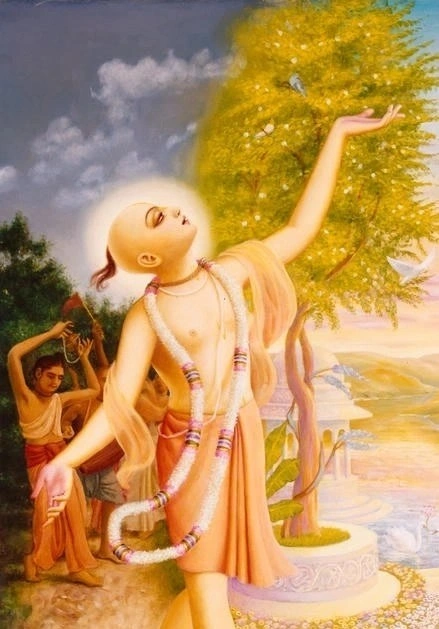
How These Pages Are Arranged #
Each stage of His life summarised above has its own detailed page. The pages follow the order of His life, from His advent at Mayapur to His disappearance at Puri. The relevant verses of the Chaitanya-charitamrita and Srimad-Bhagavatam are given in full on each page. The complete sequence is listed above.
Songs in the Vaishnava Song Book #
The Vaishnava Song Book carries 2 songs attributed to Sri Chaitanya Mahaprabhu. See the full author page here.
