Māna-sarovara (Māṭavana)
मान-सरोवर (माटवन)
Also called Maan Sarovara
- What it is
- Māna-sarovara is a lake across the Yamunā from Vṛndāvana, near the village of Pānī-gaon.
- Visiting
- Pilgrims reach Māna-sarovara by crossing the Yamunā from Vṛndāvana.
- Places here
- Māna-sarovara Mandira (Māṭavana)
In short
Māna-sarovara is a lake across the Yamunā from Vṛndāvana, near the village of Pānī-gaon. The guidebook Śrī Vraja-maṇḍala Parikramā (2007) counts it among the places of Māṭavana, and the guidebooks explain its name from Śrīmatī Rādhārāṇī's māna, Her loving anger.[1 +5] According to the Bhakti-ratnākara, Śrīla Rāghava Paṇḍita Gosvāmī showed it to Śrīla Śrīnivāsa Ācārya, lying between two streams of the Yamunā.[7] The Garga-saṁhitā names a Māna-sarovara in which Lord Śiva bathed to become a gopī and enter the rāsa dance, though it does not say where that lake is.[8 +2] How Rādhā's māna is connected with this lake is told differently by the scriptures and by the guidebooks.
Key facts
| Kind | sarovara |
|---|---|
| Region · area | Bhāṇḍīravana · Māṭavana |
| Ācāryas | Śrīla Narahari Cakravartī Ṭhākura, Śrīla Rāghava Paṇḍita Gosvāmī of Govardhana, Śrīla Śrīnivāsa Ācārya, Vṛndāvana Cakravartī (commentator on the Govinda-līlāmṛta), Śrīla Jayadeva Gosvāmī |
Why it is glorified
The Nārada Purāṇa, in its glorification of Vṛndāvana, names "the holy lake called Māna" among the holy places of the land, in the …
The Nārada Purāṇa, in its glorification of Vṛndāvana, names "the holy lake called Māna" among the holy places of the land, in the same verse as Bhadravana, Bhāṇḍīravana and Bilvavana. It says nothing more about the lake and does not say where it is, so that it means this lake, and not the Māna-sarovara of Bahulāvana, is a reading (summarised here, not translated).[11]
Divine pastimes
Rādhā's māna at the autumn rāsa
Śrīmad-Bhāgavatam tells that on the autumn nights of the rāsa dance the gopīs, honoured by Kṛṣṇa, became proud, and that, seeing their pride and māna, He disappeared. He had led one gopī away alone; when She too grew proud, He disappeared from Her as well, and the other gopīs found Her lamenting. Later Kṛṣṇa appeared again before them all. The Bhāgavatam names no lake, and it does not have any gopī leave the rāsa on her own or cross the Yamunā.[12 +5]
tāsāṃ tat-saubhaga-madaṃ vīkṣya mānaṃ ca keśavaḥ / praśamāya prasādāya tatraivāntaradhīyata
Lord Keśava, seeing the gopīs too proud of their good fortune, wanted to relieve them of this pride and show them further mercy. Thus He immediately disappeared.
Translation: Śrīla Prabhupāda's disciples (BBT)Śrīla Prabhupāda's Kṛṣṇa book names the gopī whom Kṛṣṇa took away: Rādhārāṇī.[12 +5] Śrīla Viśvanātha Cakravartī Ṭhākura and Śrīla Baladeva Vidyābhūṣaṇa explain that the māna of that night was Rādhā's, because Kṛṣṇa treated all the gopīs alike, and that He disappeared to pacify Her, taking Her with Him (summarised here, not translated). They name no lake.[14 +1]
In the Caitanya-caritāmṛta, Śrīla Rāmānanda Rāya tells Śrī Caitanya Mahāprabhu that Rādhārāṇī left the rāsa dance in māna, and that Kṛṣṇa, unhappy without Her, left the circle of the dance and searched for Her along the Yamunā. Where She went is not said.[19 +5]
ক্রোধ করি’ রাস ছাড়ি’ গেলা মান করি’ ।
তাঁরে না দেখিয়া ব্যাকুল হৈল শ্রীহরি ॥ ১১২ ॥
krodha kari’ rāsa chāḍi’ gelā māna kari’
tāṅre nā dekhiyā vyākula haila śrī-hari
When Rādhārāṇī left the rāsa dance out of anger and resentment, Lord Śrī Kṛṣṇa became very anxious because He could not see Her.
Translation: Śrīla A.C. Bhaktivedanta Swami PrabhupādaŚrīla Jayadeva Gosvāmī's Gīta-govinda also tells of Rādhā going away from the dance and of Kṛṣṇa searching for Her, and the Garga-saṁhitā sets a similar episode at Nandīśvara and Kokilāvana; neither names this lake.[22 +7] The guidebooks tell that Rādhā, in Her māna, crossed the Yamunā and came to this lonely place, and that Kṛṣṇa found Her here; the accounts are set side by side at the end of this page. Read more: Śrī Rādhā's māna at the autumn rāsa and how it was broken →
Lord Śiva becomes a gopī
The Garga-saṁhitā tells that Lord Śiva came with the sage Āsuri to see Kṛṣṇa's rāsa dance. The women guarding the dance stopped them, saying that Kṛṣṇa is the only male there, and told them to bathe in the Māna-sarovara; they bathed, at once became gopīs and entered the circle of the dance. Afterwards Kṛṣṇa let them live near the Vaṁśīvaṭa. The book does not say where its Māna-sarovara is.[8 +2] Śrīmad-Bhāgavatam does not tell of Śiva becoming a gopī; it says that the demigods and their wives watched the rāsa from the sky.[12 +2] Read more: Lakṣmī, Lord Śiva and the rāsa dance: who could enter it → Several guidebooks set Śiva's bath at this lake, but they name different helpers, and one sets it elsewhere:[8 +2]
Accounts differ How and where Lord Śiva took a gopī's form to enter the rāsa.
- Garga-saṁhitā, Vṛndāvana-khaṇḍa 25.3-8Śiva came with Āsuri Muni; the women of Goloka guarding the rāsa stopped them and told them to bathe in the Māna-sarovara; they bathed, became gopīs and entered the rāsa circle. Where the lake is, is not said.
- Vṛndāvana, the Playground of God (2010)Paurṇamāsī took Śiva and Āsuri Muni to Māna Sarovara, 'a beautiful lake on the eastern side of the River Yamunā', and dipped them in it.
- The Color Guide to Vṛndāvana (2000)Lalitā (with Viśākhā) stopped Śiva and told him to bathe in 'the Rādhārāṇī Manasorovar lake'; Kṛṣṇa then named him Gopīśvara.
- the undated parikramā notes Māna-sarovaraViśākhā took Śiva to this sarovara, where he bathed and obtained a gopī's form.
Traditional accounts
According to the Bhakti-ratnākara of Śrīla Narahari Cakravartī Ṭhākura, Śrīla Rāghava Paṇḍita Gosvāmī, after Bilvavana and before …
According to the Bhakti-ratnākara of Śrīla Narahari Cakravartī Ṭhākura, Śrīla Rāghava Paṇḍita Gosvāmī, after Bilvavana and before Lohavana, told Śrīla Śrīnivāsa Ācārya that formerly (or perhaps: far to the east) this was the stream of the Yamunā, with Māna-sarovara across it, and that now the Yamunā had become two streams with Māna-sarovara between them, which he calls very charming. He added that the many villages of this region are all places of Kṛṣṇa's pastimes (summarised here, not translated). The book tells no pastime of the lake.[7]
According to the Sanskrit commentary on Śrīla Kṛṣṇadāsa Kavirāja Gosvāmī's Govinda-līlāmṛta (21.93), the Yamunā north of Vṛndāvana likewise once had Māna-sarovara in its middle (summarised here, not translated).[33]
According to the local tradition recorded in Śrī Vraja-maṇḍala Parikramā (2007), Śrīmatī Rādhikā, in māna, went to Māna-sarovara by way of the Māna-galī lane near Sevā-kuñja in Vṛndāvana; this is not certain.[34]
Śrīla Prabhupāda
No statement of Śrīla Prabhupāda about this lake was found.
No statement of Śrīla Prabhupāda about this lake was found. He speaks of Lord Śiva in Vṛndāvana, without the lake:[41]
General teaching (does not name the place)“The gopīs also worshiped Lord Śiva in Vṛndāvana, and the lord is still staying there as Gopīśvara.”
Śrīla Prabhupāda, Śrīmad-Bhāgavatam, Canto 4, 30.38, purport · vedabase.io
Śrī Vraja-maṇḍala Parikramā (2007) says that a painting in the old temple by the lake shows Kṛṣṇa pleading at Rādhikā's feet as in a verse of the Gīta-govinda.[3 +3] Of that poem of Kṛṣṇa begging Rādhārāṇī's pardon, Śrīla Prabhupāda said that it is very confidential and not an ordinary thing, so this page does not tell the scene:[44]
General teaching (does not name the place)“Jayadeva's, that poetry, that Kṛṣṇa is begging pardon from Rādhārāṇī, that is also very confidential. … That is also dealing with the gopīs. Dehi pada-pallavam udaram. So these things are not ordinary things. You should understand that.”
Śrīla Prabhupāda, Room Conversation with Film Producer about Kṛṣṇa Lila, Bhubaneswar, 22 January 1977 · vedabase.io
Visiting today
Pilgrims reach Māna-sarovara by crossing the Yamunā from Vṛndāvana. Vṛndāvana-Dhāma Ki Jaya! (c. 1986) says that they generally come here after the Pañcakrośī parikramā of Vṛndāvana, and Śrī Vraja-maṇḍala Parikramā (2007) leads its route from Māṭa and Baelvana to Māna-sarovara, Ārā, Pānī-gaon and Lohavana. In 1966 Mītal described the yātrā crossing from Vṛndāvana by boat and going by Mānasarovara and Pānīgāṁv along the Yamunā to Lohavana.[6 +2]
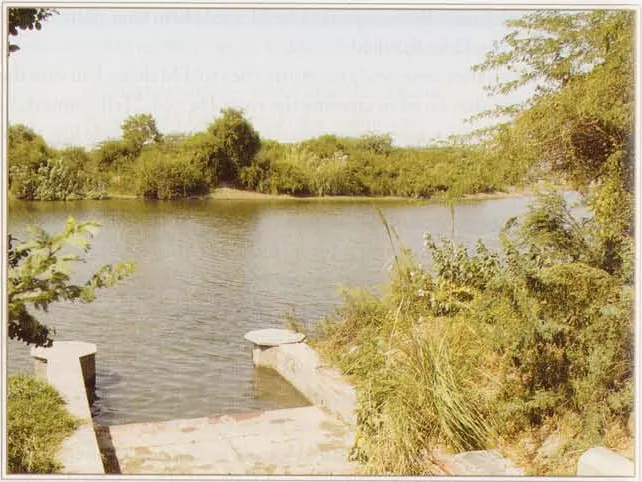
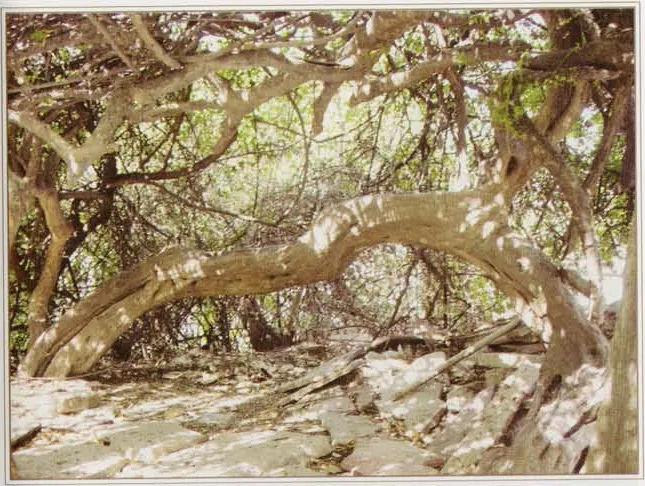
Śrī Vraja-maṇḍala Parikramā (2007) describes the lake as a charming place shaded by pīlū, kadamba and tamāla trees, with peacocks, cuckoos, swans and deer, and an old temple on its bank; its photographs show stone steps going down to the water and a grove of old trees. These are the guidebook's words of 2007; the present state of the lake has not been checked.[3 +3]
Location
| Where it is | Pānī-gaon lies 2 miles south of it; across the Yamunā from the rāsa place[48] across the Yamunā from Pañcakrośī Vṛndāvana[49] |
|---|
Places at Māna-sarovara (Māṭavana)
1 places
Nearby places
Pānī-gaon · Vṛndāvana · Sevā-kuñja · Yamunā
Pictures
1 pictures
History
A fair is held at Māna-sarovara on the eleventh day of the dark fortnight of Phālguna, Vijayā Ekādaśī. F. S. Growse recorded it in 1883, Prabhudayāl Mītal in 1966 and A. W. Entwistle in 1987, who says that it is held by members of the Rādhāvallabha sampradāya; whether it is still held was not checked.[35 +3]
In 1883 Growse described the lake as shallow and small, mostly dry in the hot weather, with a little hermitage of a Rādhāvallabha gosāīṁ among old jāman trees on its bank, the remains of a garden ascribed to a Rājā of Ballabhgarh.[39 +1] The historians name the builders of the small shrines by the lake differently; the Māna-sarovara Mandira concerns that question.
Where the sources differ
How Rādhā came to be apart from the other gopīs at the rāsa, where She went, and who found Her: did She leave on Her own and go …
Accounts differ How Rādhā came to be apart from the other gopīs at the rāsa, where She went, and who found Her: did She leave on Her own and go to Māna-sarovara (Śrī Vraja-maṇḍala Parikramā (2007), the undated parikramā notes Māna-sarovara), or did Kṛṣṇa take Her away and leave Her in the forest?
- Śrīmad-Bhāgavatam 10.29.47-48, 10.30.35-40, 10.32.2-6seeing the gopīs' pride and māna Kṛṣṇa disappeared; He had led one gopī away alone; when She, proud, asked to be carried, He disappeared and She lamented; the other gopīs found Her; later Kṛṣṇa reappeared to all the gopīs, one of them receiving Him in loving anger; no gopī is named, no lake
- Śrīla Viśvanātha Cakravartī and Śrīla Baladeva Vidyābhūṣaṇa on ŚB 10.29.48 (Śrīla Jīva Gosvāmī and Vaṁśīdhara similar)the māna was Rādhā's; Kṛṣṇa disappeared to pacify Her, taking Her with Him
- Garga-saṁhitā, Vṛndāvana-khaṇḍa 21.10-41the rāsa of the gopīs' pride was at 'nandīśvara-bṛhat-sānu-taṭe', which may mean the great peak of Nandīśvara Hill or the slope of Nandīśvara and Bṛhatsānu; Kṛṣṇa disappeared with Rādhā; at Kokilāvana, when She was proud and asked to be carried, He disappeared and She wept loudly there; the gopīs found and consoled Her
- Kṛṣṇa book ch. 29-30 (Śrīla Prabhupāda)Kṛṣṇa disappeared to curb the gopīs' pride; the gopī He took away alone was Rādhārāṇī; He left Her alone too and the gopīs found Her
More on this place
Śrī Rādhā's māna at the autumn rāsa and how it was broken · Lakṣmī, Lord Śiva and the rāsa dance: who could enter it
References
49 references
- Śrī Vraja-maṇḍala Parikramā (2007), PDF p. 257
- Śrī Vraja-maṇḍala Parikramā (2007), PDF p. 258
- Śrī Vraja-maṇḍala Parikramā (2007), PDF p. 259
- the undated parikramā notes Māna-sarovara, ¶3
- the undated parikramā notes Māna-sarovara, ¶8
- Vṛndāvana-Dhāma Ki Jaya! (c. 1986), by Dhruva Mahārāja dāsa, PDF p. 83
- Śrīla Narahari Cakravartī, Bhakti-ratnākara, Fifth Wave (pañcama taraṅga), printed pp. 275-276, vv.1693-1695 and the first half of v.1696 in the Grantha Mandira numbering, 2nd ed., 1912
- Garga-saṁhitā, Vṛndāvana-khaṇḍa (2), adhyāya 25 (rāsa-krīḍā: Śiva and Āsuri), verse 7, Sanskrit Wikisource
- Garga-saṁhitā, Vṛndāvana-khaṇḍa (2), adhyāya 25, verse 8, Sanskrit Wikisource
- Garga-saṁhitā, Vṛndāvana-khaṇḍa (2), adhyāya 25 (rāsa-krīḍā), verses 31–32, Sanskrit Wikisource
- Nārada Purāṇa, Uttara-bhāga (उत्तरार्धः), adhyāya 80 (Vṛndāvana-māhātmya), verses 76-77
- Śrīmad-Bhāgavatam 10.29.1, GRETIL
- Śrīmad-Bhāgavatam 10.29.47, GRETIL
- Śrīmad-Bhāgavatam 10.29.48, GRETIL
- Śrīmad-Bhāgavatam 10.30.35–36, GRETIL
- Śrīmad-Bhāgavatam ŚB 10.30.37, GRETIL
- Śrīmad-Bhāgavatam ŚB 10.30.38, GRETIL
- Śrīla Viśvanātha Cakravartī Ṭhākura: commentary on ŚB 10.29.48
- Śrīla Kṛṣṇadāsa Kavirāja Gosvāmī, Śrī Caitanya-caritāmṛta, CC Madhya-līlā 8.105 (Rāmānanda Rāya speaking), online edition · vedabase.io
- Śrīla Kṛṣṇadāsa Kavirāja Gosvāmī, Śrī Caitanya-caritāmṛta, Madhya-līlā 8.112 (Rāmānanda Rāya speaking), online edition · vedabase.io
Show all 49 references
- Śrīla Kṛṣṇadāsa Kavirāja Gosvāmī, Śrī Caitanya-caritāmṛta, Madhya-līlā 8.114 (Rāmānanda Rāya speaking), online edition · vedabase.io
- Śrīla Jayadeva Gosvāmī, Gīta-govinda, sarga 3, verse 1, GRETIL
- Śrīla Jayadeva Gosvāmī, Gīta-govinda, sarga 3, verse 2, GRETIL
- Śrīla Prabhupāda, Śrī Caitanya-caritāmṛta, Madhya-līlā 8.102, translation and purport · vedabase.io
- Śrīla Jayadeva Gosvāmī, Gīta-govinda, sarga 1, verses 26-27, GRETIL
- Śrīla Jayadeva Gosvāmī, Gīta-govinda, sarga 2, verse 1 and the refrain of Song 5, GRETIL
- Śrīla Jayadeva Gosvāmī, Gīta-govinda, sarga 10, verse 1, GRETIL
- Śrīla Jayadeva Gosvāmī, Gīta-govinda, sarga 10, verse 8 (seventh stanza of Song 19), GRETIL
- Garga-saṁhitā, Vṛndāvana-khaṇḍa (2) 21.10 in the Wikisource text (= 2.21.9-10 in the Danavir Goswami edition), Sanskrit Wikisource
- Garga-saṁhitā, Vṛndāvana-khaṇḍa (2), adhyāya 21, verses 36-37, Sanskrit Wikisource
- Śrīmad-Bhāgavatam 10.33.3, GRETIL
- Śrīla Prabhupāda, Kṛṣṇa, the Supreme Personality of Godhead, Chapter 33, 'Description of the Rāsa Dance' · vedabase.io
- Śrīla Kṛṣṇadāsa Kavirāja Gosvāmī, Govinda-līlāmṛta, sarga 21, verse 93, with the ṭīkā, after Haridas Shastri's edition, 1981
- Śrī Vraja-maṇḍala Parikramā (2007), PDF p. 302
- Prabhudayāl Mītal, 'Braj kā prākṛtik aur bhaugolik varṇan', list of sarovaras, printed p. 37
- A. W. Entwistle, ch. 8 §67 'Man Sarovar', printed p. 419, Egbert Forsten, Groningen, 1987
- A. W. Entwistle, Appendix (calendar of festivals), month Phalgun I, printed p. 490, Egbert Forsten, Groningen, 1987
- Mathurá (1883), F. S. Growse, B.C.S., M.A. Oxon., C.I.E. (as the title page gives him, p. 269
- Mathurá (1883), F. S. Growse, B.C.S., M.A. Oxon., C.I.E. (as the title page gives him, p. 87
- Muttra (1911), D. L. Drake-Brockman, I.C.S. (edited and compiled)
- Śrīla Prabhupāda, Śrīmad-Bhāgavatam, Canto 4, 30.38, purport · vedabase.io
- Śrī Vraja-maṇḍala Parikramā (2007), PDF p. 260
- the undated parikramā notes Māna-sarovara, ¶11
- Śrīla Prabhupāda, Room Conversation with Film Producer about Kṛṣṇa Lila, Bhubaneswar, 22 January 1977 · vedabase.io
- Śrī Vraja-maṇḍala Parikramā (2007), PDF p. 25
- Prabhudayāl Mītal, Braj-yātrā, 20th-21st halts (Vṛndāvana to Lohavana), printed p. 141
- the undated parikramā notes Māna-sarovara, ¶10
- Śrī Vraja-maṇḍala Parikramā (2007), p. 490-491
- Vṛndāvana-Dhāma Ki Jaya! (c. 1986), by Dhruva Mahārāja dāsa, p. 65