Lakṣmī, Lord Śiva and the rāsa dance: who could enter it
गोपीश्वर महादेव और लक्ष्मी: रास में किसका प्रवेश हुआ
In short
Śrīmad-Bhāgavatam says that the favour the gopīs (cowherd girls) received in the rāsa dance was never given even to Lakṣmī, the goddess of fortune, though she performed long austerities. Lord Śiva's coming to the rāsa as a gopī is not in the Bhāgavatam. The Garga-saṁhitā, one commentator and the guidebooks tell it, and he is worshipped in Vṛndāvana as Gopīśvara.[1–10]
On this page
At a glance
- Scripture: Śrīmad-Bhāgavatam 10.47.60, in Uddhava's words, and 10.16.36, in the prayers of Kāliya's wives, speak of Lakṣmī and the rāsa.[1–6]
- Śrīla Prabhupāda's teaching: Lakṣmī could not enter the rāsa because she wished to keep her form as Lakṣmī and did not follow the gopīs.[6]
- Lakṣmī's austerities: Śrīla Baladeva Vidyābhūṣaṇa names the place Śrīvana, which Śrīla Prabhupāda calls also Bilvavana.[11–13]
- Lord Śiva: the Bhāgavatam's rāsa chapters do not name him; it tells only that he is bewildered by Kṛṣṇa's flute.[7 +3]
- The name Gopīśvara: according to Śrīla Raghunātha dāsa Gosvāmī and the Bhakti-ratnākara, the gopīs worshipped him to obtain Kṛṣṇa.[16–21]
- The temple: Gopīśvara Mahādeva stands near Vaṁśīvaṭa in Vṛndāvana.[22–25]
Who could enter the rāsa dance?
The question behind this article comes from the Bhāgavatam itself. Uddhava came to Vraja with Kṛṣṇa's message and saw the love of the gopīs, the cowherd girls of Vraja. Then he spoke of the favour they received in the rāsa dance, Kṛṣṇa's circle dance with them. It was never given, he said, to the goddess of fortune or to the other consorts of the spiritual world:[1–6]
nāyaṃ śriyo 'ṅga u nitānta-rateḥ prasādaḥ
svar-yoṣitāṃ nalina-gandha-rucāṃ kuto 'nyāḥ … rāsotsave 'sya bhuja-daṇḍa-gṛhīta-kaṇṭha-
labdhāśiṣāṃ ya udagād vraja-vallabhīnām
When Lord Śrī Kṛṣṇa was dancing with the gopīs in the rāsa-līlā, the gopīs were embraced by the arms of the Lord. This transcendental favor was never bestowed upon the goddess of fortune or other consorts in the spiritual world.
Translation: Śrīla Prabhupāda's disciples (BBT)Śrīla Prabhupāda explains the same verse in his Kṛṣṇa book, his retelling of the Tenth Canto. He adds that Lakṣmī is an expansion of Śrīmatī Rādhārāṇī, always eager to rise to the position of the gopīs:[26]
General teaching (does not name the place)“Therefore the goddess of fortune, Lakṣmījī, is always eager to be elevated to the position of the gopīs. … The supreme benediction attained by the gopīs in spite of their being born in the families of cowherd men was never attained even by the goddess of fortune herself”
Śrīla Prabhupāda, Kṛṣṇa, the Supreme Personality of Godhead, Chapter 47, 'Delivery of the Message of Kṛṣṇa to the Gopīs' · vedabase.io
The Bhāgavatam tells the dance itself without naming any of the beings who came to see it. It says only that the demigods and their wives crowded the sky in their airplanes to watch. Śrīla Prabhupāda's Kṛṣṇa book tells the same.[7, 8] Two traditions of Vraja give the question a face. Lakṣmī performed austerities and could not enter. Lord Śiva, they say, came in a gopī's form. A third such story, of Nārada, is told in its own article.[9 +5] Read more: How Nārada became a gopī: the accounts side by side →
Why could Lakṣmī not enter the rāsa dance?
The Bhāgavatam first speaks of Lakṣmī's austerities in the prayers of Kāliya's wives, the Nāga-patnīs, who wonder how their husband gained the dust of Kṛṣṇa's feet:[1–6]
kasyānubhāvo 'sya na deva vidmahe tavāṅghri-reṇu-sparaśādhikāraḥ / yad-vāñchayā śrīr lalanācarat tapo vihāya kāmān su-ciraṃ dhṛta-vratā
O Lord, we do not know how the serpent Kāliya has attained this great opportunity of being touched by the dust of Your lotus feet. For this end, the goddess of fortune performed austerities for centuries, giving up all other desires and observing austere vows.
Translation: Śrīla Prabhupāda's disciples (BBT)Śrīla Prabhupāda gives the verse in his own words in the Kṛṣṇa book. Even the goddess of fortune, he writes, underwent severe austerities just to have the dust of Kṛṣṇa's lotus feet.[3] The Caitanya-caritāmṛta takes the question further in Śrī Caitanya Mahāprabhu's talk with Veṅkaṭa Bhaṭṭa. Śrīla Kṛṣṇadāsa Kavirāja Gosvāmī describes her austerities in Śrīla Prabhupāda's translation:[4]
General teaching (does not name the place)“Just to associate with Kṛṣṇa, Lakṣmī abandoned all transcendental happiness in Vaikuṇṭha and for a long time accepted vows and regulative principles and performed unlimited austerities.”
Śrīla Prabhupāda, Śrī Caitanya-caritāmṛta, Madhya-līlā 9.113, translation · vedabase.io
Then Śrī Caitanya Mahāprabhu says that the goddess of fortune is not at fault. Yet, as the scriptures say, she could not enter the rāsa dance.[5] At the end of the talk He gives the reason:[6]
General teaching (does not name the place)“The goddess of fortune, Lakṣmī, wanted to enjoy Kṛṣṇa and at the same time retain her spiritual body in the form of Lakṣmī. However, she did not follow in the footsteps of the gopīs in her worship of Kṛṣṇa.”
Śrīla Prabhupāda, Śrī Caitanya-caritāmṛta, Madhya-līlā 9.136, translation · vedabase.io
What the commentators add
The commentators on ŚB 10.16.36 agree that Lakṣmī did not attain what she sought (all summarised here, not translated). Śrīla Sanātana Gosvāmī says that she saw Kṛṣṇa's sweetness and performed austerities to attain it. She received only the boon of a place on His chest in the form of a fine golden line.[11] Śrīla Jīva Gosvāmī says that she gave up the enjoyments of her husband's company and took vows, but did not attain it.[11] Śrīla Baladeva Vidyābhūṣaṇa says that she performed austerities to touch the feet of Nanda's son, without success, and he names the place.[11]
Where did Lakṣmī perform her austerities?
According to Śrīla Baladeva Vidyābhūṣaṇa, the place of her austerity is known as Śrīvana, "the forest of Śrī". Śrīla Prabhupāda, in his purport (his explanation) to Caitanya-caritāmṛta Madhya 18.67, says that Śrīvana is also called Bilvavana.[11–13] The verse records that Śrī Caitanya Mahāprabhu visited Śrīvana on His way to Lohavana and Mahāvana:[12, 31]
‘śrīvana’ dekhi’ punaḥ gelā ‘loha-vana’
‘mahāvana’ giyā kailā janma-sthāna-daraśana
Śrī Caitanya Mahāprabhu then visited Śrīvana and Lohavana. He then went to Mahāvana and saw Gokula, the place of Lord Kṛṣṇa’s early childhood pastimes.
Translation: Śrīla A.C. Bhaktivedanta Swami PrabhupādaIn the same purport Śrīla Prabhupāda quotes the Bhakti-ratnākara: the forest of Bilvavana is worshipped by all the demigods.[12] The Vraja-bhakti-vilāsa of Śrīla Nārāyaṇa Bhaṭṭa Gosvāmī names Lakṣmī-Nṛsiṁha as the presiding Deity of the Śrī-vaṭa and gives a Lakṣmī temple as its sign-place.[32–34]
Śrī Vraja-maṇḍala Parikramā (2007) shows a Lakṣmī temple in Bilvavana, with its two Deities captioned "Śrī Lakṣmī". It places the temple near Kṛṣṇa-kuṇḍa, a sacred pond.[28 +2] According to the same book, Lakṣmī heard from Nārada of the rāsa and of the gopīs' good fortune. She performed severe austerities here to enter it, without success, and she is performing them here still.[27–30]
Is the story of Śiva as a gopī in the Bhāgavatam?
It is not, and this should be said first. The Bhāgavatam's rāsa chapters do not name Lord Śiva. When the dance began, they say, the demigods and their wives watched from the sky, and none of them is named.[7 +3] In the Tenth Canto Śiva is named in another connection, in the gopīs' song to mother Yaśodā about Kṛṣṇa's flute:[14, 15]
vividha-gopa-caraṇeṣu vidagdho veṇu-vādya urudhā nija-śikṣāḥ
tava sutaḥ sati yadādhara-bimbe datta-veṇur anayat svara-jātīḥ
savanaśas tad upadhārya sureśāḥ śakra-śarva-parameṣṭhi-purogāḥ
kavaya ānata-kandhara-cittāḥ kaśmalaṁ yayur aniścita-tattvāḥ ||
O pious mother Yaśodā, your son, who is expert in all the arts of herding cows, has invented many new styles of flute-playing. When He takes His flute to His bimba-red lips and sends forth the tones of the harmonic scale in variegated melodies, Brahmā, Śiva, Indra and other chief demigods become confused upon hearing the sound. Although they are the most learned authorities, they cannot ascertain the essence of that music, and thus they bow down their heads and hearts.
Translation: Śrīla Prabhupāda's disciples (BBT)Śrīla Prabhupāda tells the verse in the same way. When Kṛṣṇa plays, the demigods, Lord Śiva among them, bow their heads and listen, but they cannot understand the music of His flute.[15]
What Vaṁśīdhara says
One Canto 10 commentator, Vaṁśīdhara, does speak of Śiva at the rāsa (summarised here, not translated). The gopīs say that no woman in the three worlds could resist the flute. On that verse he says that even Śaṅkara, Lord Śiva, and others, enchanted by the flute, took women's dress and joined the gopīs.[9, 10] Explaining a word of ŚB 10.33.10, he cites a commentary on the five rāsa chapters ascribed to Śiva. Śiva saw the rāsa-līlā, the pastime of the rāsa, and described it to Pārvatī. It is well known, Vaṁśīdhara adds, that at that very time he became Gopīśvara. He names no helper, lake or place.[10, 38]
The Garga-saṁhitā
The Garga-saṁhitā, a later text with its own account of these pastimes, tells the story in its Vṛndāvana-khaṇḍa (summarised here, not translated). Śiva came with the sage Āsuri to see Kṛṣṇa's rāsa. The women of Goloka, Kṛṣṇa's own abode, were guarding it. They stopped the two, saying that Kṛṣṇa is the only male there, and told them to bathe in the Māna-sarovara, a lake across the Yamunā. They bathed, became gopīs and entered the circle of the rāsa.[39–41] Afterwards they asked to live always in Vṛndāvana at the feet of Rādhā and Kṛṣṇa. They made their home on the sandbank near the Vaṁśīvaṭa, by the Yamunā.[42] The guidebooks' versions of the story differ from it and from one another, and they are set out below.[39–41]
Why do the gopīs worship Gopīśvara?
The older texts explain the name Gopīśvara, "the lord of the gopīs", in a different way. Śrīla Raghunātha dāsa Gosvāmī, in his Vraja-vilāsa-stava, says that the gopīs, longing for Kṛṣṇa, worshipped this lord here and quickly attained their desire. He himself worships that Gopīśvara on the bank of the Yamunā every day (summarised here, not translated).[16–21] The Bhakti-ratnākara says that the gopīs constantly worshipped him with many offerings to gain Kṛṣṇa's company, and that this is why he is called Gopīśvara.[19] Śrīla Prabhupāda writes in his purport to Śrīmad-Bhāgavatam 4.30.38:[16–21]
Names this place“The gopīs also worshiped Lord Śiva in Vṛndāvana, and the lord is still staying there as Gopīśvara. The gopīs, however, prayed that Lord Śiva bless them by giving them Lord Kṛṣṇa as their husband.”
Śrīla Prabhupāda, Śrīmad-Bhāgavatam, 4.30.38, purport · vedabase.io
Śrīla Viśvanātha Cakravartī Ṭhākura's Vraja-rīti-cintāmaṇi calls him the giver of boons whom the gopīs worship. In his Saṅkalpa-kalpa-druma he prays to Gopīśvara, the lord of Vṛndāvana's land, for pure love for the feet of the Divine Couple.[19 +3] The Bhāgavatam itself, telling the gopīs' vow for Kṛṣṇa, names only the goddess Kātyāyanī. The unmarried girls worshipped her on the Yamunā's bank in the winter month of Hemanta.[45–47] The sources differ on whom the gopīs worshipped:
Accounts differ Whom the gopīs worshipped to obtain Kṛṣṇa: the Bhāgavatam names only the goddess Kātyāyanī; Śrīla Raghunātha dāsa Gosvāmī and the Bhakti-ratnākara name Gopīśvara (Śiva); Śrīla Prabhupāda names both.
- Śrīmad-Bhāgavatam 10.22.1–5, 10.22.27In the first month of Hemanta the unmarried girls of Vraja worshipped the goddess Kātyāyanī (Bhadrakālī, 10.22.5) in an image on the Yamunā's bank, praying that Nanda's son become their husband; Kṛṣṇa then told them that their desire was fulfilled, the purpose of their vow (10.22.27). Śiva is not named.
- Śrīla Raghunātha dāsa Gosvāmī, Vraja-vilāsa-stava 87The gopīs, longing to attain Kṛṣṇa, the son of the king of the gopas, worshipped Gopīśvara here on the Yamunā's bank and quickly attained their desire.
- Bhakti-ratnākara, Fifth Wave, 1912 ed. p. 447The gopīs constantly worshipped Gopīśvara with many offerings to gain Kṛṣṇa's company, hence his name.
- Śrīla Prabhupāda, SB 4.30.38 and 4.24.30 purports; Kṛṣṇa book ch. 22The gopīs worshipped Lord Śiva in Vṛndāvana, where he stays as Gopīśvara, praying for Kṛṣṇa as their husband (4.30.38); they worshipped 'not only Lord Śiva but Kātyāyanī, or Durgā, as well' (4.24.30); unmarried girls customarily worship Lord Śiva or Goddess Durgā for a husband, and the gopīs worshipped Goddess Durgā (Kṛṣṇa book ch. 22).
Where is the Gopīśvara temple?
The Gopīśvara Mahādeva temple stands near the Vaṁśīvaṭa in Vṛndāvana, to its north-east according to Śrī Vraja-maṇḍala Parikramā (2007).[22–25] The Padma Purāṇa, an old scripture, already says that in Vṛndāvana, by the Yamunā, the seat of a Śiva-liṅga called Gopīśvara is seen.[48, 49] In Śrīla Kṛṣṇadāsa Kavirāja Gosvāmī's Govinda-līlāmṛta, Gopīśvara always dwells north-east of Brahma-kuṇḍa, with the Vaṁśīvaṭa to his north.[50] Read more: Where the autumn rāsa took place →
The Gosvāmīs honoured him in their own works. Śrīla Rūpa Gosvāmī opens his dramas Lalita-mādhava and Vidagdha-mādhava with a stage-manager acting on a dream-order of Śiva, who is known as Gopīśvara.[51–53] According to the Bhakti-ratnākara, three young ācāryas, Śrīla Śrīnivāsa Ācārya, Śrīla Narottama dāsa Ṭhākura and Śrīla Śyāmānanda Paṇḍita, were about to leave Vraja with the Gosvāmīs' books. Śrīla Jīva Gosvāmī first sent them to Gopīśvara.[54] The book also calls him the Sadāśiva who protects the forest of Vṛndā, by whose mercy love for Vṛndāvana grows.[19 +4]
Two guidebooks describe the worship in their time. Vṛndāvana, the Playground of God (2010) has photographs of the liṅga. Their captions are said to show it in its usual form in the morning and dressed as a gopī in the evening.[20 +2] The same book and The Color Guide to Vṛndāvana (2000) describe a separate Deity of Gopīśvara as a gopī in a corner of the Vaṁśīvaṭa compound. They place Āsuri Muni in another corner.[24, 25]
Where the sources differ
The story of how Śiva became a gopī is told differently in each book that tells it. Four guidebooks tell a story in which he is said to have been stopped as a male and changed into a gopī by bathing in a lake. The gopīs found him out, and Kṛṣṇa named him Gopīśvara and made him the guard of the rāsa.[23 +5] They disagree on the lake and on the helper: Brahma-kuṇḍa or Māna-sarovara, Paurṇamāsī or Lalitā.[25 +3] According to the Bengali Vṛndāvana-kathā (1920), the Vrajavāsīs, the people of Vraja, are said to tell it differently. Kṛṣṇa recognised Mahādeva in a gopī's dress and asked him to stay in Vṛndāvana as a liṅga.[63] The accounts are set side by side here:
Accounts differ How and where Śiva became a gopī to enter the rāsa (origin of the name Gopīśvara).
- Garga-saṁhitā, Vṛndāvana-khaṇḍa 25.3-8Śiva came with Āsuri Muni; the women of Goloka guarding the rāsa stopped them and told them to bathe in the Māna-sarovara; they bathed there, became gopīs and entered the rāsa circle. The chapter does not use the name Gopīśvara.
- Śrī Vraja-maṇḍala Parikramā (2007)Pūrṇimā (Yogamāyā Paurṇamāsī) dipped Śiva in the nearby Brahma-kuṇḍa; he came out a gopī and watched the rāsa from a kuñja north-east of the rāsa-sthalī.
- Vṛndāvana, the Playground of God (2010)Paurṇamāsī took Śiva and Āsuri Muni to the Māna-sarovara on the eastern side of the Yamunā.
- The Color Guide to Vṛndāvana (2000)Lalitā (with Viśākhā) stopped Śiva and told him to bathe in 'the Rādhārāṇī Manasorovar lake'; Kṛṣṇa then named him Gopīśvara.
Where Lakṣmī performed her austerities is answered differently too. Besides Śrīvana, one set of notes quotes under Bilvavana a verse of the Vraja-rīti-cintāmaṇi that its author places in Kāmyavana.[11–13]
Accounts differ Where Lakṣmī performed her austerities to attain Kṛṣṇa or the rāsa.
- Śrī Vraja-maṇḍala Parikramā (2007)At this place in Baelvana; 'to this day, she is performing austerities here'.
- the undated parikramā notes BilvavanaIn the Bilvavana forest, meditating on the rāsa of Sevā-kuñja across the river; under Bilvavana it quotes in English two Vraja-rīti-cintāmaṇi verses, 1.40 (on Vraja in general) and 3.56 (set in Kāmyavana), neither of which names Bilvavana.
- Śrīla Baladeva Vidyābhūṣaṇa on ŚB 10.16.36The place of her austerity is famous as Śrīvana.
- Śrīla Viśvanātha Cakravartī, Vraja-rīti-cintāmaṇi 3.56 and 1.40In his description of Kāmyavana: 'where' Lakṣmī performed austerities without attaining the gopīs' mood, yet conversed with her beloved. In his praise of Vraja as a whole (1.40), Ramā was bewildered on seeing Vraja's sweetness; no place is named.
Places in this article
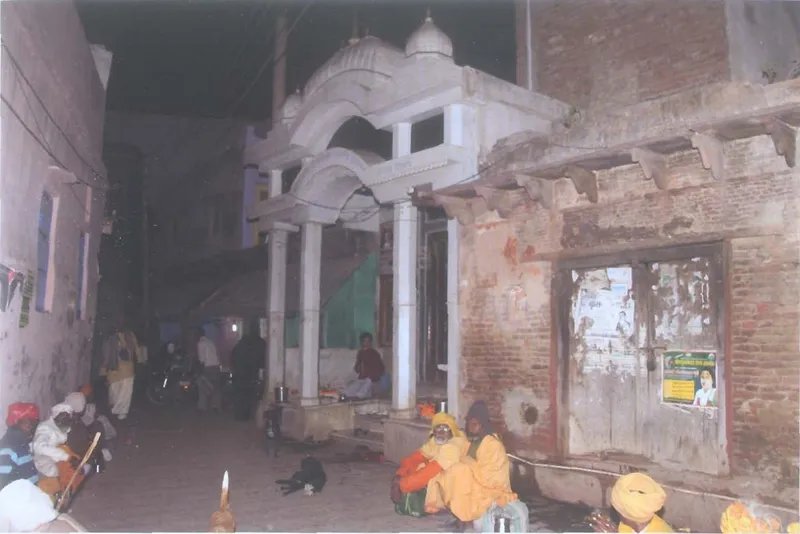
Gopīśvara Mahādeva Mandira (Vṛndāvana)
गोपीश्वर महादेव मन्दिर (वृन्दावन)The Gopīśvara Mahādeva temple is the shrine of Lord Śiva as Gopīśvara, "the lord of the gopīs", near Vaṁśīvaṭa in Vṛndāvana.
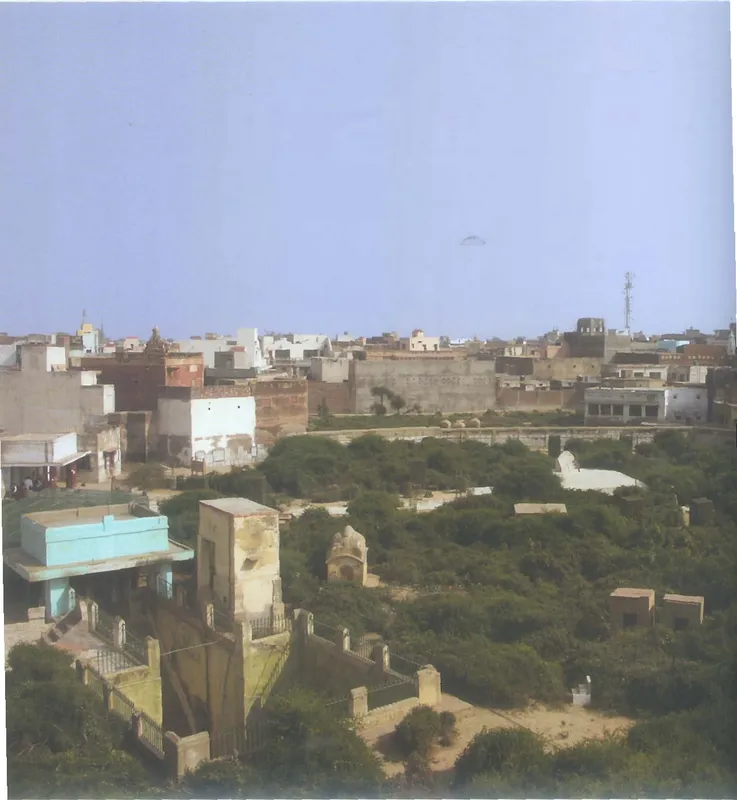
Sevā-kuñja
सेवा-कुंजSevā-kuñja, "the grove of service", is a walled garden in the centre of Vṛndāvana.
Lakṣmī Mandira (Baelvana)
लक्ष्मी मन्दिर (बेलवन)The Lakṣmī Mandira is a temple of Śrī Lakṣmī, the goddess of fortune, in Baelvana (Bilvavana), near the Kṛṣṇa-kuṇḍa of that forest.
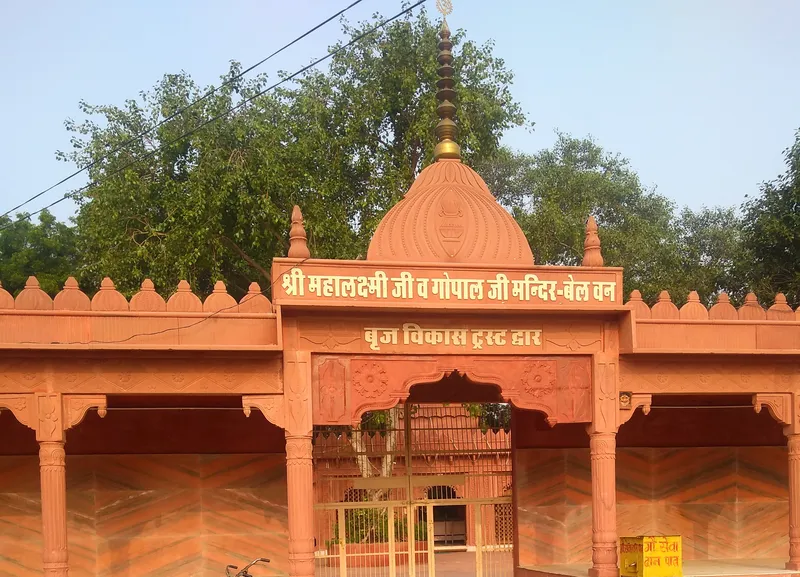
Bilvavana
बेलवनBaelvana, in Sanskrit Bilvavana, "the forest of bilva (bael) trees", is one of the twelve forests of Vraja.
Gopīśvara Mahādeva mūrti (Vaṁśīvaṭa)
गोपीश्वर महादेव मूर्ति (वंशीवट)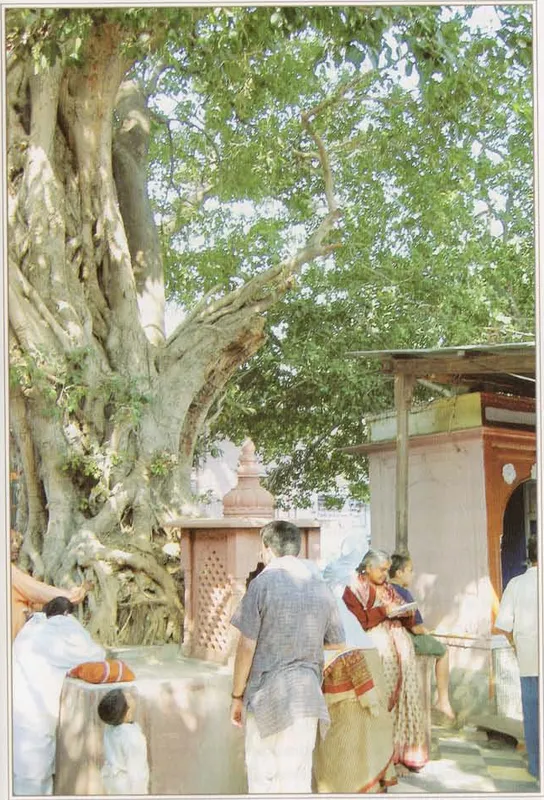
Vaṁśīvaṭa (Vṛndāvana)
वंशीवट (वृन्दावन)Vaṁśīvaṭa, "the banyan of the flute", stands on the bank of the Yamunā in Vṛndāvana, near the Gopīśvara Mahādeva temple.
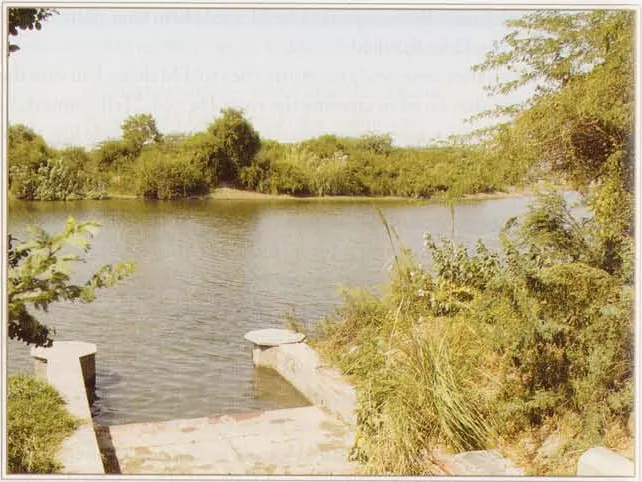
Māna-sarovara (Māṭavana)
मान-सरोवर (माटवन)Māna-sarovara is a lake across the Yamunā from Vṛndāvana, near the village of Pānī-gaon.
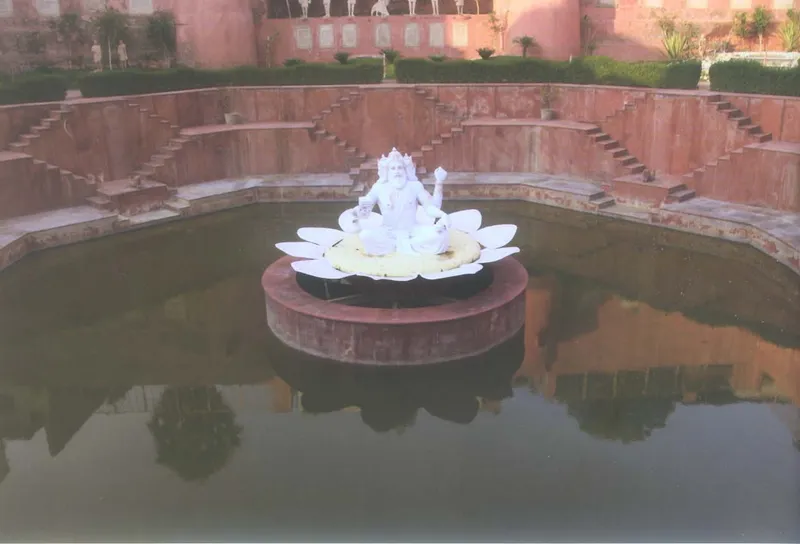
Brahma-kuṇḍa (Vṛndāvana)
ब्रह्म-कुण्ड (वृन्दावन)Brahma-kuṇḍa is a tank in Vṛndāvana, north of the Raṅgajī temple.
Annapūrṇā-devī Mandira (Gopīśvara Mahādeva)
अन्नपूर्णा-देवी मन्दिर (गोपीश्वर महादेव)Questions and answers
In the Caitanya-caritāmṛta, as Śrīla Prabhupāda translates it, she wanted to enjoy Kṛṣṇa while keeping her spiritual form as Lakṣmī. And she did not follow in the footsteps of the gopīs.[6]
According to the Garga-saṁhitā and the guidebooks, he took a gopī's form to see the rāsa. According to Śrīla Raghunātha dāsa Gosvāmī and the Bhakti-ratnākara, he is called Gopīśvara because the gopīs worshipped him to obtain Kṛṣṇa.[16 +8]
No. The Bhāgavatam's rāsa chapters do not name Śiva; only the commentator Vaṁśīdhara, the Garga-saṁhitā and the guidebooks tell of his coming in a gopī's form.[7–10]
In Vṛndāvana, near the Vaṁśīvaṭa on the old bank of the Yamunā. The Govinda-līlāmṛta places Gopīśvara north-east of Brahma-kuṇḍa, with the Vaṁśīvaṭa to his north.[22 +4]
Śrīla Baladeva Vidyābhūṣaṇa calls the place Śrīvana, and Śrīla Prabhupāda says that Śrīvana is also called Bilvavana. A 2007 guidebook shows a Lakṣmī temple there.[11 +5]
To obtain Kṛṣṇa. Śrīla Prabhupāda writes that the gopīs worshipped Lord Śiva in Vṛndāvana, where he still stays as Gopīśvara, and prayed that he give them Kṛṣṇa as their husband.[17]
Sources
- Śrīmad-Bhāgavatam 10.16.36, GRETIL
- Śrīmad-Bhāgavatam 10.47.60, GRETIL
- Śrīla Prabhupāda, Kṛṣṇa, the Supreme Personality of Godhead (Kṛṣṇa book), Chapter 16, 'Subduing Kāliya' · vedabase.io
- Śrīla Prabhupāda, Śrī Caitanya-caritāmṛta, Madhya-līlā 9.113, translation · vedabase.io
- Śrīla Prabhupāda, Śrī Caitanya-caritāmṛta, Madhya-līlā 9.120, translation · vedabase.io
- Śrīla Prabhupāda, Śrī Caitanya-caritāmṛta, Madhya-līlā 9.136, translation · vedabase.io
- Śrīmad-Bhāgavatam 10.33.3, GRETIL
- Śrīla Prabhupāda, Kṛṣṇa, the Supreme Personality of Godhead (Kṛṣṇa book), Chapter 33, 'Description of the Rāsa Dance' · vedabase.io
- Vaṁśīdhara: commentary on ŚB 10.29.40
- Vaṁśīdhara: commentary on ŚB 10.33.10
- Baladeva Vidyābhūṣaṇa: commentary on ŚB 10.16.36, Bhagavata Vidya Pith edition, ed. Bhagavata Rishi and Krishna Shankar Shastri, 1996
- Śrīla Prabhupāda, Śrī Caitanya-caritāmṛta, Madhya-līlā 18.67, purport · vedabase.io
- Padma Purāṇa, Pātāla-khaṇḍa (5) 69.50 (= Vṛndāvana-māhātmya (1) v.50 in Vṛndāvana-māhātmya of the Padma Purāṇa), Sanskrit Wikisource
- Śrīmad-Bhāgavatam 10.35.14–15, Bhagavata Vidya Pith edition, ed. Bhagavata Rishi and Krishna Shankar Shastri, 1996
- Śrīla Prabhupāda, Kṛṣṇa, the Supreme Personality of Godhead (Kṛṣṇa book), Chapter 35, 'The Gopīs’ Feelings of Separation' · vedabase.io
- Śrīla Raghunātha dāsa Gosvāmī, Vraja-vilāsa-stava, verse 87
- Śrīla Prabhupāda, Śrīmad-Bhāgavatam, 4.30.38, purport · vedabase.io
- Śrīla Prabhupāda, Śrīmad-Bhāgavatam, 4.24.30, purport · vedabase.io
- Śrīla Narahari Cakravartī, Bhakti-ratnākara, Fifth Wave (pañcama taraṅga), 1912 ed. p. 447, 2nd ed., 1912
- Śrī Vraja-maṇḍala Parikramā (2007), PDF p. 320
Show all 63 references
- Vṛndāvana-Dhāma Ki Jaya! (c. 1986), by Dhruva Mahārāja dāsa, PDF p. 81
- Śrī Vraja-maṇḍala Parikramā (2007), PDF p. 345
- Vṛndāvana, the Playground of God (2010), Bhakti Caitanya Svāmī, PDF p. 200
- Vṛndāvana, the Playground of God (2010), Bhakti Caitanya Svāmī, PDF p. 204
- The Color Guide to Vṛndāvana (2000), Written and Photographed by Rājaśekhara dāsa Brahmacārī, PDF p. 130
- Śrīla Prabhupāda, Kṛṣṇa, the Supreme Personality of Godhead, Chapter 47, 'Delivery of the Message of Kṛṣṇa to the Gopīs' · vedabase.io
- Śrī Vraja-maṇḍala Parikramā (2007), PDF p. 262
- Śrī Vraja-maṇḍala Parikramā (2007), PDF p. 263
- the undated parikramā notes Bilvavana, ¶4
- the undated parikramā notes Bilvavana, ¶6
- Śrīla Kṛṣṇadāsa Kavirāja Gosvāmī, Śrī Caitanya-caritāmṛta, Madhya-līlā 18.67, online edition · vedabase.io
- Śrīla Nārāyaṇa Bhaṭṭa, Vraja-bhakti-vilāsa, chapter (2), v.17: the presiding deities of the sixteen banyans, printed p.34, 1st ed., publ. Bābā Kṛṣṇadāsa, Kusuma-sarovara, Saṁvat 2008
- Śrīla Nārāyaṇa Bhaṭṭa, Vraja-bhakti-vilāsa, chapter (2), v.41: the circuits of the sixteen banyans (citing the 'Trailokya-sammohana-tantra'), printed p.42, 1st ed., publ. Bābā Kṛṣṇadāsa, Kusuma-sarovara, Saṁvat 2008
- Śrīla Nārāyaṇa Bhaṭṭa, Vraja-bhakti-vilāsa, chapter (2), v.56: the sign-places of the sixteen banyans, printed p.53, 1st ed., publ. Bābā Kṛṣṇadāsa, Kusuma-sarovara, Saṁvat 2008
- A. W. Entwistle, §8.65 'Belban', printed p.399, Egbert Forsten, Groningen, 1987
- Śrīmad-Bhāgavatam 10.29.1, GRETIL
- Śrīla Prabhupāda, Kṛṣṇa, the Supreme Personality of Godhead, Chapter 33, 'Description of the Rāsa Dance' · vedabase.io
- Śrīmad-Bhāgavatam 10.33.3
- Garga-saṁhitā, Vṛndāvana-khaṇḍa (2), adhyāya 25 (rāsa-krīḍā: Śiva and Āsuri), verse 7, Sanskrit Wikisource
- Garga-saṁhitā, Vṛndāvana-khaṇḍa (2), adhyāya 25, verse 8, Sanskrit Wikisource
- Garga-saṁhitā, Vṛndāvana-khaṇḍa (2), adhyāya 25 (rāsa-krīḍā), verses 31–32, Sanskrit Wikisource
- Garga-saṁhitā, Vṛndāvana-khaṇḍa (2), adhyāya 25, verses 31–32, Sanskrit Wikisource
- Śrīla Viśvanātha Cakravartī Ṭhākura, Vraja-rīti-cintāmaṇi, dvitīya sarga (chapter 2) vv. 70, 73-74
- Śrīla Viśvanātha Cakravartī Ṭhākura, Saṅkalpa-kalpa-druma, verse 103
- Śrīmad-Bhāgavatam 10.22.1–2, 10.22.4, GRETIL
- Śrīmad-Bhāgavatam 10.22.27, GRETIL
- Śrīla Prabhupāda, Kṛṣṇa, the Supreme Personality of Godhead (Kṛṣṇa book), Chapter 22, 'Stealing the Garments of the Unmarried Gopī Girls' · vedabase.io
- Padma Purāṇa, Pātāla-khaṇḍa (5), chapter 69, verse 36, Sanskrit Wikisource
- Padma Purāṇa, Pātāla-khaṇḍa (5), chapter 83, verses 113-114, Sanskrit Wikisource
- Śrīla Kṛṣṇadāsa Kavirāja Gosvāmī, Govinda-līlāmṛta, sarga 21 (ekaviṁśaḥ sargaḥ), v.86, after the editions of Haridas Das and Haridas Shastri
- Śrīla Rūpa Gosvāmī, Lalita-mādhava, act 1, prose after v. 2 … after v.2')
- Śrīla Rūpa Gosvāmī, Vidagdha-mādhava, act 1, prose after v. 2 veṇu-nāda-vilāsaḥ after v.2')
- Viśvanātha Cakravartī Ṭhākura, commentary on act 1, prologue veṇu-nāda-vilāsaḥ [part 2]', after v.2 and v.4)
- Śrīla Narahari Cakravartī, Bhakti-ratnākara, Sixth Wave (ṣaṣṭha taraṅga), 1912 ed. p. 481, 2nd ed., 1912
- Govardhana Hill: India's Most Sacred Mountain (2001), Rajasekhara dasa Brahmacari, PDF p. 82
- The Colour Guide to Rādhā-kuṇḍa (1999), Rājaśekhara dāsa Brahmacārī, PDF p. 65
- The Color Guide to Vṛndāvana (2000), Written and Photographed by Rājaśekhara dāsa Brahmacārī, PDF p. 100
- Vṛndāvana, the Playground of God (2010), Bhakti Caitanya Svāmī, PDF p. 202
- Vṛndāvana, the Playground of God (2010), Bhakti Caitanya Svāmī, PDF p. 203
- Śrī Vraja-maṇḍala Parikramā (2007), PDF p. 319
- Vṛndāvana, the Playground of God (2010), Bhakti Caitanya Svāmī, PDF p. 201
- Vṛndāvana-Dhāma Ki Jaya! (c. 1986), by Dhruva Mahārāja dāsa, PDF p. 79
- Pulinbihārī Datta, ch. 14 (caturdaśa pariccheda), entry on Gopīśvara, printed p. 168
Further sources
- Śrīmad-Bhāgavatam 10.16, 10.33, 10.35 and 10.47, translation by the disciples of Śrīla Prabhupāda (BBT).
- Śrīla Prabhupāda, Kṛṣṇa, the Supreme Personality of Godhead, chapters 16, 33, 35 and 47; Śrī Caitanya-caritāmṛta, Madhya-līlā 9 and 18, and Śrīmad-Bhāgavatam 4.30.38, with his translation and purports (BBT).
- The Canto 10 commentaries of Śrīla Sanātana Gosvāmī, Śrīla Jīva Gosvāmī, Śrīla Baladeva Vidyābhūṣaṇa and Vaṁśīdhara (Sanskrit), summarised, not translated.
- Garga-saṁhitā, Padma Purāṇa, Vraja-vilāsa-stava, Govinda-līlāmṛta, Vraja-rīti-cintāmaṇi, Bhakti-ratnākara (1912 edition), Vraja-bhakti-vilāsa: summarised from the original languages.