Kāmyavana parikramā
The pastime places of Kāmyavana (Kaman) in the order the guidebook Śrī Vraja-maṇḍala Parikramā gives for the darśana after bathing at Vimala-kuṇḍa, from Vimala-kuṇḍa through the kuṇḍas and hills of the forest to the Vṛndā-devī and Govindajī temple.[1]
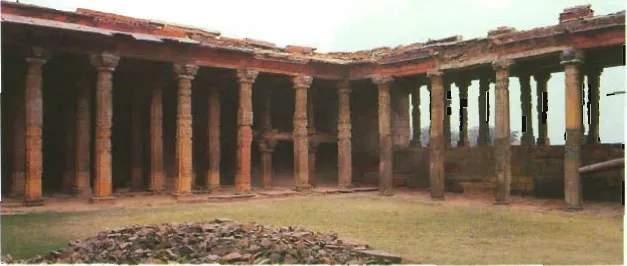
On this page
About this route
| Order | As printed in the guidebook’s Kāmyavana chapter (84 places). The book leads from one place to the next with its own words (“Next come”, “Just nearby”, “Further north”, “After this”), but it prints no map of Kāmyavana and does not number the places, so this order has not been checked on the ground. At the end the book adds four more places, in no order; they are in the next row. Jal-krīḍā-kuṇḍa and Luk-lukī-kuṇḍa appear as two stops but share one place page. |
|---|---|
| Also in the book | Caraṇa-pahāḍī, Śrī Rādhā-Gopīnātha, Śrī Rādhā-Mohana (Gopālajī) and Caurāsī-khambā, which the book names after its 84 places, in no order. Caurāsī-khambā is the temple in the picture at the top of this page. |
Walking guide
Only 5 of the 84 stops have a position in our own map data (not from Google). The guide leads you to these 5 and skips the others.
Your position stays on your phone; we do not store it.
Map of the stops
The interactive map uses Google Maps. It loads only when you open it. Each pin carries the number of its stop.
5 of 84 stops shown; the others have no position yet.
- confirmed position
- position not yet confirmed (preview only)
The stations
The Google Maps links open Google’s own result for each place.
Jump to a stop stops 1–84
- 1
- 2
- 3
- 4
- 5
- 6
- 7
- 8
- 9
- 10
- 11
- 12
- 13
- 14
- 15
- 16
- 17
- 18
- 19
- 20
- 21
- 22
- 23
- 24
- 25
- 26
- 27
- 28
- 29
- 30
- 31
- 32
- 33
- 34
- 35
- 36
- 37
- 38
- 39
- 40
- 41
- 42
- 43
- 44
- 45
- 46
- 47
- 48
- 49
- 50
- 51
- 52
- 53
- 54
- 55
- 56
- 57
- 58
- 59
- 60
- 61
- 62
- 63
- 64
- 65
- 66
- 67
- 68
- 69
- 70
- 71
- 72
- 73
- 74
- 75
- 76
- 77
- 78
- 79
- 80
- 81
- 82
- 83
- 84
On the walking guide
- 1
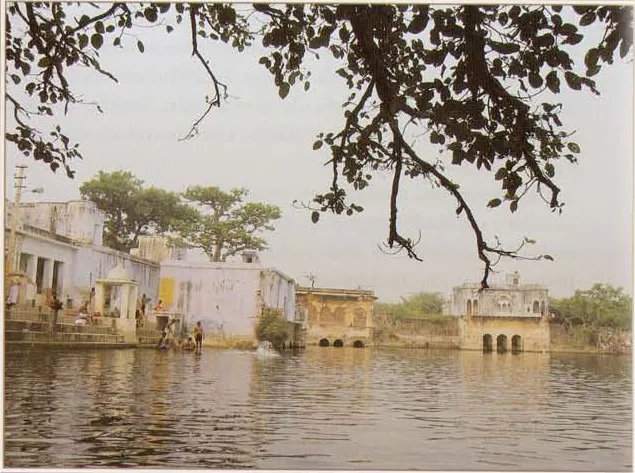
Vimala-kuṇḍa
On the walking guideVimala-kuṇḍa is the best-known pond of Kāmyavana.
Source details
printed: “Vimala-kuṇḍa”
- 2
Gopikā-kuṇḍa
Gopikā-kuṇḍa is a pond of Kāmyavana that comes right after Vimala-kuṇḍa both in Nārāyaṇa Bhaṭṭa's Vraja-bhakti-vilāsa and in Śrī Vraja-maṇḍala Parikramā (2007), which follows its order.
Source details
printed: “Gopikā-kuṇḍa”
- 3
Suvarṇapura
Suvarṇapura ('city of gold') is a place in Kāmyavana, listed in the Vraja-bhakti-vilāsa and named by Śrī Vraja-maṇḍala Parikramā (2007) between Gopikā-kuṇḍa and Gayā-kuṇḍa.
Source details
printed: “Suvarṇapura”
- 4
- 5
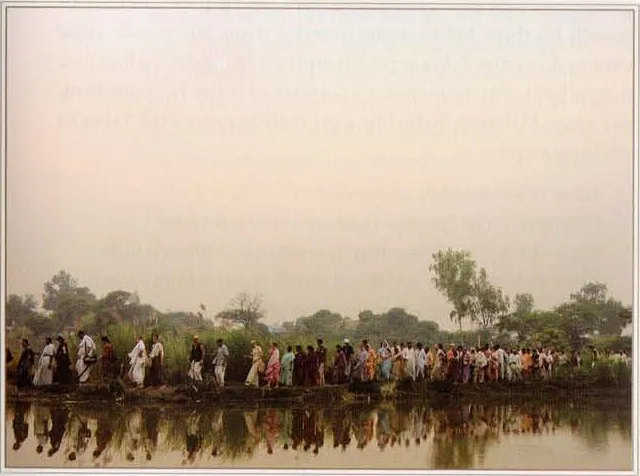
Dharma-kuṇḍa
On the walking guideDharma-kuṇḍa is a kuṇḍa (sacred pond) in the eastern part of Kāmyavana.
Source details
printed: “Dharma-kuṇḍa”
- 6
Throne of Dharmarāja (Dharma-kuṇḍa)
A throne of Dharmarāja at Dharma-kuṇḍa in Kāmyavana, a place of darśana according to Śrī Vraja-maṇḍala Parikramā (2007).
Source details
printed: “the throne of Dharmarāja”
- 7
Yajña-kuṇḍa
A kuṇḍa of Kāmyavana where, according to the Vraja-bhakti-vilāsa quoting the 'Mātsya', King Yudhiṣṭhira performed five sacrifices; its prayer for circumambulating it names it after the Pāṇḍavas' sacrifices.
Source details
printed: “Yajña-kuṇḍa”
- 8
Pañca Tīrtha-sarovara
Pañca Tīrtha-sarovara, "the five tīrtha-lakes of the Pāṇḍavas", lies in Kāmyavana near Dharma-kuṇḍa.
Source details
printed: “the Pañca Tīrtha-sarovara of the Pāṇḍavas”
- 9
Parama-mokṣa-kuṇḍa
Parama-mokṣa-kuṇḍa is a pond of Kāmyavana where, the Vraja-bhakti-vilāsa says, Nanda-gopa and others are held to have attained liberation.
Source details
printed: “Parama-mokṣa-kuṇḍa”
- 10
Maṇikarṇikā-kuṇḍa
Maṇikarṇikā-kuṇḍa is a pond of Kāmyavana with a bathing prayer from the 'Vāmana-purāṇa'; the Bhakti-ratnākara says that all people sing of this Maṇikarṇikā and that much of the power of Viśvanātha is here.
Source details
printed: “Maṇikarṇikā-kuṇḍa”
- 11
- 12
Yaśodā-kuṇḍa
Yaśodā-kuṇḍa is a pond of Kāmyavana, named after Kṛṣṇa's mother.
Source details
printed: “Yaśodā-kuṇḍa”
- 13
Manokāmanā-kuṇḍa
Manokāmanā-kuṇḍa, "the pond of the mind's desires", is a pond of Kāmyavana.
Source details
printed: “Manokāmanā-kuṇḍa”
- 14
Kāma-sarovara
Kāma-sarovara, also called Gopikā-ramaṇa, is a lake of Kāmyavana.
Source details
printed: “Gopikāramaṇa-kuṇḍa”
- 15
Setubandha-sarovara
Setubandha-sarovara, the lake of the bridge, is a lake of Kāmyavana; the guidebook Śrī Vraja-maṇḍala Parikramā (2007) also calls it Laṅkā-kuṇḍa and reaches it by the road south from the village of Kāma.
Source details
printed: “Setubandha Rāmeśvara-kuṇḍa”
- 16
Dhyāna-kuṇḍa
Dhyāna-kuṇḍa, "the pond of meditation", is a kuṇḍa (sacred pond) of Kāmyavana, near Luk-lukī-kuṇḍa.
Source details
printed: “Dhyāna-kuṇḍa”
- 17
- 18
Jalvihāra-kuṇḍa
Jalvihāra-kuṇḍa is a pond of Kāmyavana whose bathing prayer in the Vraja-bhakti-vilāsa, cited from the 'Brahma-yāmala', calls it the tīrtha 'for the sport of Indra's apsarās'.
Source details
printed: “Jal-vihāra-kuṇḍa”
- 19
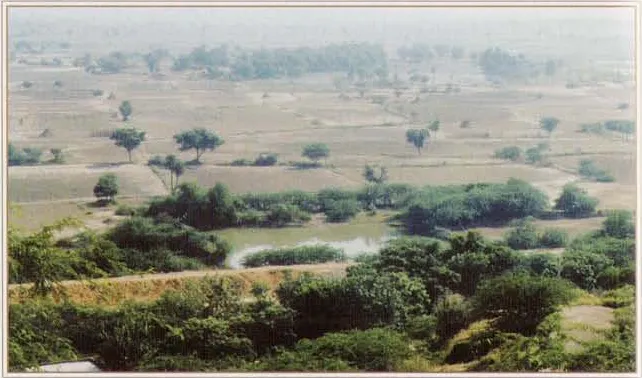
Luk-lukī-kuṇḍa
Luk-lukī-kuṇḍa, "the pond of hide-and-seek", is a kuṇḍa (sacred pond) of Kāmyavana.
Source details
printed: “Jal-krīḍā-kuṇḍa”
The kuṇḍas of the five sakhās stops 20–24
- 20
Raṅgīlā-kuṇḍa
One of the kuṇḍas of Kāmyavana, which Śrī Vraja-maṇḍala Parikramā (2007) counts among the kuṇḍas of five sakhās near Caraṇa-pahāḍī and the village of Agrāvalī.
Source details
printed: “Raṅgīlā-kuṇḍa”
- 21
Chabīlā-kuṇḍa
One of the five -īlā kuṇḍas of Kāmyavana that Śrī Vraja-maṇḍala Parikramā (2007) places, like Vihvala-kuṇḍa, near Caraṇa-pahāḍī.
Source details
printed: “Chabīlā-kuṇḍa”
- 22
Jakīlā-kuṇḍa
A pond of Kāmyavana that Śrī Vraja-maṇḍala Parikramā (2007) counts among the kuṇḍas of five sakhās (Raṅgīlā, Chabīlā, Jakīlā, Matīlā and Datīlā) near Agrāvalī.
Source details
printed: “Jakīlā-kuṇḍa”
- 23
Matīlā-kuṇḍa
A pond of Kāmyavana that Śrī Vraja-maṇḍala Parikramā (2007) counts among the kuṇḍas of five sakhās near Agrāvalī.
Source details
printed: “Matīlā-kuṇḍa”
- 24
Datīlā-kuṇḍa
One of the five -īlā kuṇḍas of Kāmyavana, which Śrī Vraja-maṇḍala Parikramā (2007) calls the kuṇḍas of the five sakhās and places, like Vihvala-kuṇḍa, near Caraṇa-pahāḍī.
Source details
printed: “Datīlā-kuṇḍa”
- 25
Pañca-kuṇḍa
A group of five ponds at Kāmyavana: the Vraja-bhakti-vilāsa lists 'the five kuṇḍas that stand beside' Datīla-kuṇḍa, and Śrī Vraja-maṇḍala Parikramā (2007) lists Pañca-kuṇḍa after Datīlā-kuṇḍa; neither names the five.
Source details
printed: “Pañca-kuṇḍa”
- 26
Yaśodharā-kuṇḍa
Yaśodharā-kuṇḍa is a pond of Kāmyavana that the older texts call Ghoṣarāṇī-kuṇḍa.
Source details
printed: “Ghoṣarānī-kuṇḍa”
- 27
Vihvala-kuṇḍa
Vihvala-kuṇḍa is a pond of Kāmyavana whose name means "overwhelmed": here, the sources say, the sound of Kṛṣṇa's flute overwhelmed those who heard it.
Source details
printed: “Vihvala-kuṇḍa”
- 28
Śyāma-kuṇḍa
A kuṇḍa of Kāmyavana, not the Śyāma-kuṇḍa beside Rādhā-kuṇḍa.
Source details
printed: “Śyāma-kuṇḍa”
- 29
Gomatī-kuṇḍa
Gomatī-kuṇḍa is one of the ponds of Kāmyavana that bear the names of great holy places.
Source details
printed: “Gomatī-kuṇḍa”
- 30
Dvārakā-kuṇḍa
Dvārakā-kuṇḍa is a pond of Kāmyavana named after Dvārakā, Kṛṣṇa's city by the sea.
Source details
printed: “Dvārakā-kuṇḍa”
- 31
- 32
- 33
- 34
- 35
- 36
Balabhadra-kuṇḍa
This Balabhadra-kuṇḍa is one of the many kuṇḍas (sacred ponds) of Kāmyavana.
Source details
printed: “Balabhadra-kuṇḍa”
- 37
- 38
Surabhi-kuṇḍa
Surabhi-kuṇḍa is a kuṇḍa (sacred pond) of Kāmyavana.
Source details
printed: “Surabhi-kuṇḍa”
- 39
Vatsa-kuṇḍa
A kuṇḍa of Kāmyavana after Surabhī-kuṇḍa, which the Vraja-bhakti-vilāsa's prayer calls the tīrtha made by the calves, giver of joy to Yaśodā and of the happiness of sons and grandsons.
Source details
printed: “Vatsa-kuṇḍa”
- 40
Luk-lukī-kuṇḍa
Luk-lukī-kuṇḍa, "the pond of hide-and-seek", is a kuṇḍa (sacred pond) of Kāmyavana.
Source details
printed: “Luk-lukī-kuṇḍa”
- 41
Govinda-kuṇḍa
A pond of Kāmyavana that the Vraja-bhakti-vilāsa lists after the place of hide-and-seek, with the eye-closing place 'right there'; its bathing prayer (cited from the 'Viṣṇu-rahasya') calls it the tīrtha made by Indra and others that arose from Kṛṣṇa's abhiṣeka.
Source details
printed: “Govinda-kuṇḍa”
- 42
Netramīcana-kuṇḍa
The place of closing the eyes at Kāmyavana.
Source details
printed: “Netramīcana-kuṇḍa”
- 43
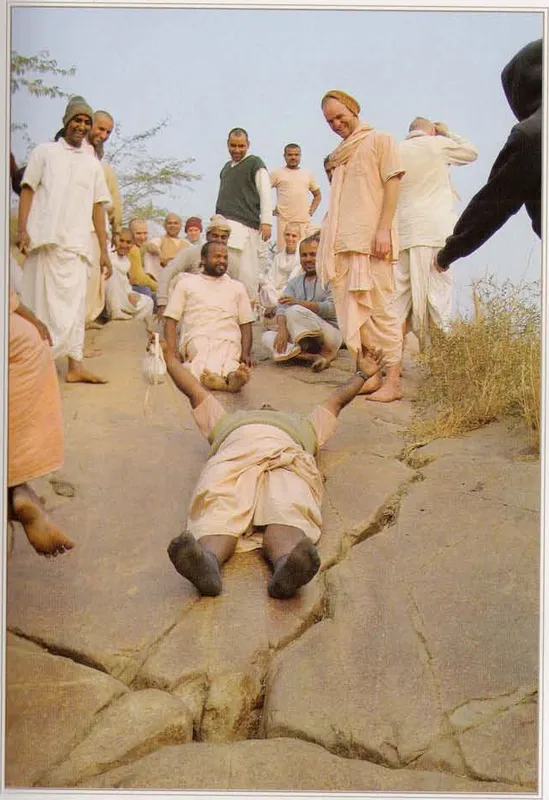
Phisalanī-śilā
On the walking guidePhisalanī-śilā, the "slippery stone", is a sloping rock on a hill of Kāmyavana, down which Kṛṣṇa and His cowherd friends slid in play.
Source details
printed: “Phisalanī-śilā”
- 44
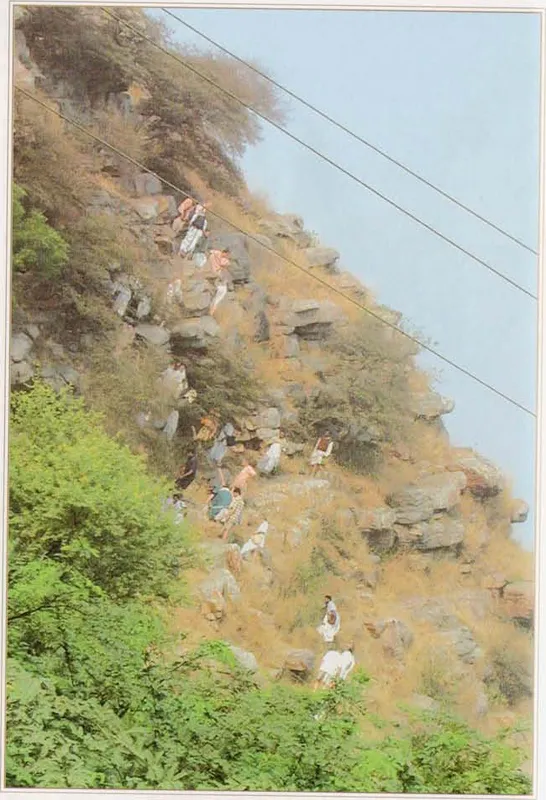
Vyomāsura's cave
Vyomāsura's cave is shown in the hill of Kāmyavana, near the stone slide called Phisalanī-śilā.
Source details
printed: “Vyomāsura’s cave”
- 45
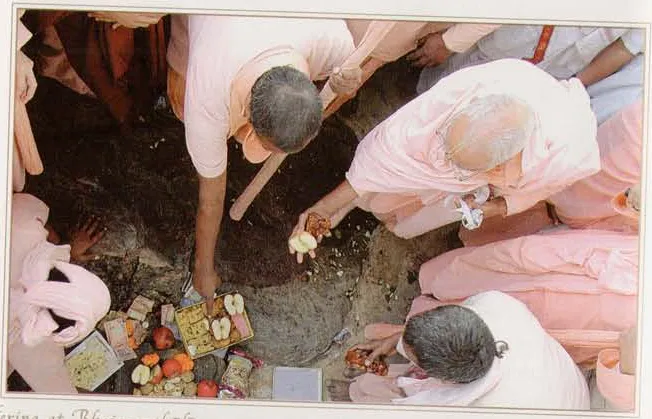
Bhojana-thālī
On the walking guideBhojana-thālī, "the place of the meal plate", is a rocky hill in Kāmyavana, near Vyomāsura's cave.
Source details
printed: “Bhojana-thālī”
- 46
Marriage-place of Sumanā Sakhī
The place where, according to the Vraja-bhakti-vilāsa, the sakhī Sumanā was married, with Lalitā tying the knot; its prayer, cited from the 'Bṛhad-gautamīya', promises the joy of weddings and a long, happy life.
Source details
printed: “the marriage-place of Sumanā Sakhī”
- 47
Lalitā Granthi-datta-sthāna
The place where, according to the Vraja-bhakti-vilāsa, Lalitā secretly gave (tied) the knot at the wedding of the sakhī Sumanā; the book names it with Sumanā's wedding place in one entry and one prayer, while Śrī Vraja-maṇḍala Parikramā (2007) lists 'Lalitā Granthi-datta-sthāna' separately.
Source details
printed: “Lalitā Granthi-datta-sthāna”
- 48
Viṣṇu-cihna-pāda-parvata
A hill of Kāmyavana with the marks of Viṣṇu's feet, which the Vraja-bhakti-vilāsa says are of the size of 'the form at the age of eleven years', with a prayer to the land marked by Viṣṇu's soles.
Source details
printed: “Viṣṇu-cinha-pāda-parvata”
- 49
Garuḍa-tīrtha
A tīrtha of Kāmyavana beside the hill that bears the marks of Viṣṇu's feet.
Source details
printed: “Garuḍa-tīrtha”
- 50
Kapila-tīrtha
A tīrtha of Kāmyavana that the Vraja-bhakti-vilāsa lists after the Garuḍa-tīrtha; its prayer, cited from the 'Bhaviṣya', calls it the place presided over by Kapila, the son of Devahūti, joined with hidden yoga.
Source details
printed: “Kapila-tīrtha”
- 51
Place of Lohajaṅgha Ṛṣi
A place of the ṛṣi Lohajaṅgha in Kāmyavana, named in the list of Śrī Vraja-maṇḍala Parikramā (2007) and, with a prayer for health and long life, in the Vraja-bhakti-vilāsa.
Source details
printed: “the place of Lohajaṅgha Ṛṣi”
- 52
Hoḍa-sthāna
A place of Kāmyavana that the Vraja-bhakti-vilāsa lists as 'the Hoḍa place' after the place of the sage Lohajaṅgha, with Indulekhā's place to its north; Śrī Vraja-maṇḍala Parikramā (2007) follows this order.
Source details
printed: “Hoḍa-sthāna”
- 53
Place of Indulekhā-devī
A place of Kāmyavana connected with Indulekhā.
Source details
printed: “the place of Indulekhā-devī”
- 54
Place of Balarāma and the mark of His plough
A place on the hill at Kāmyavana connected with Balarāma.
Source details
printed: “the place of Balarāma and the mark of Balarāma’s plough”
- 55
Kṛṣṇa-kūpa (north of Indulekhā's place)
A well 'in the middle of Kāmyavana' that the Vraja-bhakti-vilāsa puts north of Baladeva's place with the plough-line; its prayer, cited from the 'Ādi-purāṇa', calls it the tīrtha of Kṛṣṇa's bathing, for the liberation of the Yādavas, without saying when Kṛṣṇa bathed there.
Source details
printed: “Kṛṣṇa-kūpa”
- 56
Saṅkarṣaṇa-kuṇḍa (near Kṛṣṇa-kūpa)
A Saṅkarṣaṇa (Balarāma) tīrtha beside Kṛṣṇa-kūpa in Kāmyavana.
Source details
printed: “Saṅkarṣaṇa-kuṇḍa”
- 57
Lokeśvara-tīrtha
A tīrtha of Kāmyavana that the Vraja-bhakti-vilāsa calls 'the hidden tīrtha named Lokeśvara'; its prayer, cited from the 'Laiṅga', says it brings happiness to Lokeśvara, gives liberation by bathing and gives secret knowledge.
Source details
printed: “Lokeśvara-tīrtha”
- 58
Varāha-kuṇḍa
A kuṇḍa of Kāmyavana that the Vraja-bhakti-vilāsa's prayer calls made beautiful by Lord Varāha and (standing) for the uplifting of the earth; the edition's Hindi reads it as made by Varāha.
Source details
printed: “Varāha-kuṇḍa”
- 59
Satī-kuṇḍa
A pond (puṣkariṇī) of Kāmyavana that Śrī Vraja-maṇḍala Parikramā (2007) and the Vraja-bhakti-vilāsa's list call Satī-kuṇḍa; at the same place in its prayer chapter the Vraja-bhakti-vilāsa has 'Sītā-kuṇḍa', made beautiful by Sītā's bathing and made by Viśvakarmā.
Source details
printed: “Satī-kuṇḍa”
- 60
Candrasakhī-puṣkariṇī
A pond of Kāmyavana that the Vraja-bhakti-vilāsa lists after Satī-kuṇḍa, with the image of Candraśekhara Mahādeva 'above it'; Śrī Vraja-maṇḍala Parikramā (2007) gives the same order.
Source details
printed: “Candrasakhī-puṣkariṇī”
- 61
Candraśekhara Śiva (near Śṛṅgāra-tīrtha)
An image of Lord Śiva as Candraśekhara in Kāmyavana.
Source details
printed: “the deity of Candraśekhara Śiva”
- 62
Śṛṅgāra-tīrtha
A tīrtha of Kāmyavana near the Candraśekhara image, named in Śrī Vraja-maṇḍala Parikramā (2007) and in the Vraja-bhakti-vilāsa, whose prayer salutes Kṛṣṇa adorned with the signs of śṛṅgāra (amorous decoration) and the gopīs whose form is śṛṅgāra.
Source details
printed: “Śṛṅgāra-tīrtha”
- 63
Prabhālallī
A step-well (bāvaḍī) on the south side of a hill in Kāmyavana, named in Śrī Vraja-maṇḍala Parikramā (2007) and in the Vraja-bhakti-vilāsa, whose bathing prayer praises it as a queen of tīrthas delightful to the gods and gandharvas.
Source details
printed: “Prabhālallī”
- 64
Bhāradvāja Ṛṣi-kūpa
A well near a hill in Kāmyavana, west of the step-well Prabhālallī.
Source details
printed: “Bhāradvāja Ṛṣi-kūpa”
- 65
Saṅkarṣaṇa-kuṇḍa (north of Prabhālallī)
The second Saṅkarṣaṇa site of Kāmyavana, north of the step-well Prabhālallī.
Source details
printed: “another Saṅkarṣaṇa-kuṇḍa”
- 66
- 67
Bhadreśvara Śiva
A deity of Śiva named Bhadreśvara at the top of a hill in Kāmyavana, which Śrī Vraja-maṇḍala Parikramā (2007) names in its darśana sequence after the three wells near Prabhālallī.
Source details
printed: “the deity of Bhadreśvara Śiva”
- 68
Alakṣa Garuḍa
A deity of Garuḍa in Kāmyavana that Śrī Vraja-maṇḍala Parikramā (2007) names after Bhadreśvara Śiva at the top of the hill, before the āśrama of Pippalāda Ṛṣi.
Source details
printed: “the deity of Alakṣa Garuḍa”
- 69
Āśrama of Pippalāda Ṛṣi
The āśrama of the ṛṣi Pippalāda near the image of Alakṣa Garuḍa on a hill in Kāmyavana, named in Śrī Vraja-maṇḍala Parikramā (2007) and in the Vraja-bhakti-vilāsa, whose prayer salutes the ṛṣi as the remover of all troubles.
Source details
printed: “the āśrama of Pippalāda Ṛṣi”
- 70
Dihuhalī
A place of Kāmyavana that the Vraja-bhakti-vilāsa calls 'famous by the name Dihuhalī', after the place of the Buddha form near the hill and before Rādhā-puṣkariṇī; Śrī Vraja-maṇḍala Parikramā (2007) names it on the way to Rādhā-puṣkariṇī.
Source details
printed: “Dihuhalī”
Rādhā-puṣkariṇī and the sakhīs’ ponds around it stops 71–78
- 71
Rādhā-puṣkariṇī
A pond (puṣkariṇī) in Kāmyavana with six ponds of sakhīs around it and the ponds of the sixty-four sakhīs, named in the Vraja-bhakti-vilāsa and Śrī Vraja-maṇḍala Parikramā (2007); the Vraja-bhakti-vilāsa's prayer praises it as charming to Rādhā and Kṛṣṇa.
Source details
printed: “Rādhā-puṣkariṇī”
- 72
Lalitā-puṣkariṇī
Lalitā-puṣkariṇī is one of the six ponds of the sakhīs around Rādhā-puṣkariṇī.
Source details
printed: “Lalitā-puṣkariṇī”
- 73
Viśākhā-puṣkariṇī
Viśākhā-puṣkariṇī is one of the six ponds of the sakhīs around Rādhā-puṣkariṇī.
Source details
printed: “Viśākhā-puṣkariṇī”
- 74
Candrāvalī-puṣkariṇī
Candrāvalī-puṣkariṇī is one of the six ponds of the sakhīs around Rādhā-puṣkariṇī.
Source details
printed: “Candrāvalī-puṣkariṇī”
- 75
Candrabhāga-puṣkariṇī
Candrabhāga-puṣkariṇī is one of the six ponds of the sakhīs around Rādhā-puṣkariṇī.
Source details
printed: “Candrabhāga-puṣkariṇī”
- 76
Līlāvatī-puṣkariṇī
Līlāvatī-puṣkariṇī is one of the six ponds of the sakhīs around Rādhā-puṣkariṇī.
Source details
printed: “Līlāvatī-puṣkariṇī”
- 77
Prabhāvatī-puṣkariṇī
Prabhāvatī-puṣkariṇī is one of the six ponds of the sakhīs around Rādhā-puṣkariṇī.
Source details
printed: “Prabhāvatī-puṣkariṇī”
- 78
Puṣkariṇīs of the sixty-four sakhīs
The ponds of the sixty-four sakhīs are named together with Rādhā-puṣkariṇī and the six ponds of the sakhīs around it.
Source details
printed: “the puṣkariṇīs of sixty-four sakhīs”
At Kuśa-sthalī stops 79–82
- 79
Kuśa-sthalī
A tīrtha of Kāmyavana beyond the ponds of the sixty-four sakhīs.
Source details
printed: “Kuśa-sthalī”
- 80
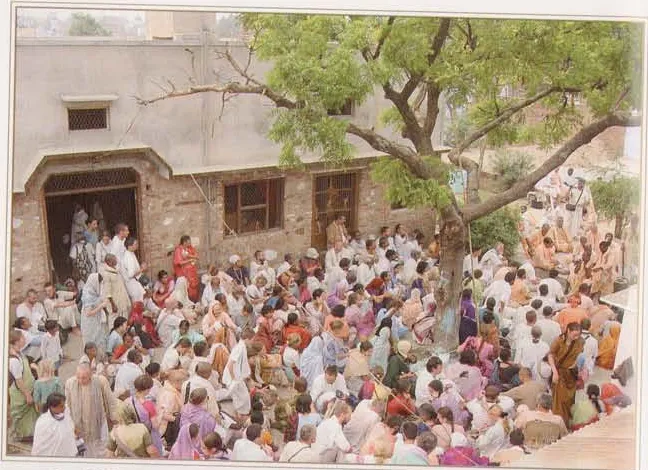
Kāmeśvara Mahādeva
On the walking guideKāmeśvara Mahādeva is a temple of Lord Śiva in Kāmyavana, at Kuśa-sthalī.
Source details
printed: “Kameśvara Mahādeva”
- 81
Place where Śaṅkhacūḍa was killed
Source details
printed: “the place where Śaṅkhacūḍa was killed”
- 82
Candraśekhara, Vimaleśvara and Varāha deities
Three deities north of Kuśasthalī in Kāmyavana: according to the Vraja-bhakti-vilāsa, the image of Candraśekhara Mahādeva and the darśana of Vimaleśvara and of Varāha, with prayers to Vimaleśvara (ascribed to the Agni Purāṇa) and to Varāha; Śrī Vraja-maṇḍala Parikramā (2007) names the same three.
Source details
printed: “the deity of Candraśekhara, of Vimaleśvara and a deity of Varāha”
- 83
Deities of the five Pāṇḍavas with Draupadī
Images of the five Pāṇḍavas with Draupadī in Kāmyavana.
Source details
printed: “the five Pāṇḍavas with Draupadī”
- 84
Vṛndā-devī with Govindajī and other deities
The deities that Śrī Vraja-maṇḍala Parikramā (2007) lists at the end of its Kāmyavana list: Vṛndā-devī with Govindajī, Rādhā-Vallabha, Navanīta-rāya, Gokuleśvara and Rāmacandra; the Vraja-bhakti-vilāsa lists the same deities (with Gopīnātha) among Kāmavana's eighty-four, with a prayer for each.
Source details
printed: “Vṛndā-devī with Govindajī, Śrī Rādhā-Vallabha, Navanīta-rāya, Gokuleśvara and Śrī Rāmacandra”
References
- Śrī Vraja-maṇḍala Parikramā (2007), the pastime places of Kāmyavana, the darśana after bathing at Vimala-kuṇḍa, pp. 264–267