How Śrīla Śyāmānanda Paṇḍita found Śrī Rādhā's anklet
The anklet, his new name and his tilaka in the old books and the guidebooks
In short
Śrīla Śyāmānanda Paṇḍita, first called Duḥkhī Kṛṣṇadāsa, came to Vṛndāvana to study under Śrīla Jīva Gosvāmī. According to the Bhakti-ratnākara and the Prema-vilāsa, he found Śrī Rādhā's anklet in a grove of Vṛndāvana, and the name Śyāmānanda came to him then. The books differ on where, how and who gave the name.[1–5]
On this page
At a glance
- His first name: Duḥkhī Kṛṣṇadāsa, a disciple of Śrīla Hṛdaya-caitanya.[2, 3, 6]
- His teacher in Vṛndāvana: Śrīla Jīva Gosvāmī, according to the Bhakti-ratnākara.[1]
- The anklet: according to a song in the Bhakti-ratnākara, he found Śrī Rādhā's anklet in a new grove in Vṛndāvana.[1–3]
- The name: Śrīla Jīva Gosvāmī gives it in the Bhakti-ratnākara's Sixth Wave and in the Prema-vilāsa. Other books name no giver.[2, 4, 5]
- The tilaka: according to the guidebooks (2000 and 2007), his followers still wear a tilaka (a sacred mark worn on the forehead) that recalls the anklet.[7–10]
- The temple: Śrīla Prabhupāda writes that Śyāmānanda Gosvāmī built the Śyāmasundara temple of Vṛndāvana.[7 +5]
Who was Śrīla Śyāmānanda Paṇḍita?
He was first called Duḥkhī Kṛṣṇadāsa, and he was a disciple of Śrīla Hṛdaya-caitanya. The Bhakti-ratnākara says that Śrīla Jīva Gosvāmī taught him in Vṛndāvana.[2, 3, 6]
In its First Wave (first chapter), the book says that he went to Vṛndāvana eagerly at his master's order. His practice there soothed the eyes and minds of everyone who saw it. Śrīla Jīva Gosvāmī saw his good conduct, and then taught him the books of devotion (summarised here, not translated).[1] Read more: Śrīla Śrīnivāsa and Śrīla Narottama at Viśrāma-ghāṭa →
Śrīla Prabhupāda names him among the three whom Śrīla Jīva Gosvāmī sent out with the Gosvāmīs' teachings:[6]
General teaching (does not name the place)“Later, Śrīla Jīva Gosvāmī inspired Śrīnivāsa Ācārya, Narottama dāsa Ṭhākura and Duḥkhī Kṛṣṇadāsa to preach Kṛṣṇa consciousness in Bengal.”
Śrīla Prabhupāda, Śrī Caitanya-caritāmṛta, Ādi-līlā 10.85, purport · vedabase.io
A song in the Bhakti-ratnākara says that he went by way of Gauḍa (Bengal) and Ambikā to Utkala, Orissa. He stayed there by the order of the Gosvāmīs. Other books also send him to Orissa, and they differ in the details:[1–3]
Accounts differ Where Śrīla Jīva Gosvāmī sent Śyāmānanda to preach.
- the undated parikramā notes VṛndāvanaŚrīla Jīva Gosvāmī sent him to Orissa with Śrīla Śrīnivāsa Ācārya and Śrīla Narottama dāsa Ṭhākura; they became 'the first book distribution party'.
- Śrīla Prabhupāda, CC Ādi 10.85 purportŚrīla Jīva Gosvāmī inspired Śrīla Śrīnivāsa Ācārya, Śrīla Narottama dāsa Ṭhākura and Duḥkhī Kṛṣṇadāsa to preach Kṛṣṇa consciousness in Bengal.
- Bhakti-ratnākara, Fifteenth Wave song (1912 ed. p. 1060)Śyāmānanda went by way of Gauḍa and Ambikā to Utkala (Orissa) and stayed there by the order of the Gosvāmīs.
- Vṛndāvana-Dhāma Ki Jaya! (c. 1986)Śyāmānanda was instrumental in spreading Kṛṣṇa consciousness in Orissa; with Narottama and Śrīnivāsa he brought the Gosvāmīs' teachings out of Vṛndāvana.
How did Duḥkhī Kṛṣṇadāsa get the name Śyāmānanda?
The oldest books give the name without a story. Śrīla Narahari Cakravartī Ṭhākura tells of it in three places of his Bhakti-ratnākara and once in his Narottama-vilāsa. The four passages do not repeat each other (all summarised here, not translated).[1–3, 16]
- First Wave: by his practice in Vṛndāvana he gave great joy to Śyāmasundara (Kṛṣṇa), and the name Śyāmānanda came about there. No giver is named.[1]
- Sixth Wave: by his guru's order, he received from Śrīla Jīva Gosvāmī the right to serve in meditation. Śrīla Jīva Gosvāmī knew that he had given happiness to Rādhā-Śyāmasundara, and gave him the name Śyāmānanda.[2]
- Narottama-vilāsa: his guru, Śrīla Hṛdaya-caitanya, tells a devotee about him. His disciple became constantly engaged in service in the groves of Vṛndāvana and found joy, and the name Śyāmānanda became his.[16]
- Fifteenth Wave, in a song of Śrīla Narahari Cakravartī Ṭhākura: his mind is always a bee at the lotus feet of Śrīla Hṛdaya-caitanya. He found the anklet of Rāī, Śrī Rādhā, in a new grove in Vṛndāvana, and there the name Śyāmānanda became known. The line does not show whether "new grove" is the name of a place.[3]
Only the song connects the name with the anklet. None of the four passages mentions sweeping, a tilaka, a Deity (a sacred form of the Lord for worship) or a temple. None names Sevā-kuñja or Jhāḍū-maṇḍala.[1–3] The Bengali book Vṛndāvana-kathā (1920) also says that Śrīla Jīva Gosvāmī saw his deep devotion and steadiness, and gave him the name Śyāmānanda in place of Duḥkhī.[10]
Where did he find Śrī Rādhā's anklet?
The Prema-vilāsa
The Prema-vilāsa, in an edition of about 1913, tells the finding at more length (summarised here, not translated). Duḥkhī Kṛṣṇadāsa had come to Śrīla Jīva Gosvāmī in Vṛndāvana and stayed to study with him. One night he had a vision, which the edition's contents call a dream. He saw Rādhā and Kṛṣṇa with the sakhīs (Śrī Rādhā's girlfriends) in a grove, and during the dance the anklet of Śrī Rādhā's left foot slipped off unnoticed.[4, 5]
At dawn he rose, eager to see the place of the rāsa dance. He bowed down at the footprints. He found the anklet covered with leaves, and carried it on his head to Śrīla Jīva Gosvāmī. The Gosvāmī understood whose anklet it was. He embraced him and told him that from that day his name was Śyāmānanda. The text does not name the place.[4]
The Vṛndāvana-kathā
Pulinbihārī Datta's Bengali Vṛndāvana-kathā (1920) gives a plainer version. One day at dawn Duḥkhī Kṛṣṇadāsa was sweeping in Nikuñjavana, the garden that people call Sevā-kuñja. There he picked up the anklet of Śrī Rādhā's foot. The author gives no source for this.[10]
On the next page he adds what the pūjārīs (the temple priests) told him. They pointed to a small walled place across the road from the Śyāmasundara temple, beside the house of Śrīla Śyāmānanda Paṇḍita's memorial. This, they said, is where the anklet had been found.[17]
The guidebooks
The guidebooks of 1986 to 2010 tell a longer story. It differs from book to book, and it adds details that the older books do not have; their versions are set out below, where the sources differ. In all of them his forehead is marked with the anklet. That, they say, is the origin of the tilaka his followers still wear.[7–10] The places the sources give for the finding differ, and they are set side by side:
Accounts differ Where Śyāmānanda (Duḥkhī Kṛṣṇadāsa) found Śrīmatī Rādhikā's anklet.
- Śrī Vraja-maṇḍala Parikramā (2007)At Jhāḍū-maṇḍala, which Śrīla Jīva Gosvāmī had given him to sweep.
- Vṛndāvana, the Playground of God (2010)In the groves of the Sevā-kuñja area, which he cleaned daily; Lalitā then took him to Lalitā-kuṇḍa in Sevā-kuñja.
- The Color Guide to Vṛndāvana (2000); the undated parikramā notes VṛndāvanaIn Sevā-kuñja, which he swept daily (Śyāmānanda Tilaka Sthāna).
- Bhakti-ratnākara, Fifteenth Wave p. 1060In a new nikuñja in Vṛndāvana (বৃন্দাবনে নব-নিকুঞ্জে); no place named.
The wording of these accounts is our summary of the sources, not a published translation.
What is the Śyāmānanda tilaka?
The Prema-vilāsa says that Śrīla Jīva Gosvāmī recognised the anklet. He then made Duḥkhī Kṛṣṇadāsa a tilaka in the shape of Kṛṣṇa's foot, with a dot for Śrī Rādhikā.[4, 5] The Vṛndāvana-kathā (1920) says that the Vaiṣṇavas of his line wear a red dot within the tilaka, as the sign of the anklet he found.[10] The guidebooks say that his followers still use the same tilaka mark, in the shape of the anklet.[7–10]
The guidebooks also show the place where, they say, he received it. The Śyāmānanda Tilaka-sthāna is across the road from the Śyāmasundara temple. It is inside a small āśrama (a hermitage) next to his memorial, Śrīla Śyāmānanda Paṇḍita's puṣpa-samādhi. A white marble tablet carved with a U-shaped tilaka and lines of writing marks it.[7 +3]
Who gave him the Deity of Rādhā-Śyāmasundara?
Śrīla Prabhupāda names him as the builder of the temple:[7 +5]
Names this place“Similarly, their nephew Jīva Gosvāmī constructed the Rādhā-Dāmodara temple, Śrī Gopāla Bhaṭṭa Gosvāmī constructed the Rādhā-ramaṇa temple, Śrī Lokanātha Gosvāmī constructed the Gokulānanda temple, and Śyāmānanda Gosvāmī constructed the Śyāmasundara temple.”
Śrīla Prabhupāda, Śrī Caitanya-caritāmṛta, Ādi-līlā 7.164, purport · vedabase.io
Vṛndāvana, the Playground of God (2010) records a local tradition. According to it, Śrīmatī Rādhārāṇī gave him the small Deity of Śyāmasundara at Sevā-kuñja in 1578. The Color Guide to Vṛndāvana (2000) says that She had Lalitā present him with a Deity of Śyāmasundara. (A Deity is the sacred form of the Lord that is worshipped.) The oldest accounts mention no Deity, and the year has no stated source, so this is not certain.[7 +3]
In 1920 the Vṛndāvana-kathā wrote that its author had found no account in any book of when or how Śyāmasundara was installed. He thought it likely that Śrīla Śyāmānanda Paṇḍita installed the Deity at the end of his life.[17]
He added a point about the Caitanya-caritāmṛta. The names of Rādhā-Dāmodara, Rādhā-ramaṇa, Gokulānanda and Śyāmasundara are not in it, so these Deities were probably installed after it was written. He had also seen the temple nearly in ruins a few years before 1920, when it was being repaired.[17]
Three guidebooks also connect Śrīla Baladeva Vidyābhūṣaṇa with the temple and its large Deities, without dates.[7 +3] Who founded the temple, and whose Deities stand there, is told differently:
Accounts differ Who founded the Vṛndāvana Rādhā-Śyāmasundara temple, and whose Deities stand in it.
- Śrīla Prabhupāda (CC Ādi 7.164 and 1.19 purports; lecture, London, 25 July 1976)Śyāmānanda Gosvāmī constructed / established the Śyāmasundara temple; 'the temple of Śyāmasundara of Śyāmānanda Gosvāmī'.
- Śrī Vraja-maṇḍala Parikramā (2007)Śrī Rādhā-Śyāmasundara are 'the deities established and worshipped by' Śrīla Baladeva Vidyābhūṣaṇa; Śyāmānanda is named only for the samādhi opposite the entrance.
- Vṛndāvana, the Playground of God (2010)The temple was established by Śrīla Śyāmānanda Paṇḍita; his Deity is the small one to the right of the main altar ('Lāla-lāli'); the large Deities were installed and worshipped by Baladeva, the larger Deity carved under his supervision.
- The Color Guide to Vṛndāvana (2000)Established by Śyāmānanda during his second visit to Vṛndāvana; his original Deity stands to the right of the altar; the large Deity on the central altar was personally worshipped by Baladeva, who looked after the temple.
According to the guidebooks, the temple stands near the Rādhā-Dāmodara temple in Vṛndāvana.[18 +3] Śrīla Prabhupāda writes that the Gosvāmīs held their learned discussions at Sevā-kuñja. That is the spot where Śrīla Jīva Gosvāmī established the Rādhā-Dāmodara temple.[25–30] Read more: Śrī Rādhā-Dāmodara, the Deity of Śrīla Jīva Gosvāmī →
Where the sources differ
The sources do not agree on who gave the name Śyāmānanda, or on what occasion. Śrīla Jīva Gosvāmī is the giver in the Bhakti-ratnākara's Sixth Wave, the Prema-vilāsa and the Vṛndāvana-kathā. No giver is named in the Bhakti-ratnākara's First Wave, its song and the Narottama-vilāsa. The guidebooks give the name to Lalitā, to Śrīmatī Rādhārāṇī, or to Śrīla Jīva Gosvāmī after a dream.[2 +5]
They also explain the name differently. In the Bhakti-ratnākara it means one who gave happiness to Rādhā-Śyāmasundara; in two guidebooks, one who gives pleasure to Śrī Rādhā.[2 +3] The Vṛndāvana-kathā places the finding at Nikuñjavana, and the Prema-vilāsa names no place; the place is not certain in either account.[33–36]
Śrī Vraja-maṇḍala Parikramā (2007) alone sets it at Jhāḍū-maṇḍala. It says that Śrīla Jīva Gosvāmī had given him that place to sweep. In its version he returns the anklet to Śrīmatī Rādhikā Herself, and Lalitā marks his forehead with it. This is not certain.[9, 31]
The guidebooks also tell different sequels. In them the new tilaka is questioned, by Śrīla Hṛdaya-caitanya in one book and by the Vaiṣṇavas in another, until its origin is known. These too are not certain.[19, 37]
Accounts differ Where Śyāmānanda (Duḥkhī Kṛṣṇadāsa) found Śrīmatī Rādhikā's anklet.
- Śrī Vraja-maṇḍala Parikramā (2007)At Jhāḍū-maṇḍala, which Śrīla Jīva Gosvāmī had given him to sweep.
- Vṛndāvana, the Playground of God (2010)In the groves of the Sevā-kuñja area, which he cleaned daily; Lalitā then took him to Lalitā-kuṇḍa in Sevā-kuñja.
- The Color Guide to Vṛndāvana (2000); the undated parikramā notes VṛndāvanaIn Sevā-kuñja, which he swept daily (Śyāmānanda Tilaka Sthāna).
- Bhakti-ratnākara, Fifteenth Wave p. 1060In a new nikuñja in Vṛndāvana (বৃন্দাবনে নব-নিকুঞ্জে); no place named.
The wording of these accounts is our summary of the sources, not a published translation.
Places in this article
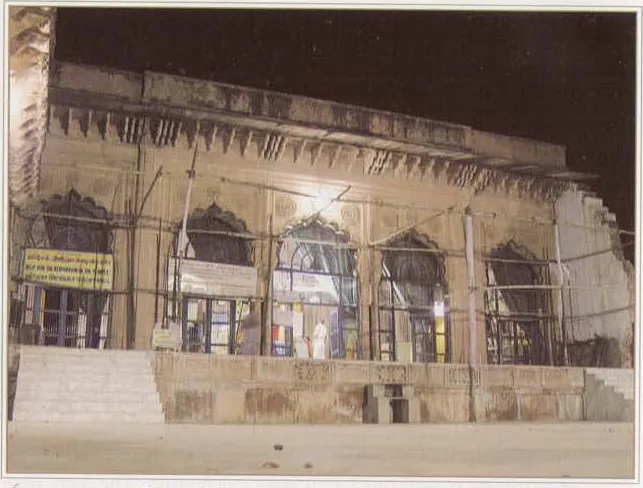
Rādhā-Śyāmasundara Mandira (Vṛndāvana)
राधा-श्यामसुन्दर मन्दिर (वृन्दावन)The Rādhā-Śyāmasundara Mandira stands near the Rādhā-Dāmodara temple in Vṛndāvana.
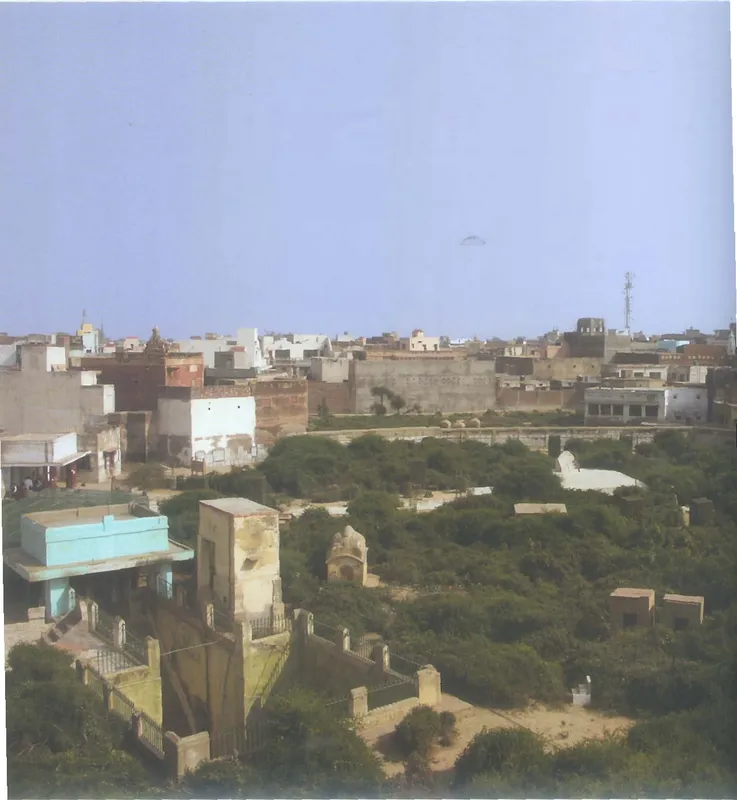
Sevā-kuñja
सेवा-कुंजSevā-kuñja, "the grove of service", is a walled garden in the centre of Vṛndāvana.
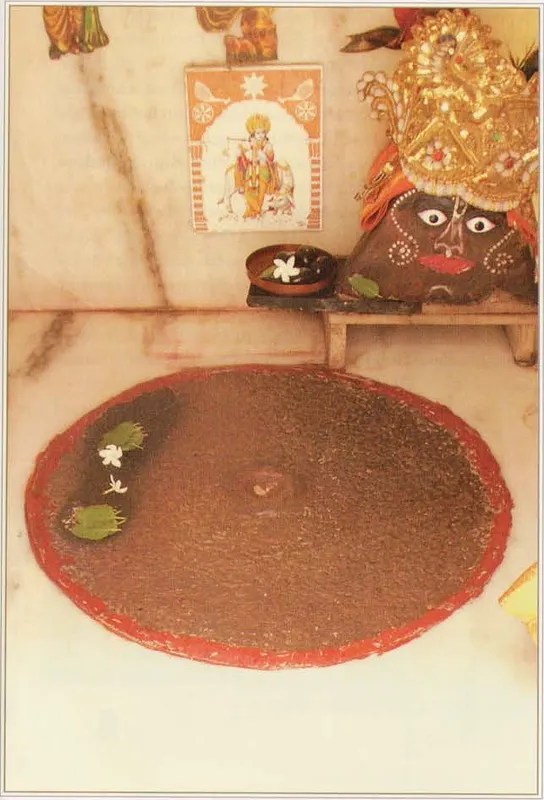
Jhāḍū-maṇḍala
झाड़ू-मण्डलJhāḍū-maṇḍala (also written Jāru Maṇḍala) is a small shrine near Cīra-ghāṭa in Vṛndāvana.
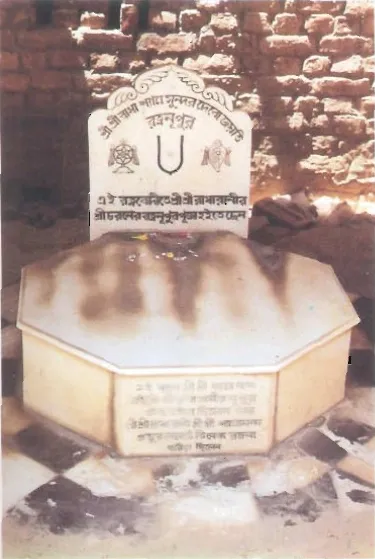
Śyāmānanda Tilaka-sthāna
श्यामानन्द तिलक-स्थानThe Tilaka-sthāna, "the place of the tilaka", is a small enclosure across the road from the Śyāmasundara temple in Vṛndāvana, inside a small āśrama a little beyond the Śā …
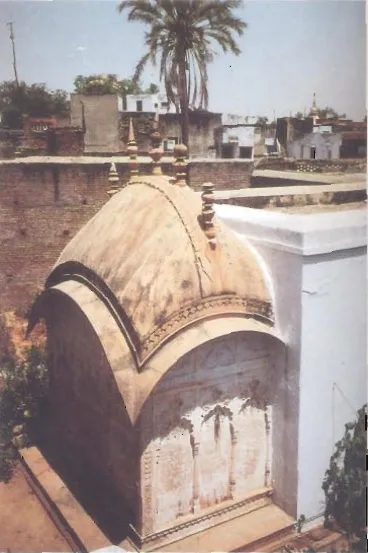
Śyāmānanda Paṇḍita's puṣpa-samādhi
श्यामानन्द पण्डित की पुष्प-समाधिA small memorial of Śrīla Śyāmānanda Paṇḍita stands across the road from the entrance of the Rādhā-Śyāmasundara temple in Vṛndāvana, beside the Tilaka-sthāna, where accor …
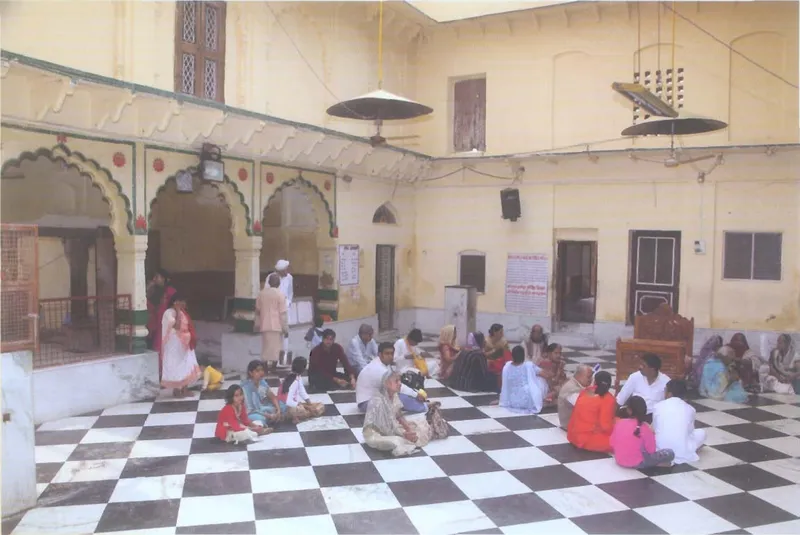
Rādhā-Dāmodara Mandira (Vṛndāvana)
राधा-दामोदर मन्दिर (वृन्दावन)The Rādhā-Dāmodara Mandira is one of the seven old temples of the Gauḍīya Vaiṣṇavas in Vṛndāvana, in the Sevā-kuñja quarter.
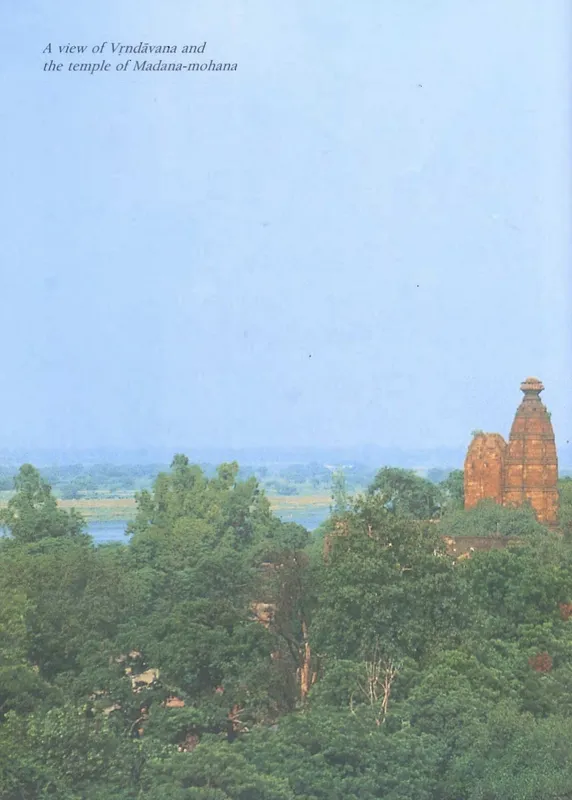
Vṛndāvana
वृन्दावनVṛndāvana is the forest on the bank of the Yamunā where Kṛṣṇa spent His childhood and youth, and the town of temples that stands in that forest today.
Questions and answers
According to the Bhakti-ratnākara, Śrīla Jīva Gosvāmī gave Duḥkhī Kṛṣṇadāsa the name Śyāmānanda, knowing that he had given happiness to Rādhā-Śyāmasundara. The Prema-vilāsa says that Śrīla Jīva Gosvāmī gave it when he brought him Śrī Rādhā's anklet.[2, 4, 5]
The Bhakti-ratnākara says only "in a new grove in Vṛndāvana", and the Prema-vilāsa names no place. The Vṛndāvana-kathā (1920) says Nikuñjavana, the garden people call Sevā-kuñja. The guidebooks name other spots.[3, 10]
It is the tilaka of his line. The Prema-vilāsa says that Śrīla Jīva Gosvāmī made it in the shape of Kṛṣṇa's foot, with a dot for Śrī Rādhikā. The Vṛndāvana-kathā (1920) says his followers wear a red dot in it as the sign of the anklet.[4 +2]
The guidebooks say that Śrīmatī Rādhārāṇī gave him the small Deity of Śyāmasundara. But the older books do not mention it, so this is not certain. Śrīla Prabhupāda writes that Śyāmānanda Gosvāmī constructed the Śyāmasundara temple.[7 +7]
According to the guidebooks, it is across the road from the Śyāmasundara temple, inside a small āśrama next to his memorial. A marble tablet carved with a U-shaped tilaka marks it.[7 +3]
No. The older books tell of the anklet, the name and the tilaka briefly. The guidebooks add the marking of his forehead with the anklet and the gift of a Deity, which are not certain, and they differ among themselves.[7 +6]
He was Śrīla Śyāmānanda's guru. In the Narottama-vilāsa, Śrīla Hṛdaya-caitanya tells a devotee that he sent his disciple to Vṛndāvana. There he studied the books of devotion and received the name Śyāmānanda.[16]
Sources
- Śrīla Narahari Cakravartī, Bhakti-ratnākara, First Wave (prathama taraṅga), 1912 ed. p. 27, 2nd ed., 1912
- Śrīla Narahari Cakravartī, Bhakti-ratnākara, Sixth Wave (ṣaṣṭha taraṅga), 1912 ed. p. 457, 2nd ed., 1912
- Śrīla Narahari Cakravartī, Bhakti-ratnākara, Fifteenth Wave (pañcadaśa taraṅga), 1912 ed. p. 1060, song in rāga Suhai ('punaḥ suhai'), 2nd ed., 1912
- Prema-vilāsa, twelfth vilāsa (dvādaśa vilāsa), printed p. 87, end of the left column and right column, Kolkata, 1913
- Prema-vilāsa, twelfth vilāsa (dvādaśa vilāsa), printed p. 87: the last couplet but one of the left column, and lines 5–9 of the right column (line 8 holds only 'প্রমাণে।', carried over from line 7), Kolkata, 1913
- Śrīla Prabhupāda, Śrī Caitanya-caritāmṛta, Ādi-līlā 10.85, purport · vedabase.io
- The Color Guide to Vṛndāvana (2000), Written and Photographed by Rājaśekhara dāsa Brahmacārī, PDF p. 97
- the undated parikramā notes Vṛndāvana, ¶130
- Śrī Vraja-maṇḍala Parikramā (2007), PDF p. 310
- Vṛndāvana-kathā, chapter 8 (aṣṭama pariccheda: Śyāmasundarajī), printed p. 112
- Śrīla Prabhupāda, Śrī Caitanya-caritāmṛta, Ādi-līlā 7.164, purport · vedabase.io
- Śrīla Prabhupāda, Śrī Caitanya-caritāmṛta, Ādi-līlā 1.19, purport · vedabase.io
- Śrīla Prabhupāda, Sunday Feast Lecture, London, 25 July 1976 · vedabase.io
- Vṛndāvana, the Playground of God (2010), Bhakti Caitanya Svāmī, PDF p. 96
- Vṛndāvana, the Playground of God (2010), Bhakti Caitanya Svāmī, PDF p. 12
- Śrīla Narahari Cakravartī, Narottama-vilāsa, second vilāsa (dvitīya vilāsa) vv. 75–76, printed p. 21, 1st ed., Baṅgābda 1314
- Vṛndāvana-kathā, chapter 8 (aṣṭama pariccheda: Śyāmasundarajī), printed p. 113
- Vṛndāvana, the Playground of God (2010), Bhakti Caitanya Svāmī, PDF p. 162
- Vṛndāvana, the Playground of God (2010), Bhakti Caitanya Svāmī, PDF p. 98
- Vṛndāvana, the Playground of God (2010), Bhakti Caitanya Svāmī, PDF p. 99
Show all 37 references
- Vṛndāvana, the Playground of God (2010), Bhakti Caitanya Svāmī, PDF p. 100
- Śrī Vraja-maṇḍala Parikramā (2007), PDF p. 333
- Śrī Vraja-maṇḍala Parikramā (2007), PDF p. 337
- Vṛndāvana-Dhāma Ki Jaya! (c. 1986), by Dhruva Mahārāja dāsa, PDF p. 100
- Śrīla Prabhupāda, Śrīmad-Bhāgavatam, 2.2.5, purport · vedabase.io
- Śrī Vraja-maṇḍala Parikramā (2007), PDF p. 330
- The Color Guide to Vṛndāvana (2000), Written and Photographed by Rājaśekhara dāsa Brahmacārī, PDF p. 77
- The Color Guide to Vṛndāvana (2000), Written and Photographed by Rājaśekhara dāsa Brahmacārī, PDF p. 84
- the undated parikramā notes Vṛndāvana, ¶136
- the undated parikramā notes Vṛndāvana, ¶146
- Śrī Vraja-maṇḍala Parikramā (2007), PDF p. 309
- Śrīla Prabhupāda, Initiations and Wedding, Sydney, 9 April 1972 · vedabase.io
- Vṛndāvana-kathā, account of Śyāmānanda (Kṛṣṇadāsa), printed p. 112; Nikuñjavana: p. 196
- Vṛndāvana-kathā, ch. 8 (aṣṭama pariccheda), on the Śyāmasundara temple, printed p. 113
- Prema-vilāsa, 12th vilāsa (dvādaśa vilāsa, as this edition numbers it), printed p. 86, right-hand column, Kolkata, 1913
- Prema-vilāsa, 12th vilāsa (dvādaśa vilāsa, as this edition numbers it), printed p. 87, Kolkata, 1913
- Vṛndāvana-Dhāma Ki Jaya! (c. 1986), by Dhruva Mahārāja dāsa, PDF p. 68
Further sources
- Bhakti-ratnākara, First, Sixth and Fifteenth Waves (Bengali, 1912), and Narottama-vilāsa, second vilāsa (c. 1907), of Śrīla Narahari Cakravartī Ṭhākura; Prema-vilāsa, twelfth vilāsa (c. 1913): summarised, not translated.
- Śrī Caitanya-caritāmṛta with Śrīla Prabhupāda's purports (BBT). Pulinbihārī Datta, Vṛndāvana-kathā (1920), for attributed traditions and dated observations.