Akrūra's vision in the Yamunā
अक्रूर-घाट: यमुना में अक्रूर का दर्शन
In short
On the road from Vraja to Mathurā, Akrūra stopped at the Yamunā to bathe. Under the water he saw Kṛṣṇa and Balarāma, though They were sitting on his chariot. When he dived again, he saw the Lord of Vaikuṇṭha (the spiritual world) resting on Ananta Śeṣa. The Caitanya-caritāmṛta names the place Akrūra-tīrtha, today's Akrur Ghat.[1–9]
On this page
At a glance
- Scripture: Śrīmad-Bhāgavatam 10.39.38 to 10.41.8, with Akrūra's prayers in chapter 40.[1–6]
- The first vision: Kṛṣṇa and Balarāma, standing in the water before him.[4]
- The second vision: Ananta Śeṣa, the thousand-headed serpent, and the four-armed Lord on his lap.[6, 10]
- The place: Akrūra-ghāṭa lies on the road between Vṛndāvana and Mathurā, Śrīla Prabhupāda writes.[9]
- The time: the commentators say midday; the party reached Mathurā at the end of the day.[7 +5]
- Later: according to the Caitanya-caritāmṛta, Śrī Caitanya Mahāprabhu stayed at Akrūra-tīrtha during His visit to Vṛndāvana.[15–20]
Who was Akrūra, and why was he on the road?
Akrūra was a devotee of Kṛṣṇa from Mathurā. King Kaṁsa had learned from Nārada Muni that Kṛṣṇa and Balarāma were the sons of Vasudeva, so he sent Akrūra to Nanda's Vraja to bring the two boys to Mathurā.[21–25] Akrūra set out with the brothers the next morning. How he came and how Kṛṣṇa left Vraja is told in its own article.[11 +4] Read more: Akrūra in Vraja: his arrival at Nandagrāma and Kṛṣṇa's departure →
The commentators place Nanda's house, where the journey began, at Nandīśvara. Śrīla Sanātana Gosvāmī says that it was twelve krośas, about twenty-four miles, from the Akrūra-tīrtha (summarised here, not translated).[11 +4] The Gauḍīya commentators also teach that Kṛṣṇa of Vraja never really leaves Vṛndāvana, and that another form of His went with Akrūra. Kṛṣṇa's promise to the people of Vraja is told in its own article.[30–34] Read more: Kṛṣṇa's promise to return to Vraja, and Loṭhā Bābā of Pūñcharī →
What did Akrūra see in the Yamunā?
The chariot raced along "as swiftly as the wind" and came to the river Kālindī, the Yamunā:[1–6]
bhagavān api samprāpto rāmākrūra-yuto nṛpa / rathena vāyu-vegena kālindīm agha-nāśinīm
My dear King, the Supreme Lord Kṛṣṇa, traveling as swiftly as the wind in that chariot with Lord Balarāma and Akrūra, arrived at the river Kālindī, which destroys all sins.
Translation: Śrīla Prabhupāda's disciples (BBT)Kṛṣṇa touched the water and drank a little. Then He had the chariot moved near a grove of trees and sat on it again with Balarāma.[2] Akrūra asked the brothers to stay seated, and went to a pool of the river to bathe, as the scriptures teach.[3]
The first immersion
As Akrūra stood under the water, reciting Vedic mantras, he suddenly saw the two brothers before him:[4]
nimajjya tasmin salile japan brahma sanātanam / tāv eva dadṛśe 'krūro rāma-kṛṣṇau samanvitau
While immersing himself in the water and reciting eternal mantras from the Vedas, Akrūra suddenly saw Balarāma and Kṛṣṇa before him.
Translation: Śrīla Prabhupāda's disciples (BBT)He was puzzled to see Them in the water when They were sitting on the chariot. He came up and looked. There They were on the chariot, just as before. So he went down again, to see whether his vision had been false.[5]
The second immersion
This time he saw Ananta Śeṣa, the Lord of the serpents, with thousands of heads and hoods, white like Mount Kailāsa, praised by heavenly beings with bowed heads.[6] On Ananta's lap rested the Supreme Lord Himself:[10]
tasyotsaṅge ghana-syāmaṃ pīta-kauśeya-vāsasam / puruṣaṃ catur-bhujaṃ śāntam padma-patrāruṇekṣaṇam
Akrūra then saw the Supreme Personality of Godhead lying peacefully on the lap of Lord Ananta Śeṣa. The complexion of that Supreme Person was like a dark-blue cloud. He wore yellow garments and had four arms and reddish lotus-petal eyes.
Translation: Śrīla Prabhupāda's disciples (BBT)Akrūra was overwhelmed with joy. Standing there in the water, he offered long prayers to the Lord, which fill the whole of the Bhāgavatam's fortieth chapter.[1–6, 10]
Śrīla Prabhupāda tells the scene in his Kṛṣṇa book, his own retelling of the Tenth Canto:[35]
Names this place“While he was standing in the river, Akrūra suddenly saw Balarāma and Kṛṣṇa within the water.”
Śrīla Prabhupāda, Kṛṣṇa, the Supreme Personality of Godhead, Chapter 39, 'Akrūra's Return Journey and His Vision of Viṣṇuloka Within the Yamunā River' · vedabase.io
How the vision ended
While Akrūra was still praying, the Lord withdrew the vision. Śrīla Prabhupāda compares it to an actor who changes his dress:[36]
General teaching (does not name the place)“While Akrūra was offering his prayers to the Supreme Personality of Godhead, the Lord disappeared from the water, exactly as an expert dramatic actor changes his dress and assumes his original feature. After the viṣṇu-mūrti disappeared, Akrūra got out of the water. … by the end of the day they reached the precincts of Mathurā.”
Śrīla Prabhupāda, Kṛṣṇa, the Supreme Personality of Godhead (Kṛṣṇa book), Chapter 41, 'Kṛṣṇa Enters Mathurā' · vedabase.io
Akrūra came out of the water, quickly finished his duties and went back to the chariot, full of wonder. Kṛṣṇa, smiling, asked him a question:[37]
so 'pi cāntarhitaṃ vīkṣya jalād unmajya satvaraḥ / kṛtvā cāvaśyakaṃ sarvaṃ vismito ratham āgamat … tam apṛcchad dhṛṣīkeśaḥ kiṃ te dṛṣṭam ivādbhutam / bhūmau viyati toye vā tathā tvāṃ lakṣayāmahe
Lord Kṛṣṇa asked Akrūra: Have you seen something wonderful on the earth, in the sky or in the water? From your appearance, We think you have.
Translation: Śrīla Prabhupāda's disciples (BBT)Akrūra drove on, and at the end of the day he brought the brothers to Mathurā, where Nanda and the cowherds were waiting in a garden outside the city.[14]
Why did Kṛṣṇa show Akrūra this vision?
The Bhāgavatam does not say why. The ācāryas, the great teachers of the tradition, give their reasons (summarised here, not translated).[38]
- Śrīla Viśvanātha Cakravartī Ṭhākura explains the second immersion. In Vraja Akrūra had seen Kṛṣṇa's form, more wonderful than the form he used to meditate on. Kṛṣṇa then showed him Śrī Viṣṇu, the Deity of Akrūra's own mantra, to restore his old meditation.[38]
- Śrīla Sanātana Gosvāmī stresses that Akrūra saw the two brothers, whom he had seated on the chariot, in that very water.[39]
- Śrīla Jīva Gosvāmī gives the pool a name, Ananta-tīrtha, the tīrtha (holy bathing place) of Ananta.[13]
What Akrūra was reciting in the water, "the eternal Brahman" in the verse, is read in several ways: a Vedic hymn, the Gāyatrī, or the Lord Himself.[39]
Accounts differ What Akrūra was reciting or meditating on in the water ('japan brahma sanātanam', ŚB 10.39.41).
- BBT translation of ŚB 10.39.41 (Śrīla Prabhupāda's disciples)'reciting eternal mantras from the Vedas'.
- Śrīla Śrīdhara Svāmī and Vaṁśīdhara on ŚB 10.39.41Śrīdhara: the Veda; Vaṁśīdhara: the Aghamarṣaṇa hymn, or the Veda.
- Śrīla Sanātana Gosvāmī on ŚB 10.39.41The Aghamarṣaṇa hymn (as some say), or the Gāyatrī, mother of the Vedas, or the Veda, born from Nārāyaṇa, or the eternal Brahman, the Lord Himself.
- Śrīla Viśvanātha Cakravartī on ŚB 10.39.44In the second immersion Kṛṣṇa showed Akrūra Śrī Viṣṇu, the deity worshipped in Akrūra's own mantra.
The wording of these accounts is our summary of the sources, not a published translation.
At what time of day did it happen?
The Bhāgavatam gives no hour for the bath. It says only that Akrūra set out at sunrise and reached Mathurā at the end of the day.[14] Śrīla Sanātana Gosvāmī and Śrīla Jīva Gosvāmī say that the river was reached at midday, as the Viṣṇu Purāṇa, an old Sanskrit scripture, says. They explain the long journey by the long farewell of the gopīs (the cowherd girls) and a winding road.[7 +9] Śrīla Sanātana Gosvāmī also notes that other Purāṇas give the arrival in Mathurā as evening or sunset, and he ascribes the difference to different ages.[12]
Accounts differ At what time of day Akrūra bathed and when the party reached Mathurā.
- Śrīmad-Bhāgavatam 10.39.32 and 10.41.6Akrūra set out at sunrise after his morning worship; they reached Mathurā 'at the end of the day' (dinātyaye). No time is given for the bath.
- Śrīla Sanātana Gosvāmī and Śrīla Jīva Gosvāmī on ŚB 10.39.38 and 10.41.2The river was reached at midday (quoting Viṣṇu Purāṇa 5.18.33); the duties Akrūra finished after the vision were his midday (mādhyāhnika) worship in the water.
- Viṣṇu Purāṇa 5.18.33, 5.19.9They reached the Yamunā at midday and Mathurā in the evening (sāyāhne).
- Harivaṁśa, as Śrīla Sanātana Gosvāmī quotes it on ŚB 10.41.6They entered the city at the time of the red sun; Sanātana ascribes the differing times to different kalpas.
Do other Purāṇas tell it differently?
Yes, and each telling is given here as its own (summarised here, not translated).[40, 41]
- The Viṣṇu Purāṇa tells the same stop. Akrūra asks the brothers to wait while he does his daily worship in the river. In the water he meditates on the Supreme and sees Balabhadra as the thousand-hooded Śeṣa, with the dark, four-armed Kṛṣṇa on his lap.[40]
- The Garga-saṁhitā places the bath near the gardens of Mathurā. On Śeṣa's lap Akrūra sees Goloka, Kṛṣṇa's own abode, with Govardhana, the Yamunā and the Vṛndāvana forest, and Kṛṣṇa with Śrī Rādhā in the circle of the rāsa dance.[41]
The books also differ on one small point: whether Kṛṣṇa and Balarāma themselves bathed. The Bhāgavatam says that Kṛṣṇa touched and drank the water; Śrīla Prabhupāda writes that the brothers took Their baths.[2, 9]
Accounts differ Whether Kṛṣṇa and Balarāma bathed at the stop on the road to Mathurā.
- Śrīmad-Bhāgavatam 10.39.39 (BBT translation, Śrīla Prabhupāda's disciples)Kṛṣṇa touched the river's water for purification and drank some; then the chariot was moved near a grove of trees and He climbed back on with Balarāma. No bath is mentioned.
- Śrīla Sanātana Gosvāmī and Śrīla Jīva Gosvāmī on ŚB 10.39.39'upaspṛśya' means that the Lord, getting down from the chariot, first sipped water (ācamana); He drank because of the fatigue of the road.
- Śrīla Prabhupāda, Kṛṣṇa book ch. 39 and CC Madhya 18.135 purportKṛṣṇa and Balarāma took Their baths in the river (Kṛṣṇa book); 'When Kṛṣṇa and Balarāma took Their baths, Akrūra saw the entire world of Vaikuṇṭha within the water' (CC purport).
- Śrīla Prabhupāda, ŚB 4.8.42 purportAt Akrūra-tīrtha 'all of them took bath in this ghāṭa'.
Where is Akrūra-ghāṭa?
The Caitanya-caritāmṛta calls this bathing place Akrūra-tīrtha, the place where Akrūra saw Vaikuṇṭha.[7–9] Śrīla Prabhupāda explains in his purport, his explanation of the verse:[9]
Names this place“Akrūra-tīrtha is located on the road between Vṛndāvana and Mathurā. … When Kṛṣṇa and Balarāma took Their baths, Akrūra saw the entire world of Vaikuṇṭha within the water. The inhabitants of Vṛndāvana also saw the Vaikuṇṭha planets within the water.”
Śrīla Prabhupāda, Śrī Caitanya-caritāmṛta, Madhya-līlā 18.135, purport · vedabase.io
Śrīla Sanātana Gosvāmī already speaks of it as the well-known Akrūra-tīrtha on the bank of the Yamunā.[7 +5] In the list of twenty-four bathing places of the twelve forests of Vraja it is number eighteen, the place where Kṛṣṇa, Balarāma and Akrūra bathed on the way to Mathurā.[42, 43] Śrī Vraja-maṇḍala Parikramā (2007) places it four miles north of Mathurā and one mile south of Vṛndāvana, with the village of Akrūra-gaon nearby.[27] The Color Guide to Vṛndāvana (2000) describes a temple there with Deities of Kṛṣṇa and Balarāma and Akrūra standing between Them. It says that the Yamunā, which once flowed past it, had moved about a kilometre away.[34 +3]
The same ghāṭa is linked with another vision: the cowherd men's sight of Kṛṣṇa's abode at Brahma-hrada. Śrīla Prabhupāda's Kṛṣṇa book says that Kṛṣṇa once led the cowherd men to the lake where Akrūra would later be shown the Vaikuṇṭha world. According to Śrīla Jīva Gosvāmī, Brahma-hrada is another name of this place; the question is discussed in its own article.[47–51] Read more: The cowherds' vision at Brahma-hrada →
A holy bathing place
The Varāha Purāṇa's praise of Mathurā gives a whole chapter to this tīrtha. It calls it the king of tīrthas, and says that bathing there at a solar eclipse gives the result of great sacrifices. It adds that rites there on the full moon of Kārttika deliver one's family and ancestors.[52–54] Śrī Vraja-maṇḍala Parikramā (2007) also speaks of the rule to bathe at Akrūra-ghāṭa during a solar eclipse. The Varāha Purāṇa and the lines quoted in the Bhakti-ratnākara give this rule.[51 +3] The Bhakti-ratnākara quotes a verse it ascribes to the Saura Purāṇa: Akrūra-tīrtha is very dear to Hari (Kṛṣṇa), and bathing there on the full moon, especially in Kārttika (October–November), frees one from rebirth.[55 +2]
Śrī Caitanya at Akrūra-tīrtha
According to the Caitanya-caritāmṛta, Śrī Caitanya Mahāprabhu made this place His home in Vraja. To avoid the crowds of Mathurā, He stayed at Akrūra-tīrtha and went each day to the holy places of Vṛndāvana.[15 +7] He would bathe at Cīra-ghāṭa, rest at Teṅtulī-talā and sit under the old tamarind tree there, chanting the holy name.[17 +3] One day, remembering Akrūra's vision, He jumped into the water and stayed under it. His companion Balabhadra Bhaṭṭācārya pulled Him out, and then decided to take Him away from Vṛndāvana to Prayāga.[44, 63]
Where the sources differ
The texts agree that Akrūra saw the Lord in the water, but they describe what he saw in different ways. The Bhāgavatam speaks of the brothers and then of the Lord on Ananta Śeṣa. The Caitanya-caritāmṛta speaks of Vaikuṇṭha, and the Garga-saṁhitā of Goloka.[1–9]
Accounts differ What Akrūra saw in the water.
- Śrīmad-Bhāgavatam 10.39.41 ff. (BBT translation) and Śrīla Prabhupāda's Kṛṣṇa book ch. 39Balarāma and Kṛṣṇa, then Balarāma as Śeṣa Nāga and Kṛṣṇa as the four-armed Lord (Viṣṇuloka).
- Caitanya-caritāmṛta Madhya 18.136At this ghat Akrūra saw Vaikuṇṭha (and the Vrajavāsīs saw Goloka).
- Garga-saṁhitā Mathurā-khaṇḍa 5.5.4–7On Śeṣa's lap he saw Goloka with Govardhana, the Yamunā and the Vṛndāvana forest, and Kṛṣṇa with Rādhā in the rāsa circle.
- Śrī Vraja-maṇḍala Parikramā (2007)Instead of his worshipful Sanātana Brahma (four-armed Viṣṇu) he saw Rāma and Kṛṣṇa, and was convinced They are the complete Sanātana Brahma.
Places in this article
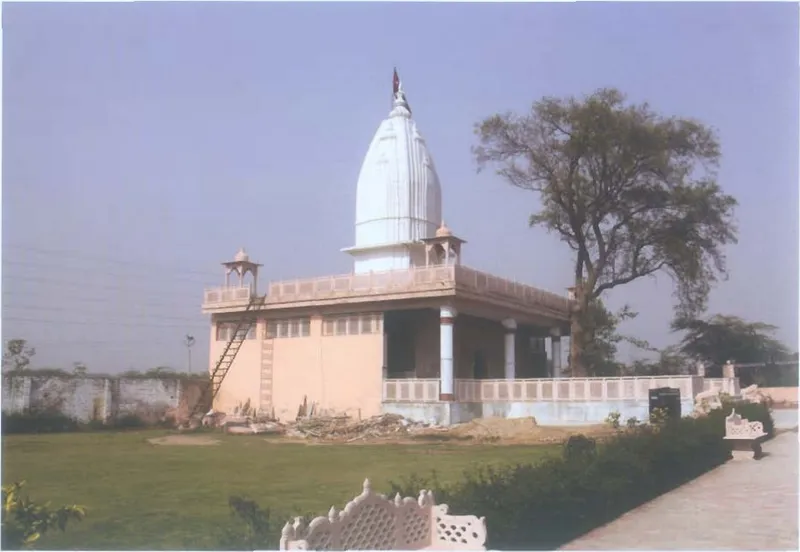
Akrūra-ghāṭa
अक्रूर-घाटAkrūra-ghāṭa, also called Akrūra-tīrtha, is a bathing place on the old bank of the Yamunā, on the road between Vṛndāvana and Mathurā.
Akrūra-gaon
अक्रूर-गाँव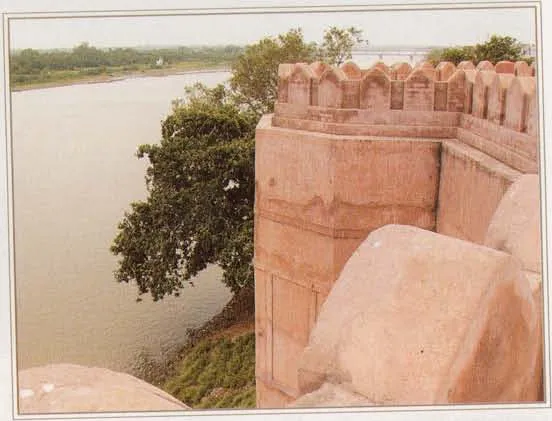
Mathurā
मथुराMathurā is the city on the Yamunā where Śrī Kṛṣṇa appeared from Devakī in the prison of King Kaṁsa.
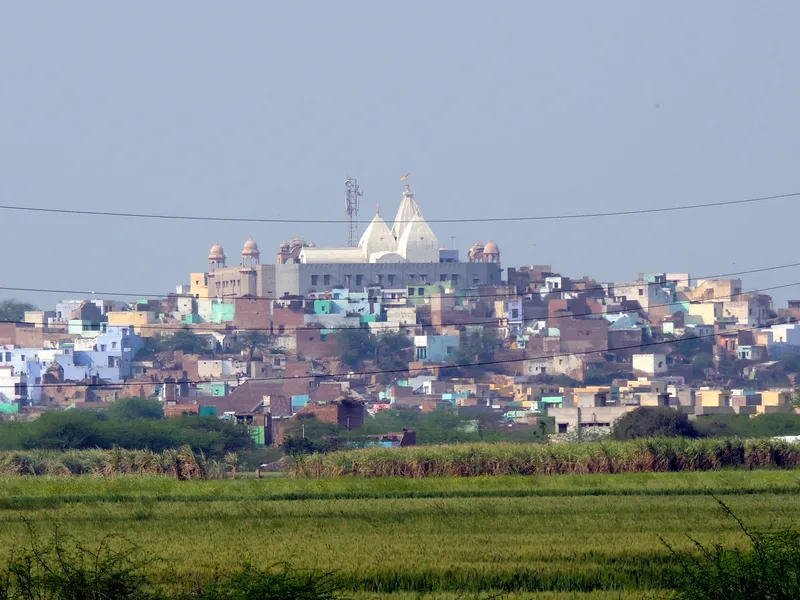
Nandagrāma
नन्दग्रामNandagrāma, today Nandagaon, is the village of Nanda Mahārāja, Kṛṣṇa's father in Vraja, on and around Nandīśvara Hill.
Questions and answers
First Kṛṣṇa and Balarāma, standing in the water, though They were sitting on the chariot. Then Ananta Śeṣa, with the four-armed Supreme Lord resting on his lap.[4 +2]
On the road between Vṛndāvana and Mathurā, Śrīla Prabhupāda writes. A guidebook places it four miles north of Mathurā and one mile south of Vṛndāvana.[9, 27]
While still in the water, he offered long prayers to the Lord, which fill the fortieth chapter of the Bhāgavatam's Tenth Canto.[1–6, 10]
The Bhāgavatam does not say. Śrīla Viśvanātha Cakravartī Ṭhākura explains that Kṛṣṇa showed Akrūra Śrī Viṣṇu, the Deity of his own mantra, to restore his old meditation.[38]
Śrīla Sanātana Gosvāmī and Śrīla Jīva Gosvāmī say midday, following the Viṣṇu Purāṇa. The Bhāgavatam says only that they reached Mathurā at the end of the day.[7 +5]
Yes. In the Viṣṇu Purāṇa Akrūra sees Balabhadra as Śeṣa with Kṛṣṇa on his lap; in the Garga-saṁhitā he sees Goloka and Kṛṣṇa with Śrī Rādhā in the rāsa.[40, 41]
Sources
- Śrīmad-Bhāgavatam 10.39.38, GRETIL
- Śrīmad-Bhāgavatam 10.39.39, GRETIL
- Śrīmad-Bhāgavatam 10.39.40, GRETIL
- Śrīmad-Bhāgavatam 10.39.41, GRETIL
- Śrīmad-Bhāgavatam 10.39.42–43, GRETIL
- Śrīmad-Bhāgavatam 10.39.44–45, GRETIL
- Śrīla Kṛṣṇadāsa Kavirāja Gosvāmī, Śrī Caitanya-caritāmṛta, Madhya-līlā 18.135, online edition · vedabase.io
- Śrīla Kṛṣṇadāsa Kavirāja Gosvāmī, Śrī Caitanya-caritāmṛta, Madhya-līlā 18.136, online edition · vedabase.io
- Śrīla Prabhupāda, Śrī Caitanya-caritāmṛta, Madhya-līlā 18.135, purport · vedabase.io
- Śrīmad-Bhāgavatam 10.39.46, GRETIL
- Śrīla Sanātana Gosvāmī: commentary on ŚB 10.39.38, Bhagavata Vidya Pith edition, ed. Bhagavata Rishi and Krishna Shankar Shastri, 1996
- Śrīla Sanātana Gosvāmī: commentary on ŚB 10.41.6, Bhagavata Vidya Pith edition, ed. Bhagavata Rishi and Krishna Shankar Shastri, 1996
- Śrīla Jīva Gosvāmī: commentary on ŚB 10.39.40, Bhagavata Vidya Pith edition, ed. Bhagavata Rishi and Krishna Shankar Shastri, 1996
- Śrīmad-Bhāgavatam 10.41.6 and 10.41.8, GRETIL
- Śrīla Kṛṣṇadāsa Kavirāja Gosvāmī, Śrī Caitanya-caritāmṛta, Madhya-līlā 18.70, online edition · vedabase.io
- Śrīla Kṛṣṇadāsa Kavirāja Gosvāmī, Śrī Caitanya-caritāmṛta, Madhya-līlā 18.74, online edition · vedabase.io
- Śrīla Kṛṣṇadāsa Kavirāja Gosvāmī, Śrī Caitanya-caritāmṛta, Madhya-līlā 18.78, online edition · vedabase.io
- Śrīla Kṛṣṇadāsa Kavirāja Gosvāmī, Śrī Caitanya-caritāmṛta, Madhya-līlā 18.128, online edition · vedabase.io
- Śrīla Prabhupāda, Śrīmad-Bhāgavatam, Canto 1, Introduction (the life of Śrī Caitanya Mahāprabhu) · vedabase.io
- Śrīla Prabhupāda, Śrī Caitanya-caritāmṛta, Madhya-līlā 18.70, purport · vedabase.io
Show all 63 references
- Śrīmad-Bhāgavatam 10.36.17, GRETIL
- Śrīmad-Bhāgavatam 10.36.30, GRETIL
- Śrīmad-Bhāgavatam 10.39.35, GRETIL
- Śrīla Prabhupāda, Kṛṣṇa, the Supreme Personality of Godhead (Kṛṣṇa book), Chapter 39, 'Akrūra’s Return Journey and His Vision of Viṣṇuloka Within the Yamunā River' · vedabase.io
- Śrīla Prabhupāda, Kṛṣṇa, the Supreme Personality of Godhead (Kṛṣṇa book), Chapter 36, 'Kaṁsa Sends Akrūra for Kṛṣṇa' · vedabase.io
- Śrī Vraja-maṇḍala Parikramā (2007), PDF p. 226
- Śrī Vraja-maṇḍala Parikramā (2007), PDF p. 284
- Vṛndāvana-Dhāma Ki Jaya! (c. 1986), by Dhruva Mahārāja dāsa, PDF p. 76
- Śrīla Sanātana Gosvāmī: commentary on ŚB 10.38.24, Bhagavata Vidya Pith edition, ed. Bhagavata Rishi and Krishna Shankar Shastri, 1996
- Śrīla Sanātana Gosvāmī: commentary on ŚB 10.39.37, Bhagavata Vidya Pith edition, ed. Bhagavata Rishi and Krishna Shankar Shastri, 1996
- Vaṁśīdhara: commentary on ŚB 10.3.51, Bhagavata Vidya Pith edition, ed. Bhagavata Rishi and Krishna Shankar Shastri, 1996
- Śrīla Sanātana Gosvāmī: commentary on ŚB 10.5.1, Bhagavata Vidya Pith edition, ed. Bhagavata Rishi and Krishna Shankar Shastri, 1996
- Śrīla Rūpa Gosvāmī, Laghu-bhāgavatāmṛta, 1.5.461 (quoting the Yāmala), GRETIL
- Śrī Vraja-maṇḍala Parikramā (2007), PDF p. 285
- Śrīla Prabhupāda, Kṛṣṇa, the Supreme Personality of Godhead, Chapter 39, 'Akrūra's Return Journey and His Vision of Viṣṇuloka Within the Yamunā River' · vedabase.io
- Śrīla Prabhupāda, Kṛṣṇa, the Supreme Personality of Godhead (Kṛṣṇa book), Chapter 41, 'Kṛṣṇa Enters Mathurā' · vedabase.io
- Śrīmad-Bhāgavatam 10.41.2–3, GRETIL
- Śrīla Viśvanātha Cakravartī: commentary on ŚB 10.39.44, Bhagavata Vidya Pith edition, ed. Bhagavata Rishi and Krishna Shankar Shastri, 1996
- Śrīla Sanātana Gosvāmī: commentary on ŚB 10.39.41, Bhagavata Vidya Pith edition, ed. Bhagavata Rishi and Krishna Shankar Shastri, 1996
- Viṣṇu Purāṇa, 5.18.33–36, GRETIL
- Garga-saṁhitā, Mathurā-khaṇḍa (5) 5.2–6 (5.1 and 5.7 in notes), Sanskrit Wikisource
- Śrīla Prabhupāda, Śrīmad-Bhāgavatam, 4.8.42, purport · vedabase.io
- Śrīla Prabhupāda, Śrīmad-Bhāgavatam 4.8.42, purport (the list, as reprinted with numbers)
- Vṛndāvana, the Playground of God (2010), Bhakti Caitanya Svāmī, PDF p. 244
- The Color Guide to Vṛndāvana (2000), Written and Photographed by Rājaśekhara dāsa Brahmacārī, PDF p. 155
- Vṛndāvana-Dhāma Ki Jaya! (c. 1986), by Dhruva Mahārāja dāsa, PDF p. 77
- Śrīla Prabhupāda, Kṛṣṇa, the Supreme Personality of Godhead (Kṛṣṇa book), Chapter 28 (the cowherds' vision) · vedabase.io
- Śrīmad-Bhāgavatam 10.28.14 and 10.28.16, GRETIL
- Śrīla Jīva Gosvāmī, Kṛṣṇa-sandarbha, anuccheda 116 (on ŚB 10.28.14–17), GRETIL
- Śrīla Jīva Gosvāmī, Gopāla-campū, Uttara-campū, pūraṇa 29, section [82], GRETIL
- Śrī Vraja-maṇḍala Parikramā (2007), PDF p. 286
- Varāha Purāṇa, adhyāya 155 ('akrūra-tīrtha-prabhāva'), verses 3–6, Sanskrit Wikisource
- Varāha Purāṇa, adhyāya 155, verses 1–2 (chapter heading), Sanskrit Wikisource
- Varāha Purāṇa, adhyāya 155, verses 71–75 and colophon, Sanskrit Wikisource
- Śrīla Narahari Cakravartī, Bhakti-ratnākara, Fifth Wave, printed p. 289 (1912 ed.): verses quoted from the Saura Purāṇa and the Ādi-varāha, then the couplets on Mahāprabhu's stay, 2nd ed., 1912
- Śrīla Rūpa Gosvāmī, Mathurā-māhātmya vv.437-439, quoting the Ādi-varāha
- Śrīla Narahari Cakravartī, Bhakti-ratnākara, Fifth Wave (pañcama taraṅga), printed p. 288 (1912 ed.), 2nd ed., 1912
- Śrīla Rūpa Gosvāmī, Mathurā-māhātmya v.424-425, quoting the Saura Purāṇa
- Śrīla Kṛṣṇadāsa Kavirāja Gosvāmī, Śrī Caitanya-caritāmṛta, Madhya-līlā 18.79, online edition · vedabase.io
- Śrīla Prabhupāda, Śrī Caitanya-caritāmṛta, Madhya-līlā, Chapter 18, chapter summary · vedabase.io
- Śrīla Kṛṣṇadāsa Kavirāja Gosvāmī, Śrī Caitanya-caritāmṛta, Madhya-līlā 18.75, online edition · vedabase.io
- Śrīla Kṛṣṇadāsa Kavirāja Gosvāmī, Śrī Caitanya-caritāmṛta, CC Madhya-līlā 18.77, online edition · vedabase.io
- Śrīla Kṛṣṇadāsa Kavirāja Gosvāmī, Śrī Caitanya-caritāmṛta, Madhya-līlā 18.137, online edition · vedabase.io
Further sources
- Śrīmad-Bhāgavatam 10.39–10.41, translation by the disciples of Śrīla Prabhupāda (BBT).
- Śrīla Prabhupāda, Kṛṣṇa, the Supreme Personality of Godhead, chapters 39 and 41; Śrī Caitanya-caritāmṛta, Madhya-līlā 18, with his translation and purports (BBT).
- The Canto 10 commentaries of Śrīla Sanātana Gosvāmī, Śrīla Jīva Gosvāmī and Śrīla Viśvanātha Cakravartī Ṭhākura; the Viṣṇu, Varāha and Garga texts: summarised from the Sanskrit, not translated.