Sākṣi-gopāla: the Gopāla of Vṛndāvana who walked to bear witness
The Caitanya-caritāmṛta's story of the Deity who left His Vṛndāvana temple on foot, and where He is worshipped now
In short
Sākṣi-gopāla, "the witness Gopāla", is the Deity of Kṛṣṇa who, according to the Caitanya-caritāmṛta, walked behind a young brāhmaṇa from His temple in Vṛndāvana to Vidyānagara, a journey of a hundred days, to prove a promise made before Him. He was later taken to Kaṭaka (Cuttack) and is worshipped today at Satyavādī near Purī.[1–10]
On this page
At a glance
- The source: the Caitanya-caritāmṛta, Madhya-līlā, chapter 5, in Śrīla Prabhupāda's translation with his purports (his explanations under each verse).[1–5]
- His Vṛndāvana temple: at Govinda's place in Vṛndāvana, which Śrīla Prabhupāda renders as the site where the Govinda temple now stands.[11]
- The promise: an elder brāhmaṇa promised his daughter to a younger one in front of Gopāla, and the younger asked Gopāla to be his witness.[12–17]
- The journey: on foot behind the brāhmaṇa for a hundred days; the sound of His ankle bells told the brāhmaṇa that He was following.[4 +6]
- His later homes: Vidyānagara, then Kaṭaka, then, Śrīla Prabhupāda adds, the Jagannātha temple and Satyavādī near Purī.[6–9]
- Not the Gopāla of Govardhana: the Deity of Govardhana Hill, now at Nāthadvāra, is a different Deity with a different story.[4 +5]
- The teaching: the Deity only seemed to be stone; He was Kṛṣṇa Himself, Śrīla Prabhupāda explains.[26]
What is the story of Sākṣi-gopāla?
Śrīla Kṛṣṇadāsa Kavirāja Gosvāmī tells the whole story in the fifth chapter of the Madhya-līlā, the middle part of the Caitanya-caritāmṛta, his book on the life of Śrī Caitanya Mahāprabhu. He opens the chapter by offering obeisances to the Lord who did this:[1–5]
পদ্ভ্যাং চলন্ যঃ প্রতিমা-স্বরূপো
ব্রহ্মণ্যদেবো হি শতাহগম্যম্ ।
দেশং যযৌ বিপ্রকৃতেঽদ্ভুতেহং
তং সাক্ষিগোপালমহং নতোঽস্মি ॥ ১ ॥
padbhyāṁ calan yaḥ pratimā-svarūpo
brahmaṇya-devo hi śatāha-gamyam
deśaṁ yayau vipra-kṛte ’dbhutehaṁ
taṁ sākṣi-gopālam ahaṁ nato ’smi
I offer my respectful obeisances unto the Supreme Personality of God [brahmaṇya-deva], who appeared as Sākṣi-gopāla to benefit a brāhmaṇa. For one hundred days He traveled through the country, walking on His own legs. Thus His activities are wonderful.
Translation: Śrīla A.C. Bhaktivedanta Swami PrabhupādaThe same chapter notes that Śrī Nityānanda Prabhu, on His earlier pilgrimage all over India, had also come to see Sākṣi-gopāla at Kaṭaka.[27]
Two pilgrims in Vṛndāvana
Two brāhmaṇas of Vidyānagara, an elder and a younger, went on pilgrimage. (A brāhmaṇa belongs to the priestly and learned class.)[1–5] In his purport Śrīla Prabhupāda explains that the pilgrims visited the twelve forests of Vraja, five east of the Yamunā and seven west of it, before they reached Pañcakrośī Vṛndāvana, the town inside the Vṛndāvana forest.[28] He names the forests in the same purport:
Names this place“The five forests situated on the eastern side of the river Yamunā are Bhadra, Bilva, Loha, Bhāṇḍīra and Mahāvana. The seven forests situated on the western side of the Yamunā are Madhu, Tāla, Kumuda, Bahulā, Kāmya, Khadira and Vṛndāvana.”
Śrīla Prabhupāda, Śrī Caitanya-caritāmṛta, Madhya-līlā 5.12, purport · vedabase.io
The Vṛndāvana forest, he adds, reaches from the town of Vṛndāvana up to Nandagrāma and Varṣāṇā, and the town of the story lies within it.[28] There, at Govinda's place, stood a great temple where Gopāla was worshipped in grand style:[11]
বৃন্দাবনে গোবিন্দ-স্থানে মহাদেবালয় ।
সে মন্দিরে গোপালের মহাসেবা হয় ॥ ১৩ ॥
vṛndāvane govinda-sthāne mahā-devālaya
se mandire gopālera mahā-sevā haya
In the village of Pañcakrośī Vṛndāvana, at the site where the Govinda temple is now situated, there was a great temple where gorgeous worship of Gopāla was performed.
Translation: Śrīla A.C. Bhaktivedanta Swami PrabhupādaThe pilgrims bathed at the bathing places along the Yamunā, Keśī-ghāṭa and Kāliya-ghāṭa among them, visited Gopāla and rested in His temple.[1, 29]
কেশীতীর্থ, কালীয়-হ্রদাদিকে কৈল স্নান ।
শ্রীগোপাল দেখি’ তাহাঁ করিলা বিশ্রাম ॥ ১৪ ॥
keśī-tīrtha, kālīya-hradādike kaila snāna
śrī-gopāla dekhi’ tāhāṅ karilā viśrāma
After taking baths at different bathing places along the river Yamunā, such as Keśī-ghāṭa and Kāliya-ghāṭa, the pilgrims visited the temple of Gopāla. Afterwards, they took rest in that temple.
Translation: Śrīla A.C. Bhaktivedanta Swami PrabhupādaThe beauty of Gopāla won their hearts, and they stayed there a few days. All through the journey the younger brāhmaṇa had looked after the elder. The old man said that not even his own son had served him so well. Out of gratitude he promised to give the young man his daughter in marriage.[30–35]
কৃতঘ্নতা হয় তোমায় না কৈলে সম্মান ।
অতএব তোমায় আমি দিব কন্যাদান ॥ ২০ ॥
kṛta-ghnatā haya tomāya nā kaile sammāna
ataeva tomāya āmi diba kanyā-dāna
“If I did not show you any respect, I would be ungrateful. Therefore, I promise to give you my daughter in charity.”
Translation: Śrīla A.C. Bhaktivedanta Swami PrabhupādaThe promise before Gopāla
The younger brāhmaṇa refused at first. The elder had family standing, learning and wealth, he said, and he himself had none of them. He served him only to please Kṛṣṇa. He also warned that the elder's wife, sons and relatives would never agree, just as Rukmī had once stopped his father, King Bhīṣmaka, from giving Rukmiṇī to Kṛṣṇa. The elder answered that his daughter was his to give.[36–41]
Śrīla Prabhupāda explains in his purports that both men were pure Vaiṣṇavas (devotees of Viṣṇu, that is, of Kṛṣṇa). The younger served the elder to please Kṛṣṇa, because Kṛṣṇa is pleased when His devotee is served. Citing Śrīla Bhaktisiddhānta Sarasvatī Ṭhākura, he writes that this service was meant only to please Kṛṣṇa, and he adds that because of it Gopāla later agreed to be the witness: to protect the honour of both devotees.[42, 43]
So the younger brāhmaṇa asked the elder to repeat his promise in front of Gopāla. The elder did so. Then the younger asked Gopāla to remember it as his witness, to be called on later if it was needed.[12–17]
গোপালের আগে বিপ্র কহিতে লাগিল ।
“তুমি জান, নিজ-কন্যা ইহারে আমি দিল ॥” ৩২ ॥
gopālera āge vipra kahite lāgila
‘tumi jāna, nija-kanyā ihāre āmi dila’
Coming before Gopāla, the elderly brāhmaṇa said, “My dear Lord, please witness that I have given my daughter to this boy.”
Translation: Śrīla A.C. Bhaktivedanta Swami Prabhupādaছোটবিপ্র বলে, — “ঠাকুর, তুমি মোর সাক্ষী ।
তোমা সাক্ষী বোলাইমু, যদি অন্যথা দেখি ॥” ৩৩ ॥
choṭa-vipra bale, — “ṭhākura, tumi mora sākṣī
tomā sākṣī bolāimu, yadi anyathā dekhi”
Then the younger brāhmaṇa addressed the Deity, saying, “My dear Lord, You are my witness. I shall call for You to testify if it is necessary later on.”
Translation: Śrīla A.C. Bhaktivedanta Swami PrabhupādaŚrīla Prabhupāda explains the custom behind this scene. In India a daughter could be promised by word alone, which is called vāg-datta, and a promise made before the Deity could not be taken back. Even now, he writes, village quarrels are settled in a temple, because no one dares to lie before the Deity.[44]
Trouble at home in Vidyānagara
The two brāhmaṇas went home to Vidyānagara. There the elder told his family about the promise, and they were upset. His relatives threatened to cut him off, and his wife and sons said they would take poison. His son told him not to lie outright, but only to say that he did not remember. The Deity, the son argued, was far away and could not come. The old man, helpless, prayed to Gopāla to protect both his religious principles and his family.[45–52]
নাহি কহি — না কহিও এ মিথ্যা-বচন ।
সবে কহিবে — ‘মোর কিছু নাহিক স্মরণ ॥’ ৪৪ ॥
nāhi kahi — nā kahio e mithyā-vacana
sabe kahibe — ‘mora kichu nāhika smaraṇa’
“You do not have to flatly deny that you spoke such a thing. There is no need to make a false statement. Simply say that you do not remember what you said.
Translation: Śrīla A.C. Bhaktivedanta Swami PrabhupādaŚrīla Prabhupāda describes this son as an atheist who took the Deity for a piece of stone or wood. So he was sure that a stone Deity in a distant land could neither speak nor travel.[54]
When the younger brāhmaṇa came to ask for his bride, the elder stayed silent, and his son came out with a stick to strike him. The next day the young man called the people of the village together. At the meeting the elder said that he did not exactly remember such a promise. His son then claimed that the young man had given his father a drug called dhuturā to steal his money, and the people became a little doubtful.[55–60]
The young brāhmaṇa told the whole story and said that he had called the Supreme Lord Himself as his witness. The elder quickly agreed: if Gopāla came in person, he would give his daughter. His son agreed too, because he was sure that Gopāla could never come. The villagers wrote the agreement down, and both sides signed it.[61–66]
তবে বড়বিপ্র কহে, — “এই সত্য কথা ।
গোপাল যদি সাক্ষী দেন, আপনে আসি’ এথা ॥ ৭৭ ॥
তবে কন্যা দিব আমি, জানিহ নিশ্চয় ।”
তাঁর পুত্র কহে, — ‘এই ভাল বাত হয় ॥’ ৭৮ ॥
tabe baḍa-vipra kahe, “ei satya kathā
gopāla yadi sākṣī dena, āpane āsi’ ethā
tabe kanyā diba āmi, jāniha niścaya”
tāṅra putra kahe, — ‘ei bhāla bāta haya’
Taking this opportunity, the elderly brāhmaṇa immediately confirmed that this was really true. He said, “If Gopāla personally comes here to serve as a witness, I shall surely give my daughter to the young brāhmaṇa.”
Translation: Śrīla A.C. Bhaktivedanta Swami PrabhupādaŚrīla Prabhupāda points out that the young man had one good qualification: his firm trust in what the Lord says. He also shows how Kṛṣṇa, who knows every heart, arranged things so that the father and the son, who wanted opposite things, agreed to the same test.[68, 69]
The return to Vṛndāvana
After the meeting the young brāhmaṇa went back to Vṛndāvana. He bowed down to the Deity and told Him everything.[3]
তবে সেই ছোটবিপ্র গেলা বৃন্দাবন ।
দণ্ডবৎ করি’ কহে সব বিবরণ ॥ ৮৭ ॥
tabe sei choṭa-vipra gelā vṛndāvana
daṇḍavat kari’ kahe saba vivaraṇa
After the meeting, the young brāhmaṇa started for Vṛndāvana. Upon arriving there, he first offered his respectful obeisances to the Deity and then narrated everything in full detail.
Translation: Śrīla A.C. Bhaktivedanta Swami PrabhupādaHe begged Gopāla to protect the religious principles of both brāhmaṇas. Gopāla told him to go home and remember Him at a meeting, but the brāhmaṇa said that the people would believe only if Gopāla came in this very form and spoke Himself.[70, 71] When Gopāla said that He had never heard of a Deity walking from place to place, the brāhmaṇa replied that He was not a statue but the son of Nanda Mahārāja Himself.[70 +5]
প্রতিমা নহ তুমি, — সাক্ষাৎ ব্রজেন্দ্রনন্দন ।
বিপ্র লাগি’ কর তুমি অকার্য-করণ ॥” ৯৬ ॥
pratimā naha tumi — sākṣāt vrajendra-nandana
vipra lāgi’ kara tumi akārya-karaṇa”
“My dear Lord, You are not a statue; You are directly the son of Mahārāja Nanda. Now, for the sake of the old brāhmaṇa, You can do something You have never done before.”
Translation: Śrīla A.C. Bhaktivedanta Swami PrabhupādaŚrīla Prabhupāda stresses that the young man wanted nothing for himself. He only wanted to save the elder, also a devotee, from the fault of a broken promise. The brāhmaṇa even told Gopāla that one who knows the truth and keeps silent becomes sinful. Śrīla Prabhupāda explains that this was the simple, open talk of a devotee with his Lord, and that the Lord Himself can never be touched by sin.[78, 79]
Gopāla walks behind him
Gopāla smiled and agreed to go, walking behind the brāhmaṇa. He gave one condition: the brāhmaṇa must not turn around to look at Him, or He would stay where He was. The sound of His ankle bells would tell the brāhmaṇa that He was following, and every day the brāhmaṇa was to cook rice and offer it to Him.[4 +5]
নূপুরের ধ্বনিমাত্র আমার শুনিবা ।
সেই শব্দে আমার গমন প্রতীতি করিবা ॥ ৯৯ ॥
nūpurera dhvani-mātra āmāra śunibā
sei śabde āmāra gamana pratīti karibā
“You will know that I am walking behind you by the sound of My ankle bells.
Translation: Śrīla A.C. Bhaktivedanta Swami PrabhupādaThe next day they set out, and Gopāla followed step by step. As He followed, the brāhmaṇa heard the tinkling of His ankle bells and happily cooked fine rice for Him.[4, 22]
আর দিন আজ্ঞা মাগি’ চলিলা ব্রাহ্মণ ।
তার পাছে পাছে গোপাল করিলা গমন ॥ ১০১ ॥
āra dina ājñā māgi’ calilā brāhmaṇa
tāra pāche pāche gopāla karilā gamana
The next day, the brāhmaṇa begged permission from Gopāla and started for his country. Gopāla followed him, step by step.
Translation: Śrīla A.C. Bhaktivedanta Swami PrabhupādaThe witness at Vidyānagara
Near his own village the brāhmaṇa thought that the people would believe him only if they saw Gopāla with their own eyes.[80] He looked back, and there stood Gopāla, smiling. Gopāla said that He would stay at that very spot. The brāhmaṇa went to tell the town, and the people came out, bowed down and wondered at His beauty and His long walk. Before them all, Gopāla bore witness that the elder brāhmaṇa had promised his daughter to the younger.[80–85]
সকল লোকের আগে গোপাল সাক্ষী দিল ।
বড়বিপ্র ছোটবিপ্রে কন্যাদান কৈল ॥ ১১২ ॥
sakala lokera āge gopāla sākṣī dila
baḍa-vipra choṭa-vipre kanyā-dāna kaila
Thus in the presence of all the townspeople, Lord Gopāla bore witness that the elderly brāhmaṇa had offered his daughter in charity to the young brāhmaṇa.
Translation: Śrīla A.C. Bhaktivedanta Swami PrabhupādaAfter the marriage Gopāla told the two brāhmaṇas that they were His eternal servants and offered them a blessing. They asked Him to stay there, so that the whole world would know His mercy to His servants. He stayed, people came from many lands to see Him, and the king of the country built Him a temple. There He became known as Sākṣi-gopāla.[87–92]
মন্দির করিয়া রাজা সেবা চালাইল ।
‘সাক্ষিগোপাল’ বলি’ তাঁর নাম খ্যাতি হৈল ॥ ১১৮ ॥
mandira kariyā rājā sevā cālāila
‘sākṣi-gopāla’ bali’ tāṅra nāma khyāti haila
The King constructed a nice temple, and regular service was executed. Gopāla became very famous under the name of Sākṣi-gopāla [the witness Gopāla].
Translation: Śrīla A.C. Bhaktivedanta Swami PrabhupādaŚrīla Prabhupāda explains that the two brāhmaṇas were nitya-siddhas, eternally perfect devotees who come into this world and look like ordinary people but never forget the Lord. What looks like a simple story about a marriage, he writes, is the Lord's dealing with His own servants.[93]
From Vidyānagara to Kaṭaka
In his purport Śrīla Prabhupāda places Vidyānagara in South India on the river Godāvarī, and says that it was then the capital of the kingdom of Orissa. The present town, he writes, is twenty to twenty-five miles from Rajahmundry.[94]
Later King Puruṣottama-deva of Orissa conquered Vidyānagara and took its jewelled throne, which he gave to Lord Jagannātha at Purī. He begged Gopāla to come to his kingdom, and Gopāla agreed. The king took Him to Kaṭaka and began His regular worship there.[7 +5]
সেই হৈতে গোপালের কটকেতে স্থিতি ।
এই লাগি ‘সাক্ষিগোপাল, নাম হৈল খ্যাতি ॥ ১৩৩ ॥
sei haite gopālera kaṭakete sthiti
ei lāgi ‘sākṣi-gopāla’ nāma haila khyāti
Since then, Gopāla has been situated in the city of Kaṭaka [Cuttack], and He has been known ever since as Sākṣi-gopāla.
Translation: Śrīla A.C. Bhaktivedanta Swami PrabhupādaAt Kaṭaka the queen wished to give Gopāla the pearl she wore on her nose, but His nose had no hole for it, she thought. That night Gopāla told her in a dream that His mother had pierced His nose when He was a child and set a pearl there, and that the hole was still there. The king and the queen found it, set the pearl and held a great festival.[100–105]
“বাল্যকালে মাতা মোর নাসা ছিদ্র করি’ ।
মুক্তা পরাঞাছিল বহু যত্ন করি’ ॥ ১২৯ ॥
“bālya-kāle mātā mora nāsā chidra kari’
muktā parāñāchila bahu yatna kari’
“During My childhood My mother made a hole in My nose and with great endeavor set a pearl there.
Translation: Śrīla A.C. Bhaktivedanta Swami PrabhupādaWhere is Sākṣi-gopāla now?
Śrīla Prabhupāda carries the story on in his purport. After Kaṭaka, he writes, Gopāla stayed for some time in the Jagannātha temple at Purī, and then the king of Orissa built a village for Him:[6–9]
General teaching (does not name the place)“In order to settle this love quarrel, the King of Orissa constructed a village about eleven miles from Jagannātha Purī. The village was called Satyavādī, and Gopāla was stationed there.”
Śrīla Prabhupāda, Śrī Caitanya-caritāmṛta, Madhya-līlā 5.9, purport · vedabase.io
In the Introduction to the Śrīmad-Bhāgavatam he tells the same journey: the Lord travelled from Vṛndāvana to Vidyānagara in His Deity form, the arcā incarnation, to settle the dispute and to show His favour to His servants, and from there the Deity was brought to Cuttack.[9] In Vṛndāvana in October 1976 he added that the Deity is still worshipped near Jagannātha Purī, at the place called Sākṣi-gopāla.[10] The distance from Purī is given a little differently, as shown below.[8]
Is Sākṣi-gopāla the same as the Gopāla of Govardhana?
No. They are two different Deities, and the Caitanya-caritāmṛta tells their stories in two different chapters.[4 +5]
The Gopāla of Govardhana appears in Madhya-līlā chapter 4. He introduces Himself to Śrīla Mādhavendra Purī as the lifter of Govardhana Hill, and He asks to be placed on top of the hill in a temple of His own.[23 +4] Guidebooks identify the Gopāla Rāya Mandira on the ridge of the hill as the place where Śrīla Mādhavendra Purī installed Him.[109–114]
‘śrī-gopāla’ nāma mora, — govardhana-dhārī
vajrera sthāpita, āmi ihāṅ adhikārī
“My name is Gopāla. I am the lifter of Govardhana Hill. I was installed by Vajra, and here I am the authority.
Translation: Śrīla A.C. Bhaktivedanta Swami PrabhupādaWhen the Caitanya-caritāmṛta was written, that Gopāla was still worshipped at Govardhana. Śrīla Prabhupāda writes that He is now at Nāthadvāra, cared for by the descendants of Śrī Vallabhācārya.[4 +10]
Sākṣi-gopāla's story is quite different. His temple was at Govinda's place in the town of Vṛndāvana, not on Govardhana Hill. He walked to Vidyānagara for a brāhmaṇa, and He then lived at Kaṭaka and later near Purī. None of the sources used here says that the two are one Deity.[4 +8] The Govardhana Gopāla has His own article.[23 +2] Read more: The Gopāla Deity of Govardhana →
Why did Gopāla walk from Vṛndāvana?
Śrīla Prabhupāda answers from the young brāhmaṇa's faith. In his purport to Caitanya-caritāmṛta Madhya 5.97 he writes:[26]
General teaching (does not name the place)“Because of his advanced devotional position, the younger brāhmaṇa knew that although the Deity of Gopāla appeared to be stone, He was not stone. He was the son of Nanda Mahārāja, Vrajendra-nandana Himself. As such, the Deity could act exactly as the Lord does in His original form as Kṛṣṇa.”
Śrīla Prabhupāda, Śrī Caitanya-caritāmṛta, Madhya-līlā 5.97, purport · vedabase.io
He told the story in his lectures to explain this point. In New York in 1966 he said that the Deity responds to devotion, and that this Gopāla was first in a temple at Vṛndāvana:[118]
Names this place“If you go to India, you'll find one nice temple in Orissa. It is called the temple of Witness Gopāla, Sākṣī-Gopāla, Witness Gopāla. This Gopāla was situated in a temple at Vṛndāvana.”
Śrīla Prabhupāda, Lecture on Bhagavad-gītā 9.4-7, New York, 18 November 1966 · vedabase.io
In his book Rāja-vidyā he retells it in the same way, saying that the Gopāla mūrti was at one time located in a temple in Vṛndāvana, where the two brāhmaṇas came on pilgrimage.[119] In Bombay in 1974 he explained the name itself:[120]
Names this place“Sākṣi means the witness. That vigraha, that Deity, was in Vṛndāvana. He came to give evidence for His devotee. Therefore He is known as Sākṣi-gopāla.”
Śrīla Prabhupāda, Lecture on Śrīmad-Bhāgavatam 3.26.4, Bombay, 16 December 1974 · vedabase.io
What does Śrīla Prabhupāda teach from this pastime?
Śrīla Prabhupāda told the story in New York in 1966, in Vṛndāvana in 1972 and 1976, in Bombay in 1974 and in his books. In each of these tellings he said that the Deity was formerly in Vṛndāvana.[9 +5] Speaking to his disciples in Vṛndāvana in 1972, he stressed that the Deity spoke with His devotees and went with His devotee:[9 +5]
Names this place“In Vṛndāvana, there was Gopāla, Sākṣi-Gopāla. He has now gone to Orissa. He talked with His devotees and went with His devotee.”
Śrīla Prabhupāda, Lecture on The Nectar of Devotion, Vṛndāvana, 24 October 1972 · vedabase.io
In October 1976, again in Vṛndāvana, he reminded his listeners that they had read the history in the Caitanya-caritāmṛta, and that the Deity from Vṛndāvana had gone to bear witness far away in Orissa.[10] The lesson he draws is the same: the Deity is the Lord Himself, and He acts for His devotee.[26, 118]
Where did His temple in Vṛndāvana stand?
The Caitanya-caritāmṛta places the great temple of Gopāla at Govinda's place in Vṛndāvana, and Śrīla Prabhupāda's word-meanings and translation give that as the site where the Govinda temple now stands.[11] The Bhakti-ratnākara of Śrīla Narahari Cakravartī Ṭhākura agrees: in its Sixth Wave it says that Śrī Gopāla came south on foot from the place of Govinda to bear witness.[122 +1] It also quotes a verse of the Sādhana-dīpikā that calls Gopāla a resident of Govinda's place, who walked on His own feet for a brāhmaṇa and still shines in Orissa (summarised here, not translated).[123]
তথাহি সাধনদীপিকায়াং ॥ শ্রীগোবিন্দস্থানবাসী শ্রীগোপালো দয়াম্বুধিঃ। সাক্ষ্যং দাতুং ব্রাহ্মণস্য স্বপদাভ্যাং যযো গতঃ ॥ অদ্যাপি রাজতে ওড্রদেশেঽসৌ ভক্তবৎসলঃ। কর্ত্তুঃ ন কর্ত্তুং তৎ কর্ত্তুং সমর্থো হরিরীশ্বরঃ ॥ শ্রীগোপাল গমন অন্যত্র বিস্তারিত।
tathāhi sādhanadīpikāẏāṁ
śrīgobindasthānabāsī śrīgopālo daẏāmbudhiḥ| sākṣyaṁ dātuṁ brāhmaṇasya sbapadābhyāṁ yayo gataḥ
adyāpi rājate oḍradeśe'sau bhaktabatsalaḥ| karttuḥ na karttuṁ tat karttuṁ samartho harirīśbaraḥ
śrīgopāla gamana anyatra bistārita|
Śrīla Prabhupāda gives one landmark in his purport to Caitanya-caritāmṛta Madhya 8.300: a temple of Hanumān near the Govindajī temple once stood in front of the Gopālajī temple, whose Deity went to Orissa to remain as Sākṣi-gopāla.[125]
Names this place“There is even a temple of Hanumān near Govindajī temple in Vṛndāvana. Formerly this temple was in front of the Gopālajī temple, but the Gopālajī Deity went to Orissa to remain as Sākṣi-gopāla.”
Śrīla Prabhupāda, Śrī Caitanya-caritāmṛta, Madhya-līlā 8.300, purport · vedabase.io
According to the Bengali Bhaktamāla of Kṛṣṇadāsa Bābājī (1905), Gopāla stood north of the Yogapīṭha. In the younger brāhmaṇa's words in that book, the Lord of Vṛndāvana is present at the Yogapīṭha. The book adds that a temple at the Yogapīṭha still stands, where Vaiṣṇavas serve, with Śrī Hanumān, Govinda's doorkeeper, to the south, but it does not say clearly whose temple it means.[126 +1] Śrī Vraja-maṇḍala Parikramā (2007) counts Śrī Sākṣi-gopāla among the principal ancient temples of Vṛndāvana.[128]
The Colour Guide to Rādhā-kuṇḍa (1999) counts Sākṣi-gopāla among the Deities installed by King Vajranābha, but no scripture or Gosvāmī text found says who installed Him, so this is not certain.[129] How Śrī Govinda Himself came to that place is told in its own article.[11] Read more: How Śrīla Rūpa Gosvāmī found Śrī Govinda on Gomā-ṭīlā →
Where the sources differ
The books differ on where exactly the Vṛndāvana temple of Gopāla stood, and on whether only ruins of it remain.[11, 130]
Accounts differ Where the Vṛndāvana temple of Gopāla (Sākṣi-gopāla) stood.
- Caitanya-caritāmṛta, Madhya 5.13 (Śrīla Prabhupāda's word-meanings and translation)at Govinda's place (govinda-sthāne): 'at the site where the Govinda temple is now situated'.
- Bhakti-ratnākara, Sixth Wave p. 459Gopāla came south from the place of Govinda (gobindera sthāna haite).
- Sādhana-dīpikā as quoted in the Bhakti-ratnākara, Sixth Wave p. 460Gopāla was a resident of Govinda's place (śrī-govinda-sthāna-vāsī) who walked to bear witness.
- Śrīla Prabhupāda, CC Madhya 8.300 purporta Hanumān temple near the Govindajī temple was formerly in front of the Gopālajī temple.
They also give the distance from Jagannātha Purī to Satyavādī, the present home of Sākṣi-gopāla, a little differently.[8, 130]
Accounts differ Distance of Satyavādī (Sākṣi-gopāla) from Jagannātha Purī.
- Śrīla Prabhupāda, CC Madhya 5.9 purportabout eleven miles from Jagannātha Purī.
- Śrī Vraja-maṇḍala Parikramā (2007)about twelve miles from Purī.
Places in this article
Sākṣi-gopāla Mandira (Vṛndāvana)
साक्षी-गोपाल मन्दिर (वृन्दावन)The Sākṣi-gopāla Mandira of Vṛndāvana was the temple of the Gopāla Deity who walked from Vṛndāvana to Vidyānagara to bear witness for a young brāhmaṇa, and who is worship …
Rādhā-Govinda Mandira (Vṛndāvana, old)
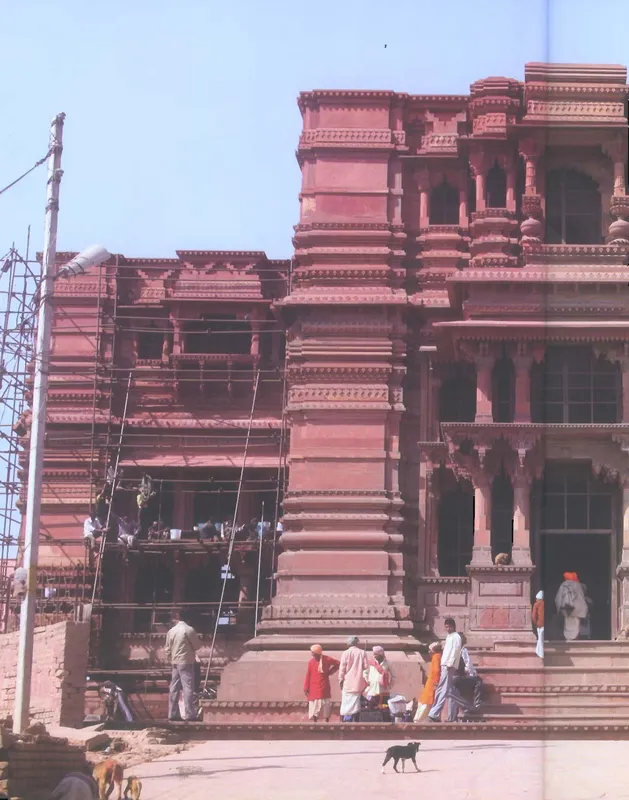
राधा-गोविन्द मन्दिर (वृन्दावन, पुराना)The old Rādhā-Govinda Mandira is the great red-sandstone temple of Śrī Govindadeva in Vṛndāvana, built, as the guidebooks say, on top of Gomā-ṭīlā, a mound.
Vṛndāvana
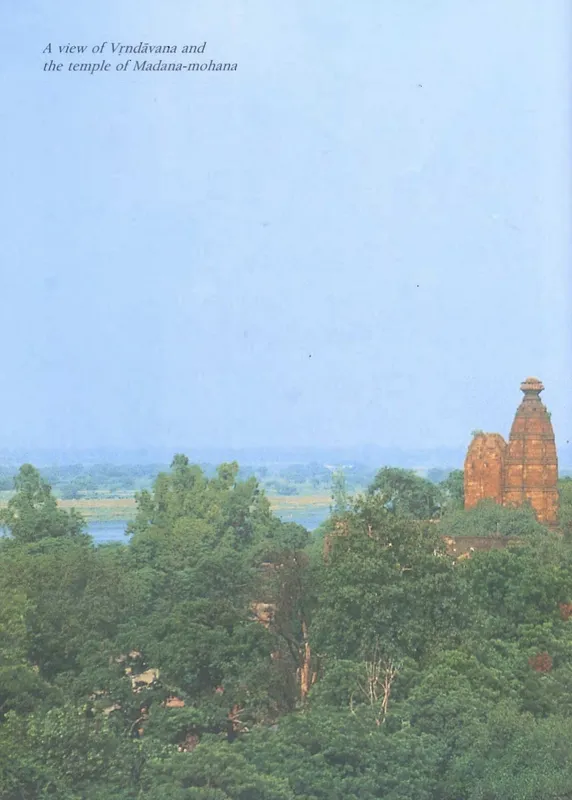
वृन्दावनVṛndāvana is the forest on the bank of the Yamunā where Kṛṣṇa spent His childhood and youth, and the town of temples that stands in that forest today.
Keśī-ghāṭa
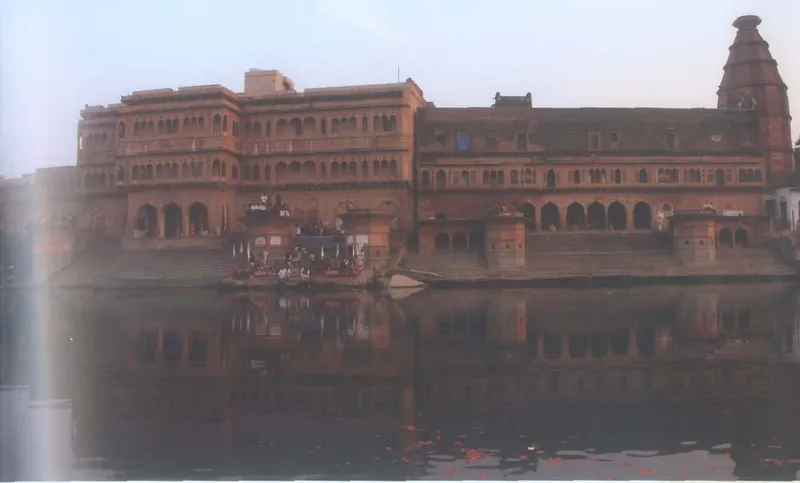
केशी-घाटKeśī-ghāṭa, also called Keśī-tīrtha, is a bathing place on the Yamunā in the north-west of Vṛndāvana, close to Cīra-ghāṭa.

Kāliya-ghāṭa
कालिय-घाटKāliya-ghāṭa is the bathing place on the old bank of the Yamunā in Vṛndāvana that marks Kāliya's lake, the Kāliya-hrada of the scriptures, today called Kāliya-daha.
Vṛndāvana (forest)
वृन्दावन (वन)Gopāla Rāya Mandira
गोपाल राय मन्दिरThe Gopāla Rāya Mandira stands on the ridge of Govardhana Hill between Aniyora and Jatīpurā.
Gopāla Prakata Sthali
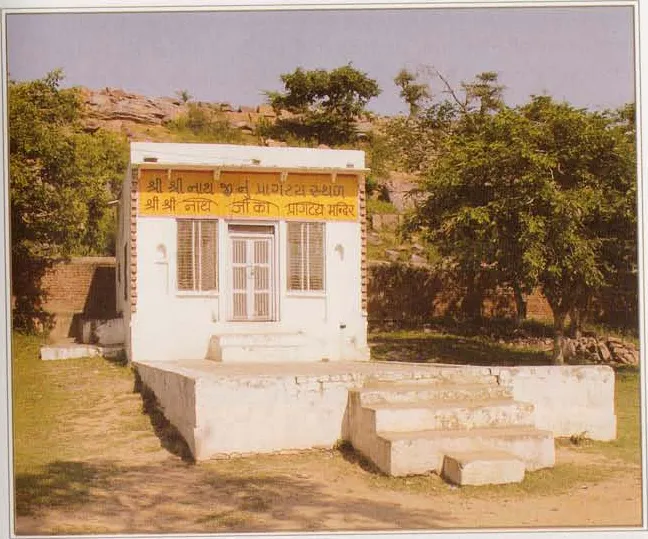
गोपाल प्रकट स्थलीThe Gopāla Prakaṭa Sthalī, the place where Gopāla appeared, is a small shrine at Govardhana Hill that two guidebooks show as the spot where Śrīla Mādhavendra Purī found t …
Questions and answers
According to the Caitanya-caritāmṛta, an elder brāhmaṇa promised his daughter to a younger one before the Gopāla Deity in Vṛndāvana. At home his family pressed him to go back on it, so the younger brāhmaṇa went back and brought Gopāla as his witness. The Deity walked behind him to Vidyānagara and confirmed the promise before the whole town.[1 +10]
No. The Caitanya-caritāmṛta tells of two different Gopāla Deities. The Gopāla of Govardhana, whom Śrīla Prabhupāda identifies with Śrīnāthajī of Nāthadvāra, was installed on Govardhana Hill. Sākṣi-gopāla was worshipped at Govinda's place in the town of Vṛndāvana and walked to Vidyānagara.[4 +6]
To bear witness for His devotee. Śrīla Prabhupāda explains that the young brāhmaṇa knew that Gopāla only appeared to be stone and was Kṛṣṇa Himself, able to act as the Lord does in His original form.[26]
Because the brāhmaṇa looked back. Gopāla had agreed to follow him on the condition that he never turned round to see Him; near his village the brāhmaṇa looked, saw Gopāla smiling, and Gopāla stayed at that spot.[4 +11]
At Satyavādī near Jagannātha Purī. The Caitanya-caritāmṛta says that He was taken from Vidyānagara to Kaṭaka, and Śrīla Prabhupāda adds that He later stayed in the Jagannātha temple and was then stationed at Satyavādī.[6–9]
At Govinda's place, says the Caitanya-caritāmṛta, which Śrīla Prabhupāda renders as the site where the Govinda temple now stands; the Bhakti-ratnākara agrees. The books differ on the exact spot and on what remains.[11 +2]
Sākṣi means the witness. Śrīla Prabhupāda says that the Deity came from Vṛndāvana to give evidence for His devotee, and therefore He is known as Sākṣi-gopāla.[120]
Sources
- Śrīla Kṛṣṇadāsa Kavirāja Gosvāmī, Śrī Caitanya-caritāmṛta, Madhya-līlā 5.14, online edition · vedabase.io
- Śrīla Kṛṣṇadāsa Kavirāja Gosvāmī, Śrī Caitanya-caritāmṛta, Madhya-līlā 5.32, online edition · vedabase.io
- Śrīla Kṛṣṇadāsa Kavirāja Gosvāmī, Śrī Caitanya-caritāmṛta, Madhya-līlā 5.87, online edition · vedabase.io
- Śrīla Kṛṣṇadāsa Kavirāja Gosvāmī, Śrī Caitanya-caritāmṛta, Madhya-līlā 5.101, online edition · vedabase.io
- Śrīla Kṛṣṇadāsa Kavirāja Gosvāmī, Śrī Caitanya-caritāmṛta, Madhya-līlā 5.1, online edition · vedabase.io
- Śrīla Kṛṣṇadāsa Kavirāja Gosvāmī, Śrī Caitanya-caritāmṛta, Madhya-līlā 5.118, online edition · vedabase.io
- Śrīla Kṛṣṇadāsa Kavirāja Gosvāmī, Śrī Caitanya-caritāmṛta, Madhya-līlā 5.133, online edition · vedabase.io
- Śrīla Prabhupāda, Śrī Caitanya-caritāmṛta, Madhya-līlā 5.9, purport · vedabase.io
- Śrīla Prabhupāda, Śrīmad-Bhāgavatam, Canto 1, Introduction · vedabase.io
- Śrīla Prabhupāda, Lecture on Śrīmad-Bhāgavatam 1.7.45-46, Vṛndāvana, 5 October 1976 · vedabase.io
- Śrīla Kṛṣṇadāsa Kavirāja Gosvāmī, Śrī Caitanya-caritāmṛta, Madhya-līlā 5.13, online edition · vedabase.io
- Śrīla Kṛṣṇadāsa Kavirāja Gosvāmī, Śrī Caitanya-caritāmṛta, Madhya-līlā 5.31, online edition · vedabase.io
- Śrīla Kṛṣṇadāsa Kavirāja Gosvāmī, Śrī Caitanya-caritāmṛta, Madhya-līlā 5.33, online edition · vedabase.io
- Śrīla Kṛṣṇadāsa Kavirāja Gosvāmī, Śrī Caitanya-caritāmṛta, Madhya-līlā 5.72, online edition · vedabase.io
- Śrīla Kṛṣṇadāsa Kavirāja Gosvāmī, Śrī Caitanya-caritāmṛta, Madhya-līlā 5.73, online edition · vedabase.io
- Śrīla Kṛṣṇadāsa Kavirāja Gosvāmī, Śrī Caitanya-caritāmṛta, Madhya-līlā 5.74, online edition · vedabase.io
- Śrīla Kṛṣṇadāsa Kavirāja Gosvāmī, Śrī Caitanya-caritāmṛta, Madhya-līlā 5.75, online edition · vedabase.io
- Śrīla Kṛṣṇadāsa Kavirāja Gosvāmī, Śrī Caitanya-caritāmṛta, Madhya-līlā 5.97, online edition · vedabase.io
- Śrīla Kṛṣṇadāsa Kavirāja Gosvāmī, Śrī Caitanya-caritāmṛta, Madhya-līlā 5.98, online edition · vedabase.io
- Śrīla Kṛṣṇadāsa Kavirāja Gosvāmī, Śrī Caitanya-caritāmṛta, Madhya-līlā 5.99, online edition · vedabase.io
Show all 131 references
- Śrīla Kṛṣṇadāsa Kavirāja Gosvāmī, Śrī Caitanya-caritāmṛta, Madhya-līlā 5.100, online edition · vedabase.io
- Śrīla Kṛṣṇadāsa Kavirāja Gosvāmī, Śrī Caitanya-caritāmṛta, Madhya-līlā 5.102, online edition · vedabase.io
- Śrīla Kṛṣṇadāsa Kavirāja Gosvāmī, Śrī Caitanya-caritāmṛta, CC Madhya-līlā 4.41, online edition · vedabase.io
- Śrīla Kṛṣṇadāsa Kavirāja Gosvāmī, Śrī Caitanya-caritāmṛta, CC Madhya-līlā 17.168, online edition · vedabase.io
- Śrīla Prabhupāda, Śrī Caitanya-caritāmṛta, Madhya-līlā 4.1, purport · vedabase.io
- Śrīla Prabhupāda, Śrī Caitanya-caritāmṛta, Madhya-līlā 5.97, purport · vedabase.io
- Śrīla Prabhupāda, Śrī Caitanya-caritāmṛta, Madhya-līlā 5.8, translation · vedabase.io
- Śrīla Prabhupāda, Śrī Caitanya-caritāmṛta, Madhya-līlā 5.12, purport · vedabase.io
- Śrīla Prabhupāda, Śrī Caitanya-caritāmṛta, Madhya-līlā 5.14, synonyms and translation · vedabase.io
- Śrīla Kṛṣṇadāsa Kavirāja Gosvāmī, Śrī Caitanya-caritāmṛta, Madhya-līlā 5.15, online edition · vedabase.io
- Śrīla Kṛṣṇadāsa Kavirāja Gosvāmī, Śrī Caitanya-caritāmṛta, Madhya-līlā 5.16, online edition · vedabase.io
- Śrīla Kṛṣṇadāsa Kavirāja Gosvāmī, Śrī Caitanya-caritāmṛta, Madhya-līlā 5.17, online edition · vedabase.io
- Śrīla Kṛṣṇadāsa Kavirāja Gosvāmī, Śrī Caitanya-caritāmṛta, Madhya-līlā 5.18, online edition · vedabase.io
- Śrīla Kṛṣṇadāsa Kavirāja Gosvāmī, Śrī Caitanya-caritāmṛta, Madhya-līlā 5.19, online edition · vedabase.io
- Śrīla Kṛṣṇadāsa Kavirāja Gosvāmī, Śrī Caitanya-caritāmṛta, Madhya-līlā 5.20, online edition · vedabase.io
- Śrīla Kṛṣṇadāsa Kavirāja Gosvāmī, Śrī Caitanya-caritāmṛta, Madhya-līlā 5.21, online edition · vedabase.io
- Śrīla Kṛṣṇadāsa Kavirāja Gosvāmī, Śrī Caitanya-caritāmṛta, Madhya-līlā 5.22, online edition · vedabase.io
- Śrīla Kṛṣṇadāsa Kavirāja Gosvāmī, Śrī Caitanya-caritāmṛta, Madhya-līlā 5.23, online edition · vedabase.io
- Śrīla Kṛṣṇadāsa Kavirāja Gosvāmī, Śrī Caitanya-caritāmṛta, Madhya-līlā 5.24, online edition · vedabase.io
- Śrīla Kṛṣṇadāsa Kavirāja Gosvāmī, Śrī Caitanya-caritāmṛta, Madhya-līlā 5.25, online edition · vedabase.io
- Śrīla Kṛṣṇadāsa Kavirāja Gosvāmī, Śrī Caitanya-caritāmṛta, Madhya-līlā 5.26, online edition · vedabase.io
- Śrīla Prabhupāda, Śrī Caitanya-caritāmṛta, Madhya-līlā 5.23, purport · vedabase.io
- Śrīla Prabhupāda, Śrī Caitanya-caritāmṛta, Madhya-līlā 5.24, purport · vedabase.io
- Śrīla Prabhupāda, Śrī Caitanya-caritāmṛta, Madhya-līlā 5.32, purport · vedabase.io
- Śrīla Kṛṣṇadāsa Kavirāja Gosvāmī, Śrī Caitanya-caritāmṛta, Madhya-līlā 5.34, online edition · vedabase.io
- Śrīla Kṛṣṇadāsa Kavirāja Gosvāmī, Śrī Caitanya-caritāmṛta, Madhya-līlā 5.35, online edition · vedabase.io
- Śrīla Kṛṣṇadāsa Kavirāja Gosvāmī, Śrī Caitanya-caritāmṛta, Madhya-līlā 5.36, online edition · vedabase.io
- Śrīla Kṛṣṇadāsa Kavirāja Gosvāmī, Śrī Caitanya-caritāmṛta, Madhya-līlā 5.37, online edition · vedabase.io
- Śrīla Kṛṣṇadāsa Kavirāja Gosvāmī, Śrī Caitanya-caritāmṛta, Madhya-līlā 5.38, online edition · vedabase.io
- Śrīla Kṛṣṇadāsa Kavirāja Gosvāmī, Śrī Caitanya-caritāmṛta, Madhya-līlā 5.39, online edition · vedabase.io
- Śrīla Kṛṣṇadāsa Kavirāja Gosvāmī, Śrī Caitanya-caritāmṛta, Madhya-līlā 5.41, online edition · vedabase.io
- Śrīla Kṛṣṇadāsa Kavirāja Gosvāmī, Śrī Caitanya-caritāmṛta, Madhya-līlā 5.47, online edition · vedabase.io
- Śrīla Kṛṣṇadāsa Kavirāja Gosvāmī, Śrī Caitanya-caritāmṛta, Madhya-līlā 5.44, online edition
- Śrīla Prabhupāda, Śrī Caitanya-caritāmṛta, Madhya-līlā 5.45, purport · vedabase.io
- Śrīla Kṛṣṇadāsa Kavirāja Gosvāmī, Śrī Caitanya-caritāmṛta, Madhya-līlā 5.48, online edition · vedabase.io
- Śrīla Kṛṣṇadāsa Kavirāja Gosvāmī, Śrī Caitanya-caritāmṛta, Madhya-līlā 5.49, online edition · vedabase.io
- Śrīla Kṛṣṇadāsa Kavirāja Gosvāmī, Śrī Caitanya-caritāmṛta, Madhya-līlā 5.50, online edition · vedabase.io
- Śrīla Kṛṣṇadāsa Kavirāja Gosvāmī, Śrī Caitanya-caritāmṛta, Madhya-līlā 5.51, online edition · vedabase.io
- Śrīla Kṛṣṇadāsa Kavirāja Gosvāmī, Śrī Caitanya-caritāmṛta, Madhya-līlā 5.52, online edition · vedabase.io
- Śrīla Kṛṣṇadāsa Kavirāja Gosvāmī, Śrī Caitanya-caritāmṛta, Madhya-līlā 5.53, online edition · vedabase.io
- Śrīla Kṛṣṇadāsa Kavirāja Gosvāmī, Śrī Caitanya-caritāmṛta, Madhya-līlā 5.64, online edition · vedabase.io
- Śrīla Kṛṣṇadāsa Kavirāja Gosvāmī, Śrī Caitanya-caritāmṛta, Madhya-līlā 5.65, online edition · vedabase.io
- Śrīla Kṛṣṇadāsa Kavirāja Gosvāmī, Śrī Caitanya-caritāmṛta, Madhya-līlā 5.66, online edition · vedabase.io
- Śrīla Kṛṣṇadāsa Kavirāja Gosvāmī, Śrī Caitanya-caritāmṛta, Madhya-līlā 5.67, online edition · vedabase.io
- Śrīla Kṛṣṇadāsa Kavirāja Gosvāmī, Śrī Caitanya-caritāmṛta, Madhya-līlā 5.68, online edition · vedabase.io
- Śrīla Kṛṣṇadāsa Kavirāja Gosvāmī, Śrī Caitanya-caritāmṛta, Madhya-līlā 5.69, online edition · vedabase.io
- Śrīla Kṛṣṇadāsa Kavirāja Gosvāmī, Śrī Caitanya-caritāmṛta, Madhya-līlā 5.77-78, online edition
- Śrīla Prabhupāda, Śrī Caitanya-caritāmṛta, Madhya-līlā 5.76, purport · vedabase.io
- Śrīla Prabhupāda, Śrī Caitanya-caritāmṛta, Madhya-līlā 5.77-78, purport · vedabase.io
- Śrīla Kṛṣṇadāsa Kavirāja Gosvāmī, Śrī Caitanya-caritāmṛta, Madhya-līlā 5.91, online edition · vedabase.io
- Śrīla Kṛṣṇadāsa Kavirāja Gosvāmī, Śrī Caitanya-caritāmṛta, Madhya-līlā 5.94, online edition · vedabase.io
- Śrīla Kṛṣṇadāsa Kavirāja Gosvāmī, Śrī Caitanya-caritāmṛta, Madhya-līlā 5.88, online edition · vedabase.io
- Śrīla Kṛṣṇadāsa Kavirāja Gosvāmī, Śrī Caitanya-caritāmṛta, Madhya-līlā 5.89, online edition · vedabase.io
- Śrīla Kṛṣṇadāsa Kavirāja Gosvāmī, Śrī Caitanya-caritāmṛta, Madhya-līlā 5.90, online edition · vedabase.io
- Śrīla Kṛṣṇadāsa Kavirāja Gosvāmī, Śrī Caitanya-caritāmṛta, Madhya-līlā 5.92, online edition · vedabase.io
- Śrīla Kṛṣṇadāsa Kavirāja Gosvāmī, Śrī Caitanya-caritāmṛta, Madhya-līlā 5.93, online edition · vedabase.io
- Śrīla Kṛṣṇadāsa Kavirāja Gosvāmī, Śrī Caitanya-caritāmṛta, Madhya-līlā 5.96, online edition
- Śrīla Prabhupāda, Śrī Caitanya-caritāmṛta, Madhya-līlā 5.89, purport · vedabase.io
- Śrīla Prabhupāda, Śrī Caitanya-caritāmṛta, Madhya-līlā 5.90, purport · vedabase.io
- Śrīla Kṛṣṇadāsa Kavirāja Gosvāmī, Śrī Caitanya-caritāmṛta, Madhya-līlā 5.105, online edition · vedabase.io
- Śrīla Kṛṣṇadāsa Kavirāja Gosvāmī, Śrī Caitanya-caritāmṛta, Madhya-līlā 5.103, online edition · vedabase.io
- Śrīla Kṛṣṇadāsa Kavirāja Gosvāmī, Śrī Caitanya-caritāmṛta, Madhya-līlā 5.104, online edition · vedabase.io
- Śrīla Kṛṣṇadāsa Kavirāja Gosvāmī, Śrī Caitanya-caritāmṛta, Madhya-līlā 5.106, online edition · vedabase.io
- Śrīla Kṛṣṇadāsa Kavirāja Gosvāmī, Śrī Caitanya-caritāmṛta, Madhya-līlā 5.107, online edition · vedabase.io
- Śrīla Kṛṣṇadāsa Kavirāja Gosvāmī, Śrī Caitanya-caritāmṛta, Madhya-līlā 5.108, online edition · vedabase.io
- Śrīla Kṛṣṇadāsa Kavirāja Gosvāmī, Śrī Caitanya-caritāmṛta, Madhya-līlā 5.112, online edition
- Śrīla Kṛṣṇadāsa Kavirāja Gosvāmī, Śrī Caitanya-caritāmṛta, Madhya-līlā 5.113, online edition · vedabase.io
- Śrīla Kṛṣṇadāsa Kavirāja Gosvāmī, Śrī Caitanya-caritāmṛta, Madhya-līlā 5.114, online edition · vedabase.io
- Śrīla Kṛṣṇadāsa Kavirāja Gosvāmī, Śrī Caitanya-caritāmṛta, Madhya-līlā 5.115, online edition · vedabase.io
- Śrīla Kṛṣṇadāsa Kavirāja Gosvāmī, Śrī Caitanya-caritāmṛta, Madhya-līlā 5.116, online edition · vedabase.io
- Śrīla Kṛṣṇadāsa Kavirāja Gosvāmī, Śrī Caitanya-caritāmṛta, Madhya-līlā 5.117, online edition · vedabase.io
- Śrīla Kṛṣṇadāsa Kavirāja Gosvāmī, Śrī Caitanya-caritāmṛta, Madhya-līlā 5.119, online edition · vedabase.io
- Śrīla Prabhupāda, Śrī Caitanya-caritāmṛta, Madhya-līlā 5.113, purport · vedabase.io
- Śrīla Prabhupāda, Śrī Caitanya-caritāmṛta, Madhya-līlā 5.119, purport · vedabase.io
- Śrīla Kṛṣṇadāsa Kavirāja Gosvāmī, Śrī Caitanya-caritāmṛta, Madhya-līlā 5.120, online edition · vedabase.io
- Śrīla Kṛṣṇadāsa Kavirāja Gosvāmī, Śrī Caitanya-caritāmṛta, Madhya-līlā 5.121, online edition · vedabase.io
- Śrīla Kṛṣṇadāsa Kavirāja Gosvāmī, Śrī Caitanya-caritāmṛta, Madhya-līlā 5.122, online edition · vedabase.io
- Śrīla Kṛṣṇadāsa Kavirāja Gosvāmī, Śrī Caitanya-caritāmṛta, Madhya-līlā 5.123, online edition · vedabase.io
- Śrīla Kṛṣṇadāsa Kavirāja Gosvāmī, Śrī Caitanya-caritāmṛta, Madhya-līlā 5.124, online edition · vedabase.io
- Śrīla Kṛṣṇadāsa Kavirāja Gosvāmī, Śrī Caitanya-caritāmṛta, Madhya-līlā 5.125, online edition · vedabase.io
- Śrīla Kṛṣṇadāsa Kavirāja Gosvāmī, Śrī Caitanya-caritāmṛta, Madhya-līlā 5.126, online edition · vedabase.io
- Śrīla Kṛṣṇadāsa Kavirāja Gosvāmī, Śrī Caitanya-caritāmṛta, Madhya-līlā 5.127, online edition · vedabase.io
- Śrīla Kṛṣṇadāsa Kavirāja Gosvāmī, Śrī Caitanya-caritāmṛta, Madhya-līlā 5.128, online edition · vedabase.io
- Śrīla Kṛṣṇadāsa Kavirāja Gosvāmī, Śrī Caitanya-caritāmṛta, Madhya-līlā 5.129, online edition · vedabase.io
- Śrīla Kṛṣṇadāsa Kavirāja Gosvāmī, Śrī Caitanya-caritāmṛta, Madhya-līlā 5.130, online edition · vedabase.io
- Śrīla Kṛṣṇadāsa Kavirāja Gosvāmī, Śrī Caitanya-caritāmṛta, CC Madhya-līlā 4.38, online edition · vedabase.io
- Govardhana Hill: India's Most Sacred Mountain (2001), Rajasekhara dasa Brahmacari, PDF p. 98
- Vṛndāvana-Dhāma Ki Jaya! (c. 1986), by Dhruva Mahārāja dāsa, PDF p. 41
- Govardhana Hill: India's Most Sacred Mountain (2001), Rajasekhara dasa Brahmacari, PDF p. 99
- Govardhana Hill: India's Most Sacred Mountain (2001), Rajasekhara dasa Brahmacari, PDF p. 140
- Govardhana Hill: India's Most Sacred Mountain (2001), Rajasekhara dasa Brahmacari, PDF p. 22
- Vṛndāvana-Dhāma Ki Jaya! (c. 1986), by Dhruva Mahārāja dāsa, PDF p. 42
- the undated parikramā notes Govardhana, ¶148
- Śrī Vraja-maṇḍala Parikramā (2007), PDF p. 133
- Śrī Vraja-maṇḍala Parikramā (2007), PDF p. 129
- The Colour Guide to Rādhā-kuṇḍa (1999), Rājaśekhara dāsa Brahmacārī, PDF p. 140
- the undated parikramā notes Govardhana, ¶103
- Śrīla Prabhupāda, Lecture on Bhagavad-gītā 9.4-7, New York, 18 November 1966 · vedabase.io
- Śrīla Prabhupāda, Rāja-vidyā: The King of Knowledge, Chapter 3 · vedabase.io
- Śrīla Prabhupāda, Lecture on Śrīmad-Bhāgavatam 3.26.4, Bombay, 16 December 1974 · vedabase.io
- Śrīla Prabhupāda, Lecture on The Nectar of Devotion, Vṛndāvana, 24 October 1972 · vedabase.io
- Śrīla Narahari Cakravartī, Bhakti-ratnākara, Sixth Wave (ṣaṣṭha taraṅga), 1912 ed. p. 459, 2nd ed., 1912
- Śrīla Narahari Cakravartī, Bhakti-ratnākara, Sixth Wave (ṣaṣṭha taraṅga), 1912 ed. p. 460, 2nd ed., 1912
- Śrīla Narahari Cakravartī, Bhakti-ratnākara, Sixth Wave (ṣaṣṭha taraṅga), 1912 ed. p. 460, 2nd ed., 1912
- Śrīla Prabhupāda, Śrī Caitanya-caritāmṛta, Madhya-līlā 8.300, purport · vedabase.io
- Kṛṣṇadāsa, last mālā, walk through Vṛndāvana's holy places, printed p. 350, left column, lines 35-36 (the third and fourth lines from the foot), and right column, lines 1-3
- Kṛṣṇadāsa, chapter 'Caritra Śrī Choṭa-vipra o Baṛa-vipra' (the younger and the elder brāhmaṇa), printed p. 178, right column, lines 13-15
- Śrī Vraja-maṇḍala Parikramā (2007), PDF p. 322
- The Colour Guide to Rādhā-kuṇḍa (1999), Rājaśekhara dāsa Brahmacārī, PDF p. 35
- Śrī Vraja-maṇḍala Parikramā (2007), PDF p. 333
- Śrīla Prabhupāda, Room Conversation, New York, 17 July 1976 · vedabase.io
Further sources
- Śrī Caitanya-caritāmṛta, Madhya-līlā 4, 5 and 8.300, with Śrīla Prabhupāda's translation and purports (BBT); Śrīmad-Bhāgavatam, First Canto, Introduction; Rāja-vidyā, chapter 3; Śrīla Prabhupāda's lectures (vedabase.io).
- Bhakti-ratnākara, Sixth Wave (Bengali, 1912), with the Sādhana-dīpikā verse it quotes; the Bengali Bhaktamāla of Kṛṣṇadāsa Bābājī (1905): summarised, not translated.