The temple of Śṛṅgāravaṭa and its gosvāmīs
शृंगारवट का मन्दिर और उसके गोस्वामी, वृन्दावन
In short
Śṛṅgāravaṭa, "the banyan of adornment", is a banyan with a temple of Gaura-Nitāi (Śrī Caitanya and Śrī Nityānanda) on the Yamunā in Vṛndāvana. The Bhakti-ratnākara also calls it Nityānanda-vaṭa, after Śrī Nityānanda Prabhu. A family that traces its line to Śrī Nityānanda Prabhu serves the temple. Its records include a Mughal grant of villages.[1–9]
On this page
At a glance
- The place: according to the guidebooks, on the bank of the Yamunā in Vṛndāvana, a little east of Imlītalā, near the Rādhā-Dāmodara temple.[10–15]
- The two names: the Bhakti-ratnākara says everyone calls it Śṛṅgāravaṭa, and some call it Nityānanda-vaṭa.[1]
- The family: according to the Vṛndāvana-kathā, in 1920 descendants of Śrī Nityānanda Prabhu's family owned the temple and served by turns. The book names no document, so its account of the founding is not certain.[8]
- Śrīla Prabhupāda: the gosvāmīs of Śṛṅgāra-ghāṭa are known as belonging to the Nityānanda family.[16]
- The grant: according to Entwistle (1987), an early decree of Aurangzeb gave Jahangirpur and other villages to Gosvāmī Pūrṇānanda of Śṛṅgāravaṭa.[9]
- The temple: the guidebooks (2000–2010) describe Gaura-Nitāi, Rādhā-Kṛṣṇa and Jagannātha Deities, the sacred forms worshipped there.[2–7]
What is Śṛṅgāravaṭa?
The oldest known book that names the place is the Bhakti-ratnākara of Śrīla Narahari Cakravartī Ṭhākura. It follows Śrīla Śrīnivāsa Ācārya on his round of Vraja. His guide shows him a wonderful banyan on the Yamunā's bank that everyone calls Śṛṅgāravaṭa. Here Kṛṣṇa's pastimes of dressing delighted Subala and His other friends, and some call the tree Nityānanda-vaṭa (summarised here, not translated).[1] The guidebooks also set here the adornment of Śrī Rādhā on the rāsa night, the night of Kṛṣṇa's circle dance; that is told in its own article.[2–7] Read more: Śrī Rādhā's māna at the autumn rāsa and how it was broken →
Śrīla Nārāyaṇa Bhaṭṭa Gosvāmī's Vraja-bhakti-vilāsa counts a Śṛṅgāravaṭa among the sixteen banyans of Vraja. It is the third of the eight on the south bank of the Yamunā, but the book does not say where on that bank it stands. Vraja has a second Śṛṅgāravaṭa, near Tiloyāra.[17] Śrī Vraja-maṇḍala Parikramā (2007) counts three banyans in Vṛndāvana town: Advaitavaṭa, Śṛṅgāravaṭa near the Rādhā-Dāmodara temple, and Vaṁśīvaṭa.[11]
According to the Vṛndāvana-kathā (1920), the gosvāmīs of the temple explained the name in their own way. Śrī Rādhā Ṭhākurāṇī used to sit under the banyan and adorn Herself, they said, and so the place is called Śṛṅgāravaṭa.[18]
Why is it called Nityānanda-vaṭa?
The Bhakti-ratnākara tells why. Śrī Nityānanda Prabhu came to Mathurā for some days and wandered through Vraja. After seeing all its forests, He came to Vṛndāvana and played on the sandbank of the Yamunā. Under this banyan He would sit one moment and rise the next. He rolled in the dust, dressed Himself with flowers and cried out for Kānāi (Kṛṣṇa), His life (summarised here, not translated).[19, 20]
দেখিয়া সকল বন আসি বৃন্দাবনে। খেলয়ে অদ্ভুত খেলা যমুনাপুলিনে॥ এই যে অপূর্ব্ব বটবৃক্ষের তলাতে। ক্ষণে বৈসে ক্ষণে উঠে লোটায় ধূলাতে॥ ক্ষণে নানা পুষ্পে বেশ করে আপনার। ক্ষণে কহে কোথা প্রাণ কানাই আমার॥ নিত্যানন্দ ভাবাবেশে করে টলমল। অশ্রুজলে পূর্ণ দীর্ঘ নয়নযুগল॥ ঐছে নিত্যানন্দ বৃন্দাবনেতে বিহরে। নিত্যানন্দ চেষ্টা কে বুঝিতে শক্তি ধরে॥ জানিলেন শ্রীগৌরসুন্দর নবদ্বীপে। গুপ্তরূপে বিহরি বিহরে ব্যক্তরূপে॥
dekhiẏā sakala bana āsi bṛndābane| khelaẏe adbhuta khelā yamunāpuline|| ei ye apūrbba baṭabṛkṣera talāte| kṣaṇe baise kṣaṇe uṭhe loṭāẏa dhūlāte|| kṣaṇe nānā puṣpe beśa kare āpanāra| kṣaṇe kahe kothā prāṇa kānāi āmāra|| nityānanda bhābābeśe kare ṭalamala| aśrujale pūrṇa dīrgha naẏanayugala|| aiche nityānanda bṛndābanete bihare| nityānanda ceṣṭā ke bujhite śakti dhare|| jānilena śrīgaurasundara nabadbīpe| guptarūpe bihari bihare byaktarūpe||
Then He came to know that Śrī Gaurasundara, Śrī Caitanya, was openly showing His pastimes in Navadvīpa. So He left from here for Navadvīpa. The book calls the place His play-place, and says that whoever sees it is most fortunate.[19, 20]
Śrīla Prabhupāda writes a note on Śrī Nityānanda Prabhu. In it he says that it is said He lived for many days at Mathurā, and there heard of Śrī Caitanya Mahāprabhu's pastimes in Navadvīpa:[22]
General teaching (does not name the place)“Nityānanda Prabhu traveled on many pilgrimages with the sannyāsī. It is said that for many days He lived at Mathurā with him, and at that time He heard about Lord Caitanya Mahāprabhu’s pastimes in Navadvīpa. Therefore He came down to Bengal to see the Lord.”
Śrīla Prabhupāda, Śrī Caitanya-caritāmṛta, Ādi-līlā 17.12, purport · vedabase.io
The guidebooks say different things about His stay. In one He stayed at the banyan for a few days. In another He stayed for some time before Śrī Caitanya Mahāprabhu began His saṅkīrtana (the public chanting of the holy names). A third calls it His favourite place. The Vṛndāvana-kathā (1920) says He took shelter under it for some time on His pilgrimage.[2 +5] How He learned of Śrī Caitanya Mahāprabhu's appearance is told in more than one way, and the accounts differ:
Accounts differ How and where Nityānanda learned that Śrī Caitanya had appeared, before He left Vraja for Navadvīpa.
- Śrī Vraja-maṇḍala Parikramā (2007)Near Śṛṅgāravaṭa 'He heard an aerial voice announce, "Your Kanhaiyā as Śacīnandana Gaurahari in Nadiyā is waiting for You to come to Him."'
- Bhakti-ratnākara, Fifth WaveWhile sporting in Vṛndāvana under this banyan He came to know (jānilena) that Gaurasundara now sported openly in Navadvīpa, and went to Navadvīpa from here; no voice is mentioned (earlier on the same page he spends some days in Mathurā: 'কথোদিন আসি প্রভু মথুরা নগরে').
- Śrīla Prabhupāda, CC Ādi 17.12 purport'It is said that for many days He lived at Mathurā with him [the sannyāsī], and at that time He heard about Lord Caitanya Mahāprabhu's pastimes in Navadvīpa.'
- Vṛndāvana, the Playground of God (2010)He stayed here 'prior to Lord Caitanya's beginning His saṅkīrtana movement'; how He learned of it is not said.
The wording of these accounts is our summary of the sources, not a published translation.
Who are the gosvāmīs of Śṛṅgāravaṭa?
Here the word gosvāmī is used as the title of the family that serves the temple. Śrīla Prabhupāda names the family once, in his purport (explanation) on Śrī Nityānanda Prabhu's birthplace. There he lists the priests of the temple at Garbhavāsa:[16]
Names this place“Kṛṣṇadāsa belonged to the Ciḍiyā-kuñja at Vṛndāvana. The date of his disappearance is Kṛṣṇa-janmāṣṭamī. Ciḍiyā-kuñja is a place now managed by the gosvāmīs of Śṛṅgāra-ghāṭa in Vṛndāvana. They are also known as belonging to the Nityānanda family, most probably on the basis of their relationship with Kṛṣṇadāsa.”
Śrīla Prabhupāda, Śrī Caitanya-caritāmṛta, Ādi-līlā 13.61, purport · vedabase.io
He speaks of the gosvāmīs of Śṛṅgāra-ghāṭa, the bathing place beside the banyan. No source says in so many words that they are the same family as the gosvāmīs who serve the temple at Śṛṅgāravaṭa. But the books' descriptions agree on their link with Śrī Nityānanda Prabhu.[8, 16]
The founder and his son
The Bengali book Vṛndāvana-kathā (1920) tells how the family began. Paramānanda Gosvāmī was a sannyāsī (a renunciant) of Śrī Nityānanda Prabhu's family. He came from the village of Puraṇiyā in Bāṅkuḍā district and first set up a temple here. His son Rasikānanda settled in Vṛndāvana with his family in the reign of the emperor Jahāṅgīr. In 1920 Rasikānanda's descendants served the temple by turns. The book names no document or date for any of this, so it is not certain.[8]
The same book found the temple very old but not in ruins. Its owners were descendants of Śrī Nityānanda Prabhu's family. Its main Deities were Nitāi and Caitanya, and Rādhā-Kṛṣṇa were served with Them.[8]
In 2010 Vṛndāvana, the Playground of God said that devotees of the Nityānanda-vaṁśa still ran the temple. (The Nityānanda-vaṁśa is the family that traces its descent from Śrī Nityānanda Prabhu.) Its pūjārīs, the temple priests, showed a metal saṅkīrtana banner. They said He used it for harināma, the chanting of the holy names. That is their account, and it is not certain.[5, 6]
Builders of Śṛṅgāra-ghāṭa
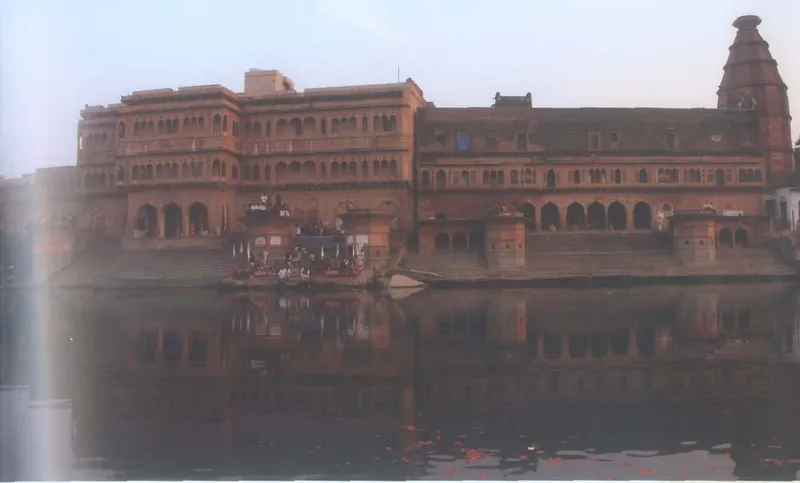
Three lists of Vṛndāvana's riverside ghāṭas (bathing steps) name the temple's gosvāmīs as the builders of the nearby steps. F. S. Growse (1883) says that Singār Ghāṭ was built by the gosāīṁ of the temple of Singār-bat. The Vṛndāvana-kathā (1920) names the gosvāmīs of Śṛṅgāravaṭa, and The Color Guide to Vṛndāvana (2000) the gosāīṁ of Śṛṅgāravaṭa. None gives a name or a year, so this is not certain.[25–27]
What did the Mughal emperors give the temple?
The sources give three kinds of statement about a grant to a temple in Vṛndāvana. They do not name the same emperor.[9] Read more: The temples of Vṛndāvana in Mughal times →
The decree reported by Entwistle
According to the historian A. W. Entwistle (1987), early in his reign Aurangzeb issued decrees in favour of devotees in Braj. One of them granted Gosvāmī Pūrṇānanda of Śṛṅgāravaṭa the villages of Sakraya, Jahangirpur and others on the east bank of the Yamunā. Entwistle takes this from an earlier Bengali study and gives no year.[9] So the decree's exact date and wording are not known.[9]
The endowment Growse saw
In 1883 Growse described the Bengali temple of Śṛṅgāravaṭa, near the Madana-mohana temple. He called it of ancient date but often renewed. It then had a yearly income of 13,500 rupees, shared by three shareholders. Each of them took the services for four months at a time. The village of Jahangirpur across the river, with the sacred grove of Bel-ban, belonged to its endowment.[28] He does not say how the village was acquired.[9]
Growse's calendar of Vṛndāvana's festivals also records the Nandotsava, the festival of Nanda Mahārāja. It was held at Śṛṅgāravaṭa in the evening of Bhādon Badi 9, the ninth day of the dark half of Bhādon (August–September). It went on through the night with music and dancing. The sources do not say whether it is still kept here.[29] The district gazetteer of 1911 names Gosāīṁ Kesonand as the priest of the Śṛṅgāravaṭa temple, who had bought the rights to the village of Ral.[30]
What Śrīla Prabhupāda said in 1976
Twice in 1976 Śrīla Prabhupāda spoke of a temple kept up from a village across the Yamunā. In a lecture in Vṛndāvana in September he said:[31, 32]
Names this place“Aurangzeb gave some land, Jahangir gave some land. There is still one temple, it was constructed by Jahangir, and the other side of the Yamunā there is a village called Jahangir-pura. That village was given to the brāhmaṇas for maintaining the temple.”
Śrīla Prabhupāda, Lecture on Śrīmad-Bhāgavatam 1.7.16, Vṛndāvana, 14 September 1976 · vedabase.io
A month earlier, in Hyderabad, he had spoken of the same village. Then he asked about a gosvāmī of Śṛṅgāravaṭa:[31, 32]
Names this place“Aurangzeb gave many contributions to the Vṛndāvana temples. Yes. And Aurangzeb's grandfather, Jahangir, he gave so many temples to many brāhmaṇas. There is one village just opposite Vṛndāvana, Keśīghāṭa = Jahangipura. This village was given to a brāhmaṇa. From the income he was maintaining a temple. And Aurangzeb... You know Sringarpat Goswami?”
Śrīla Prabhupāda, Room Conversation About Māyāpur Construction, Hyderabad, 19 August 1976 · vedabase.io
He names no temple. That he meant the temple at Śṛṅgāravaṭa is an inference, a conclusion drawn from Growse's record that Jahangirpur belonged to its endowment.[31–33] Each source names the emperor differently:
Accounts differ Which Mughal emperor the sources connect with the temple maintained from the village of Jahangirpur across the Yamunā and with the grant of the village.
- Śrīla Prabhupāda, lecture on Śrīmad-Bhāgavatam 1.7.16, Vṛndāvana, 14 September 1976After 'Aurangzeb gave some land, Jahangir gave some land': 'There is still one temple, it was constructed by Jahangir, and the other side of the Yamunā there is a village called Jahangir-pura. That village was given to the brāhmaṇas for maintaining the temple.' He names no temple and does not say who gave the village.
- Śrīla Prabhupāda, room conversation, Hyderabad, 19 August 1976After 'Aurangzeb gave many contributions to the Vṛndāvana temples' and right after 'Aurangzeb's grandfather, Jahangir, he gave so many temples to many brāhmaṇas': a village just opposite Vṛndāvana, 'Keśīghāṭa = Jahangipura', 'was given to a brāhmaṇa', who maintained a temple from its income; then 'And Aurangzeb... You know Sringarpat Goswami?', and the subject is broken off.
- A. W. Entwistle (1987), a historian, citing ShyamdasEntwistle says that early in his reign Aurangzeb issued some firmans in favour of Braj devotees, one of them granting Gosvāmī Pūrṇānanda of Śṛṅgāravaṭa in Vṛndāvana the villages of Sakraya, Jahāṅgīrpur and others on the east bank of the Yamunā. He names no temple or builder.
- F. S. Growse, Mathurá (1883), a historianGrowse says that the village of Jahāṅgīrpur across the river, with the sacred grove of Bel-vana, belongs to the endowment of the Bengali temple of Śṛṅgāravaṭa, which he counts, like the smaller temples, as old and often renewed. He names no builder or grantor.
What do the guidebooks describe at Śṛṅgāravaṭa?
The guidebooks describe a temple on the left of the courtyard, and they list its Deities in different ways. The Color Guide to Vṛndāvana (2000) names Rādhā-Kṛṣṇa, Gaura-Nitāi, Jagannātha, Baladeva and Subhadrā. Śrī Vraja-maṇḍala Parikramā (2007) names the presiding Deities as Śrī Nitāi-Gaura and Śrī Rādhā-Kṛṣṇa. Vṛndāvana, the Playground of God (2010) describes large Gaura-Nitāi Deities, small Rādhā-Kṛṣṇa Deities, unusual Jagannātha Deities and old Deities of Lakṣmī-Nārāyaṇa.[2 +5]
Śrī Vraja-maṇḍala Parikramā counts Śrī Gaura-Nitāi at Śṛṅgāravaṭa among the principal ancient temples of Vṛndāvana. But no dated record of the building is known, so its age is not certain.[3]
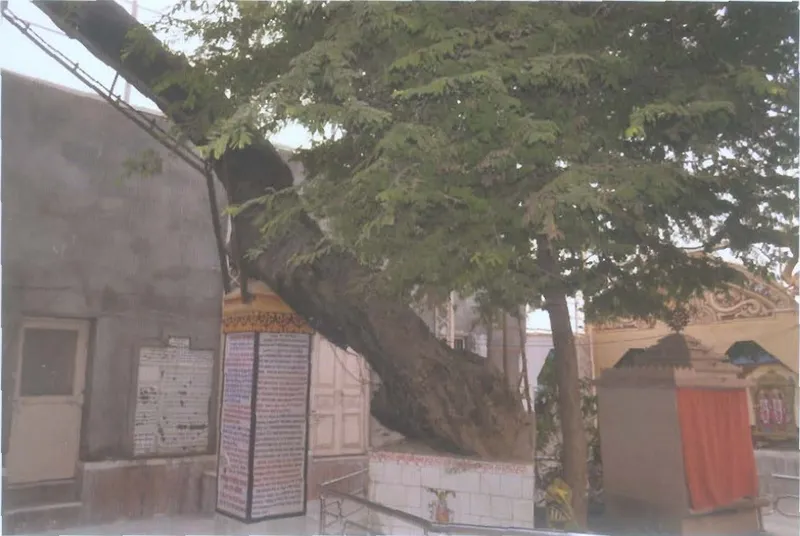
The banyan is described differently over the years. In 1920 the Vṛndāvana-kathā found that the Śṛṅgāravaṭa that had stood on the platform had perished. A large banyan grown from its seed stood beside the steps of the ghāṭa.[8] The guidebooks of 2000 and 2010 photograph an old stump beside a younger trunk grown from a planted branch.[5 +2]
Accounts differ The state, and the meaning, of the old banyan.
- Śrī Vraja-maṇḍala Parikramā (2007)'Just near the temple under an ancient banyan tree is a unique painting' of Kṛṣṇa decorating Rādhikā.
- Vṛndāvana, the Playground of God (2010)The old tree, under which Lord Nityānanda would sit, has died; devotees planted a branch of it shortly before, and a new banyan grows there beside the old stump.
- The Color Guide to Vṛndāvana (2000) and the undated parikramā notes VṛndāvanaThe original banyan under which the Divine Couple sat has almost vanished, leaving a large stump; a branch from it was planted and has grown into a large tree.
- Vṛndāvana-kathā (Pulinbihārī Datta, 1920), p. 187The Śṛṅgāra-vaṭa that formerly stood on the platform (vedī) has perished with time; another large banyan grown from its seed stands beside the steps of the ghāṭa.
Śrī Vraja-maṇḍala Parikramā says that under an ancient banyan near the temple is a painting of Kṛṣṇa decorating Śrīmatī Rādhikā. Vṛndāvana, the Playground of God describes a picture of that pastime in a raised shrine to the right of the main altar. The books do not say whether the two are the same.[2 +3]
Timeline
- 1883
In 1883 Growse described the Bengali temple of Śṛṅgāravaṭa, near the Madana-mohana temple.
Read in the article: What did the Mughal emperors give the temple? → - 1911
The district gazetteer of 1911 names Gosāīṁ Kesonand as the priest of the Śṛṅgāravaṭa temple, who had bought the rights to the village of Ral.
Read in the article: What did the Mughal emperors give the temple? → - 1920
In 1920 Rasikānanda's descendants served the temple by turns.
Read in the article: Who are the gosvāmīs of Śṛṅgāravaṭa? →
Places in this article
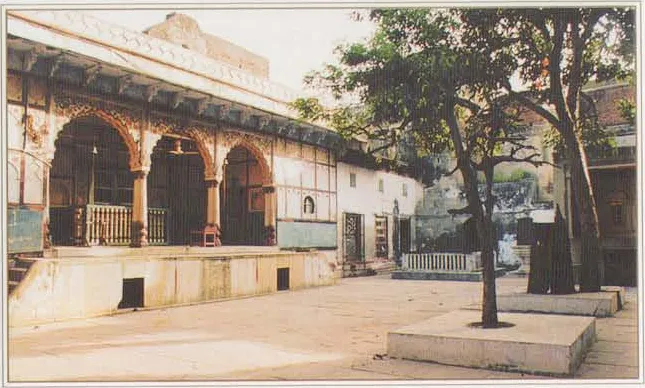
Śṛṅgāravaṭa (Vṛndāvana)
शृंगारवट (वृन्दावन)Śṛṅgāravaṭa, "the banyan of adornment", is a banyan with a temple on the bank of the Yamunā in Vṛndāvana, a little east of Imlītalā towards Keśī-ghāṭa and near the Rādhā- …
Rādhā-Kṛṣṇa, Gaura-Nitāi and Jagannātha Mandira (Śṛṅgāravaṭa)
राधा-कृष्ण, गौर-निताई और जगन्नाथ मन्दिर (शृंगारवट)Śṛṅgāra-ghāṭa
शृंगार-घाटŚṛṅgāra-ghāṭa is a bathing ghāṭa (steps down to the river) on the Yamunā in Vṛndāvana, a little east of Imlītalā-ghāṭa, with Govinda-ghāṭa near it to the north.
Ancient banyan tree (Śṛṅgāravaṭa)
प्राचीन वट वृक्ष (शृंगारवट)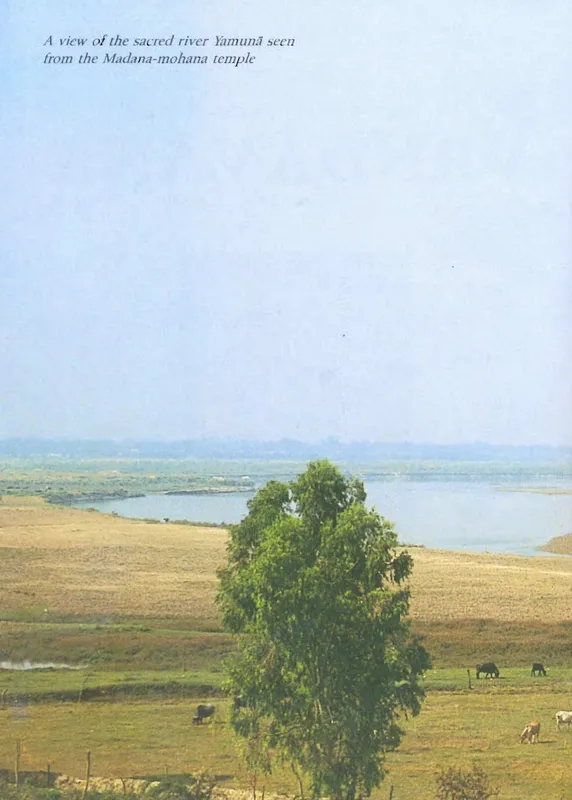
Yamunā
यमुनाThe Yamunā, also called the Kālindī, is the river that runs through Vraja-maṇḍala.
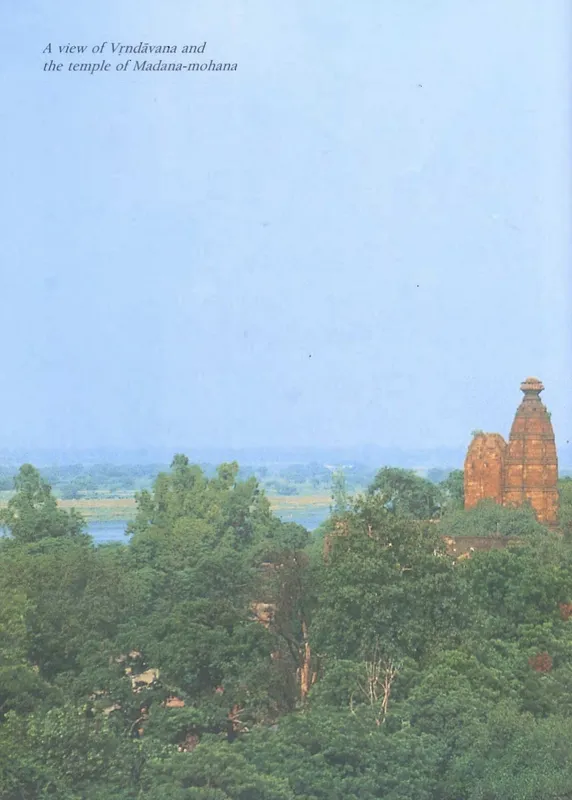
Vṛndāvana
वृन्दावनVṛndāvana is the forest on the bank of the Yamunā where Kṛṣṇa spent His childhood and youth, and the town of temples that stands in that forest today.
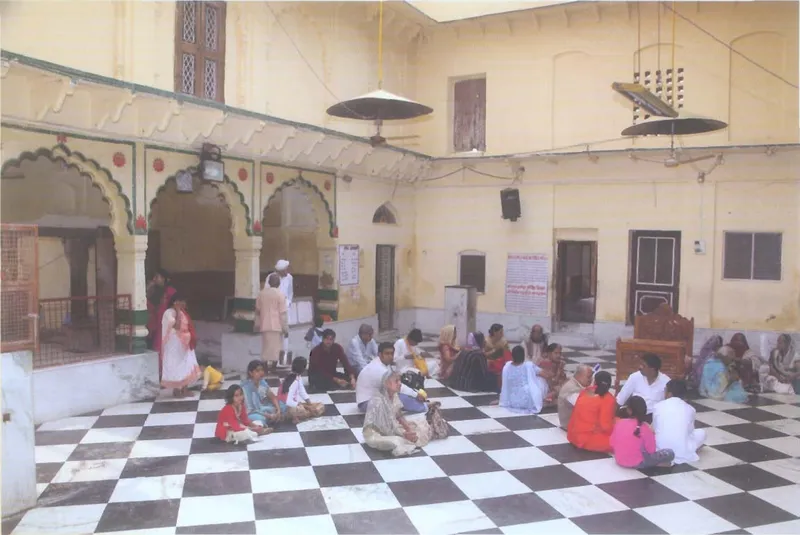
Rādhā-Dāmodara Mandira (Vṛndāvana)
राधा-दामोदर मन्दिर (वृन्दावन)The Rādhā-Dāmodara Mandira is one of the seven old temples of the Gauḍīya Vaiṣṇavas in Vṛndāvana, in the Sevā-kuñja quarter.
Imlītalā (Vṛndāvana)
इमलीतला (वृन्दावन)Imlītalā, "the foot of the tamarind tree", is a tamarind with a temple on the old bank of the Yamunā in Vṛndāvana, near Sevā-kuñja.
Keśī-ghāṭa
केशी-घाटKeśī-ghāṭa, also called Keśī-tīrtha, is a bathing place on the Yamunā in the north-west of Vṛndāvana, close to Cīra-ghāṭa.
Questions and answers
It is a banyan with a temple on the bank of the Yamunā in Vṛndāvana, near the Rādhā-Dāmodara temple. The Bhakti-ratnākara calls it the banyan of Kṛṣṇa's dressing pastimes with His friends. Some, it says, call it Nityānanda-vaṭa.[1 +6]
According to the Bhakti-ratnākara, Śrī Nityānanda Prabhu sat and played under this banyan on His pilgrimage in Vraja. He left from here for Navadvīpa when He came to know of Śrī Caitanya Mahāprabhu's pastimes there.[19, 20]
In 1920 the Vṛndāvana-kathā found it owned by descendants of Śrī Nityānanda Prabhu's family, who served by turns. A guidebook of 2010 says that devotees of the Nityānanda-vaṁśa still run it; this may have changed and is not certain.[5, 6, 8]
In 1976 he said that there is still a temple constructed by Jahangir. He said the village of Jahangir-pura across the Yamunā was given to the brāhmaṇas to maintain it. He named no temple; that he meant Śṛṅgāravaṭa is an inference.[31, 32]
Growse (1883), the Vṛndāvana-kathā (1920) and The Color Guide to Vṛndāvana (2000) name the gosvāmīs of Śṛṅgāravaṭa. They give no name or year, so this is not certain.[25–27]
According to Entwistle (1987), an early decree of Aurangzeb granted Jahangirpur and other villages to Gosvāmī Pūrṇānanda of Śṛṅgāravaṭa. Growse (1883) lists Jahangirpur in the temple's endowment. The decree's exact date and wording are not known.[9, 28]
In 1883 Growse recorded the Nandotsava, held at Śṛṅgāravaṭa through the night of Bhādon Badi 9 with music and dancing. The sources do not say whether it is still kept.[29]
Sources
- Śrīla Narahari Cakravartī, Bhakti-ratnākara, taraṅga 5, printed p. 318, 2nd ed., 1912
- Śrī Vraja-maṇḍala Parikramā (2007), PDF p. 311
- Śrī Vraja-maṇḍala Parikramā (2007), PDF p. 322
- Vṛndāvana, the Playground of God (2010), Bhakti Caitanya Svāmī, PDF p. 164
- Vṛndāvana, the Playground of God (2010), Bhakti Caitanya Svāmī, PDF p. 165
- Vṛndāvana, the Playground of God (2010), Bhakti Caitanya Svāmī, PDF p. 166
- The Color Guide to Vṛndāvana (2000), Written and Photographed by Rājaśekhara dāsa Brahmacārī, PDF p. 94
- Pulinbihārī Datta, ch. 16 (ṣoḍaśa pariccheda), section 3 'Śṛṅgāra-baṭa', printed p. 187, first paragraph
- A. W. Entwistle, §5.25 'The exodus of deities from Braj', printed p. 183 with n. 255, Egbert Forsten, Groningen, 1987
- Śrī Vraja-maṇḍala Parikramā (2007), PDF p. 310
- Śrī Vraja-maṇḍala Parikramā (2007), PDF p. 346
- Śrī Vraja-maṇḍala Parikramā (2007), PDF p. 298
- Śrī Vraja-maṇḍala Parikramā (2007), PDF p. 344
- Vṛndāvana, the Playground of God (2010), Bhakti Caitanya Svāmī, PDF p. 170
- Vṛndāvana-Dhāma Ki Jaya! (c. 1986), by Dhruva Mahārāja dāsa, PDF p. 100
- Śrīla Prabhupāda, Śrī Caitanya-caritāmṛta, Ādi-līlā 13.61, purport · vedabase.io
- Śrīla Nārāyaṇa Bhaṭṭa, Vraja-bhakti-vilāsa, Second chapter: the sixteen banyans (ṣoḍaśa-vaṭa) of the north and south banks of the Yamunā, introduced as from the Bhaviṣyottara; printed p. 36, paragraph 20; Hindi rendering on the same page, 1st ed., publ. Bābā Kṛṣṇadāsa, Kusuma-sarovara, Saṁvat 2008
- Pulinbihārī Datta, ch. 16 (ṣoḍaśa pariccheda), section 3 'Śṛṅgāra-baṭa', printed p. 186
- Śrīla Narahari Cakravartī, Bhakti-ratnākara, Fifth Wave (pañcama taraṅga), 1912 ed. p. 324, text lines 16-23 (from 'দেখিয়া সকল বন'; the running head is not counted), 2nd ed., 1912
- Śrīla Narahari Cakravartī, Bhakti-ratnākara, Fifth Wave (pañcama taraṅga), 1912 ed. p. 325, text lines 1-5 (the running head is not counted), 2nd ed., 1912
Show all 34 references
- Śrīla Narahari Cakravartī, Bhakti-ratnākara, Fifth Wave (pañcama taraṅga), 1912 ed. p. 324, text lines 16-23 (from 'দেখিয়া সকল বন'; the running head is not counted), 2nd ed., 1912
- Śrīla Prabhupāda, Śrī Caitanya-caritāmṛta, Ādi-līlā 17.12, purport · vedabase.io
- Śrī Vraja-maṇḍala Parikramā (2007), PDF p. 343
- Vṛndāvana-Dhāma Ki Jaya! (c. 1986), by Dhruva Mahārāja dāsa, PDF p. 68
- Mathurá (1883), F. S. Growse, B.C.S., M.A. Oxon., C.I.E. (as the title page gives him, p. 270
- Pulinbihārī Datta, ch. 23 (upasaṁhāra, 'conclusion'), list of Vṛndāvana's ghāṭas and their builders, nos. 19-24, printed p. 274
- The Color Guide to Vṛndāvana (2000), Written and Photographed by Rājaśekhara dāsa Brahmacārī, PDF p. 31
- Growse, Mathurá
- Growse
- Muttra gazetteer
- Śrīla Prabhupāda, Lecture on Śrīmad-Bhāgavatam 1.7.16, Vṛndāvana, 14 September 1976 · vedabase.io
- Śrīla Prabhupāda, Room Conversation About Māyāpur Construction, Hyderabad, 19 August 1976 · vedabase.io
- F. S. Growse, Mathurá: A District Memoir
- the undated parikramā notes Vṛndāvana, ¶181
Further sources
- Bhakti-ratnākara, Fifth Wave (Bengali, 1912), and the Vraja-bhakti-vilāsa: summarised, not translated. Śrī Caitanya-caritāmṛta with Śrīla Prabhupāda's purports (BBT); his lectures and conversations (vedabase.io).
- For dated history only, named and paraphrased: F. S. Growse, Mathurá: A District Memoir (1883); the Muttra district gazetteer (1911); Pulinbihārī Datta, Vṛndāvana-kathā (1920); A. W. Entwistle, Braj: Centre of Krishna Pilgrimage (1987).