Śrī Rādhā-vinoda, the Deity of Śrīla Lokanātha Gosvāmī
श्री राधा-विनोद, श्रील लोकनाथ गोस्वामी के श्री विग्रह
In short
Śrī Rādhā-vinoda (Radha Vinod) is the Deity of Śrīla Lokanātha Gosvāmī. According to the Bhakti-ratnākara, the Lord came to him in another form at the Kiśorī-kuṇḍa of Umrāo, near Chatravana, and gave him the Deity. He carried Rādhā-vinoda to Vṛndāvana in a cloth bag. According to the guidebooks, a representative form is worshipped in the Rādhā-Gokulānanda temple.[1–12]
On this page
At a glance
- Where the Deity came: the Kiśorī-kuṇḍa of Umrāo, beside Chatravana, according to the Bhakti-ratnākara.[1–6, 13]
- How He came: according to the same book, the Lord knew Śrīla Lokanātha Gosvāmī's longing. He came in another form, gave him the Deity named Rādhā-vinoda and vanished.[14]
- The cloth bag: the book tells that Śrīla Lokanātha Gosvāmī made a cloth bag for the Deity, a temple that he carried on his chest.[3, 7–9]
- In Vṛndāvana: according to the Bhakti-ratnākara, Śrīla Jīva Gosvāmī found him sitting alone before Rādhā-vinoda, and Śrī Jāhnavā-devī saw the Deity among the six Deities of Vṛndāvana.[14–16]
- The temple: Śrīla Prabhupāda writes that Śrīla Lokanātha Gosvāmī built the temple of Gokulānanda, one of the seven old temples of Vṛndāvana.[17–25]
- Later: the guidebooks and the historians say that the original Rādhā-vinoda is in Jaipur and a representative form is worshipped in Vṛndāvana.[5 +7]
How did Rādhā-vinoda appear at Umrāo?
The Bhakti-ratnākara of Śrīla Narahari Cakravartī Ṭhākura tells it in its First Wave (a chapter of the book). Wandering in Vraja, Śrīla Lokanātha Gosvāmī came to Umrāo, a village beside Chatravana where the Kiśorī-kuṇḍa (a sacred pond) lies. He stayed there alone for some days, wishing to serve a Deity (a sacred form of the Lord worshipped in a temple).[1–6, 13] The Lord knew his longing. He came in another form carrying a Deity, handed Him over, said that His name was Śrī Rādhā-vinoda, and vanished.[2, 14]
Śrīla Lokanātha Gosvāmī wondered who had given Him. Then, the book continues, Rādhā-vinoda smiled and spoke. He said that He lived in the forest of this village and the Kiśorī-kuṇḍa was His place. Seeing the devotee's longing, He had come by Himself, since no one would bring Him. And He asked to be given something to eat (summarised here, not translated).[1–6] The Bhakti-ratnākara does not say which Lord came in another form. The later books name Him differently, as set out below.[14]
In its Fifth Wave the book returns to the place. Śrīla Rāghava Paṇḍita shows the kuṇḍa to Śrīla Śrīnivāsa Ācārya and Śrīla Narottama dāsa Ṭhākura. He calls it very dear to the daughter of Vṛṣabhānu, Śrīmatī Rādhārāṇī, and says that here Śrī Rādhā-vinoda showed His mercy to Śrīla Lokanātha Gosvāmī.[31–33]
How did Śrīla Lokanātha Gosvāmī serve and carry the Deity?
The Bhakti-ratnākara describes his service at the kuṇḍa in simple, everyday detail. He cooked for Rādhā-vinoda and fed Him, made Him a bed of flowers, fanned Him with leaves and massaged His feet.[3, 7–9] He made a cloth bag that served as the Deity's temple and always carried it on his chest, like a necklace. The villagers wanted to build him a hut, but he would live only at the foot of a tree.[3, 7–9]
The Fifth Wave adds what Śrīla Rāghava Paṇḍita told the pilgrims at the kuṇḍa. Śrīla Lokanātha Gosvāmī offered Rādhā-vinoda whatever fruit, roots, greens or rice he received. In the rains and the cold he lived under the tree there with an old quilt and a worn cloth. In heavy rain he kept the Deity in the hollow of the tree, while he himself got soaked.[31–34]
At other times, the book says, he kept the Deity in the old bag on his chest. Remembering the pastimes of Śrī Gauracandra (Śrī Caitanya), he wept at that place. As Śrīla Rāghava Paṇḍita told this, he himself could not hold back his feelings, and Śrīla Śrīnivāsa Ācārya and Śrīla Narottama dāsa Ṭhākura rolled in the dust in tears.[32–34]
After some days at the kuṇḍa, according to the First Wave, Śrīla Lokanātha Gosvāmī came to Vṛndāvana. There all the Gosvāmīs looked after him with care.[3 +3] How he had come to Vraja in the first place, sent by Śrī Caitanya Mahāprabhu, is told in a separate article.[14–16] Read more: How Śrīla Lokanātha Gosvāmī came to Vraja and stayed there →
Rādhā-vinoda in Vṛndāvana
The Bhakti-ratnākara shows Śrīla Lokanātha Gosvāmī living in Vṛndāvana with his Deity. Śrīla Śrīnivāsa Ācārya, Śrīla Narottama dāsa Ṭhākura and Śrīla Śyāmānanda Paṇḍita were about to leave for Gauḍa (Bengal) with the Gosvāmīs' books. First Śrīla Jīva Gosvāmī took them to Śrīla Lokanātha Gosvāmī's place. They found him sitting alone in a quiet spot, his eyes fixed on the moon-like face of Śrī Rādhā-vinoda.[14–16]
Later Śrī Jāhnavā-devī stayed in Vṛndāvana after the Kheturi festival. Śrīla Gopāla Bhaṭṭa Gosvāmī, Śrīla Lokanātha Gosvāmī and others went with her for darśana (the devoted seeing of the Deity). They saw Śrī Govinda, Gopīnātha, Madana-mohana, Śrī Rādhā-vinoda, Śrī Rādhā-Ramaṇa and Rādhā-Dāmodara.[14–16] In that account Rādhā-vinoda is one of the six Deities of Vṛndāvana that a pilgrim visits. The book does not say where in Vṛndāvana the Deity stood.[14, 16]
Later books add a place. The Bengali Vṛndāvana-kathā (1920) says that Śrīla Rūpa Gosvāmī, Śrīla Sanātana Gosvāmī, Śrīla Raghunātha Bhaṭṭa Gosvāmī and the other Gosvāmīs asked Śrīla Lokanātha Gosvāmī to bring Rādhā-vinoda. He did so and installed Him in a temple near the compound of Śrī Rādhā-Ramaṇa. Śrī Vraja-maṇḍala Parikramā (2007) says the same.[11 +2] The kīrtana (devotional song) Jaya Rādhā-Mādhava greets Rādhā-vinoda as the treasure of Śrīla Lokanātha Gosvāmī's life, and Rādhā-Gokulānanda as the treasure of Śrīla Viśvanātha Cakravartī Ṭhākura's.[37]
Who built the Rādhā-Gokulānanda temple?
Śrīla Prabhupāda names Śrīla Lokanātha Gosvāmī as the builder in four purports (his explanations of verses), calling it the temple of Gokulānanda. In a fifth he says that Śrīla Lokanātha Gosvāmī built the temple of Rādhā-vinoda.[17–21] One Caitanya-caritāmṛta verse names Śrīla Lokanātha Gosvāmī among Śrīla Rūpa Gosvāmī's companions at Mathurā. In his purport to it, Śrīla Prabhupāda writes:
Names this place“Following the orders of Śrī Caitanya Mahāprabhu, Śrī Lokanātha went to Vṛndāvana to live. He established a temple named Gokulānanda. Śrīla Narottama dāsa Ṭhākura selected Lokanātha dāsa Gosvāmī to be his spiritual master, and Narottama dāsa Ṭhākura was his only disciple.”
Śrīla Prabhupāda, Śrī Caitanya-caritāmṛta, Madhya-līlā 18.49, purport · vedabase.io
He counts the temple among the seven old temples of Vṛndāvana, the authorised institutions of the Gauḍīya Vaiṣṇavas.[17 +5] In 1968 he was planning a new community in America. He wanted seven temples there as a model of Vṛndāvana, named after its seven main temples, Gokulānanda among them.[24]
The guidebooks give the temple's main Deity as Gokulānanda, a small form of Kṛṣṇa. The guidebooks link Him with Śrīla Viśvanātha Cakravartī Ṭhākura: installed by him according to two guidebooks, worshipped by him according to three others.[38–46] Śrīla Viśvanātha Cakravartī Ṭhākura's Stavāmṛta-laharī contains an eight-verse hymn to Gokulānanda Govinda, though the hymn does not say which Gokulānanda it addresses.[46] His life at Rādhā-kuṇḍa is told in another article.[38–41] Read more: Śrīla Viśvanātha Cakravartī Ṭhākura at Rādhā-kuṇḍa →
What the Bengali books of 1905 to 1920 saw
The Bengali Bhaktamāla of Kṛṣṇadāsa Bābājī (1905) surveys the temples of Vṛndāvana. It names Rādhā-Gokulānanda and then Śrī Rādhā-vinoda, the service of Śrīla Lokanātha Gosvāmī.[47] The Vṛndāvana-kathā (1920) says that Rādhā-vinoda had gone to Jaipur and that His representative stood in a temple beside Rādhā-Ramaṇa's. With Him stood the Gokulānanda whom Śrīla Viśvanātha Cakravartī Ṭhākura had installed at Rādhā-kuṇḍa. The Govardhana-śilā (a sacred stone from Govardhana Hill) that Śrī Caitanya gave to Śrīla Raghunātha dāsa Gosvāmī was there too.[27, 48]
Dated reports from 1905 to 1987 place that Govardhana-śilā in this temple.[27 +5] An editor's note in the Prema-vilāsa of about 1913 says that Śrīla Viśvanātha Cakravartī Ṭhākura probably lived at this temple, wrote his commentaries there and left property for its Deities. It adds that by then the temple was in a pitiable state. The note gives no source.[51, 52]
The altar and the samādhi garden
Vṛndāvana, the Playground of God (2010) describes the altar. On the upper level is a representative form of the Deity of Śrī Caitanya worshipped by Śrīla Narottama dāsa Ṭhākura. Beside it are the representative Rādhā-vinoda of Śrīla Lokanātha Gosvāmī and Rādhā-Vijaya-govinda of Śrīla Baladeva Vidyābhūṣaṇa. On the lower level are Gokulānanda of Śrīla Viśvanātha Cakravartī Ṭhākura and the Govardhana-śilā.[38 +3]
The temple stands about two hundred metres from the Rādhā-Ramaṇa temple, according to the same book.[11 +4]
Beside the temple lies a samādhi garden (a garden of saints' tombs). Its main tomb is Śrīla Lokanātha Gosvāmī's samādhi; the Bengali books of 1905 and 1920 already name his tomb at this temple.[56, 57]
Where is Rādhā-vinoda now?
The Vṛndāvana-kathā (1920) dates the departure with its own "probably". It says that probably about 1670 Aurangzeb's men were damaging temples and images. Then all the Deities of the Gauḍīya line, Rādhā-vinoda among them, were taken from Vṛndāvana to Jaipur under the shelter of Rāmasiṁha.[42 +2] The historian A. W. Entwistle (1987) says that the Gauḍīya priests of Rādhā-vinoda and three other temples sought the protection of the rulers of Amber. He says the Deities were first taken to Kāmā, and he gives no year for Rādhā-vinoda.[28–30]
Both historians, Entwistle and Prabhudayāl Mītal (1966), say that the original Deities of this temple are in Jaipur. Mītal adds that their representative forms are worshipped here.[28–30] The guidebooks say the same of Rādhā-vinoda: the original is in Jaipur, and a representative, a pratibhū, is in the Rādhā-Gokulānanda temple.[5 +5]
A temple named after Rādhā-vinoda also stands at Rādhā-kuṇḍa, the Rādhā-vinoda Mandira. The guidebooks count it among the temples that hold representative forms of the Gosvāmīs' Deities.[5 +4] Read more: The pratibhū Deities of Rādhā-kuṇḍa →
Where the sources differ
How the Deity came to Śrīla Lokanātha Gosvāmī is told differently. The Bhakti-ratnākara says the Lord came in another form. One guidebook says Śrī Caitanya came as a village boy, notes call the giver Kṛṣṇa Himself, and another guidebook says the Deity appeared from the kuṇḍa.[4 +5]
Accounts differ How the Deity Rādhā-vinoda came to Śrīla Lokanātha Gosvāmī at Umrāo (Kiśorī-kuṇḍa).
- Bhakti-ratnākara, 1st waveThe Lord (prabhu), knowing his longing, came in another form carrying the Deity, named Him Śrī Rādhā-vinoda, handed Him over and vanished; the Deity said He lived there and had come by Himself.
- Vṛndāvana, the Playground of God (2010) p. 87, citing the Bhakti-ratnākaraLord Caitanya appeared before him disguised as a village boy carrying a Deity of Kṛṣṇa, put the Deity in his hands and vanished; Lokanātha named the Deity Rādhā-Vinoda.
- the undated parikramā notes Khadiravana'Krishna Himself appeared and gave Lokanatha a Deity of Radha-Vinoda'; 'Krishna Himself appeared before him in the form of a Deity … "I have come Myself!"'
- Śrī Vraja-maṇḍala Parikramā (2007) pp. 639, 431Lokanātha 'found the deity of Śrī Rādhā-Vinoda in Kiśorī-kuṇḍa'; the Deities 'appeared from this kuṇḍa'.
The sources also differ on who established the temple. Śrīla Prabhupāda and most guidebooks name Śrīla Lokanātha Gosvāmī, while one guidebook of 2010 names Śrīla Viśvanātha Cakravartī Ṭhākura.[25 +5]
Accounts differ Who established the Rādhā-Gokulānanda temple of Vṛndāvana: Śrīla Lokanātha Gosvāmī or Śrīla Viśvanātha Cakravartī Ṭhākura?
- Śrīla Prabhupāda, CC Ādi 1.19, 7.164, 12.82 and Madhya 18.49 purportsŚrīla Lokanātha Gosvāmī established / constructed the Gokulānanda temple; Viśvanātha is not mentioned.
- Śrīla Prabhupāda, CC Ādi 12.88 purportLokanātha (Bhaṭṭa) 'constructed the temple of Rādhāvinoda'.
- The Color Guide to Vṛndāvana (2000) entry 49A and table; the undated parikramā notes Vṛndāvana (same wording); the undated parikramā notes Vṛndāvana; The Colour Guide to Rādhā-kuṇḍa (1999) pp. 135, 165Founded / established by Śrīla Lokanātha Gosvāmī (The Color Guide to Vṛndāvana (2000), the undated parikramā notes Vṛndāvana: at the spot where he performed bhajana). The Colour Guide to Rādhā-kuṇḍa (1999)'s table of pratibhū Deities (p. 59) credits only the original Deity Gokulānanda to Viśvanātha; its text says Lokanātha established the temple.
- Vṛndāvana, the Playground of God (2010) p. 12'Rādhā-Gokulānanda temple, established by Viśvanātha Cakravartī Ṭhākura' (list of the seven main temples).
Whether the Deities now in Vṛndāvana are the originals or representative forms is answered differently, especially for Gokulānanda.[5 +7]
Accounts differ Are the Deities now worshipped in the Vṛndāvana temple the originals or pratibhū (representative) forms?
- Śrī Vraja-maṇḍala Parikramā (2007) pp. 639-640The original Rādhā-Vinoda and 'the original deity of Śrī Gokulānanda' are now in Jaipura; the pratibhū-vigraha is worshipped in the Vṛndāvana temple.
- The Colour Guide to Rādhā-kuṇḍa (1999) p. 165'The original Deity of Lord Gokulānanda can still be seen at the Rādhā-Gokulānanda Maṇḍira in Vṛndāvana' (original Rādhā-Vinoda in Jaipur, p. 135).
- Vṛndāvana, the Playground of God (2010) pp. 12, 87'Rādhā-Ramaṇa and Rādhā-Gokulānanda remained in Vṛndāvana the entire time as They are very small Deities' (p. 12); but Rādhā-Vinoda 'are now in Jaipur', with Their pratibhū forms in Vṛndāvana (p. 87).
- The Color Guide to Vṛndāvana (2000) p. 101; Vṛndāvana-Dhāma Ki Jaya! (c. 1986)Gokulānanda (with Śrīla Raghunātha's śilā) 'can be seen in the Rādhā Gokulānanda temple'; neither says pratibhū.
Timeline
- 1670
It says that probably about 1670 Aurangzeb's men were damaging temples and images.
Read in the article: Where is Rādhā-vinoda now? → - 1905
Dated reports from 1905 to 1987 place that Govardhana-śilā in this temple.
Read in the article: Who built the Rādhā-Gokulānanda temple? → - 1913
An editor's note in the Prema-vilāsa of about 1913 says that Śrīla Viśvanātha Cakravartī Ṭhākura probably lived at this temple, wrote his commentaries there and left property for its Deities.
Read in the article: Who built the Rādhā-Gokulānanda temple? → - 1968
In 1968 he was planning a new community in America.
Read in the article: Who built the Rādhā-Gokulānanda temple? →
Places in this article
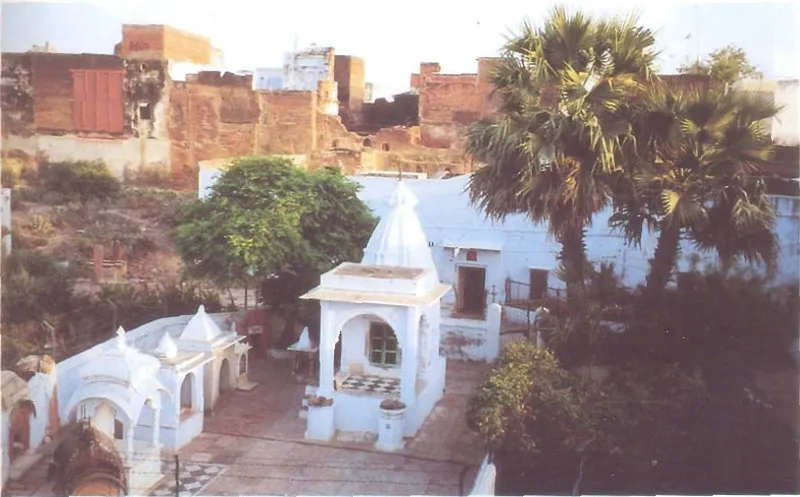
Rādhā-Gokulānanda Mandira (Vṛndāvana)
राधा-गोकुलानन्द मन्दिर (वृन्दावन)The Rādhā-Gokulānanda Mandira is a small temple in Vṛndāvana, about 200 metres from the Rādhā-Ramaṇa temple on a street that leads towards Keśī-ghāṭa.
Umrāo
उमरावUmrāo is a village beside Chatravana.
Kiśorī-kuṇḍa (Umrāo)
किशोरी-कुण्ड (उमराव)The Kiśorī-kuṇḍa of Umrāo, a village beside Chatravana, is honoured as the place where Śrīla Lokanātha Gosvāmī lived in great renunciation and received his Deity, Śrī Rād …
Chatravana
छत्रवनChatravana is today the town of Chātā on the Mathurā–Delhi road, about twenty miles north-west of Mathurā, according to the guidebook Śrī Vraja-maṇḍala Parikramā (2007).
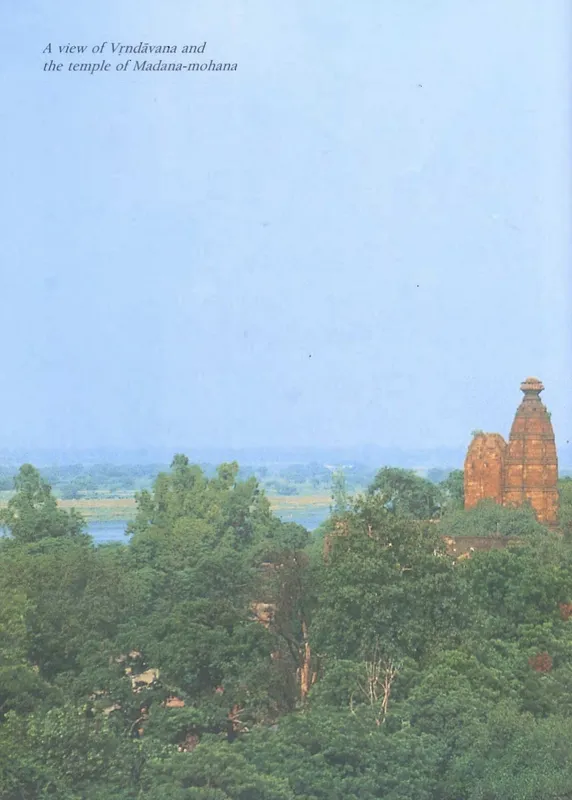
Vṛndāvana
वृन्दावनVṛndāvana is the forest on the bank of the Yamunā where Kṛṣṇa spent His childhood and youth, and the town of temples that stands in that forest today.
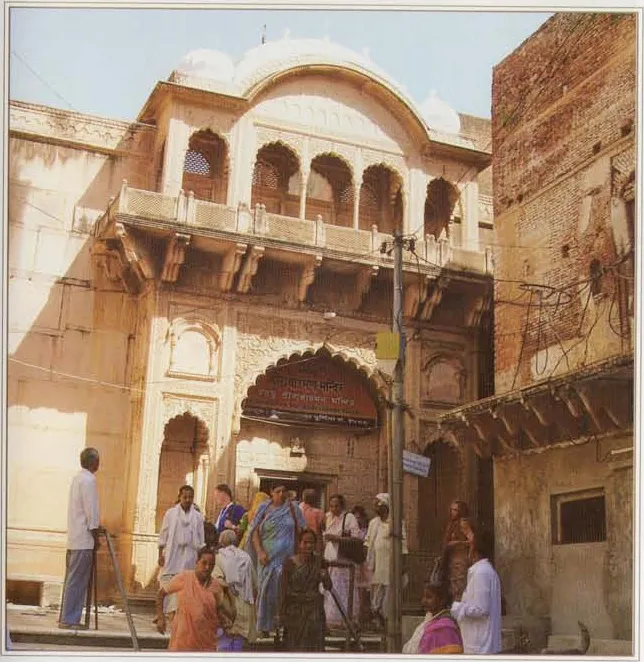
Rādhā-Ramaṇa Mandira (Vṛndāvana)
राधारमण मन्दिर (वृन्दावन)The Rādhā-Ramaṇa Mandira in Vṛndāvana is the temple of Śrī Rādhā-Ramaṇa, the Deity of Śrī Gopāla Bhaṭṭa Gosvāmī, and one of the seven principal Gauḍīya Vaiṣṇava temples o …
Lokanātha Gosvāmī Samādhi (Rādhā-Gokulānanda)
लोकनाथ गोस्वामी समाधि (राधा-गोकुलानन्द)The tomb of Śrīla Lokanātha Gosvāmī is the main samādhi in the samādhi garden beside the Rādhā-Gokulānanda Mandira in Vṛndāvana.
Samādhi Garden (Rādhā-Gokulānanda)
समाधि उद्यान (राधा-गोकुलानन्द)The samādhi garden is a walled courtyard beside the Rādhā-Gokulānanda Mandira in Vṛndāvana, with the tombs of Śrīla Lokanātha Gosvāmī, Śrīla Narottama dāsa Ṭhākura, Śrīla …
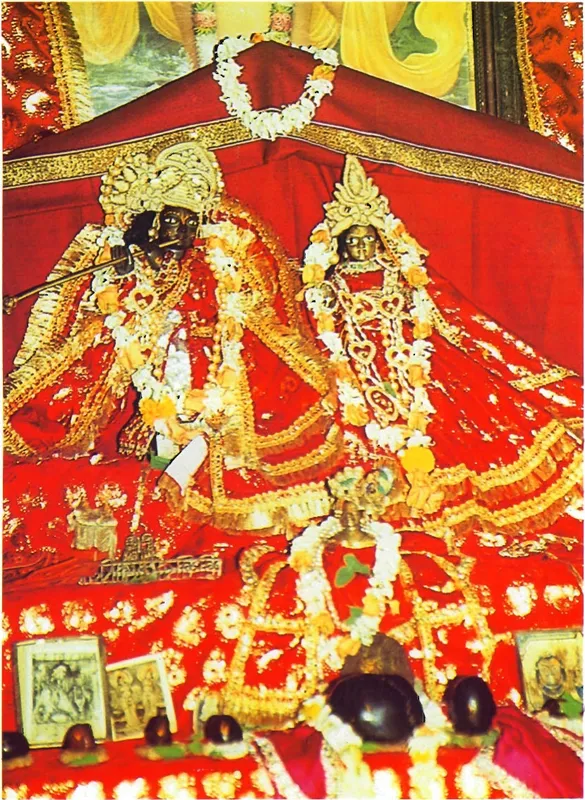
Rādhā-vinoda Mandira (Rādhā-kuṇḍa)
राधा-विनोद मन्दिर (राधा-कुण्ड)The Rādhā-vinoda Mandira is a small roadside temple in the village of Rādhā-kuṇḍa.
Questions and answers
According to the Bhakti-ratnākara, Śrīla Lokanātha Gosvāmī was staying by the Kiśorī-kuṇḍa of Umrāo, longing to serve a Deity. The Lord came in another form, gave him the Deity named Śrī Rādhā-vinoda and vanished. The Deity then said He had come by Himself.[14]
In a cloth bag he made for Him, which served as His temple and which he wore on his chest. In heavy rain, the Bhakti-ratnākara says, he kept the Deity in the hollow of a tree.[3 +5]
The guidebooks and the historians Entwistle and Mītal say the original Deity is in Jaipur. A representative form is worshipped in the Rādhā-Gokulānanda temple of Vṛndāvana.[5 +7]
Śrīla Prabhupāda writes that Śrīla Lokanātha Gosvāmī built the Gokulānanda temple. One guidebook of 2010 credits Śrīla Viśvanātha Cakravartī Ṭhākura with the temple instead.[17 +10]
It is one of the seven old temples of Vṛndāvana, near the Rādhā-Ramaṇa temple. According to the guidebooks, its altar holds Gokulānanda, linked with Śrīla Viśvanātha Cakravartī Ṭhākura, a representative Rādhā-vinoda and other Deities.[17 +9]
For Rādhā-vinoda the sources agree that the original is in Jaipur. For Gokulānanda they differ. Some guidebooks say the original is in Vṛndāvana; others, and the historian Mītal, say that He too is in Jaipur.[5 +7]
Sources
- Śrīla Narahari Cakravartī, Bhakti-ratnākara, taraṅga 1, printed p. 22, 2nd ed., 1912
- Śrīla Narahari Cakravartī, Bhakti-ratnākara, First Wave (prathama taraṅga), printed p. 23, vv.326-333 in the Grantha Mandira numbering, 2nd ed., 1912
- Śrīla Narahari Cakravartī, Bhakti-ratnākara, First Wave (prathama taraṅga), printed p. 23, vv.334-341 in the Grantha Mandira numbering, 2nd ed., 1912
- the undated parikramā notes Khadiravana, ¶42
- Vṛndāvana, the Playground of God (2010), Bhakti Caitanya Svāmī, PDF p. 87
- Vṛndāvana-Dhāma Ki Jaya! (c. 1986), by Dhruva Mahārāja dāsa, PDF p. 55
- the undated parikramā notes Khadiravana, ¶44
- the undated parikramā notes Khadiravana, ¶45
- the undated parikramā notes Khadiravana, ¶46
- Śrī Vraja-maṇḍala Parikramā (2007), PDF p. 228
- Śrī Vraja-maṇḍala Parikramā (2007), PDF p. 332
- the undated parikramā notes Khadiravana, ¶23
- Śrī Vraja-maṇḍala Parikramā (2007), PDF p. 227
- Śrīla Narahari Cakravartī, Bhakti-ratnākara, taraṅga 1, printed p. 23, 2nd ed., 1912
- Śrīla Narahari Cakravartī, Bhakti-ratnākara, taraṅga 6, printed p. 480, 2nd ed., 1912
- Śrīla Narahari Cakravartī, Bhakti-ratnākara, taraṅga 11, printed p. 666, 2nd ed., 1912
- Śrīla Prabhupāda, Śrī Caitanya-caritāmṛta, Ādi-līlā 1.19, purport · vedabase.io
- Śrīla Prabhupāda, Śrī Caitanya-caritāmṛta, Ādi-līlā 7.164, purport · vedabase.io
- Śrīla Prabhupāda, Śrī Caitanya-caritāmṛta, Ādi-līlā 12.82, purport · vedabase.io
- Śrīla Prabhupāda, Śrī Caitanya-caritāmṛta, Madhya-līlā 18.49, purport · vedabase.io
Show all 59 references
- Śrīla Prabhupāda, Śrī Caitanya-caritāmṛta, Ādi-līlā 12.88, purport · vedabase.io
- Śrīla Prabhupāda, Śrī Caitanya-caritāmṛta, Ādi-līlā 10.90, purport · vedabase.io
- Śrīla Prabhupāda, Room conversation with Professor Olivier Lacombe, Paris, 14 June 1974 · vedabase.io
- Śrīla Prabhupāda, Letter to Kīrtanānanda and Hayagrīva, letter 68-08-23, 23 August 1968 · vedabase.io
- The Color Guide to Vṛndāvana (2000), Written and Photographed by Rājaśekhara dāsa Brahmacārī, PDF p. 25
- The Colour Guide to Rādhā-kuṇḍa (1999), Rājaśekhara dāsa Brahmacārī, PDF p. 139
- Vṛndāvana-kathā, chapter 7 (Rādhāvinoda and Gokulānanda), printed p. 101
- A. W. Entwistle, Vrindaban temples, entry 32 'Radhavinod and Gokulanand' (citing VDA 32), printed p. 413, Egbert Forsten, Groningen, 1987
- A. W. Entwistle, ch. 5 §25 'The exodus of deities from Braj', printed p. 185, Egbert Forsten, Groningen, 1987
- Prabhudayāl Mītal, part 1 ('ब्रज-संस्कृति की भूमिका'), 'Braj-yātrā', Vṛndāvana: 'Śrī Rādhāvinoda-jī tathā Śrī Gokulānanda-jī', printed p. 137
- Śrīla Narahari Cakravartī, Bhakti-ratnākara, Fifth Wave (pañcama taraṅga), printed pp. 247-248, vv.1259-1264 in the Grantha Mandira numbering, 2nd ed., 1912
- the undated parikramā notes Khadiravana, ¶58
- Śrīla Narahari Cakravartī, Bhakti-ratnākara, Fifth Wave (pañcama taraṅga), printed p. 248, vv.1265-1268 in the Grantha Mandira numbering, 2nd ed., 1912
- the undated parikramā notes Khadiravana, ¶59
- Vṛndāvana-kathā, chapter 7 ('রাধাবিনোদ ও গোকুলানন্দ । রঘুনাথ ভট্ট ও রঘুনাথ দাস গোস্বামী'), printed p. 97
- Śrī Vraja-maṇḍala Parikramā (2007), PDF p. 333
- Jaya Rādhā-Mādhava Rādhā-Mādhava Rādhe (Jaya Rādhā-Kṛṣṇa Gīti) (not credited in the song book) · song book
- Vṛndāvana, the Playground of God (2010), Bhakti Caitanya Svāmī, PDF p. 82
- The Colour Guide to Rādhā-kuṇḍa (1999), Rājaśekhara dāsa Brahmacārī, PDF p. 113
- The Color Guide to Vṛndāvana (2000), Written and Photographed by Rājaśekhara dāsa Brahmacārī, PDF p. 109
- Vṛndāvana-Dhāma Ki Jaya! (c. 1986), by Dhruva Mahārāja dāsa, PDF p. 69
- Vṛndāvana, the Playground of God (2010), Bhakti Caitanya Svāmī, PDF p. 12
- The Colour Guide to Rādhā-kuṇḍa (1999), Rājaśekhara dāsa Brahmacārī, PDF p. 169
- The Colour Guide to Rādhā-kuṇḍa (1999), Rājaśekhara dāsa Brahmacārī, PDF p. 63
- The Color Guide to Vṛndāvana (2000), Written and Photographed by Rājaśekhara dāsa Brahmacārī, PDF p. 114
- Śrīla Viśvanātha Cakravartī Ṭhākura, Stavāmṛta-laharī no. 14 (as numbered on the page), Śrī Gokulānanda-govindadevāṣṭaka, verse 1 and colophon
- Śrī Śrī Bhaktamāla grantha, 26th mālā, survey of the temples within the village ('অথ দেবালয় কহি গ্রামের ভিতরে'), printed p. 349, right-hand column
- Vṛndāvana-kathā, chapter 7, section on Raghunātha dāsa Gosvāmī, printed p. 111
- A. W. Entwistle, ch. 8 §66.32 'Radhavinod and Gokulanand', printed p. 413, Egbert Forsten, Groningen, 1987
- Śrīla Narahari Cakravartī, Narottama-vilāsa, appendix ('গ্রন্থকর্ত্তার পরিচয়'), printed p. 128, foot of the left column and top of the right column, 1st ed., Baṅgābda 1314
- Prema-vilāsa, twentieth vilāsa, footnote (১), printed p. 206, right-hand column, Kolkata, 1913
- Prema-vilāsa, twentieth vilāsa, footnote continued, printed p. 207, left-hand column, Kolkata, 1913
- the undated parikramā notes Vṛndāvana, ¶205
- The Color Guide to Vṛndāvana (2000), Written and Photographed by Rājaśekhara dāsa Brahmacārī, PDF p. 166
- Vṛndāvana-Dhāma Ki Jaya! (c. 1986), by Dhruva Mahārāja dāsa, PDF p. 100
- Śrī Śrī Bhaktamāla grantha, 26th mālā, survey of the temples, printed p. 350, left-hand column, first lines
- Vṛndāvana-kathā, chapter 7 ('রাধাবিনোদ ও গোকুলানন্দ'), printed p. 104
- Vṛndāvana-kathā, chapter 19 (ūnaviṁśa pariccheda), printed p. 218
- the undated parikramā notes Vṛndāvana, ¶17
Further sources
- Bhakti-ratnākara of Śrīla Narahari Cakravartī Ṭhākura (Bengali, 1912 edition), First, Fifth, Sixth and Eleventh Waves, summarised, not translated.
- Śrīla Prabhupāda's purports to Caitanya-caritāmṛta Ādi 1.19, 7.164, 12.82, 12.88 and Madhya 18.49 (BBT).
- The historians A. W. Entwistle (1987) and Prabhudayāl Mītal (1966), named for dated history only.