The swing pastimes of Rādhā and Kṛṣṇa
झूलन यात्रा: श्री राधा-कृष्ण की झूलन लीला
In short
Jhulan Yātrā, the swing festival, remembers the swing pastimes of Rādhā and Kṛṣṇa. Śrīmad-Bhāgavatam tells only that Kṛṣṇa and the cowherd boys rode in swings. The Padma Purāṇa, the Garga-saṁhitā and the Gosvāmīs (Śrī Caitanya's leading followers) describe the Divine Couple swung by Their friends. Śrīla Prabhupāda names the Jhulana-yātrā among the festivals devotees keep.[1–8]
On this page
At a glance
- Scripture: Śrīmad-Bhāgavatam 10.18.15 lists riding in swings among the games of Kṛṣṇa, Balarāma and the cowherd boys.[1–3]
- The season: from the third day of the bright half of Śrāvaṇa (July–August), according to Śrīla Viśvanātha Cakravartī Ṭhākura and Śrīla Baladeva Vidyābhūṣaṇa.[9]
- The Purāṇas (old scriptures): the Padma Purāṇa tells that Rādhā and Kṛṣṇa sometimes sit together on a swing and are swung by Their friends.[4]
- The Gosvāmīs: Śrīla Rūpa Gosvāmī wrote songs for the swing festival, and Śrīla Raghunātha dāsa Gosvāmī praises a place where the sakhīs, Śrī Rādhā's girl friends, swing the Couple in spring.[5–7]
- The festivals: Śrīla Prabhupāda names the Jhulana-yātrā and the Dola-yātrā of March.[8]
- The places: Jhūlanavana in Vṛndāvana, Cakra-tīrtha at Govardhana, the swings of Rādhā-kuṇḍa, Varṣāṇā and Saṅket.[5 +10]
Does the Bhāgavatam tell of swinging?
The Bhāgavatam speaks of swings once, in its list of the games that Kṛṣṇa, Balarāma and the cowherd boys played in the forest of Vṛndāvana.[1–3]
kvacic ca dardura-plāvair vividhair upahāsakaiḥ / kadācit syandolikayā karhicin nṛpa-ceṣṭayā
They would sometimes jump around like frogs, sometimes play various jokes, sometimes ride in swings and sometimes imitate monarchs.
Translation: Śrīla Prabhupāda's disciples (BBT)It closes the list by saying that the brothers played such well-known games among the rivers, hills, valleys, bushes, trees and lakes of Vṛndāvana, without naming any place.[2] Śrīla Prabhupāda renders the verse in his Kṛṣṇa book:[1–3]
General teaching (does not name the place)“They joked with one another by imitating croaking frogs, and they enjoyed swinging underneath the trees. Sometimes they would play amongst themselves like a king and his subjects.”
Śrīla Prabhupāda, Kṛṣṇa, the Supreme Personality of Godhead (Kṛṣṇa book), Chapter 18, 'Killing the Demon Pralambāsura' · vedabase.io
In the same chapter he lists the other games of that summer in the forest. They are dancing, singing, wrestling, hide-and-seek, catching ball with bael and āmalaka fruits, and blindman's buff. The boys played them among the rivers, lakes and gardens of Vṛndāvana.[19]
The commentators, the ācāryas who explained the Bhāgavatam verse by verse, give the swinging a season (summarised here, not translated). Śrīla Viśvanātha Cakravartī Ṭhākura and Śrīla Baladeva Vidyābhūṣaṇa explain it as swinging on a swing from the third day of the bright half of Śrāvaṇa onward. Vaṁśīdhara gives the same date. None of them names a place or a tree.[9] The Tenth Canto tells no swing pastime of Kṛṣṇa with the gopīs, the cowherd girls of Vraja. Only Śrīla Viśvanātha Cakravartī Ṭhākura, in a comment on Uddhava's visit, counts swinging among Kṛṣṇa's pastimes with the gopīs. These, he says, took place by His internal potency, unseen by others.[1–3, 20]
How do the Purāṇas and the Gosvāmīs describe the swing pastimes?
The Padma Purāṇa gives an account of Rādhā and Kṛṣṇa's daily pastimes in Vṛndāvana, told by Vṛndā-devī, the goddess of Vraja's forests, to Nārada. The two meet in the forest and play there all day, it says, and sometimes They sit together on a swing and Their friends swing Them. It names no forest or spot (summarised here, not translated).[4] No other Purāṇa passage is known to tell of Rādhā and Kṛṣṇa swung together by Their companions.[4]
The Garga-saṁhitā tells of a swing festival in the month of Caitra, March–April (summarised here, not translated). In a quiet spot of the Vṛndāvana forest near the Yamunā, Kṛṣṇa held the festival with a group of gopīs on a kadamba tree (a flowering tree of Vraja). Śrī Rādhā was at His side.[21–23]
The Gosvāmīs sing of it in their prayers (both summarised here, not translated). Śrīla Rūpa Gosvāmī wrote two songs in his Gītāvalī for the swing festival; one is headed "dolotsava". In them a friend asks Śrī Rādhā to see Mādhava (Kṛṣṇa) swaying on a jewelled swing moved by His friends, while the gopīs clap their hands.[5–7] Śrīla Raghunātha dāsa Gosvāmī, in his Vraja-vilāsa-stava, praises the place called Govinda-sthala. There every spring the sakhīs joyfully swing Śrī Gāndharvā (Śrī Rādhā) and the holder of the best of hills (Kṛṣṇa).[5]
The Bhakti-ratnākara shows Śrīla Śrīnivāsa Ācārya a place on the bank of the Yamunā in Vṛndāvana where, it says, Kṛṣṇa swings with His beloved. It gives a song of the rainy season in which Lalitā and the other sakhīs gently swing Them in a grove.[24]
Which places in Vraja remember the swing pastimes?
Many places in Vraja have a swing or a swing place, and each is given here with the source that names it.[5 +9]
In Vṛndāvana
Śrī Vraja-maṇḍala Parikramā (2007) counts Jhūlanavana, "the forest of swings", as the tenth of the twelve forests of the Vṛndāvana parikramā, the walk around the town. It lies south of Rādhā-bāga, with Gahvaravana south of it.[7 +3] The same book lists a Dolā-kadamba, the swing kadamba, among three kadamba trees of Vṛndāvana, in the Rādhā-bāga Jhūlanavana, without saying exactly where it may stand.[7, 25] Śrīla Viśvanātha Cakravartī Ṭhākura's Vraja-rīti-cintāmaṇi names a swing place south of the Govinda-bhūmi, the yogapīṭha of Śrī Govinda in Vṛndāvana, with a lake some way beyond it.[26, 27]
At Govardhana and Rādhā-kuṇḍa
According to the Bhakti-ratnākara, Cakra-tīrtha at Govardhana is well known and fulfils one's desire, and it is the place of Śrī Rādhā-Kṛṣṇa's swing pastime. There the book quotes Śrīla Raghunātha dāsa Gosvāmī's verse on Govinda-sthala.[5 +4] The boat pastime that the guidebooks also set near Cakra-tīrtha is told in its own article.[5 +4] Read more: The boat pastime on Mānasī-gaṅgā: Kṛṣṇa as the boatman →
A song in the Bhakti-ratnākara, signed by Śrīla Narahari Cakravartī Ṭhākura, describes tall jewelled swings hanging on the blossoming mango, kadamba, bakula and campaka trees around Rādhā-kuṇḍa.[28] Śrī Vraja-maṇḍala Parikramā (2007) names a Jhūlana-ghāṭa on the western bank of the kuṇḍa (sacred pond) where, it says, Rādhā and Kṛṣṇa used to swing. It adds that in its day the young girls of Rādhā-kuṇḍa still swung there with great festivity. This may rest on that book alone.[29] Jhūlana-talā is marked at the north-west corner of the kuṇḍa on the 2007 guidebook's map. A photograph of 1999 shows a two-pillared stone structure under a large tree. Śrīla Sanātana Gosvāmī's vision there is told in its own article.[30, 31] Read more: Śrīla Sanātana Gosvāmī's vision of Śrī Rādhā's braid →
Śrīla Viśvanātha Cakravartī Ṭhākura's Kṛṣṇa-kuṇḍāṣṭaka praises Śyāma-kuṇḍa as the place where the Divine Couple play with Their friends in swing pastimes, rāsa dances (Kṛṣṇa's circle dances with the gopīs), songs and music.[32]
At Varṣāṇā, Prema-sarovara and Saṅket
Śrīla Nārāyaṇa Bhaṭṭa Gosvāmī's Vraja-bhakti-vilāsa, a pilgrim's manual, gives prayers at several swings. At Māneṅgita-vana, by Varṣāṇā, the pilgrim greets the swing of Jhūlana-sthalī as the festival of Rādhā and the festival of Kṛṣṇa, adorned with many jewels, with nineteen obeisances.[17] At Prema-vana the swing place is Kṛṣṇa's swing, which arose from the festival of Śrāvaṇa.[33] At Saṅket the manual marks the Saṅketa-vaṭa by a rāsa-maṇḍala adorned with a swing.[18] The historian Mītal (1966) writes that Śrī Nārāyaṇa Bhaṭṭa may have had the rāsa platform and swing pavilion at Saṅket built. The editor of the Hindi edition of the Vraja-bhakti-vilāsa says that he had rāsa-maṇḍalas, platforms for the rāsa dance, and swings built at the places his book mentions.[34–36] On Brahma-parvata at Varṣāṇā the manual lists a swing place right after the Dāna-mandira, which the pilgrim worships with yoghurt together with the swing.[37–39]
Śrī Vraja-maṇḍala Parikramā (2007) mentions a pleasant kadamba forest with a swing at Śeṣaśāī, and names one of Vraja's hills the swing place, Jhūlana-sthāna.[12 +3] The Bhakti-ratnākara also speaks of a kadamba forest between Ādi-badrī and Indroli where Rādhā, Kṛṣṇa and the sakhīs play and swing in Śrāvaṇa.[43] The historian Entwistle (1987) lists in his calendar of festivals a play at Vilāsa-garh on the tenth day of the bright half of Bhādra (August–September). In it Kṛṣṇa and Rādhā sit in a swing.[44]
When is the swing festival?
Śrīla Prabhupāda names the swing festivals among the ceremonies that a devotee should observe, in The Nectar of Devotion:[8]
General teaching (does not name the place)“the ceremony of Jhulana-yātrā with the Lord sitting on a swing, and Dola-yātrā (the Lord’s activities in the month of March)”
Śrīla Prabhupāda, The Nectar of Devotion, Chapter 9 ('Further Considerations of Devotional Principles'), section 'Observing ārati and celebrations of the Lord' · vedabase.io
According to the commentators, the swinging begins on the third day of the bright half of Śrāvaṇa, in the rainy season. The Vraja-bhakti-vilāsa says that the swing of Prema-vana arose from the festival of Śrāvaṇa.[9, 33] The Garga-saṁhitā and Śrīla Raghunātha dāsa Gosvāmī speak of swinging in spring, the season of the Dola-yātrā.[5 +3]
The guidebooks describe the festival in the temples. Śrī Vraja-maṇḍala Parikramā (2007) describes a large swing festival at the Dvārakādīśa temple in Mathurā at the start of the rainy season, in Śrāvaṇa. It tells of the Deity (the sacred form of the Lord) swinging on a golden, jewelled swing before crowds from Mathurā and far away.[45, 46] According to The Colour Guide to Rādhā-Kuṇḍa (1999), a temple at Rādhā-kuṇḍa held a yearly swing festival that was very popular with the local people and especially the children.[47, 48]
Do the sources agree on the season?
No scripture names Jhūlanavana or the Dolā-kadamba. The forest's name and its place among the twelve forests of Vṛndāvana come from the guidebook.[1 +6] The books also place the swing pastimes in different seasons. The commentators and the Bhakti-ratnākara's song give the rainy season of Śrāvaṇa. The Garga-saṁhitā and the Vraja-vilāsa-stava give spring.[5 +5]
Places in this article
Jhūlanavana
झूलनवनJhūlanavana, the "swing forest", is the tenth of the twelve forests (vanas) that the guidebook Śrī Vraja-maṇḍala Parikramā (2007) counts inside the ten-mile parikramā of …
Cīra-kadamba
चीर-कदम्बMahāprabhu Mandira (Rādhā-kuṇḍa)
महाप्रभु मन्दिर (राधा-कुण्ड)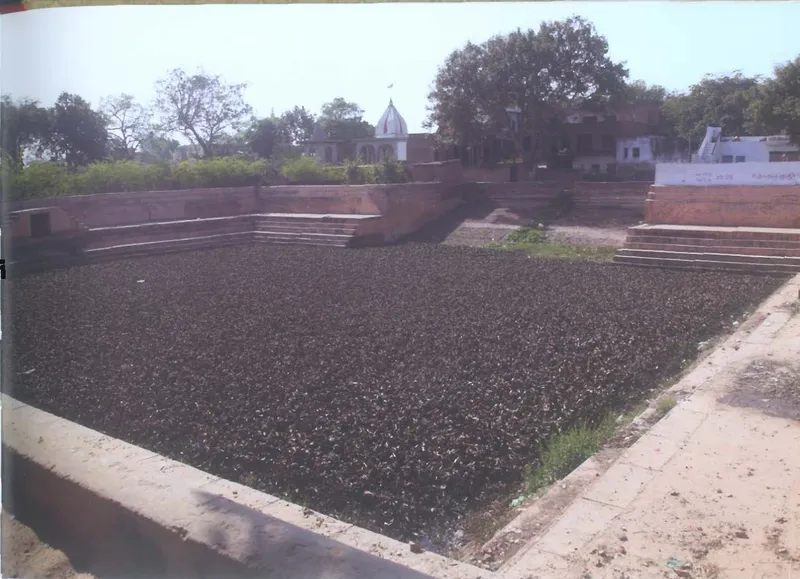
Govinda-kuṇḍa (Vṛndāvana)
गोविन्द-कुण्ड (वृन्दावन)Govinda-kuṇḍa is a large stepped tank in the eastern part of Vṛndāvana, near the Raṅgajī temple.
Hiṇḍola-sthala (Brahma-parvata)
हिण्डोल-स्थल (ब्रह्म-पर्वत)Śeṣaśāī
शेषशायीŚeṣaśāī, or Śeṣaśāyī, "the Lord who lies on Śeṣa", is a village at the northern edge of Vraja.
Kadamba grove (Śāṅarā-śikhara)
कदम्ब-कुंज (शाङरा-शिखर)Dolā-kadamba
दोला-कदम्ब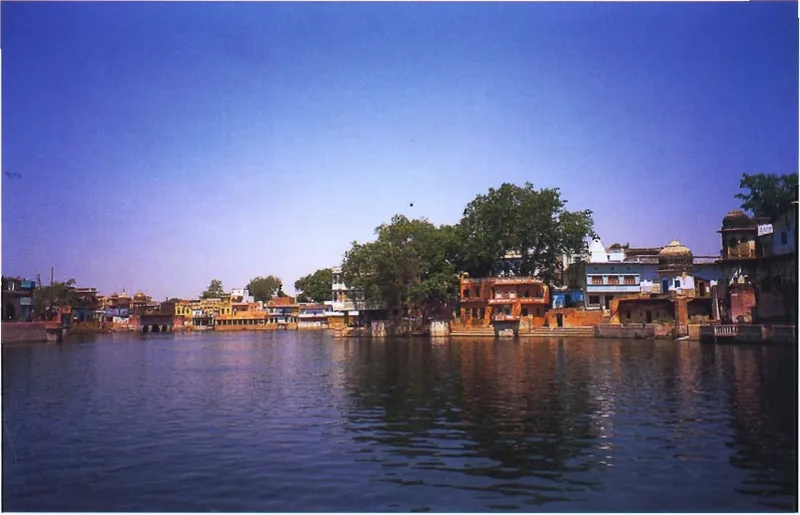
Cakra-tīrtha (Govardhana)
चक्र-तीर्थ (गोवर्धन)Cakra-tīrtha is a holy bathing place (tīrtha) on the northern bank of Mānasī-gaṅgā in Govardhana town, as the guidebooks place it.
Jhūlana-talā (Rādhā-kuṇḍa)
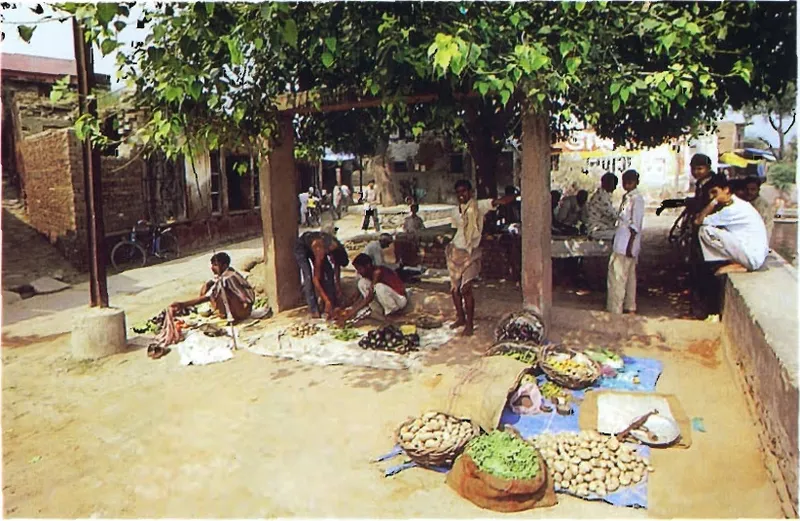
झूलन-तला (राधा-कुण्ड)Jhūlana-talā is a spot on the western side of Rādhā-kuṇḍa, in the village of Rādhā-kuṇḍa.
Jhūlana-ghāṭa
झूलन-घाटRāsa-maṇḍala (north of Rādhā-Vallabha-ghāṭa, Śyāma-kuṇḍa)
रास-मण्डल (राधावल्लभ-घाट के उत्तर में, श्याम-कुण्ड)Jhūlana-sthalī (Māna-garh)
झूलन-स्थली (मान-गढ़)Jhūlana-sthalī, the place of the swing, is at Māna-garh on the hill of Varṣāṇā.
Jhūla-sthala (Prema-sarovara)
झूला-स्थल (प्रेम-सरोवर)Rāsa-maṇḍala (Saṅket)
रास-मण्डल (संकेत)Śāṅarā-śikhara
शाङरा-शिखरŚāṅarā-śikhara is a whitish hill next to the village of Khoha.
Dvārakādīśa Mandira
द्वारकाधीश मन्दिरThe Dvārakādīśa Mandira is a temple of Kṛṣṇa as Dvārakādhīśa, the king of Dvārakā, in the Māṇika-choka quarter of Mathurā, close to Viśrāma-ghāṭa and Gatāśrama-ṭīlā.
Vilāsa-garh
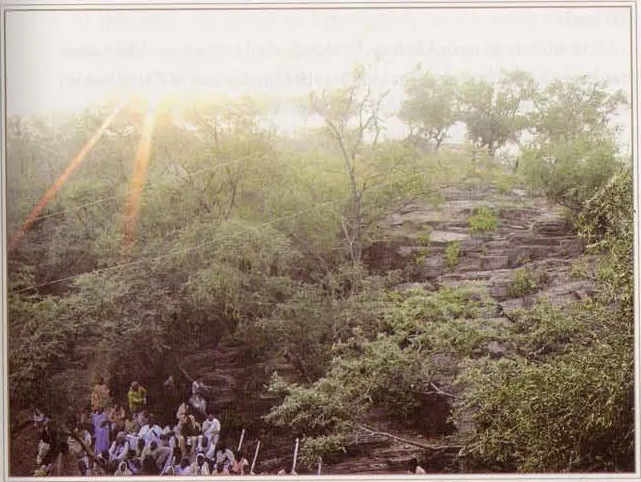
विलास-गढ़Vilāsa-garh is a small shrine on Viṣṇu-parvata at Varṣāṇā, beside the narrow pass Sāṅkarī-khor, according to the guidebook Śrī Vraja-maṇḍala Parikramā (2007).
Questions and answers
The swing festival, in which the Deity is seated on a swing. Śrīla Prabhupāda names the Jhulana-yātrā, with the Lord sitting on a swing, among the festivals a devotee should observe.[8]
Only of the cowherd boys: ŚB 10.18.15 lists riding in swings among the games of Kṛṣṇa, Balarāma and their friends. It tells no swing pastime of Kṛṣṇa with the gopīs.[1–3]
Jhūlanavana and the Dolā-kadamba in Vṛndāvana, Cakra-tīrtha at Govardhana, the swings around Rādhā-kuṇḍa and Śyāma-kuṇḍa, and the swing places of Varṣāṇā, Prema-sarovara and Saṅket, each according to its own source.[5 +11]
The commentators date the swinging from the third day of the bright half of Śrāvaṇa, in the rainy season. The Garga-saṁhitā tells a spring festival in Caitra.[9 +3]
A festival of the Lord's activities in the month of March, which Śrīla Prabhupāda names beside the Jhulana-yātrā. The Garga-saṁhitā's dolotsava, the swing festival, takes place in the spring month of Caitra.[8 +3]
In The Nectar of Devotion he counts the Jhulana-yātrā and the Dola-yātrā among the ceremonies to be observed in devotional service.[8]
Sources
- Śrīmad-Bhāgavatam 10.18.15, GRETIL
- Śrīmad-Bhāgavatam 10.18.16, GRETIL
- Śrīla Prabhupāda, Kṛṣṇa, the Supreme Personality of Godhead (Kṛṣṇa book), Chapter 18, 'Killing the Demon Pralambāsura' · vedabase.io
- Padma Purāṇa, Pātāla-khaṇḍa (5), adhyāya 83 (Vṛndāvana-māhātmya), verses 47b–48, Sanskrit Wikisource
- Śrīla Raghunātha dāsa Gosvāmī, Vraja-vilāsa-stava, verse 80
- Śrīla Rūpa Gosvāmī, Gītāvalī, song 4 and song 5 (āsāvarī: whole song)
- Śrī Vraja-maṇḍala Parikramā (2007), PDF p. 342
- Śrīla Prabhupāda, The Nectar of Devotion, Chapter 9 ('Further Considerations of Devotional Principles'), section 'Observing ārati and celebrations of the Lord' · vedabase.io
- Śrīla Viśvanātha Cakravartī Ṭhākura: commentary on ŚB 10.18.15, Bhagavata Vidya Pith edition, ed. Bhagavata Rishi and Krishna Shankar Shastri, 1996
- Śrī Vraja-maṇḍala Parikramā (2007), PDF p. 341
- Śrī Vraja-maṇḍala Parikramā (2007), PDF p. 298
- Śrī Vraja-maṇḍala Parikramā (2007), PDF p. 25
- Śrīla Narahari Cakravartī, Bhakti-ratnākara, Fifth Wave, 1912 ed. p. 208, 2nd ed., 1912
- Śrīla Raghunātha dāsa Gosvāmī, Vraja-vilāsa-stava, as quoted in the Bhakti-ratnākara, Fifth Wave, 1912 ed. p. 208; verse printed as Vraja-vilāsa '৮৯' (89), 2nd ed., 1912
- Śrīla Raghunātha dāsa Gosvāmī, Vraja-vilāsa-stava, as quoted in the Bhakti-ratnākara, Fifth Wave, 1912 ed. p. 208; verse printed as Vraja-vilāsa '৮০' (80), 2nd ed., 1912
- Śrīla Raghunātha dāsa Gosvāmī, Vraja-vilāsa-stava, verse 79
- Śrīla Nārāyaṇa Bhaṭṭa, Vraja-bhakti-vilāsa, ch. 10 v.64 (prayer for the swing of Māneṅgita-vana), printed p. 225, 1st ed., publ. Bābā Kṛṣṇadāsa, Kusuma-sarovara, Saṁvat 2008
- Śrīla Nārāyaṇa Bhaṭṭa, Vraja-bhakti-vilāsa, ch. 2 v.56 (opening), printed p. 53, 1st ed., publ. Bābā Kṛṣṇadāsa, Kusuma-sarovara, Saṁvat 2008
- Śrīla Prabhupāda, Kṛṣṇa, the Supreme Personality of Godhead (Kṛṣṇa book), chapter 18, 'Killing the Demon Pralambāsura' · vedabase.io
- Śrīla Viśvanātha Cakravartī Ṭhākura: commentary on ŚB 10.47.53, Bhagavata Vidya Pith edition, ed. Bhagavata Rishi and Krishna Shankar Shastri, 1996
Show all 48 references
- Garga-saṁhitā, Mādhurya-khaṇḍa (4) 15.6–8, Sanskrit Wikisource
- Garga-saṁhitā, Mādhurya-khaṇḍa (4) 15.9, Sanskrit Wikisource
- Garga-saṁhitā, Mādhurya-khaṇḍa (4) 15.10, Sanskrit Wikisource
- Śrīla Narahari Cakravartī, Bhakti-ratnākara, Fifth Wave, 1912 ed. printed p. 419: couplet and the first song after it (rāga Mallāra), 2nd ed., 1912
- Śrī Vraja-maṇḍala Parikramā (2007), PDF p. 346
- Śrīla Viśvanātha Cakravartī Ṭhākura, Vraja-rīti-cintāmaṇi, dvitīya sarga (chapter 2) v.72
- Vṛndāvana, the Playground of God (2010), Bhakti Caitanya Svāmī, PDF p. 191
- Śrīla Narahari Cakravartī, Bhakti-ratnākara, Fifth Wave, 1912 ed. p. 192, first song (gīte yathā, rāga sāraṅga), 2nd ed., 1912
- Śrī Vraja-maṇḍala Parikramā (2007), PDF p. 100
- Śrī Vraja-maṇḍala Parikramā (2007), PDF p. 101
- The Colour Guide to Rādhā-kuṇḍa (1999), Rājaśekhara dāsa Brahmacārī, PDF p. 66
- Śrīla Viśvanātha Cakravartī Ṭhākura, Kṛṣṇa-kuṇḍāṣṭaka, verse 6
- Śrīla Nārāyaṇa Bhaṭṭa, Vraja-bhakti-vilāsa, Tenth chapter, v.59: the Prema-vana pilgrimage, prayer at the swing place (hiṇḍola-sthala); printed p. 224, 1st ed., publ. Bābā Kṛṣṇadāsa, Kusuma-sarovara, Saṁvat 2008
- Prabhudayāl Mītal, printed p. 122
- Vraja-bhakti-vilāsa, introduction, p. (2), 1st ed., publ. Bābā Kṛṣṇadāsa, Kusuma-sarovara, Saṁvat 2008
- Vraja-bhakti-vilāsa, introduction, 1st ed., publ. Bābā Kṛṣṇadāsa, Kusuma-sarovara, Saṁvat 2008
- Śrīla Nārāyaṇa Bhaṭṭa, Vraja-bhakti-vilāsa, ch. 2 v.47 ('ततो वृपभानुपुरलिंगानि', 'pādme'), printed p. 46, 1st ed., publ. Bābā Kṛṣṇadāsa, Kusuma-sarovara, Saṁvat 2008
- Śrī Vraja-maṇḍala Parikramā (2007), PDF p. 170
- Śrīla Nārāyaṇa Bhaṭṭa, Vraja-bhakti-vilāsa, ch. 4 v.56 (prayer for the Dāna-mandira), printed p. 100, 1st ed., publ. Bābā Kṛṣṇadāsa, Kusuma-sarovara, Saṁvat 2008
- Śrī Vraja-maṇḍala Parikramā (2007), PDF p. 236
- the undated parikramā notes Śeṣaśāī, ¶9
- Śrīla Narahari Cakravartī, Bhakti-ratnākara, Fifth Wave (pañcama taraṅga), printed p. 257, vv.1422-1429 in the Grantha Mandira numbering, 2nd ed., 1912
- Śrīla Narahari Cakravartī, Bhakti-ratnākara, Fifth Wave, 1912 ed. p. 214, 2nd ed., 1912
- A. W. Entwistle, Calendar of festivals, Bhadon II (bright half of Bhādra), days 10 and 12, printed p. 487, Egbert Forsten, Groningen, 1987
- Śrī Vraja-maṇḍala Parikramā (2007), PDF p. 57
- the undated parikramā notes Mathurā, ¶41
- The Colour Guide to Rādhā-kuṇḍa (1999), Rājaśekhara dāsa Brahmacārī, PDF p. 157
- The Colour Guide to Rādhā-kuṇḍa (1999), Rājaśekhara dāsa Brahmacārī, PDF p. 165
Further sources
- Śrīmad-Bhāgavatam 10.18.15–16, translation by the disciples of Śrīla Prabhupāda (BBT).
- Śrīla Prabhupāda, Kṛṣṇa, the Supreme Personality of Godhead, chapter 18; The Nectar of Devotion, chapter 9 (BBT).
- The Canto 10 commentaries of Śrīla Viśvanātha Cakravartī Ṭhākura, Śrīla Baladeva Vidyābhūṣaṇa and Vaṁśīdhara (Sanskrit), summarised, not translated.
- Padma Purāṇa, Garga-saṁhitā, Gītāvalī, Vraja-vilāsa-stava, Kṛṣṇa-kuṇḍāṣṭaka, Bhakti-ratnākara (1912 edition), Vraja-bhakti-vilāsa: summarised from the original languages.