How Madana-mohana came to Śrīla Sanātana Gosvāmī
How His temple was built
In short
Madana-mohana, also called Madana-gopāla, is the Deity whose service Śrīla Sanātana Gosvāmī began in Vṛndāvana. The Bhakti-ratnākara says He came to Śrīla Sanātana Gosvāmī from Mahāvana, and a wealthy merchant built His temple. Śrīla Prabhupāda calls it the first temple of Vṛndāvana. The original Deity was later taken to Karauli.[1–18]
On this page
At a glance
- Two names, one Deity: Madana-gopāla and Madana-mohana.[1–4]
- His servant: Śrīla Sanātana Gosvāmī. The Caitanya-caritāmṛta says that all his books aim at the service of Madana-mohana and Govinda.[2 +3]
- Where He came from: Mahāvana, according to the Bhakti-ratnākara. Other books tell of Śrī Advaita Ācārya and a Caube brāhmaṇa of Mathurā, which is not certain.[4 +2]
- The builder: a wealthy merchant, according to all the accounts. The Bhakti-ratnākara names him Kṛṣṇadāsa of Multān.[5–10]
- The place: the guidebooks put the old temple on Dvādaśāditya-ṭīlā, a hill above the Yamunā.[10 +5]
- Later: according to Entwistle (1987), the original Deity has been at Karauli in Rājasthān since 1728. A later Deity is served in the new temple beside the old one.[17 +4]
Who is Madana-mohana?
A Deity is the sacred form of the Lord that is worshipped in a temple. Madana-mohana and Madana-gopāla are two names of the same Deity of Vṛndāvana. The Bhakti-ratnākara uses them side by side, and Śrīla Prabhupāda's translations render madana-gopāla as Madana-mohana.[1–4]
The Caitanya-caritāmṛta says that Śrīla Rūpa and Śrīla Sanātana Gosvāmī began the service of Madana-gopāla and Govinda in Vṛndāvana. (A Gosvāmī is one of the saintly teachers who followed Śrī Caitanya and lived in Vṛndāvana.) The book sums up the purpose of Śrīla Sanātana Gosvāmī's writing in one verse:[2 +3]
আর যত গ্রন্থ কৈলা, তাহা কে করে গণন ।
‘মদনগোপাল-গোবিন্দের সেবা’-প্রকাশন ॥ ২২২ ॥
āra yata grantha kailā, tāhā ke kare gaṇana
‘madana-gopāla-govindera sevā’-prakāśana
Śrīla Sanātana Gosvāmī also compiled many other books. Who can enumerate them? The basic principle of all these books is to show us how to love Madana-mohana and Govindajī.
Translation: Śrīla A.C. Bhaktivedanta Swami PrabhupādaŚrīla Prabhupāda gives Śrīla Sanātana Gosvāmī first place in the founding of Vṛndāvana's Deity worship:[11–16]
Names this place“Only by the endeavors of Śrī Sanātana Gosvāmī were all the lost places of pilgrimage in the Vṛndāvana area excavated. He established Madana-mohana, the first Deity in the Vṛndāvana area,”
Śrīla Prabhupāda, Śrī Caitanya-caritāmṛta, Antya-līlā 4.81, purport · vedabase.io
The name Madana-mohana means "the enchanter of Cupid". Śrīla Kṛṣṇadāsa Kavirāja Gosvāmī explains it from the rāsa dance, Kṛṣṇa's circle dance with the gopīs. That is told in its own article.[31–34] Read more: Madana-mohana: how Kṛṣṇa overcame Cupid in the rāsa night →
What the Bhāgavatam says and does not say
None of the story told below is in Śrīmad-Bhāgavatam or in its commentaries on the Tenth Canto. The Deity is linked to the Tenth Canto only through Śrīla Kṛṣṇadāsa Kavirāja Gosvāmī. He quotes ŚB 10.32.2 when he describes Madana-gopāla, but that verse names no place and no Deity.[31–34] Everything about how the Deity came and how the temple was built comes from three kinds of sources: the lives of the saints, Śrīla Prabhupāda's lectures and the guidebooks. Each story is credited here to the source that tells it.[5 +9]
Where was the Deity before Śrīla Sanātana Gosvāmī?
The oldest mention of a Madana-gopāla in Vraja is in the Caitanya-bhāgavata. It tells that Śrī Nityānanda Prabhu went on a long pilgrimage before he met Śrī Caitanya Mahāprabhu. On the way he saw Nanda's home at Gokula, wept there and bowed to Madana-gopāla, and then went on to Hastināpura.[26 +2]
The Bhakti-ratnākara quotes these lines. It adds that he stayed from time to time at Gokula-Mahāvana to see Madana-gopāla. Neither book says that this is the Deity later served by Śrīla Sanātana Gosvāmī.[26 +2]
A different story is told of Śrī Advaita Ācārya, and it is not certain. According to the Prema-vilāsa, Kṛṣṇa told Śrī Advaita Ācārya in a dream that He was hidden in a grove on the Yamunā bank. He asked to be dug out. Advaita raised Him. When invaders came, the Deity hid in the form of Gopāla, and so He was called Madana-gopāla. Later Advaita gave Him to a Caube brāhmaṇa (a priest of the Caube community) of Mathurā. From him the Deity was to go to Śrīla Rūpa and Śrīla Sanātana Gosvāmī.[4, 22]
The Bengali book Vṛndāvana-kathā (1920) twice reports a similar account from the Advaita-prakāśa. Both times it adds that the Vrajavāsīs, the people of Vraja, do not accept it; so this is not certain.[37, 38] The guidebooks set Advaita's finding at Advaitavaṭa or in Mahāvana-Gokula, and they do not agree on the spot:[4 +5]
Accounts differ Where Śrī Advaita Ācārya found the Deity Madana-gopāla (and whether a Deity is part of his stay at this banyan at all).
- Śrī Vraja-maṇḍala Parikramā (2007)He had found Śrī Madana-Gopāla in Mahāvana-Gokula and served Him here at Advaitavaṭa.
- Vṛndāvana, the Playground of God (2010)'It is said' that local ladies told him where the Deity was, and following their directions he located Him (here, during his stay).
- The Color Guide to Vṛndāvana (2000) and the undated parikramā notes VṛndāvanaHe discovered the Deity of Madana-gopāla at this place, where he performed his bhajana.
- Bhakti-ratnākara, Fifth WaveAdvaita stayed and worshipped Kṛṣṇa under this banyan near the Yamunā; no Deity is mentioned.
How did Madana-mohana come to Śrīla Sanātana Gosvāmī?
The Bhakti-ratnākara tells two parts of the story in two places. Both put the Deity at Mahāvana first (summarised here, not translated).[5, 43]
The cowherd boy at Mahāvana
In its Fifth Wave (its fifth chapter), the Bhakti-ratnākara says that Madana-gopāla used to play on the sand of the Yamunā at Mahāvana. One day He came as a cowherd boy with the children of Mahāvana. Śrīla Sanātana Gosvāmī watched Him and thought that this was no ordinary child. He followed Him, and the child went into a temple. Inside, Śrīla Sanātana Gosvāmī saw not the child but Madana-mohana. He bowed down and went back to his lodging without a word.[43]
The dream and the hut of leaves
In its Second Wave the book says that Śrīla Sanātana Gosvāmī stayed at Mahāvana from time to time. Madana-gopāla was won over by his love. In a dream He told him that He liked his hut and would come to him from Mahāvana, and at dawn He came.[5] Śrīla Sanātana Gosvāmī served Him in a hut of leaves. The prince of Vraja ate dry bread there, and His servant was sad that he had nothing better to offer.[5]
Under a kadamba tree by the Yamunā
The Sādhana-dīpikā, written by a priest of the Govinda temple, gives only the setting. According to it, Śrīla Sanātana Gosvāmī made the service of Madana-gopāla manifest on the ground beneath a kadamba tree. The place was cooled by the water of the Yamunā. The book names no hill, hut or temple (summarised here, not translated).[44]
The same book says that he handed the Deity's service to Śrī Kṛṣṇadāsa Brahmacārī, who was very close to him. The Bhakti-ratnākara also names Śrī Kṛṣṇadāsa Brahmacārī as the servant in charge of Madana-gopāla.[45–50]
Śrīla Prabhupāda: the tree and the salt
Śrīla Prabhupāda told the story to his disciples in Vṛndāvana, in 1972:[7 +5]
Names this place“And Madana Gopāla's temple you have seen, old. He was living there underneath a tree. There was no temple at that time. The temple was constructed later on.”
Śrīla Prabhupāda, Lecture, Kṛṣṇadāsa Kavirāja Gosvāmī's Appearance Day, Vṛndāvana, 19 October 1972 · vedabase.io
In other lectures he said that Śrīla Sanātana Gosvāmī kept his Madana-mohana hanging in the tree. He told how the Deity asked for salt with the dry bread. Śrīla Sanātana Gosvāmī answered that he could not go and beg for salt, and that he offered whatever he had.[7 +8] The guidebooks tell the same request for salt, with Śrīla Sanātana Gosvāmī's answer in other words.[7 +4]
The Caube of Mathurā
The Prema-vilāsa ends the Advaita story in Mathurā. Śrīla Sanātana Gosvāmī bowed to the Caube and took Madana-mohana to his own dwelling. There he began His service, to the joy of the Vrajavāsīs.[22]
The guidebook Śrī Vraja-maṇḍala Parikramā (2007) cites two manuscripts. It says that he received the Deity from Paraśurāma Caube of Mahāvana in Saṁvat 1590 of the Indian Vikrama calendar (1534). He began His worship on the second day of the bright half of Māgha (January–February). The date rests on these manuscripts alone, so it is not certain.[9 +3]
The ways the Deity's coming is told, in the Vaiṣṇava books and in the guidebooks, are set side by side here:
Accounts differ How the Deity Madana-gopāla came to Śrīla Sanātana Gosvāmī.
- Bhakti-ratnākara, Fifth Wave (pp. 283-284)At Mahāvana Sanātana saw a cowherd boy playing on the Yamunā sand, followed Him into a temple and saw Madana-mohana there. The same page says that Śrī Caitanya, at Mahāvana, was overwhelmed on seeing Madana-gopāla.
- Bhakti-ratnākara, Second Wave (p. 93)Madana-gopāla, who played at Mahāvana, told Sanātana in a dream that He liked his hut and would come from Mahāvana; He came at dawn.
- Śrī Vraja-maṇḍala Parikramā (2007)Sanātana saw the boy Madana playing gullī-ḍaṇḍā at a Caube's house in Mathurā; after three visits the boy followed him on foot to his bhajana-kuṭī and became the Deity.
- Śrī Vraja-maṇḍala Parikramā (2007) citing Sevā-prākaṭya and Iṣṭalābha; the undated parikramā notes MahāvanaObtained from Paraśurāma Caube of Mahāvana in 1534 (saṁvat 1590).
Who was the merchant who built the temple?
All the sources agree that a wealthy merchant came to Śrīla Sanātana Gosvāmī and built the temple. They differ on his name, on his boat and on who asked for the temple.[5–10]
According to the Bhakti-ratnākara, Madana-gopāla knew His servant's sorrow and wished His service to grow. A very wealthy man named Kṛṣṇadāsa came from Multān. He was a Kapūra and an eminent kṣatriya (a man of the warrior and ruling class). He came down from his boat and fell at Śrīla Sanātana Gosvāmī's feet, and he was given to Madana-mohana's feet (summarised here, not translated).[5]
That same day he began the temple. He decorated the Deity with jewelled ornaments, kept a separate store of clothes for Him and arranged many kinds of offerings. The Vrajavāsīs rejoiced to see Madana-gopāla.[6]
Śrīla Prabhupāda called the builder a Sindhi salt merchant. He was travelling on the river towards Delhi and offered his service.[5–10] In Māyāpur in 1974 Śrīla Prabhupāda told it this way:[5–10]
Names this placeJust like this Madana-mohana temple was constructed by a big merchant. He approached Sanātana Gosvāmī = "Sir, what can I do for you? I want to serve you." So Sanātana Gosvāmī said, "My Madana-mohana... I am living underneath the tree, and my Madana-mohana is hanging. So if you can, you can construct a temple for Madana-mohana."
Śrīla Prabhupāda, Lecture on Śrīmad-Bhāgavatam 1.8.26, Māyāpur, 6 October 1974 · vedabase.io
As Śrīla Prabhupāda tells it, Śrīla Sanātana Gosvāmī asks for the temple. According to the Bhakti-ratnākara, he blesses the merchant, who begins it himself.[2 +9]
The Prema-vilāsa gives a third version. Madana-mohana wished to live in a temple, so a merchant's boat got stuck on a sandbank. The merchant promised Śrīla Sanātana Gosvāmī a temple from his profit. The boat moved at once, and he built the temple. The book names neither the merchant nor the place.[22]
The names given to the merchant differ:
Accounts differ Name and origin of the merchant who built the temple.
- Bhakti-ratnākara, Second Wave (1912 ed. p. 93)Kṛṣṇadāsa, a Kapūra and an eminent kṣatriya ('kapūra kṣatriya-śreṣṭha'), a very rich man from Multān.
- Śrī Vraja-maṇḍala Parikramā (2007)Kṛṣṇadāsa Kapūra, a rich merchant from the Multāna province.
- Vṛndāvana, the Playground of God (2010) and Vṛndāvana-Dhāma Ki Jaya! (c. 1986)Kṛṣṇadāsa Kapoor, owner of a salt boat (barge).
- The Color Guide to Vṛndāvana (2000) and the undated parikramā notes VṛndāvanaRāmdāsa Kapoor, a wealthy merchant from Multan in Punjab.
Where his boat was, and how it was freed, are also told differently:
Accounts differ The merchant's boat: where it was, which way it was going, and how it was freed.
- Bhakti-ratnākara, Second WaveKṛṣṇadāsa came down from his boat to the Gosvāmī; no stranding is told in the lines read.
- Śrī Vraja-maṇḍala Parikramā (2007)Large boats on the Yamunā stuck in the sand as they came near Śrīla Sanātana's bhajana-kuṭī; they floated free the moment the merchant vowed to build a temple.
- Vṛndāvana, the Playground of God (2010)A salt boat going down the Yamunā to Agra stuck 'immediately beneath Dvādaṣāditya-ṭilā'; Sanātana sent the merchant to pray to Madana-mohana, and the boat was found freed.
- The Color Guide to Vṛndāvana (2000)Three boats of salt going to Agra stuck on a sandbank when passing Kāliyā-ghāṭa; Madana-mohana as a cowherd boy sent the merchant to Sanātana; a storm and heavy rain swelled the river and freed them.
How old is the temple on Dvādaśāditya-ṭīlā?
Śrīla Prabhupāda said many times that Śrīla Sanātana Gosvāmī established the Madana-mohana temple first. Śrīla Rūpa Gosvāmī established the Govindajī temple after it.[11–16]
Names this place“Śrīla Sanātana Gosvāmī first of all established this Madana-mohana temple, then Govindajī.”
Śrīla Prabhupāda, Lecture, Vṛndāvana, 14 March 1974 · vedabase.io
No dated record tells the year it was built. The historians give no year either. Entwistle (1987) says it was built at about the time the work on the Govinda temple was going on. Mītal (1966) counts it among the temples built in Vṛndāvana in Akbar's reign.[57–59] The guidebooks give their own years, and they differ:
Accounts differ When the temple was opened.
- Vṛndāvana, the Playground of God (2010)Opened in 1581, the first temple in the town of Vṛndāvana.
- The Color Guide to Vṛndāvana (2000), Govardhana Hill: India's Most Sacred Mountain (2001), The Colour Guide to Rādhā-kuṇḍa (1999), the undated parikramā notes VṛndāvanaChronology: 1580, Madana-mohana temple opens.
- Śrīla Prabhupāda, lecture 18 March 1967The oldest temple in Vṛndāvana, 'not less than five hundred years old' (an approximate figure).
- Entwistle (1987), pp. 166 and 159-160No year: the red sandstone temple was built at about the same time that work was in progress on the Govinda-deva temple, whose inscription gives the year of its construction as 1590.
The Vaiṣṇavas asked Śrīla Kṛṣṇadāsa Kavirāja Gosvāmī to write the life of Śrī Caitanya Mahāprabhu. He went to Madana-gopāla to ask His permission. A garland slipped from the Deity's neck, and the priest Gosāñi dāsa put it on him. There he began the Caitanya-caritāmṛta.[3 +4] How the temple of Govinda was built is told in its own article. Read more: The great temple of Śrī Govinda →
Where is the original Madana-mohana now?
In San Francisco in 1967, Śrīla Prabhupāda showed a picture of Vṛndāvana. He spoke of the temple's age and of its damage:[9 +5]
Names this place“This temple was first constructed by Sanātana Gosvāmī. That is the oldest temple in Vṛndāvana, not less than five hundred years old. And it was desecrated by the Aurangzeb, Emperor Aurangzeb. Then another new temple is now constructed where Madana-mohana is residing.”
Śrīla Prabhupāda, Lecture on Śrī Caitanya-caritāmṛta, Ādi-līlā 7.149-171, San Francisco, 18 March 1967 · vedabase.io
In 1973 he wrote that the old temple, desecrated (dishonoured) and partly destroyed, still stood beside the new one.[9 +5] Neither historian gives a year for an attack. Entwistle (1987) says that no Vṛndāvana temple was demolished, and that the ruin of the original temples is put down to attacks made on Aurangzeb's orders. Mītal (1966) says that the temple was ruined under Aurangzeb's order to destroy the temples of Braj.[18 +2]
According to Entwistle, the Deity was taken first to Jaipur, where Savāī Jai Singh gave Him a mansion. In 1728 Rājā Gopāla Siṁha of Karauli took Him to Karauli and built a temple for Him opposite his palace.[17, 18]
Mītal says that the Gauḍīya devotees of Vṛndāvana installed a pratibhū, a representative Deity, in Saṁvat 1805. He says that the Bengali devotee Nandakumāra Vasu built a new temple near the old one in Saṁvat 1877. Entwistle also names Nand Kumar Bose, early in the nineteenth century.[17 +3] The guidebooks tell the journey with other details, and they differ:
Accounts differ Where the original Deity was taken at the time of Aurangzeb.
- The Color Guide to Vṛndāvana (2000) and the undated parikramā notes VṛndāvanaTaken to Karauli in Rajasthan for safety during the attack of Aurangzeb's soldiers.
- Vṛndāvana, the Playground of God (2010)In 1670 the king of Jaipur, Jai Singh, had the Deities taken to his capital; some years later Gopāla Singh of Karauli obtained Madana-mohana.
- Vṛndāvana-Dhāma Ki Jaya! (c. 1986)Moved to Jaipur in 1670 and later to Karoli at the request of a Jaipur princess married into Karoli.
- Śrī Vraja-maṇḍala Parikramā (2007)Already moved to Jaipura before the desecration; now resides in Karaulī.
The journeys of the Vṛndāvana Deities in that period are brought together in a separate article.[17, 18] Read more: The temples of Vṛndāvana in Mughal times → Representative forms of the main Deities of Vṛndāvana are also served at Rādhā-kuṇḍa, the sacred pond of Śrī Rādhā.[17 +3] Read more: The pratibhū Deities of Rādhā-kuṇḍa →
Places in this article
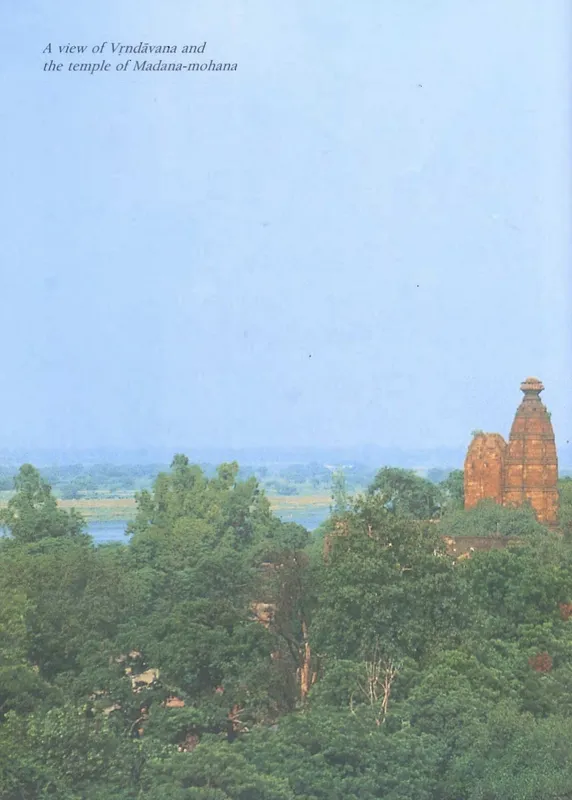
Rādhā-Madana-mohana Mandira (Vṛndāvana, old)
राधा-मदनमोहन मन्दिर (वृन्दावन, पुराना)The old Rādhā-Madana-mohana Mandira is the temple of Madana-mohana, also called Madana-gopāla, the Deity whose service Śrīla Sanātana Gosvāmī began in Vṛndāvana.
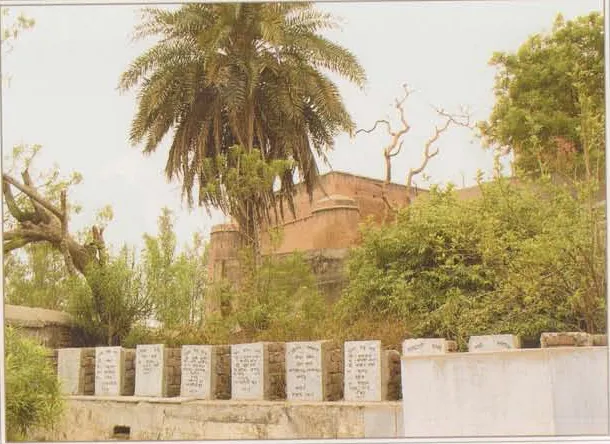
Dvādaśāditya-ṭīlā
द्वादशादित्य-टीलाDvādaśāditya-ṭīlā, the Hill of the Twelve Suns, is the hill in Vṛndāvana on which the old Madana-mohana Mandira stands, near Kāliya's lake by the Yamunā.
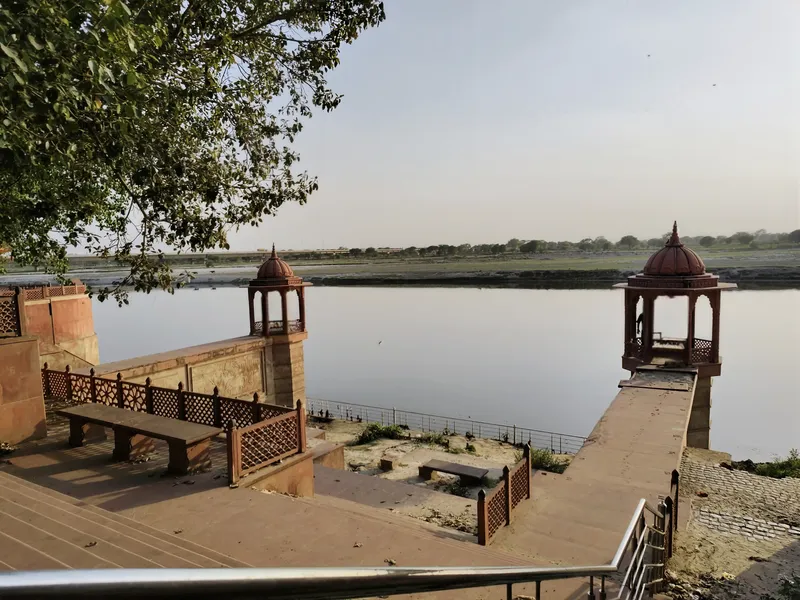
Mahāvana
महावनMahāvana, "the great forest", also called Bṛhadvana, is the forest on the eastern bank of the Yamunā where Kṛṣṇa spent His infancy.
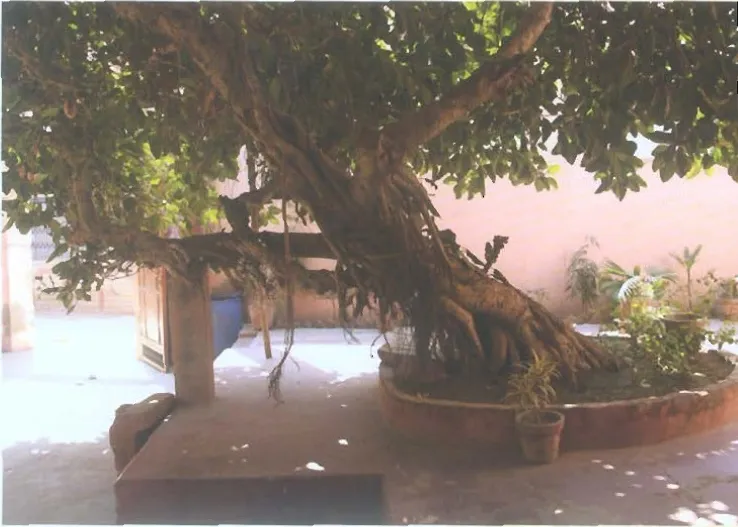
Advaitavaṭa
अद्वैतवटAdvaitavaṭa is a banyan tree (vaṭa) by the Yamunā in Praskandana-kṣetra, just below Dvādaśāditya-ṭīlā in Vṛndāvana.
Vṛndāvana
वृन्दावनVṛndāvana is the forest on the bank of the Yamunā where Kṛṣṇa spent His childhood and youth, and the town of temples that stands in that forest today.
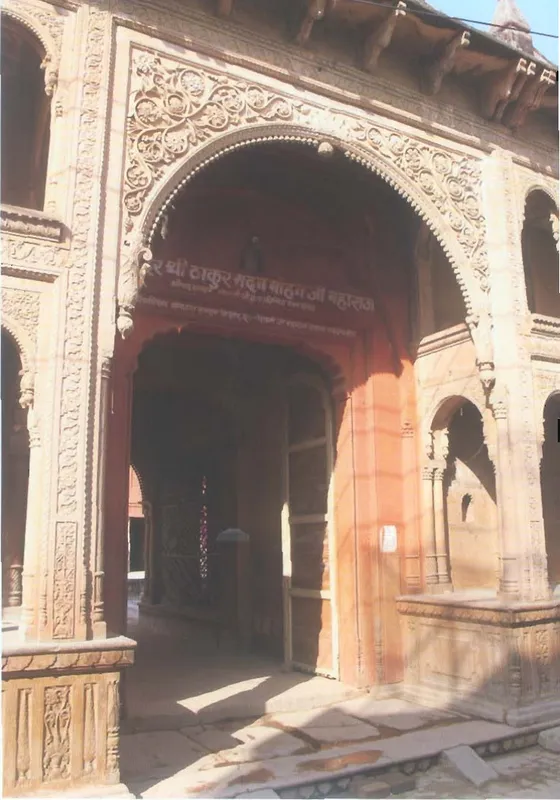
Madana-mohana Mandira (Vṛndāvana, new)
मदनमोहन मन्दिर (वृन्दावन, नया)The new Madana-mohana Mandira stands immediately beside the old Madana-mohana temple of Śrīla Sanātana Gosvāmī in Vṛndāvana.
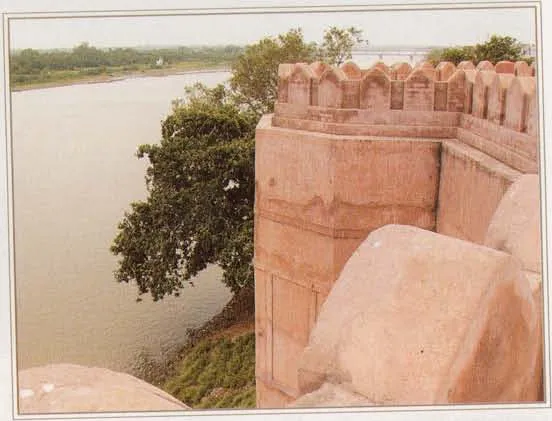
Mathurā
मथुराMathurā is the city on the Yamunā where Śrī Kṛṣṇa appeared from Devakī in the prison of King Kaṁsa.
Questions and answers
According to the Bhakti-ratnākara, Madana-gopāla played at Mahāvana. He told Śrīla Sanātana Gosvāmī in a dream that He liked his hut, and He came to him at dawn. Other books say that He came from a Caube brāhmaṇa's house in Mathurā.[5, 22]
The Bhakti-ratnākara names him Kṛṣṇadāsa, a Kapūra from Multān. Śrīla Prabhupāda called him a Sindhi salt merchant, and the guidebooks give other names.[5–10]
The Caitanya-bhāgavata says that Śrī Nityānanda Prabhu bowed to a Madana-gopāla at Gokula. The Bhakti-ratnākara places Madana-gopāla at Mahāvana. The Prema-vilāsa and the guidebooks tell that Śrī Advaita Ācārya found Him, but this is not certain.[4 +4]
The name means the enchanter of Cupid. Śrīla Kṛṣṇadāsa Kavirāja Gosvāmī explains it from the rāsa dance, quoting ŚB 10.32.2.[31–34]
He lived under a tree with no possessions. Śrīla Prabhupāda told how the Deity asked for salt. Śrīla Sanātana Gosvāmī answered that he could not go and beg for salt.[7 +8]
According to Entwistle (1987), the Deity went first to Jaipur, and in 1728 to Karauli in Rājasthān, where a temple was built for Him. A later Deity is served in the new temple beside the old one in Vṛndāvana.[17 +4]
No dated record gives the year. Śrīla Prabhupāda called it the first and oldest temple of Vṛndāvana. The historians say only that it was built in Akbar's reign, at about the time of the Govinda temple.[11 +8]
Sources
- Śrīla Narahari Cakravartī, Bhakti-ratnākara, Fifth Wave, 1912 ed. p. 297, 2nd ed., 1912
- Śrīla Kṛṣṇadāsa Kavirāja Gosvāmī, Śrī Caitanya-caritāmṛta, Madhya-līlā 1.32, online edition · vedabase.io
- Śrīla Prabhupāda, Śrī Caitanya-caritāmṛta, Ādi-līlā 8.73, purport · vedabase.io
- Prema-vilāsa, 24th vilāsa (caturviṁśa vilāsa), 1913 ed. pp. 230–231, Kolkata, 1913
- Śrīla Narahari Cakravartī, Bhakti-ratnākara, Second Wave (dvitīya taraṅga), 1912 ed. p. 93, 2nd ed., 1912
- Śrīla Narahari Cakravartī, Bhakti-ratnākara, Second Wave, 1912 ed. p. 94, 2nd ed., 1912
- Śrīla Prabhupāda, Lecture on Śrīmad-Bhāgavatam 1.2.8, Bombay, 26 December 1972 · vedabase.io
- Śrīla Prabhupāda, Lecture on Śrīmad-Bhāgavatam 1.8.26, Māyāpur, 6 October 1974 · vedabase.io
- Śrī Vraja-maṇḍala Parikramā (2007), PDF p. 327
- Vṛndāvana, the Playground of God (2010), Bhakti Caitanya Svāmī, PDF p. 16
- Śrīla Prabhupāda, Lecture on Śrī Caitanya-caritāmṛta, Ādi-līlā 7.149-171, San Francisco, 18 March 1967 · vedabase.io
- Śrīla Prabhupāda, Lecture on Śrīmad-Bhāgavatam 4.14.14, Delhi, 16 November 1971 · vedabase.io
- Śrīla Prabhupāda, Lecture on Śrī Caitanya-caritāmṛta, Madhya-līlā 20.101, Washington, D.C., 6 July 1976 · vedabase.io
- Śrīla Prabhupāda, Lecture, Vṛndāvana, 14 March 1974 · vedabase.io
- Śrīla Prabhupāda, Sunday Feast Lecture, London, 25 July 1976 · vedabase.io
- Śrīla Prabhupāda, Śrī Caitanya-caritāmṛta, Ādi-līlā 7.164, purport · vedabase.io
- A. W. Entwistle, ch. 8 §66.3 'Madanmohan', printed p. 402, Egbert Forsten, Groningen, 1987
- A. W. Entwistle, ch. 5 §25 'The exodus of deities from Braj', printed p. 185, Egbert Forsten, Groningen, 1987
- Śrīla Kṛṣṇadāsa Kavirāja Gosvāmī, Śrī Caitanya-caritāmṛta, Antya-līlā 4.222, online edition · vedabase.io
- Śrīla Prabhupāda, Śrī Caitanya-caritāmṛta, Antya-līlā 4.222, purport · vedabase.io
Show all 66 references
- Śrīla Rādhā-kṛṣṇa Gosvāmī, Sādhana-dīpikā, first section (prathama-kakṣā), prose after v.16
- Prema-vilāsa, 23rd vilāsa (trayoviṁśa vilāsa), 1913 ed. pp. 224–225, Kolkata, 1913
- Śrī Vraja-maṇḍala Parikramā (2007), PDF p. 342
- The Color Guide to Vṛndāvana (2000), Written and Photographed by Rājaśekhara dāsa Brahmacārī, PDF p. 56
- Vṛndāvana-Dhāma Ki Jaya! (c. 1986), by Dhruva Mahārāja dāsa, PDF p. 64
- the undated parikramā notes Mahāvana, ¶59
- Govardhana Hill: India's Most Sacred Mountain (2001), Rajasekhara dasa Brahmacari, PDF p. 84
- A. W. Entwistle, ch. 5 §36 'The Gaudiya Sampraday in modern times', printed p. 219, Egbert Forsten, Groningen, 1987
- Prabhudayāl Mītal, part 1 ('ब्रज-संस्कृति की भूमिका'), 'Braj-yātrā', Vṛndāvana: end of the Madanamohana entry, printed p. 136
- Prabhudayāl Mītal, part 2 ('ब्रज का इतिहास'), modern period, entry 'Nandakumāra Vasu', printed p. 277
- Śrīla Kṛṣṇadāsa Kavirāja Gosvāmī, Śrī Caitanya-caritāmṛta, Ādi-līlā 5.213, online edition · vedabase.io
- Śrīla Kṛṣṇadāsa Kavirāja Gosvāmī, Śrī Caitanya-caritāmṛta, Ādi-līlā 5.214 (quoting ŚB 10.32.2), online edition · vedabase.io
- Śrīla Kṛṣṇadāsa Kavirāja Gosvāmī, Śrī Caitanya-caritāmṛta, Ādi-līlā 5.215, online edition · vedabase.io
- Śrīla Kṛṣṇadāsa Kavirāja Gosvāmī, Śrī Caitanya-caritāmṛta, Ādi-līlā 5.212, online edition · vedabase.io
- Śrīla Vṛndāvana dāsa Ṭhākura, Caitanya-bhāgavata, Ādi-khaṇḍa (running head '৮ম', chapter 8 in this edition), 1931 ed. p. 54, right column, lines 5–8
- Śrīla Narahari Cakravartī, Bhakti-ratnākara, Fifth Wave (pañcama taraṅga), 1912 ed. p. 324, 2nd ed., 1912
- Vṛndāvana-kathā, ch. 3, printed pp. 67–68
- Vṛndāvana-kathā, ch. on Advaita Prabhu, printed pp. 184–186
- Śrī Vraja-maṇḍala Parikramā (2007), PDF p. 302
- Vṛndāvana, the Playground of God (2010), Bhakti Caitanya Svāmī, PDF p. 139
- The Color Guide to Vṛndāvana (2000), Written and Photographed by Rājaśekhara dāsa Brahmacārī, PDF p. 57
- the undated parikramā notes Vṛndāvana, ¶61
- Śrīla Narahari Cakravartī, Bhakti-ratnākara, Fifth Wave, 1912 ed. pp. 283-284, 2nd ed., 1912
- Śrīla Rādhā-kṛṣṇa Gosvāmī, Sādhana-dīpikā, first section (prathama-kakṣā), vv.18–19
- Śrīla Rādhā-kṛṣṇa Gosvāmī, Sādhana-dīpikā, first section (prathama-kakṣā), prose after v.21
- Śrīla Narahari Cakravartī, Bhakti-ratnākara, Thirteenth Wave (trayodaśa taraṅga), 1912 ed. p. 1021, 2nd ed., 1912
- Śrīla Narahari Cakravartī, Bhakti-ratnākara, Fourth Wave (caturtha taraṅga), 1912 ed. p. 144, 2nd ed., 1912
- Śrīla Narahari Cakravartī, Narottama-vilāsa, Second vilāsa (dvitīya vilāsa), vv. 292–297, 1st ed. p. 17, 1st ed., Baṅgābda 1314
- Vṛndāvana-kathā, ch. 3, printed pp. 68–69
- Bhaktamāla of Nābhā dāsa with Priyādāsa's kavittas and Rūpakalā's prose tilaka, kavitta 381 (ṭīkā 475), 'Śrī Kṛṣṇadāsa Brahmacārī jī', 1904 ed. p. 901
- Śrīla Prabhupāda, Lecture, Kṛṣṇadāsa Kavirāja Gosvāmī's Appearance Day, Vṛndāvana, 19 October 1972 · vedabase.io
- the undated parikramā notes Vṛndāvana, ¶50
- Śrī Vraja-maṇḍala Parikramā (2007), PDF p. 326
- The Color Guide to Vṛndāvana (2000), Written and Photographed by Rājaśekhara dāsa Brahmacārī, PDF p. 60
- Vṛndāvana-kathā, ch. 2, printed p. 30 and the next page, numbered '32'
- Śrīla Kṛṣṇadāsa Kavirāja Gosvāmī, Śrī Caitanya-caritāmṛta, Ādi-līlā 8.80, online edition · vedabase.io
- A. W. Entwistle, ch. 5 §15 'Some Gaudiya devotees of the late sixteenth century', printed p. 166, Egbert Forsten, Groningen, 1987
- A. W. Entwistle, ch. 5 §12 (Akbar's reign), printed pp. 159-160, Egbert Forsten, Groningen, 1987
- Prabhudayāl Mītal, part 2 ('ब्रज का इतिहास'), Mughal period, Akbar, printed p. 183
- Śrīla Kṛṣṇadāsa Kavirāja Gosvāmī, Śrī Caitanya-caritāmṛta, Ādi-līlā 8.73, online edition · vedabase.io
- Śrīla Kṛṣṇadāsa Kavirāja Gosvāmī, Śrī Caitanya-caritāmṛta, Ādi-līlā 8.74, online edition · vedabase.io
- Śrīla Kṛṣṇadāsa Kavirāja Gosvāmī, Śrī Caitanya-caritāmṛta, Ādi-līlā 8.75, online edition · vedabase.io
- Śrīla Kṛṣṇadāsa Kavirāja Gosvāmī, Śrī Caitanya-caritāmṛta, Ādi-līlā 8.77, online edition · vedabase.io
- Śrīla Prabhupāda, Letter to Jadurani, letter 73-06-28, 28 June 1973 · vedabase.io
- A. W. Entwistle, ch. 5 §24 (Aurangzeb's time), printed p. 181, Egbert Forsten, Groningen, 1987
- Prabhudayāl Mītal, part 2 ('ब्रज का इतिहास'), Aurangzeb: 'ब्रज के मदिरो का ध्वस' (the destruction of Braj's temples), printed p. 221
Further sources
- Śrī Caitanya-caritāmṛta with Śrīla Prabhupāda's translation and purports (BBT); Śrīla Prabhupāda's lectures and letters (vedabase.io).
- Bhakti-ratnākara, Second and Fifth Waves; Caitanya-bhāgavata, Ādi-khaṇḍa; Prema-vilāsa; Sādhana-dīpikā: summarised, not translated.
- For dated history only, named and paraphrased: Pulinbihārī Datta, Vṛndāvana-kathā (1920); Prabhudayāl Mītal (1966); A. W. Entwistle, Braj: Centre of Krishna Pilgrimage (1987).